

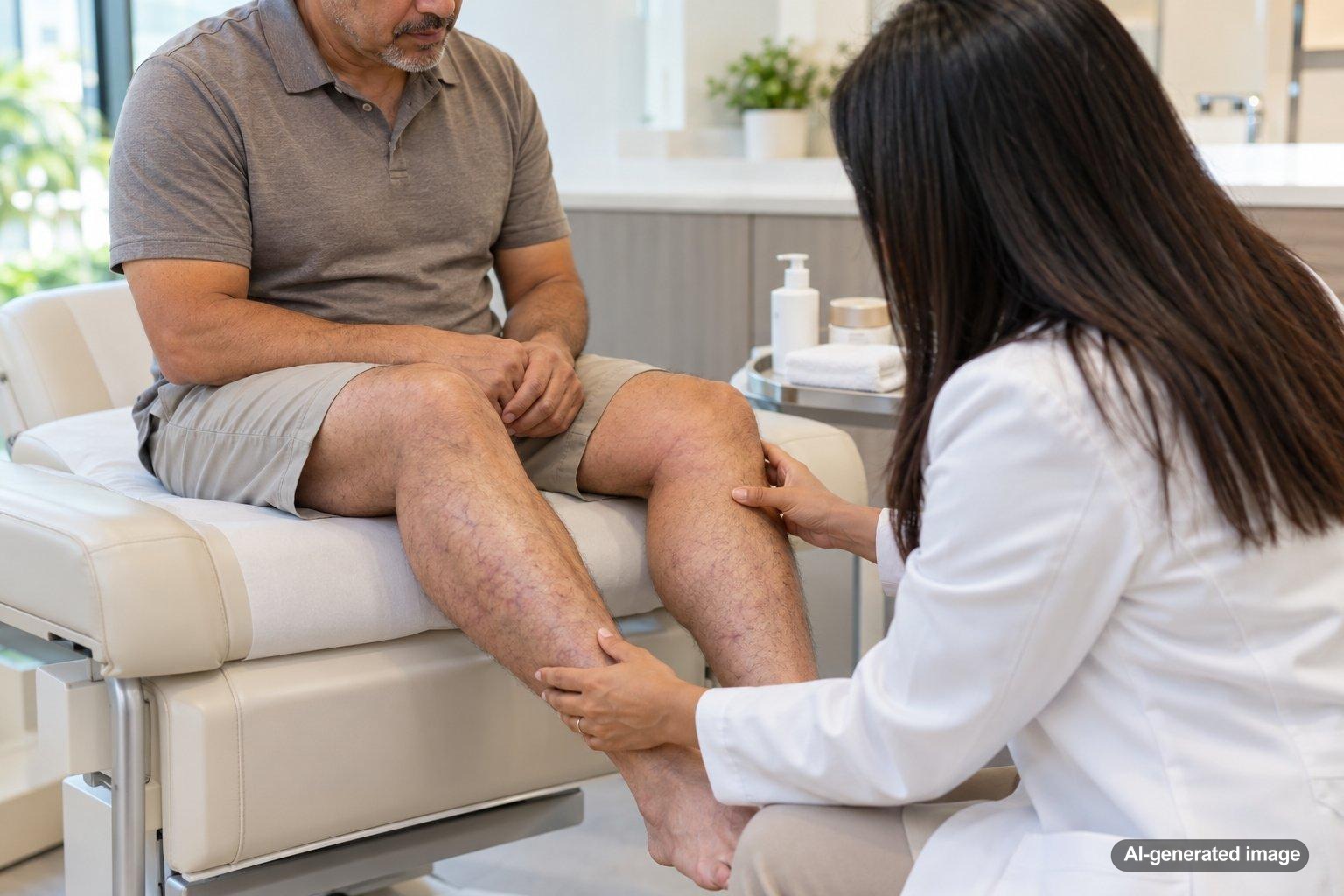
Stepping out of the shower and noticing a patchwork of pink, red, or purplish color across your legs can be surprising. The pattern may look like uneven blotches, a faint net, or patches of color that become more noticeable after you have been standing under warm water. Sometimes it fades soon after you dry off. Other times, the discoloration seems to linger.
In many situations, mottled legs after a shower reflect temporary changes in small blood vessels, skin temperature, and circulation. Warm water and standing still can make these changes more visible. However, not every mottled pattern has the same explanation, and persistent or unusual discoloration deserves closer attention. Understanding what the pattern looks like, when it appears, and whether other symptoms accompany it can help guide the next step.
Quick Answer: Why Do Legs Look Mottled After a Shower?
- Warm water widens blood vessels. Heat can increase blood flow near the skin’s surface, making red or pink patches more visible.
- Standing encourages blood to collect in the lower legs. Gravity can temporarily increase the amount of blood in the veins of the feet and legs, particularly when you remain relatively still.
- Temperature changes can create a netlike pattern. Some people develop a temporary marbled appearance associated with changes in blood flow through superficial vessels.
- Individual circulation patterns vary. Skin tone, temperature sensitivity, and vascular responses can influence how noticeable the color becomes.
- Persistent discoloration or accompanying symptoms warrant evaluation. Pain, significant swelling, sores, or a pattern that does not fade should not automatically be attributed to shower temperature.
What Does Mottled Skin on the Legs Actually Mean?
Mottling describes an uneven pattern of skin color rather than a single medical diagnosis. It may appear as irregular reddish or purple patches, a lace-like network, or a marbled pattern with lighter areas between darker ones.
Skin color partly reflects how blood moves through the small vessels beneath the surface. Changes in the diameter of these vessels, local blood flow, and the amount of blood present in superficial veins can affect the appearance of the skin.
One recognizable pattern is called livedo reticularis. It describes a netlike or lace-like reddish-purple discoloration that can become more visible with temperature changes. Some forms are temporary and harmless, particularly when related to cold exposure. Other forms can be persistent or associated with an underlying medical condition.
Importantly, not every blotchy leg pattern is livedo reticularis. Redness caused by heat, dependent blood pooling, irritation, and certain vascular conditions can have different appearances. A clinician may need to examine the skin to distinguish them.
Common Reasons Your Legs Become Blotchy While Standing in the Shower
Warm Water Changes Blood Flow Near the Skin
When your body becomes warm, blood vessels near the skin’s surface tend to widen. This process, called vasodilation, helps the body release heat. As superficial blood flow increases, the skin may appear pinker or redder.
These changes are not always perfectly uniform. Some areas may become noticeably flushed while neighboring areas remain lighter, creating a patchy appearance. Hotter water and longer showers can make the effect more apparent.
Gravity Encourages Blood Pooling in the Lower Legs
Standing upright means the circulatory system must continually move blood from the legs back toward the heart against gravity. The muscles in your calves assist this process when you walk or shift your weight.
During a shower, you may stand relatively motionless for several minutes. Blood can temporarily accumulate in the veins of the lower legs, a process often called dependent venous pooling. Warmth can also widen blood vessels, potentially making the resulting color changes more noticeable.
Some people notice a reddish-purple appearance around the knees, calves, ankles, or feet that becomes less obvious after sitting or elevating the legs. This observation can be useful to share during a medical evaluation, although it does not establish a particular diagnosis.
Temperature-Related Mottling
Blood vessels respond continually to changes in temperature. Cold exposure can cause superficial vessels to narrow, sometimes producing a temporary, lace-like mottling pattern. As the skin warms, the pattern may change or disappear.
The transition between a cool bathroom, warm shower water, and cooler air afterward can make temperature-related color variations noticeable. A persistent netlike pattern, however, should not be assumed to be a normal temperature response without evaluation.
Individual Differences in Vascular Response
Some people experience more pronounced changes in skin color when they move between sitting and standing, become warm, or remain upright for extended periods.
In certain circumstances, an exaggerated response to standing may occur alongside lightheadedness, a racing heartbeat, or other symptoms involving blood pressure and heart rate regulation. Skin discoloration alone cannot identify the cause, but associated symptoms can help a clinician determine whether a broader circulation assessment is appropriate.
Skin Irritation From Heat or Shower Products
Not every red or blotchy pattern comes from circulation. Hot water, fragranced cleansers, exfoliating products, or an impaired skin barrier can contribute to redness and irritation.
Irritation is more likely to be considered when the skin also feels itchy, tight, dry, stinging, or rough. These changes may resemble vascular blotchiness at first glance, but their underlying causes and management can differ.
How Can You Tell Whether the Pattern Is Related to Heat or Circulation?
Paying attention to the circumstances surrounding the discoloration can provide helpful clues. Consider the following observations:
- Timing: Does the pattern appear only after a warm shower, or does it happen whenever you stand for a while?
- Temperature: Is it more noticeable after a particularly hot shower or when the bathroom is cold?
- Distribution: Does it affect both legs similarly, or is one leg distinctly different?
- Duration: Does the discoloration fade after you cool down, sit, or move around?
- Other symptoms: Are there sensations of itching, burning, heaviness, numbness, pain, or swelling?
Temporary color changes that resolve when the skin returns to a comfortable temperature may be less concerning than changes that remain visible, recur with other symptoms, or become progressively more pronounced. Still, appearance and timing alone cannot reliably rule out medical causes.
What Can You Do at Home?
When mottling is mild, temporary, and unaccompanied by concerning symptoms, simple adjustments may help you understand whether shower conditions are contributing.
- Choose comfortably warm water. Avoid extremely hot showers, which can intensify flushing and leave skin feeling dry or irritated.
- Try shorter showers. Reducing prolonged heat exposure may help limit temporary redness.
- Move gently while standing. If it is safe for your balance and mobility, occasional ankle movements or gentle shifts in position can engage the calf muscles.
- Use mild skin products. A gentle, fragrance-free cleanser may be preferable if redness occurs with dryness or stinging.
- Moisturize after bathing. Applying a fragrance-free moisturizer while the skin is slightly damp can support the skin barrier.
- Document recurring changes. A clear photograph taken when the mottling is visible, along with notes about water temperature and how long the pattern lasts, may help your clinician assess it.
Avoid aggressively rubbing the skin, using very hot water to test circulation, or attempting to treat persistent discoloration with unfamiliar topical products. If you feel dizzy or faint while showering, stop, get to a safe position, and seek appropriate medical guidance.
When Might Mottled Legs Point to Something Beyond a Normal Shower Response?
Although temporary heat-related color changes can occur in otherwise healthy skin, some patterns warrant a more careful assessment.
Persistent livedo-like discoloration may occasionally be associated with conditions affecting blood vessels, blood flow, or clotting. Some individuals experience livedo reticularis without an identifiable underlying disease, while others may require additional evaluation based on their medical history and examination.
Venous circulation problems may cause changes in lower-leg color, sometimes accompanied by swelling, heaviness, varicose veins, or skin changes near the ankles. These findings differ from brief flushing that disappears after a shower.
Inflammatory or other vascular disorders can also produce discoloration, especially when there are painful areas, unusual sores, or other systemic symptoms. The appearance of the skin alone is not enough to establish the cause.
A dermatologist can evaluate whether the discoloration appears primarily related to the skin or its superficial blood vessels. If a deeper circulatory issue is suspected, assessment by a primary care clinician or vascular specialist may also be appropriate.
What Professional Evaluation and Treatment Options Are Available?
The appropriate approach depends on whether the mottling represents a temporary response to heat and posture, a skin condition, or an underlying circulation concern.
A dermatologist may begin by examining the pattern, reviewing photographs of episodes, and asking about temperature exposure, standing, medications, medical history, and associated symptoms. The clinician may also assess whether the color changes with position or temperature.
If the findings suggest a vascular or systemic cause, the dermatologist may recommend additional evaluation or coordinate care with another medical specialist. Depending on the clinical findings, further assessment might include circulation testing or selected laboratory studies.
For uncomplicated temporary flushing, medical procedures may not be needed. When irritation is contributing, gentle skincare and barrier-supporting measures may be appropriate. When a specific underlying disorder is identified, management generally focuses on that condition rather than simply concealing the discoloration.
Not all mottled skin is suitable for cosmetic treatment. Determining the cause should come before considering procedures intended to change skin color or visible vessels.
When Should You See a Dermatologist or Seek Medical Attention?
Consider arranging a medical evaluation if the mottling:
- Persists long after the shower or does not change when your skin returns to its usual temperature.
- Appears repeatedly without a clear temperature or positional trigger.
- Becomes more pronounced, spreads, or changes in appearance.
- Is accompanied by recurring swelling, tenderness, numbness, or unusual skin sensitivity.
- Occurs with sores, ulcers, or other unexplained skin changes.
- Is noticeably different between your two legs.
Some symptoms require more urgent attention. Seek prompt medical assessment for new swelling and pain in one leg, particularly when the calf is tender or warm, because a blood clot is one possible concern. Sudden severe leg pain, a cold or pale limb, or abrupt weakness or numbness can indicate a circulation emergency.
If leg symptoms occur with sudden shortness of breath, chest pain, fainting, or coughing up blood, seek emergency medical care immediately.
The goal is not to assume that every color change is dangerous. It is to recognize when a symptom deserves an examination rather than repeated observation at home.
Frequently Asked Questions
Is it normal for my legs to turn purple after a hot shower?
Some people experience temporary reddish or purplish changes related to warmth and standing. However, purple discoloration has several possible causes. If it is persistent, affects only one leg, or comes with pain, swelling, or other symptoms, a medical evaluation is appropriate.
Can standing still in the shower cause blood to pool in my legs?
Yes. Standing relatively motionless can allow more blood to collect temporarily in the lower extremities because of gravity. Warmth may make these vascular changes more visible. Significant or recurrent symptoms should be discussed with a clinician rather than assumed to result from ordinary pooling.
Is mottled skin after a shower the same as livedo reticularis?
Not necessarily. Livedo reticularis describes a characteristic netlike or lace-like discoloration. General blotchiness caused by warmth or irritation can look different. A dermatologist can assess the appearance and determine whether livedo or another process may be involved.
Why do my legs look blotchy only after a long shower?
Longer exposure to warm water can increase superficial blood vessel dilation, while prolonged standing may contribute to dependent blood pooling. Together, these effects can make color differences more noticeable. This is a possible explanation, not a diagnosis.
Should I worry if the mottling disappears after I sit down?
A pattern that fades with a change in position may suggest a positional component to the circulation response. Nevertheless, repeated dramatic color changes, dizziness, palpitations, swelling, or discomfort deserve medical attention. Improvement with sitting does not rule out an underlying condition.
Can a dermatologist help with mottled legs?
Yes. A dermatologist can examine the skin, distinguish among possible skin and superficial vascular patterns, and advise whether further medical or vascular evaluation is needed. If the cause is primarily related to circulation outside the skin, coordinated care may be recommended.
Ready to get help?
Schedule an appointment or send a message and our team will get back to you.
Prefer to call? 954-666-3736
Disclaimer
This article is for educational purposes and is not medical advice. For diagnosis and personalized treatment, please book an appointment with a board-certified dermatologist.
