

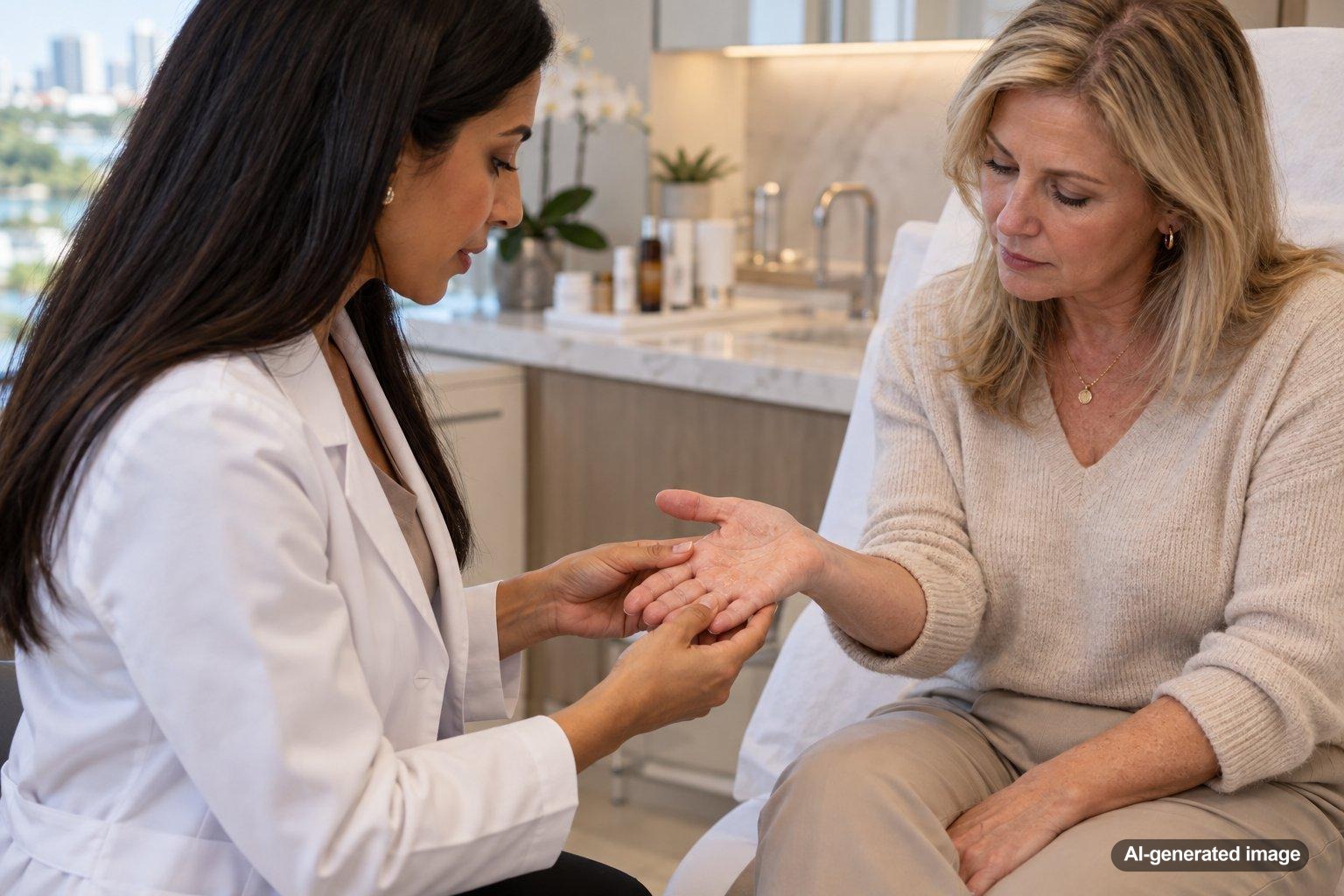
The skin on your palms and soles is naturally thicker than the skin on most other parts of your body. But when these areas become unusually thick, yellow, rough, or covered in tiny pits, the change may be more than ordinary dryness or calluses. Several skin conditions can produce similar-looking changes, and the location, texture, and timing can offer useful clues.
One possibility is palmoplantar keratoderma, a broad term for excessive thickening of the skin on the palms and soles. Other possibilities include inflammatory skin conditions, pressure-related calluses, and certain superficial infections. Importantly, tiny raised spots and small depressions are not the same finding, even though both can make the skin look uneven. A dermatologist can help determine which pattern is present and whether further evaluation is needed.
Quick Answer: Why Does the Skin Become Thick, Yellow, and Pitted?
- Palmoplantar keratoderma: Excessive buildup of the outer skin layer can create thick, sometimes yellow or waxy skin on the palms and soles.
- Punctate keratoderma: Small, firm areas of thickened skin may resemble tiny dots, plugs, or pits.
- Pitted keratolysis: A superficial bacterial infection can produce small crater-like depressions, usually on the soles, sometimes accompanied by noticeable foot odor.
- Eczema or psoriasis: Inflammatory skin conditions can produce thickening, scaling, peeling, and painful cracks.
- Friction and pressure: Repeated rubbing or weight-bearing can cause localized yellowish calluses, particularly on the feet.
What Is Palmoplantar Keratoderma?
Palmoplantar keratoderma describes abnormal thickening of the outermost layer of skin on the palms, soles, or both. The term does not refer to one single disease. Instead, it includes several conditions that share a similar physical appearance but may have different underlying causes.
The thickened skin may appear yellow, waxy, rough, or unusually firm. Some people develop broad areas of thickening, while others notice distinct patches around pressure points. In certain forms, the surface contains numerous small, hardened spots.
Dermatologists often describe these patterns as diffuse, focal, or punctate. Diffuse thickening involves much of the palm or sole. Focal thickening is concentrated in particular areas, often where pressure occurs. Punctate thickening produces multiple small, discrete bumps.
Some forms are inherited and begin during childhood or early adulthood. Others develop later in life and may be associated with inflammatory skin disease, environmental exposure, medications, or other medical factors. The timing of the skin changes is therefore an important part of the evaluation.
Why Does Thickened Skin Sometimes Look Yellow?
The palms and soles contain a naturally substantial outer skin layer composed of keratinized cells. When that layer becomes excessively thick, it may develop a pale yellow, cream, or waxy appearance.
This color change does not automatically indicate an infection or a problem elsewhere in the body. In many cases, the appearance reflects the physical properties of accumulated surface skin.
However, color alone cannot identify the cause. A dermatologist will also consider whether the affected skin is smooth, scaly, cracked, inflamed, tender, or unusually thick.
Yellow skin accompanied by yellowing of the eyes or more widespread skin discoloration deserves medical evaluation because it may represent a different concern.
What Causes Pits or Tiny Holes in the Palms and Soles?
The word ‘pitted’ can describe several different surface changes. Distinguishing true depressions from tiny raised areas can help narrow the possible explanations.
Pitted Keratolysis
Pitted keratolysis is a superficial bacterial infection that most often affects the weight-bearing areas of the feet, including the heels and balls of the feet. It creates small, shallow, crater-like depressions in the outer skin.
The pits may become more noticeable when the feet are wet. Other clues can include excessive sweating, persistent foot odor, and softened or damp-looking skin. The condition is associated with warm, moist environments and prolonged use of enclosed footwear.
Although the palms can occasionally be affected, involvement of the hands is uncommon. Pitted keratolysis does not explain every form of yellow or thickened skin, and its appearance can overlap with other conditions.
Punctate Palmoplantar Keratoderma
Punctate palmoplantar keratoderma produces numerous tiny, firm areas of thickened skin. These are generally raised keratinized spots rather than true holes.
Depending on their size and shape, the spots may look like small plugs embedded in the skin. The surrounding surface can appear uneven, particularly when many lesions are present.
Some punctate keratodermas are inherited. They may appear in adolescence or adulthood and can become more noticeable with time.
Other Conditions That Affect Surface Texture
Inflammation, scaling, calluses, and certain infections can change the texture of palm and sole skin. Sometimes an area that looks pitted at first glance is actually a collection of tiny keratin plugs, cracks, or irregular patches of thickened skin.
Because these patterns have different causes, it is better to have persistent changes evaluated than to assume that every small depression represents the same condition.
Other Common Causes of Thick or Rough Palms and Soles
- Palmoplantar psoriasis: This inflammatory condition can produce thick, sharply defined, scaly areas and painful fissures on the palms or soles.
- Hand or foot eczema: Eczema may cause dryness, itching, scaling, irritation, and thickening from ongoing inflammation or rubbing.
- Calluses: Repeated pressure from footwear, tools, exercise, or everyday movement can lead to localized buildup of hardened skin.
- Fungal infections: Certain fungal infections can cause scaling, thickening, and peeling, particularly on the soles and between the toes.
- Inherited keratodermas: Some genetic skin conditions create persistent thickening that begins early in life and may affect multiple family members.
- Acquired keratoderma: New thickening in adulthood may sometimes develop alongside another skin condition, a medication exposure, or an underlying health issue.
These possibilities are not interchangeable. For example, a thick callus caused by shoe pressure is different from a widespread inherited keratoderma, even when both appear yellowish.
What Clues Can Help a Dermatologist Identify the Cause?
The distribution and history of the changes often provide more information than color alone.
- Age of onset: Skin thickening that began in childhood may suggest a different explanation from a new change appearing in adulthood.
- Location: Changes limited to weight-bearing areas may relate to pressure or pitted keratolysis, while widespread thickening may indicate another process.
- Surface appearance: Raised dots, smooth calluses, scaling, fissures, and crater-like depressions can point toward different conditions.
- Associated symptoms: Itching, pain, odor, sweating, and cracking provide additional clues.
- Family history: Similar palm or sole changes in relatives may be relevant when considering inherited keratodermas.
- Recent changes: New medications, footwear, occupational exposures, and other symptoms may help guide the evaluation.
In Fort Lauderdale’s warm, humid climate, moisture and enclosed footwear can contribute to some foot-skin concerns. However, humidity alone should not be assumed to explain persistent thickening or changes involving both the palms and soles.
What Can You Do at Home?
Gentle skin care may improve comfort while you arrange an evaluation or monitor mild symptoms. The goal is to protect the skin barrier without causing additional irritation.
- Moisturize consistently: Use a fragrance-free, moisturizing cream or ointment to reduce dryness and support the outer skin barrier.
- Avoid aggressive scraping: Do not cut, shave, dig out, or aggressively file thickened areas. These approaches can injure the skin.
- Reduce excessive friction: Comfortable, properly fitting shoes and protective gloves for repetitive tasks may help limit mechanical irritation.
- Keep feet reasonably dry: Change damp socks, allow footwear to dry, and avoid remaining in wet shoes for prolonged periods.
- Use gentle cleansing products: Avoid harsh scrubs, strong fragrances, and products that sting or worsen cracking.
- Observe changes: Note whether the affected areas are spreading, becoming painful, or developing new symptoms.
Products designed to exfoliate thick skin, including some containing urea, salicylic acid, or other keratolytic ingredients, may be useful in selected situations. However, they can irritate inflamed, broken, or sensitive skin. A dermatologist can help determine whether one is appropriate for the specific condition and area involved.
If you have diabetes, reduced foot sensation, poor circulation, or a condition that affects wound healing, avoid attempting to remove thick skin yourself and seek individualized medical guidance.
How Does a Dermatologist Evaluate and Treat These Changes?
A dermatologist typically begins by examining the skin and reviewing when the symptoms began, where they occur, and whether they are associated with pain, itching, odor, or changes elsewhere on the body.
Depending on the appearance, the evaluation may include a closer examination of the surface, consideration of family history, or testing to distinguish an infection from an inflammatory or inherited condition. Skin scrapings or, in selected cases, a biopsy may be considered when the diagnosis remains unclear.
Professional management depends on the underlying explanation and may include:
- Barrier-supporting skin care: Moisturizers and strategies to reduce dryness, friction, and irritation.
- Thick-skin management: Clinician-guided use of products that soften or reduce excessive keratin buildup.
- Inflammation management: Prescription treatments when conditions such as eczema or psoriasis are identified.
- Infection treatment: Appropriate antimicrobial or antifungal therapy when a specific infection is confirmed or strongly suspected.
- Further evaluation: Additional assessment when the pattern suggests an inherited condition or a possible association with another medical issue.
Not every patient requires testing or prescription medication. Treatment choices depend on the diagnosis, the severity of symptoms, and individual medical considerations.
When Should You See a Dermatologist?
Consider scheduling a dermatology evaluation if the thickening is persistent, spreading, recurring, or interfering with walking, gripping, or daily activities.
It is particularly important to seek evaluation when:
- The skin becomes painful, develops deep cracks, or bleeds repeatedly.
- There is persistent foot odor accompanied by visible pits or softened skin.
- Thickening develops for the first time in adulthood without an obvious explanation.
- The changes affect large portions of both palms and soles.
- New nail changes, significant inflammation, or symptoms elsewhere on the body appear.
- Home skin care has not improved the discomfort or the appearance continues to change.
New, rapidly progressive thickening that is widespread or accompanied by unexplained systemic symptoms also warrants medical attention. Most thickened skin conditions are not signs of serious internal disease, but some acquired patterns can occasionally be associated with other health conditions.
Seek prompt medical care if the area develops rapidly increasing redness, warmth, swelling, drainage, severe pain, or fever, as these may indicate an infection requiring timely assessment.
Frequently Asked Questions
Is thick, yellow skin on the palms and soles always palmoplantar keratoderma?
No. Although palmoplantar keratoderma is one possible explanation, calluses, eczema, psoriasis, infections, and other conditions may produce similar changes. The diagnosis depends on the complete appearance and clinical history.
Are tiny pits on the soles caused by a bacterial infection?
Sometimes. Pitted keratolysis is a superficial bacterial infection known for producing small crater-like depressions on the soles, often with foot odor. However, not every uneven or pitted-looking area is caused by bacteria.
Can palmoplantar keratoderma run in families?
Yes. Some forms are inherited and may appear in childhood or early adulthood. Other forms are acquired later in life and have no inherited cause. Family history can be useful, but it is only one part of the evaluation.
Can sweating make the pits or thickening worse?
Excessive moisture can contribute to pitted keratolysis and may make certain existing skin changes more noticeable or uncomfortable. Sweating can also occur alongside some forms of keratoderma, but it does not explain every case.
Should I exfoliate thick yellow skin on my feet?
Gentle skin care may be appropriate, but aggressive filing, cutting, or peeling can damage the skin. If the area is painful, cracked, unusually thick, or of uncertain cause, a dermatologist can help identify a safer approach.
Can thickened palms and soles develop for the first time as an adult?
Yes. Acquired forms of palmoplantar keratoderma and several other skin conditions can develop during adulthood. New or unexplained changes are worth having examined, particularly when they spread or occur alongside other symptoms.
Ready to get help?
Schedule an appointment or send a message and our team will get back to you.
Prefer to call? 954-666-3736
Disclaimer
This article is for educational purposes and is not medical advice. For diagnosis and personalized treatment, please book an appointment with a board-certified dermatologist.
Sources & further reading
- DermNet – Palmoplantar keratoderma
- DermNet – Pitted keratolysis
- DermNet – Punctate-type palmoplantar keratoderma
- DermNet – Acquired keratoderma
