

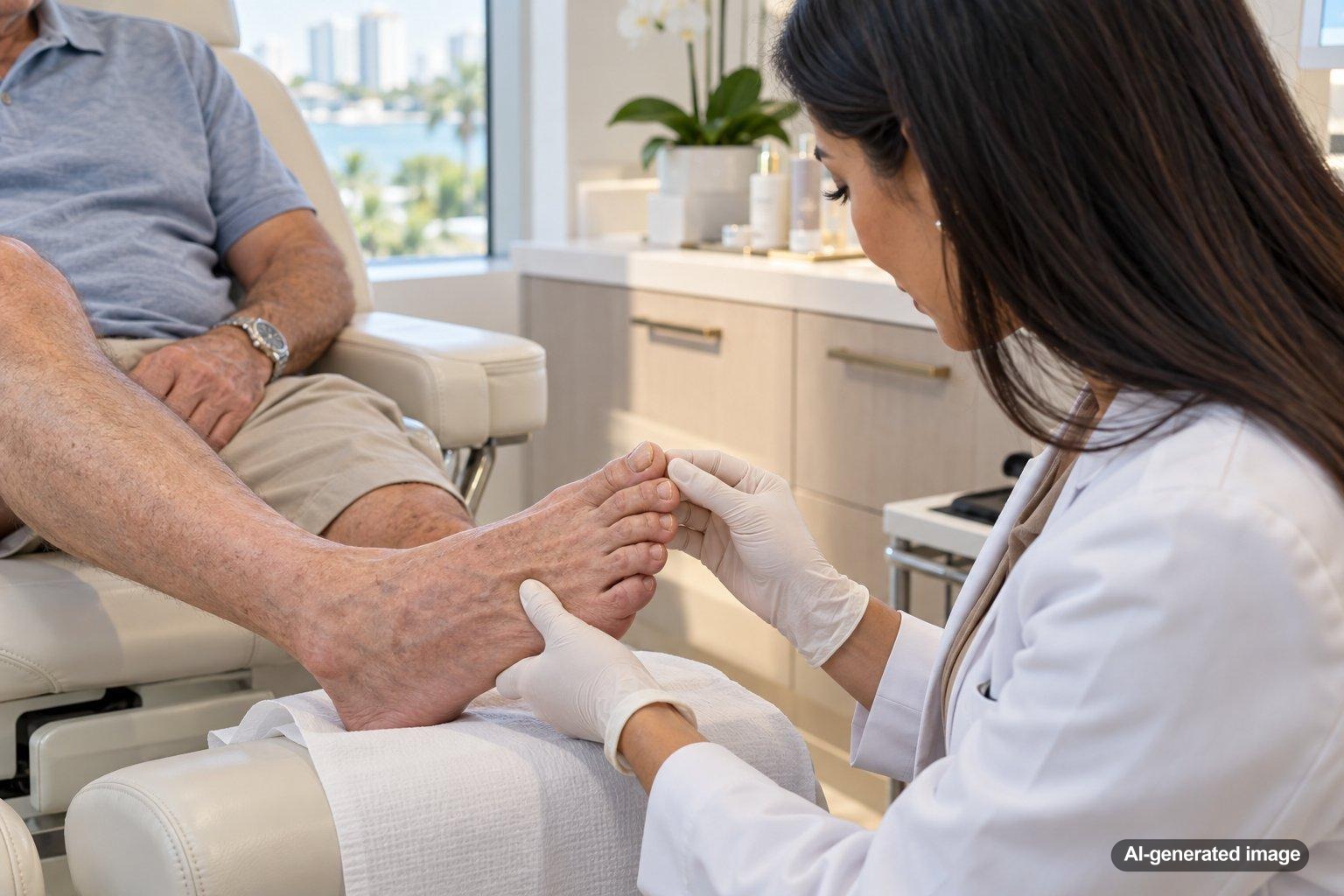
When the skin around your toenails becomes thick, hard, or unusually overgrown, it can make your nails look smaller, change their shape, or make everyday activities such as trimming your nails uncomfortable. This thickening often develops gradually and may be related to repeated friction, pressure from footwear, dryness, or irritation around the nail folds. In some cases, an underlying skin or nail condition contributes to the changes.
The important distinction is whether the skin is simply becoming thicker as a protective response or whether inflammation, an ingrown nail, or another nail disorder is changing the surrounding tissue. Understanding where the buildup occurs and whether it comes with pain, redness, or nail changes can help determine when a professional evaluation is appropriate.
Quick Answer: Why Does Skin Around Toenails Become Thick?
- Repeated pressure and friction: Tight footwear and recurring contact can contribute to thickened skin near the toenails.
- Dryness and excess keratin: Skin cells can accumulate around the nail folds, making the area appear hard or overgrown.
- Cuticle irritation: Picking, aggressive pedicures, or repeated trimming can disturb the delicate skin that protects the nail.
- Nail shape changes: An ingrown or curved toenail may irritate nearby skin and produce swelling or additional tissue.
- Underlying conditions: Chronic inflammation, infection, or conditions such as psoriasis may sometimes contribute to changes around the nails.
What Is the Thick Skin Around a Toenail?
The skin bordering a toenail is organized into structures called nail folds. The proximal nail fold sits near the nail’s base, while the lateral nail folds run along its sides. The cuticle is a thin protective seal where the skin meets the nail plate near its base.
These structures protect the area where the nail grows. They also experience considerable mechanical stress, particularly inside shoes.
When skin becomes repeatedly irritated or exposed to pressure, its outer layer may thicken through an increased accumulation of keratin, the structural protein found in skin and nails. This process is known as hyperkeratosis.
Sometimes the thickened area resembles a callus. In other cases, the cuticle appears enlarged, the side of the nail looks swollen, or tissue seems to extend over part of the nail plate. These appearances are not necessarily caused by the same condition.
Common Causes of Thick or Overgrown Skin Around Toenails
Repeated Pressure From Shoes
Shoes with narrow toe boxes can press the nail folds against the edges of the toenails. Repeated pressure may encourage the surrounding skin to become thicker, particularly along the sides of the big toenails or on toes that rub against neighboring toes.
This can be especially noticeable in people who spend long periods standing, walking, or wearing snug footwear.
Dryness and Keratin Buildup
Dry skin tends to feel rougher and less flexible. Around the toenails, accumulated surface skin cells may form a firm, sometimes whitish or yellowish rim.
Frequent exposure to drying products, harsh soaps, and repeated rubbing may contribute to this appearance. However, unusually thick or persistent buildup should not automatically be attributed to dryness alone.
Overgrown or Irritated Cuticles
The cuticle normally forms a thin seal rather than a large ridge of skin. Repeated pushing, cutting, or picking can disrupt this protective barrier and lead to irritation.
When the nail fold is repeatedly disturbed, it may develop a rough or uneven appearance. Some people notice that the surrounding skin seems to attach more firmly to the nail surface or becomes harder to manage during routine nail care.
Ingrown Toenails
An ingrown toenail occurs when an edge of the nail presses into or penetrates adjacent skin. The surrounding nail fold may become tender, swollen, or thickened.
With ongoing irritation, additional tissue may develop along the nail edge. This can sometimes look like skin growing over the toenail, although the underlying problem may involve the nail’s shape or direction of growth.
Persistent discomfort, redness, or drainage warrants professional assessment rather than repeated attempts to dig out the nail edge at home.
Chronic Nail Fold Inflammation
Inflammation around the nail fold is sometimes called paronychia. It may occur after injury, repeated irritation, or infection. Chronic inflammation can change the appearance of the cuticle and surrounding skin, sometimes making the tissue look swollen, thickened, or irregular.
Redness, warmth, tenderness, and drainage are particularly important clues. These symptoms should not be treated as ordinary dry skin.
Psoriasis and Other Skin Conditions
Psoriasis can affect the nails and surrounding skin. Nail psoriasis may cause pitting, discoloration, crumbling, nail separation, or buildup beneath the nail plate.
It is important to distinguish skin thickening beside a nail from debris accumulating underneath the nail itself. These patterns can look similar at first glance but may require different evaluations.
Other inflammatory skin conditions can also affect the nail folds. A dermatologist can assess whether a chronic skin disorder is contributing to the changes.
Why Does the Skin Sometimes Look Like It Is Growing Over the Toenail?
When tissue seems to extend onto the nail, its location offers useful clues. Thickened skin along the sides may reflect friction or irritation. Tissue covering the nail’s base may involve the proximal nail fold or cuticle. A swollen ridge beside an ingrown toenail may represent inflammation or a tissue reaction to ongoing pressure.
Some nail disorders can cause portions of the nail fold or surrounding skin to adhere abnormally to the nail plate. Because these changes are not always easy to distinguish visually, persistent or progressive overgrowth is worth examining rather than attempting to separate the tissue manually.
Pay particular attention to whether the affected area is changing, becoming painful, or interfering with normal nail growth.
What Can You Do at Home?
For mild thickening without pain, drainage, or signs of infection, conservative nail care may help reduce irritation and protect the surrounding skin.
- Choose shoes with adequate toe room. Avoid footwear that repeatedly compresses or rubs against the nail folds.
- Keep toenails trimmed carefully. Trim them approximately straight across without cutting deeply into the corners or excessively shortening the nail.
- Moisturize dry surrounding skin. A simple fragrance-free moisturizer may help improve comfort and reduce surface dryness.
- Avoid cutting thickened cuticles. Removing tissue with scissors, blades, or sharp manicure tools may create small injuries and increase irritation.
- Use gentle cleansing. Wash the feet normally, rinse away cleanser, and dry carefully around the toes.
- Limit repetitive picking and scraping. Forcefully removing thick skin or digging underneath the nail can damage the surrounding tissue.
Avoid applying strong exfoliating acids or callus removers directly to irritated nail folds without professional guidance. These products may be unsuitable for delicate or damaged skin.
If you have diabetes, reduced circulation, impaired sensation, or another condition that makes foot injuries more concerning, seek professional guidance before attempting to remove thickened tissue.
How Can a Dermatologist Evaluate Thick Skin Around the Toenails?
A dermatologic evaluation begins by determining exactly which part of the nail unit is affected. Your clinician may examine the cuticle, lateral nail folds, nail plate, surrounding skin, and the spaces between the toes.
The assessment may include questions about footwear, previous nail injuries, pedicure habits, symptoms, and how long the thickening has been present.
Depending on the findings, professional options may include:
- Protective skin care: Guidance on reducing mechanical irritation and supporting the skin barrier.
- Management of nail pressure: Recommendations for footwear adjustments or referral to an appropriate foot specialist when nail shape or structural pressure is involved.
- Evaluation of inflammation: Identifying whether an underlying inflammatory condition needs medical treatment.
- Infection assessment: Testing or treatment when examination suggests a bacterial or fungal problem.
- Careful management of excessive tissue: Determining whether thickened tissue requires professional attention rather than at-home removal.
Treatment decisions depend on the underlying cause. Simply removing visible thick skin without addressing recurring pressure or inflammation may not resolve the original problem.
When Should You See a Dermatologist?
Consider scheduling an evaluation if thickened skin persists, continues to expand, changes the shape of your toenail, or repeatedly returns despite gentle care.
Additional reasons to seek professional attention include:
- Persistent pain or tenderness around a toenail.
- Redness, swelling, warmth, or drainage near the nail fold.
- A toenail that becomes increasingly curved, lifted, distorted, or difficult to trim.
- Skin that bleeds easily or forms an unexplained growth.
- New pigmentation or an unusual dark streak involving the nail or surrounding skin.
- Several nails developing unexplained changes at the same time.
Seek prompt medical attention for spreading redness, rapidly increasing swelling, severe pain, pus, or fever. These findings may indicate an infection requiring timely treatment.
New or changing pigmented areas around the nail also deserve assessment rather than being dismissed as friction or routine nail changes.
Frequently Asked Questions
Is thick skin around my toenails normal?
Some variation in cuticle thickness and nail fold appearance is normal. However, pronounced thickening, progressive overgrowth, persistent discomfort, or changes in nail shape are reasons to consider an evaluation.
Can tight shoes cause skin to grow around toenails?
Repeated pressure from tight or narrow shoes can contribute to thickened skin and irritation around the toenails. It can also aggravate problems involving the nail edges. Improving toe room may reduce ongoing mechanical stress.
Should I cut away overgrown skin around my toenails?
Cutting or digging into thickened nail folds at home is not recommended. The tissue may be attached to delicate skin structures, and aggressive removal can cause injury, bleeding, or infection. A clinician can determine whether any tissue needs to be treated.
Why is the skin thick around only one toenail?
Localized pressure, an individual nail’s shape, a previous injury, or irritation from an ingrown edge may affect just one toe. Changes involving a single nail are not enough to identify the cause, especially if the thickening is new or progressing.
Can toenail fungus cause thick skin around the nail?
Fungal nail infections can cause thickening and debris beneath the nail plate, which may be confused with thickened surrounding skin. Other conditions can produce similar changes. A dermatologist may recommend testing when the diagnosis is uncertain.
Will moisturizing make overgrown cuticles disappear?
Moisturizing may soften dry surface skin and improve comfort, but it may not correct thickening caused by persistent pressure, nail abnormalities, or inflammation. If the tissue continues to enlarge or becomes painful, professional evaluation is appropriate.
Protecting the Skin Around Your Toenails
Thick or overgrown skin around the toenails is often associated with local irritation, accumulated keratin, or repeated pressure. However, the appearance alone cannot reliably distinguish these changes from an ingrown nail, chronic nail fold inflammation, or an underlying skin condition.
Gentle nail care, comfortable footwear, and attention to persistent changes are practical first steps. If the skin becomes painful, unusually thick, or progressively overgrown, a dermatologist can help clarify the cause and recommend an appropriate approach.
Ready to get help?
Schedule an appointment or send a message and our team will get back to you.
Prefer to call? 954-666-3736
This article is for educational purposes and is not medical advice. For diagnosis and personalized treatment, please book an appointment with a board-certified dermatologist.
Sources & Further Reading
- Cleveland Clinic – Nail Infection (Paronychia)
- American Academy of Dermatology (AAD) – 12 Nail Changes a Dermatologist Should Examine
- American Academy of Dermatology (AAD) – What Is Nail Psoriasis, and How Can I Treat It?
