

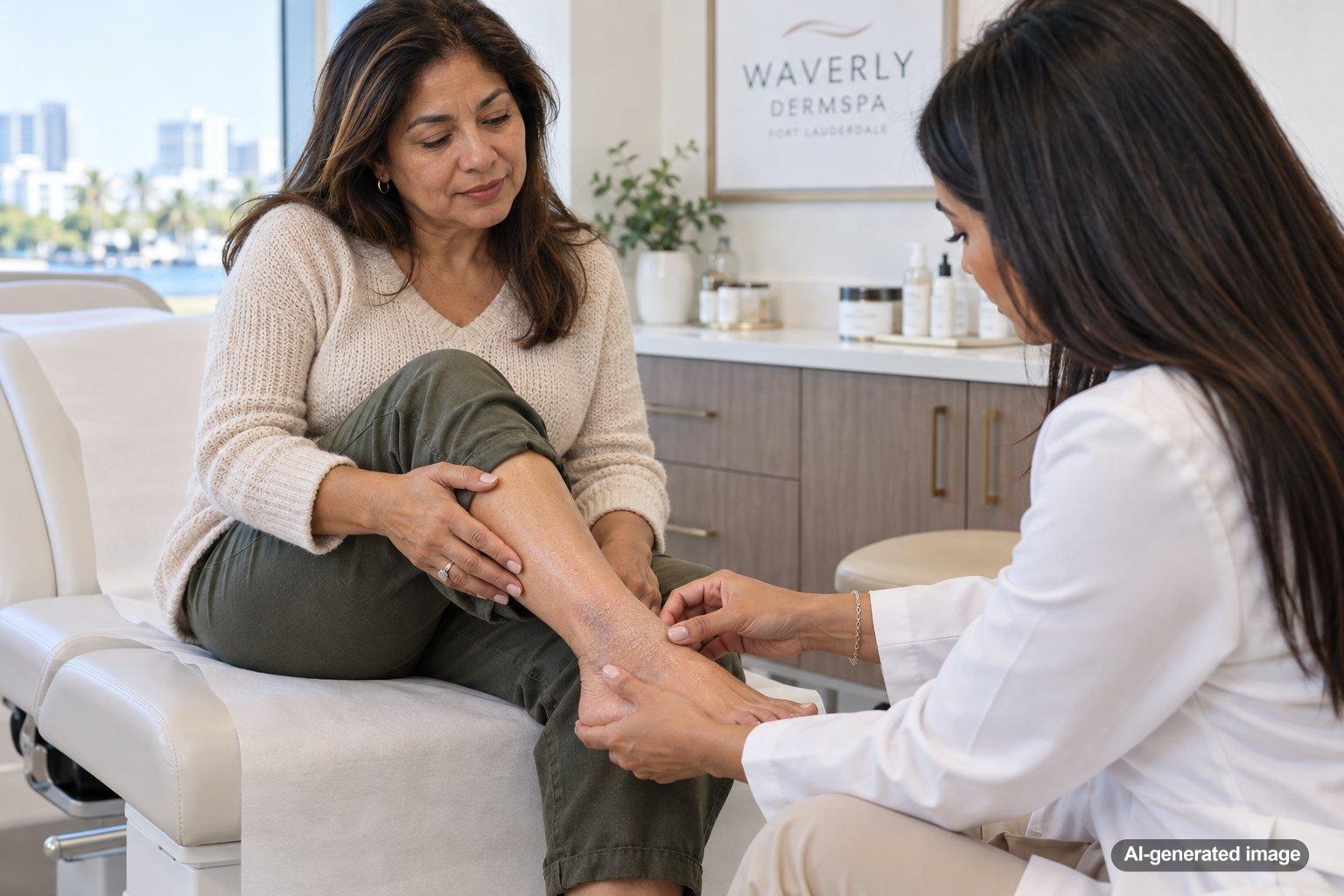
Dry, cracked, and itchy skin around your ankles can develop for several reasons, including ordinary dryness, friction from socks or shoes, contact irritation, eczema, and certain circulation-related skin changes. The ankle area experiences regular movement, rubbing, and exposure to clothing, which can make an already weakened skin barrier feel especially uncomfortable. Although gentle moisturizing may help with straightforward dryness, persistent itching, discoloration, swelling, or painful cracks deserve closer attention.
The location of the irritation can provide useful clues. Dryness concentrated where a sock rests may suggest friction or contact irritation, while itching accompanied by ankle swelling or brownish discoloration may point toward a condition requiring medical evaluation. Understanding these differences can help you care for your skin without overlooking an underlying concern.
Quick Answer: Why Are My Ankles So Dry and Itchy?
- Simple dry skin: Loss of moisture can leave ankle skin rough, flaky, tight, and vulnerable to cracking.
- Contact irritation: Footwear materials, laundry products, fragrances, and rubbing from socks can aggravate sensitive skin.
- Eczema: Inflammatory skin conditions can cause recurring itching, dryness, scaling, and irritated patches.
- Circulation-related changes: Stasis dermatitis may cause itching, swelling, scaling, and discoloration around the lower legs and ankles.
- Other skin conditions: Psoriasis and certain infections can sometimes produce symptoms that resemble ordinary dryness.
The most useful next step depends on the pattern of symptoms, whether swelling or discoloration is present, and how the skin responds to gentle care.
What Happens When the Skin Around Your Ankles Becomes Dry and Cracked?
The outermost layer of the skin acts as a protective barrier. It helps retain moisture while limiting exposure to environmental irritants. When this barrier loses too much water or becomes inflamed, the skin can feel tight, rough, or itchy.
As dryness progresses, small splits called fissures may develop. These cracks can sting when the ankle bends, rub against footwear, or become uncomfortable during walking. Scratching can further damage the barrier and create a cycle of irritation and itching.
The ankle area is particularly vulnerable to repeated friction because socks, shoes, and clothing frequently contact the same small areas. However, friction alone does not explain every persistent ankle rash.
Common Causes of Dry, Cracked, and Itchy Ankle Skin
1. Simple Dry Skin and a Weakened Skin Barrier
Dry skin, also called xerosis, occurs when the skin loses more moisture than it can comfortably retain. It may look ashy, rough, flaky, or finely cracked, depending on skin tone and severity.
Long, hot showers, harsh cleansing products, low-humidity environments, and insufficient moisturizing can contribute. Even in warm, humid climates such as Fort Lauderdale, frequent air-conditioning, swimming, and cleansing routines may aggravate dryness for some people.
Simple dryness is more likely when the skin feels tight or flaky without significant swelling, spreading redness, or persistent discoloration. Still, appearance alone cannot establish the cause.
2. Contact Dermatitis From Socks, Shoes, or Skin Care Products
Contact dermatitis develops when the skin reacts to an irritating substance or an allergen. Around the ankles, possible triggers include:
- Detergents, fabric softeners, or fragrance residues on socks.
- Rubber, adhesives, dyes, or other components in footwear.
- Fragranced lotions, soaps, or topical products.
- Repeated rubbing from tight socks, ankle straps, or shoe collars.
- Moisture and sweat trapped beneath clothing or footwear.
Irritant contact dermatitis can occur when repeated exposure damages the skin barrier. Allergic contact dermatitis involves an immune reaction to a particular substance. The two can look similar, and an allergy may develop even after a person has previously tolerated a product.
A rash that repeatedly appears along a sock line or where a shoe touches the ankle may be a useful clue. A dermatologist may recommend patch testing when allergic contact dermatitis is suspected.
3. Eczema
Eczema describes a group of inflammatory skin conditions associated with itching and skin barrier disruption. Atopic dermatitis, one common form, can produce rough, dry, inflamed patches that may crack or become thickened after repeated scratching.
Eczema can affect people of different ages and skin tones. Inflamed skin may appear pink or red, but it can also look violet, grayish, or darker than the surrounding skin. Some people experience recurrent flare-ups rather than continuous symptoms.
While moisturizing is an important part of eczema care, ongoing inflammation may require a dermatologist’s assessment and additional treatment.
4. Stasis Dermatitis and Venous Circulation Changes
Stasis dermatitis is an inflammatory skin condition associated with chronic venous insufficiency, a problem in which veins have difficulty returning blood efficiently from the legs toward the heart.
It commonly affects the lower legs, particularly around the ankles. Potential findings include persistent itching, dry or scaly patches, ankle swelling, and reddish or brownish discoloration. Some people also notice heaviness in their legs, prominent veins, or skin that gradually becomes thicker.
An important distinction: Dry, itchy ankles accompanied by swelling or progressive discoloration should not automatically be treated as a routine moisturizing problem. A clinician can assess whether circulation-related changes or another condition may be contributing.
Stasis dermatitis can sometimes lead to open sores or other complications if the underlying problem is not addressed. Compression therapy may be appropriate for selected patients, but it should be guided by a healthcare professional because certain circulation problems can make compression unsuitable.
5. Psoriasis or Other Inflammatory Skin Conditions
Psoriasis can produce well-defined, thickened, scaly patches that sometimes itch, crack, or become painful. Although it frequently affects areas such as the elbows, knees, and scalp, it may also involve the legs or ankles.
Psoriasis and eczema can sometimes resemble one another, particularly when the skin is heavily scratched or inflamed. A dermatologist can evaluate the appearance, distribution, medical history, and associated symptoms before recommending treatment.
6. Fungal or Bacterial Skin Problems
Some fungal infections cause itchy, scaly skin around the feet and may extend toward the ankles. When the skin is persistently cracked or scratched, bacteria can also enter through damaged areas.
Not every itchy or peeling patch is fungal, and applying an inappropriate medication can complicate the picture. A dermatologist may perform a skin scraping or another examination if an infection is suspected.
Increasing warmth, tenderness, spreading redness, drainage, or fever are more concerning than uncomplicated dryness and warrant prompt medical assessment.
What Can You Do at Home for Dry, Itchy Ankles?
When symptoms are mild and there are no warning signs, a simplified, gentle skin care routine may help support the skin barrier.
Choose a Thick, Fragrance-Free Moisturizer
Consider a fragrance-free cream or ointment rather than a lightweight lotion. Products containing ingredients such as petrolatum, glycerin, or ceramides can help reduce moisture loss and support the outer skin barrier.
Apply moisturizer after bathing, while the skin is still slightly damp, and reapply when the area feels dry. Avoid rubbing aggressively over painful fissures or irritated patches.
Keep Showers Short and Use Warm Water
Hot water can remove some of the skin’s protective oils and make dryness more noticeable. Shorter showers with warm rather than hot water may reduce irritation. Pat the skin dry gently instead of scrubbing it with a towel.
Reduce Friction Around the Ankles
Choose comfortable socks and shoes that do not repeatedly rub the irritated area. Breathable fabrics and properly fitting footwear may be easier on sensitive skin.
If a new pair of shoes, socks, or laundry product coincided with the irritation, consider whether that exposure could be contributing. Avoid tight bands that leave pronounced marks or increase discomfort.
Pause Harsh or Unnecessary Skin Products
Scrubs, exfoliating acids, strongly fragranced creams, and alcohol-heavy products may sting or further irritate cracked skin. Focus on gentle cleansing and basic moisturizing rather than attempting to remove every visible flake.
Do not peel away cracked skin or use aggressive exfoliation to make the surface appear smoother.
Try to Minimize Scratching
Scratching can create additional breaks in the skin and prolong irritation. Keeping fingernails short and using a cool, clean compress for temporary comfort may help reduce the urge to scratch.
Avoid applying multiple medicated anti-itch products without guidance, especially when the cause of the rash is uncertain. Some ingredients may irritate damaged skin or be inappropriate for particular conditions.
How Can You Tell Whether It Is Dry Skin or Something More?
Several observations may help you describe your symptoms to a dermatologist, although none can establish a diagnosis on its own.
- Dryness without other major changes: Fine flaking and tightness may be associated with a weakened moisture barrier.
- A sharply localized pattern: Irritation matching the shape of footwear or a sock band may suggest a contact trigger.
- Repeated itchy flare-ups: Recurring inflamed patches may be consistent with eczema or another inflammatory condition.
- Swelling and brownish discoloration: These changes may raise concern for stasis dermatitis or other vascular problems.
- Thick, clearly defined scaling: This appearance may warrant evaluation for psoriasis or another inflammatory disorder.
- Warmth, increasing pain, or drainage: These findings may suggest infection or another problem requiring timely medical attention.
Pay attention to whether the problem affects one ankle or both, whether it spreads, and whether symptoms change after standing, walking, bathing, or wearing particular shoes. A brief record of these details can be useful during an appointment.
What Professional Treatments May Help?
A dermatologist can examine the affected skin, discuss possible irritants, and determine whether the symptoms suggest dryness, eczema, contact dermatitis, psoriasis, infection, or a circulation-related problem.
Depending on the findings, professional care may involve:
- Barrier repair: Recommendations for a more suitable moisturizing and cleansing routine.
- Inflammation management: Prescription topical treatments when an inflammatory skin condition is identified.
- Allergy evaluation: Patch testing when allergic contact dermatitis is a possibility.
- Infection assessment: Examination or testing when fungal or bacterial infection is suspected.
- Circulation evaluation: Additional assessment or referral when ankle swelling, discoloration, or other findings suggest venous disease.
The right approach depends on the cause. A treatment that is useful for one type of ankle rash may be unsuitable for another, which is why persistent or unusual symptoms deserve an individualized assessment.
When Should You See a Dermatologist?
Consider scheduling a dermatology evaluation when dryness or itching continues despite gentle skin care, repeatedly returns, interferes with sleep, or produces painful cracks.
Other reasons to seek evaluation include:
- Persistent ankle swelling or changes in skin color.
- Thickening, spreading, or worsening patches.
- Cracks that bleed frequently or do not improve.
- Unexplained sores or skin breakdown.
- Severe itching that disrupts daily activities.
- Recurring irritation associated with particular products or materials.
Seek prompt medical care for spreading redness, increasing warmth or pain, pus, fever, or an open wound that appears infected. Sudden swelling in one leg, particularly with pain or warmth, also requires urgent medical evaluation. If leg symptoms occur with chest pain or shortness of breath, seek emergency care.
People with diabetes, impaired circulation, reduced sensation, or immune system conditions should be particularly cautious about cracks, sores, and other skin changes involving the feet or ankles.
Frequently Asked Questions
Why do my ankles itch more at night?
Itching may feel more noticeable at night because there are fewer distractions, the skin may be warm under bedding, or irritation accumulated during the day becomes more apparent. Eczema, contact dermatitis, and other conditions can also contribute. Persistent nighttime itching is worth discussing with a dermatologist.
Can tight socks cause dry, cracked skin around my ankles?
Tight socks can contribute to friction, pressure, and irritation, particularly when the skin barrier is already sensitive. Fabric dyes, detergents, and elastic materials may also trigger contact reactions in some individuals. However, a sock line does not rule out an underlying skin condition.
Why is the skin around my ankles turning brown and itchy?
Brownish discoloration can occur after inflammation, but when it appears with ankle swelling, scaling, or changes around the lower legs, stasis dermatitis is one possible explanation. A clinician can assess the skin and circulation to clarify the cause rather than assuming it is ordinary dryness.
Is petroleum jelly helpful for cracked ankle skin?
Plain petroleum jelly can help reduce water loss and protect superficially dry skin. Applying a thin layer to clean, slightly damp skin may provide comfort. Deep, painful, draining, or persistently open cracks should be evaluated rather than managed with an ointment alone.
Can ankle eczema go away with moisturizer alone?
Moisturizing can be an important part of managing eczema because it supports the skin barrier and reduces moisture loss. However, ongoing inflammation may require additional treatment recommended by a dermatologist. The appropriate approach depends on the type and severity of the condition.
Should I use a steroid cream on an itchy ankle rash?
Topical corticosteroids may be recommended for certain inflammatory skin conditions, but they are not appropriate for every itchy rash. Some infections can resemble eczema, and the wrong treatment may delay proper care. Ask a dermatologist before using medicated products on a persistent, unexplained, or worsening rash.
The Bottom Line
Dry, cracked, and itchy skin around the ankles often begins with a disrupted skin barrier, but several different conditions can produce similar symptoms. Gentle cleansing, consistent moisturizing, and reduced friction may help with straightforward dryness. Persistent inflammation, swelling, discoloration, painful fissures, or unusual skin changes call for a closer look.
A dermatologist can help distinguish a routine irritation problem from eczema, contact allergy, infection, or a circulation-related condition, making it easier to choose care that fits the underlying cause.
Ready to get help?
Schedule an appointment or send a message and our team will get back to you.
Prefer to call? 954-666-3736
This article is for educational purposes and is not medical advice. For diagnosis and personalized treatment, please book an appointment with a board-certified dermatologist.
Sources & Further Reading
- American Academy of Dermatology (AAD) – Dermatologists’ top tips for relieving dry skin
- Cleveland Clinic – Venous Stasis Dermatitis: Causes, Symptoms & Treatment
- American Academy of Dermatology (AAD) – How to reduce eczema flares with moisturizer
