

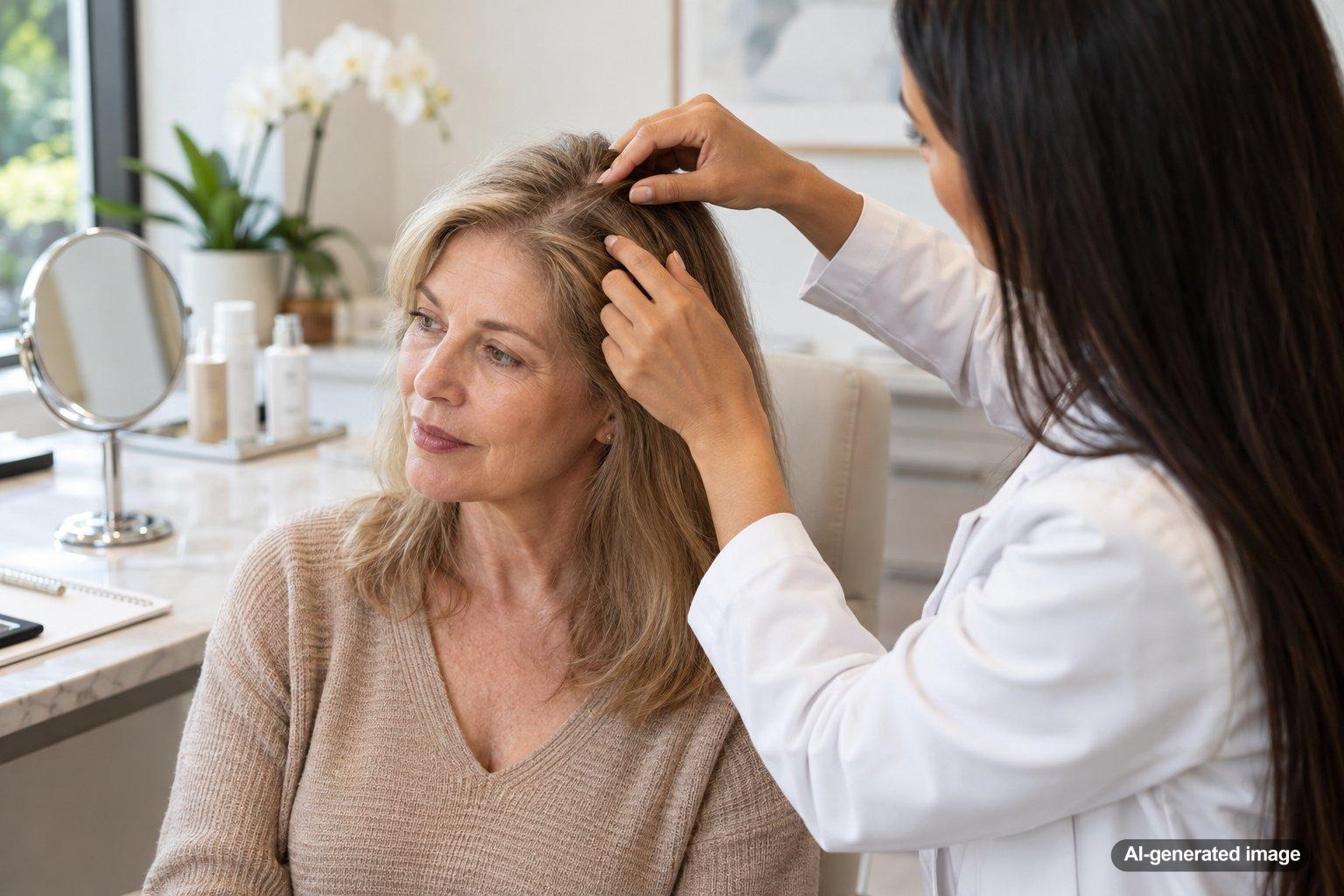
Noticing that one section of your scalp feels greasy while the rest of your hair looks clean can be frustrating, especially when the same spot becomes oily shortly after washing. You might find that the crown, hairline, or area behind one ear consistently looks shinier or feels heavier than the surrounding hair. Often, the difference has more to do with how oil, hair products, and moisture collect in that location than with a serious scalp problem.
However, persistent oiliness in one area can sometimes be associated with irritation or a scalp condition, particularly when itching, redness, flakes, or tenderness accompany it. Understanding the pattern and any additional symptoms can help you decide whether a small change in your hair care routine is reasonable or whether a dermatologist should examine the area.
Quick Answer: Why Is One Part of Your Scalp Greasier?
One section of the scalp may appear greasier because several factors can affect how natural oil accumulates and spreads through the hair.
- Natural oil distribution: Sebum may be more noticeable in areas where hair density, growth direction, or contact with the scalp makes oil easier to see.
- Uneven cleansing: Shampoo may not reach certain sections thoroughly, particularly beneath thick hair or around the crown.
- Product buildup: Conditioners, styling creams, dry shampoo, and other products can collect in specific areas.
- Repeated contact: Touching, brushing, sleeping position, or headwear may transfer or spread oil unevenly.
- Scalp irritation: Conditions such as seborrheic dermatitis can sometimes make particular areas appear oily, flaky, or inflamed.
The most useful clue is whether the area simply looks oily or also has noticeable skin changes.
How Does Scalp Oil Normally Work?
The scalp contains sebaceous glands associated with hair follicles. These glands produce sebum, a natural oily substance that helps lubricate the skin and hair. Sebum production is influenced by several factors, including hormones and individual skin characteristics.
Although the scalp produces oil across many areas, that oil does not necessarily spread evenly through the hair. Hair texture, density, length, styling habits, and washing technique can all affect where it becomes visible.
For example, oil may be more noticeable along a part line or near the crown because the hair separates there. A section of hair that lies flat against the scalp may also appear greasy sooner than a section with more volume.
Importantly, a greasy-looking patch does not automatically mean the underlying skin is producing substantially more oil than the surrounding scalp.
Common Reasons One Area of Your Scalp Gets Greasy Faster
1. Shampoo Is Not Reaching That Area Thoroughly
Some areas are naturally more difficult to cleanse than others. The crown, back of the head, and sections beneath dense hair may receive less direct attention during shampooing.
If shampoo is concentrated near the front hairline, oil and styling residue can remain elsewhere. Likewise, incomplete rinsing can leave hair feeling coated or heavy.
This may be especially noticeable when washing thick, curly, or closely packed hair.
2. Conditioner or Styling Products Are Collecting in One Spot
Leave-in conditioners, hair oils, creams, gels, and smoothing products can change the appearance of hair near the roots. When more product reaches one section, that area may look greasy even if the skin beneath it is not unusually oily.
Applying conditioner close to the roots or repeatedly spraying dry shampoo into the same location can contribute to localized residue.
Products may also transfer from brushes, pillowcases, hats, or hands, making one section appear different from the rest.
3. Your Hair Growth Pattern Makes Oil More Visible
Cowlicks, natural parts, and differences in hair direction can influence the way hair sits against the scalp.
A crown that naturally separates into several directions may expose more scalp and make individual strands appear clumped together. This can create the impression of an oily patch even when sebum production is relatively ordinary.
Fine or straight hair may reveal this effect more readily because oil can visibly coat strands and reduce volume.
4. You Frequently Touch or Rest Against That Area
Repeated contact can contribute to uneven oil distribution. For example, someone who regularly adjusts hair near one temple or rests the same side of their head against a pillow may notice a recurring difference in that location.
Headphones, hats, helmet liners, and other items that contact the scalp can also affect hair appearance by compressing strands or transferring residue.
These habits do not necessarily change how much oil the glands produce, but they can influence where oil becomes most noticeable.
5. Sweat and Humidity Are Affecting a Particular Section
Sweat is different from sebum, but moisture can make oily hair appear flatter or more separated. Areas under headwear or near the back of the head may retain moisture longer, particularly when hair is dense.
In Fort Lauderdale’s warm, humid climate, perspiration can contribute to this appearance after outdoor activities, exercise, or time spent wearing a hat.
If the same area feels damp rather than oily, consider whether sweat, incomplete drying, or repeated contact could explain the pattern.
6. Seborrheic Dermatitis or Another Scalp Condition Is Present
Seborrheic dermatitis is an inflammatory skin condition that commonly affects oil-rich areas, including the scalp. It can cause greasy-looking flakes, redness, itching, or irritation.
Although it can involve much of the scalp, symptoms may be more noticeable in certain locations. A patch that repeatedly develops oily scales or discomfort deserves attention rather than being treated as ordinary hair greasiness.
Other inflammatory conditions, including scalp psoriasis or contact dermatitis, can sometimes produce localized scaling or irritation. Their appearance and management differ, so the presence of flakes alone is not enough to identify the cause.
A dermatologist can examine the skin and determine whether inflammation, product irritation, or another condition is contributing to the change.
How to Tell Whether It Is Oil, Product Buildup, or Scalp Irritation
Observing what happens after washing can provide useful information, although it cannot establish a diagnosis.
- Mostly natural oil: The hair looks relatively clean after washing but becomes shiny, flat, or separated as time passes.
- Possible product residue: The affected section feels coated, sticky, waxy, or unusually heavy, especially after styling.
- Possible moisture retention: The area seems damp, flattened, or clumped after sweating or washing.
- Possible scalp inflammation: Oiliness occurs alongside persistent itching, redness, visible scales, tenderness, or irritation.
These patterns can overlap. For example, product residue may coexist with natural oil, and an irritated scalp may also have an ordinary amount of sebum.
If the skin itself looks different from nearby areas, professional evaluation is more informative than relying on the texture of the hair alone.
What You Can Do at Home
When the greasy area is not painful, inflamed, or associated with other concerning symptoms, a few conservative hair care adjustments may help you understand the pattern.
Pay Attention to How You Shampoo
During your normal washing routine, gently distribute shampoo across the scalp rather than focusing only on the most visible sections of hair. Use your fingertips to cleanse without scratching or aggressively scrubbing the skin.
Rinse thoroughly, especially around the crown and back of the head, where product may be easier to miss.
Keep Heavy Products Away From the Roots
If your hair type allows, concentrate richer conditioners and styling creams on the lengths and ends rather than directly on the scalp.
Consider whether the greasy section corresponds to where you typically apply leave-in products, oils, or dry shampoo.
Review Items That Touch Your Hair
Regularly clean brushes and follow appropriate care instructions for hats, pillowcases, and other items that contact your scalp. This can help reduce the repeated transfer of oil and styling residue.
Avoid Aggressive Scrubbing or Overcorrecting
It can be tempting to scrub the greasy area repeatedly or use several clarifying products at once. However, harsh cleansing may irritate the scalp without addressing the underlying reason for the uneven appearance.
Choose a gentle shampoo appropriate for your hair and scalp needs, and adjust washing frequency based on comfort and the way your hair responds.
Watch for a Consistent Pattern
Notice whether the area becomes greasy immediately after washing, later in the day, or only after certain products or activities.
Also pay attention to whether itching, flakes, redness, or discomfort develop. These observations may be helpful if you decide to schedule a dermatology visit.
What Can a Dermatologist Do About a Persistently Greasy Scalp Patch?
When one area remains unusually greasy despite reasonable hair care adjustments, a dermatologist can examine the scalp and ask about your washing routine, styling products, symptoms, and any recent changes.
The evaluation may focus on distinguishing ordinary oil accumulation from inflammation, scaling, or product-related irritation.
Depending on the findings, professional recommendations might include adjustments to cleansing habits, changes in hair products, or targeted treatment for an identified scalp condition.
For example, some inflammatory scalp conditions may be managed with medicated shampoos or prescription treatments when appropriate. The specific approach depends on the diagnosis, severity, and individual circumstances.
Not every greasy patch requires medical treatment. Sometimes an examination simply helps clarify why the area behaves differently and which everyday practices may be contributing.
When Should You See a Dermatologist?
Isolated oiliness without other symptoms is often less concerning than a greasy area accompanied by visible changes in the skin.
Consider scheduling an evaluation if you notice:
- Persistent redness, itching, burning, or irritation in the greasy area.
- Thick, recurring, or unusually adherent flakes.
- Tenderness, swelling, crusting, or sores.
- New hair thinning, increased shedding, or a localized bald patch.
- A persistent unusual odor or discharge from the scalp.
- A recurring patch that does not improve after reasonable changes to your hair care routine.
Seek prompt medical attention for rapidly spreading redness, significant pain, fever, or swelling, particularly if drainage is present.
These symptoms may have different explanations, and an in-person examination can help determine the appropriate next steps.
Frequently Asked Questions
Why is the crown of my head always greasy?
The crown may appear oilier because of its hair growth pattern, the way strands separate, or difficulty distributing shampoo evenly through the area. Product buildup and natural sebum can also contribute. If the crown is itchy, flaky, or inflamed, a dermatologist can evaluate the skin.
Can one part of my scalp actually produce more oil than another?
Sebaceous gland activity and distribution are not necessarily identical across every part of the scalp. However, visible differences in greasiness do not prove that one spot produces more sebum. Hair texture, washing habits, product placement, and contact can all influence the appearance.
Why does one section of my hair feel greasy right after I wash it?
Residual conditioner, styling products, incomplete shampoo distribution, or insufficient rinsing may leave certain strands feeling coated. If the same area remains greasy despite thorough, gentle washing and avoiding heavy products, consider having the scalp examined.
Does a greasy scalp patch mean I have dandruff?
Not necessarily. A greasy appearance alone does not establish dandruff or seborrheic dermatitis. Persistent flakes, itching, and visible inflammation may suggest that a scalp condition should be considered, but a dermatologist can help distinguish among possible causes.
Should I wash only the greasy spot more often?
Repeatedly washing one area is not always necessary and may contribute to irritation if the cleansing is aggressive. A balanced routine that gently cleanses the entire scalp is usually a more reasonable starting point. Individual washing needs vary with hair type, styling habits, and scalp condition.
Can stress or hormones make one scalp area greasier?
Hormonal factors can influence overall sebum production, and stress may affect certain skin conditions. However, a single greasy patch should not automatically be attributed to hormones or stress. Local hair care habits and scalp findings are often more useful clues when evaluating an isolated area.
The Bottom Line
One area of your scalp may look greasier because oil collects differently, hair lies flatter, cleansing is uneven, or styling products accumulate in that location. A consistent greasy patch is not automatically a sign of disease.
When the area also develops itching, redness, scaling, tenderness, or hair changes, a dermatologist can help determine whether an underlying scalp condition needs attention. The goal is to understand what is happening rather than repeatedly stripping the area of oil.
Ready to get help?
Schedule an appointment or send a message and our team will get back to you.
Prefer to call? 954-666-3736
Disclaimer
This article is for educational purposes and is not medical advice. For diagnosis and personalized treatment, please book an appointment with a board-certified dermatologist.
Sources & Further Reading
- American Academy of Dermatology (AAD) – Scalp care and healthy hair guidance
- DermNet – Seborrhoeic dermatitis
- Mayo Clinic – Seborrheic dermatitis: Symptoms and causes
