

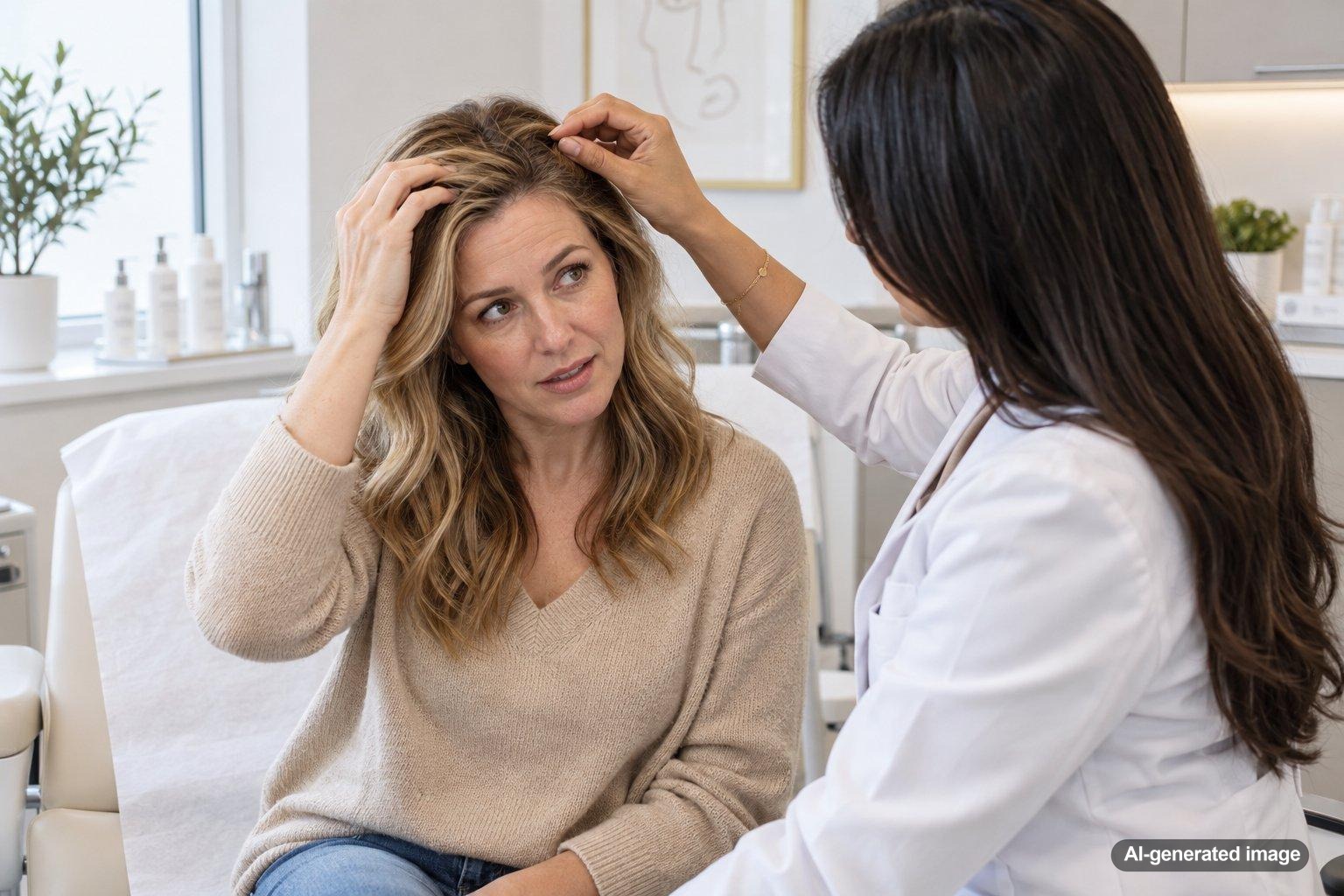
A sore or tender scalp after wearing a wig can happen for several reasons, including pressure from a tight fit, friction against the scalp, trapped heat and sweat, tension from wig clips or underlying hairstyles, and irritation from adhesives or other products. The discomfort does not automatically point to one specific problem, but recurring soreness is worth paying attention to.
In many cases, simple changes to fit, wear time, scalp care, and attachment methods may help reduce irritation. If tenderness keeps returning, becomes severe, or comes with visible skin changes or hair loss, a dermatologist can evaluate what is happening and help you decide what to do next.
Quick answer
- A wig that is too tight can create pressure and tenderness along the hairline, temples, or other contact points.
- Friction, heat, sweat, clips, combs, and tight styles underneath the wig may contribute to soreness.
- Adhesives, removers, cleansers, or wig materials may irritate sensitive scalp skin.
- Giving the scalp breaks and adjusting the fit or attachment method may help when discomfort is mild.
- Persistent pain, broken skin, significant redness, drainage, or noticeable hair loss should be evaluated by a dermatologist.
Why can a wig make your scalp feel sore?
Wigs place material, pressure, and sometimes attachment hardware directly against the scalp for extended periods. If the fit is snug or the same areas receive pressure day after day, the scalp can become tender. The discomfort may be most noticeable around the hairline, behind the ears, at the temples, or wherever clips and combs rest.
The hairstyle underneath also matters. Tight braids, ponytails, cornrows, or other styles can create tension before the wig is even added. Combining that tension with a secure wig cap, clips, or adhesive can make the scalp feel especially sensitive.
Common reasons for scalp soreness after wearing a wig
- A tight wig or wig cap: Excess pressure can make the scalp feel tender, achy, or uncomfortable after several hours.
- Friction: Repeated rubbing from the cap, lace, clips, or wig base may irritate the scalp and hairline.
- Heat and sweat: Warm weather, exercise, and long wear times can increase moisture beneath a wig, which may make already sensitive skin feel uncomfortable.
- Clips and combs: Attachment points can concentrate pressure on small areas of the scalp.
- Tight hairstyles underneath: Braids or other styles that pull on the hair may increase tenderness when worn beneath a wig.
- Adhesives and removers: Some people are sensitive to products used to secure or remove wigs, particularly when they are applied repeatedly near the hairline.
- Product buildup: Residue from styling products, oils, adhesives, or cleansers may make the scalp feel irritated or uncomfortable.
What can you do at home?
Start by reducing anything that creates obvious pressure or pulling. A wig should feel secure without causing pain, throbbing, or a strong pressure sensation. If the wig feels tight, consider having the fit adjusted rather than trying to tolerate the discomfort.
- Take regular breaks from wig wear when practical.
- Avoid overly tight braids, ponytails, or other high-tension styles underneath the wig.
- Reposition or reduce the use of clips and combs if they are pressing on tender areas.
- Keep the scalp clean using products that are appropriate for your skin and hair needs.
- Allow the scalp and wig base to dry thoroughly after sweating or cleansing.
- Use adhesive and remover products according to their directions and stop using a product if it repeatedly causes irritation.
- Avoid scratching, picking, or aggressively rubbing a sore scalp.
If the scalp is already irritated, simplifying your routine for a short period may be more comfortable than adding multiple new products. Persistent or worsening symptoms deserve professional evaluation rather than repeated trial and error.
Could the wig be contributing to hair loss?
Repeated pulling, pressure, and friction can place stress on the hair and hairline. This is especially relevant when a wig is combined with tight underlying styles or attachment methods that repeatedly pull on the same areas.
If you notice increasing breakage, thinning around the hairline, small areas of reduced density, or tenderness that accompanies hair loss, a dermatologist can examine the scalp and hair more closely. Early evaluation can be useful because several different scalp and hair concerns can look similar without an in-person examination.
What professional options are available?
A dermatologist can examine the scalp for signs of irritation, inflammation, hair breakage, or other changes that may help explain the soreness. The next step depends on what is found during the evaluation.
Professional guidance may include changes to wig fit or attachment habits, adjustments to scalp and hair-care routines, or medical treatment when a specific scalp condition is identified. Prescription therapies, when appropriate, should be selected after an evaluation rather than chosen based on symptoms alone.
When should you see a dermatologist?
Consider scheduling an evaluation if scalp soreness is persistent, keeps returning, or is getting worse despite changing your wig routine. It is also worth getting checked if you notice:
- Significant redness or swelling
- Open, crusted, or draining areas
- Intense itching, burning, or pain
- Noticeable thinning, breakage, or patches of hair loss
- Symptoms that continue even when you are not wearing the wig
- A reaction that appears after using an adhesive, remover, or other scalp product
A dermatologist can help separate simple pressure or friction from other scalp concerns that may need different care.
FAQ
Is it normal for a wig to make my scalp sore?
Mild discomfort can occur if a wig is too tight, worn for a long period, or attached with clips or other pressure points. Pain should not be treated as something you simply have to tolerate. Repeated soreness is a reason to reassess the fit and attachment method.
Can a wig cap cause scalp tenderness?
Yes. A cap that is tight, rough, or worn for long periods may contribute to pressure, friction, or heat buildup. Trying a better fit or a different cap material may be helpful.
Can wig glue irritate the scalp?
Adhesives and removers can irritate some people’s skin, especially with repeated exposure. If soreness, redness, itching, or burning consistently follows use of a particular product, stop using it and consider having the area evaluated.
Should I stop wearing my wig if my scalp hurts?
If the wig is causing pain, giving the scalp a break and identifying the source of pressure or irritation is reasonable. Continuing to wear something that is clearly painful may make the area more uncomfortable.
What if my scalp is sore even after I remove the wig?
Temporary tenderness can linger after pressure is removed, but ongoing soreness may deserve a closer look. If discomfort persists, recurs frequently, or comes with skin changes or hair loss, a dermatologist can evaluate the scalp.
Ready to get help?
Schedule an appointment or send a message and our team will get back to you.
Prefer to call? 954-666-3736
This article is for educational purposes and is not medical advice. For diagnosis and personalized treatment, please book an appointment with a board-certified dermatologist.
