

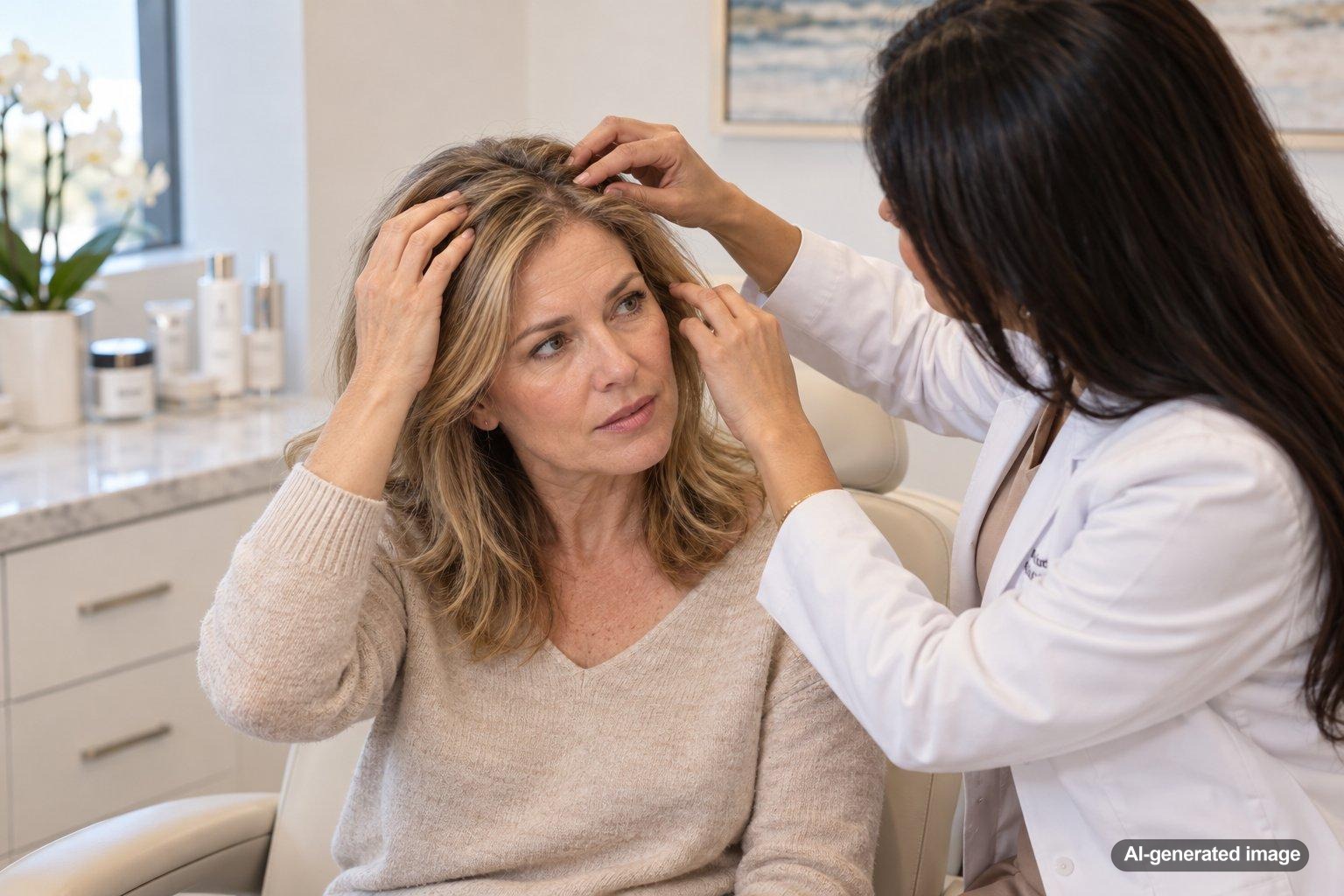
Scalp pain without a visible rash can be surprisingly uncomfortable, especially when something as ordinary as brushing your hair, resting your head on a pillow, or touching one small area causes tenderness. The discomfort may feel like soreness, burning, tingling, or sensitivity around the hair roots, even though the skin appears completely normal. Several factors can contribute, including tension from hairstyles, irritation from hair products, heightened nerve sensitivity, or discomfort associated with the neck and surrounding muscles.
The important distinction is that a scalp can feel painful without showing obvious signs of inflammation. Sometimes the problem begins at the skin surface, while other times the sensation involves nerves that supply the scalp. Understanding how the pain feels, where it occurs, and what triggers it can help determine whether gentle changes in your routine are reasonable or whether a professional examination would be more appropriate.
Quick Answer: Why Can Your Scalp Hurt Without a Rash?
- Nerve sensitivity: Scalp dysesthesia can cause burning, tenderness, tingling, or discomfort even when the scalp looks normal.
- Hair tension: Tight ponytails, braids, extensions, or other styles that pull on the hair can leave the scalp feeling sore.
- Product irritation: Shampoos, fragrances, styling products, and chemical treatments may cause discomfort before visible changes become apparent.
- Head and neck factors: Muscle tension, certain headache conditions, and irritated nerves can contribute to scalp tenderness.
- Subtle skin conditions: Inflammation or irritation may be difficult to see beneath the hair, particularly when changes are mild or localized.
No single symptom identifies the cause. Persistent, worsening, or unexplained scalp pain deserves an examination, even when there is no obvious rash.
What Does Scalp Pain Without a Rash Mean?
The scalp contains skin, hair follicles, blood vessels, sensory nerves, and connective tissue. These structures can produce uncomfortable sensations for different reasons. Visible redness or bumps are not necessary for pain to occur, particularly when the nerves responsible for detecting touch and discomfort become unusually sensitive.
Some people experience tenderness only when pressure is applied. Others notice a burning or crawling sensation that occurs without touching the scalp at all. Pain may affect one small spot, follow a broader area near the back of the head, or seem to involve the entire scalp.
A useful term is scalp dysesthesia, which describes abnormal or unpleasant sensations affecting the scalp. Symptoms can include burning, itching, stinging, tingling, or pain despite little or no visible skin abnormality. Scalp dysesthesia is a descriptive clinical term rather than proof of one particular underlying cause.
Another term, allodynia, refers to pain produced by a stimulus that would not ordinarily be painful, such as light brushing or gentle contact. This can occur in several neurological and pain-related conditions, including some migraine episodes. A clinician can help determine whether the pattern fits a nerve-related problem or something affecting the skin itself.
Common Causes of Scalp Tenderness Without Visible Redness
1. Scalp Dysesthesia and Heightened Nerve Sensitivity
Scalp dysesthesia is an important consideration when the scalp feels painful, hot, irritated, or unusually sensitive despite a normal appearance. The sensations may occur intermittently or remain present for longer periods.
Possible contributing factors include irritation of sensory nerves, certain neurological conditions, and problems involving the neck or surrounding tissues. Stress may influence how intensely some people perceive discomfort, but it should not automatically be assumed to be the underlying cause.
Because dysesthesia describes a pattern of sensations rather than a single disease, an evaluation may involve both scalp examination and questions about neck symptoms, headaches, or other neurological complaints.
2. Tight Hairstyles and Repeated Pulling
A tightly secured ponytail, bun, braid, or hair extension can place repeated tension on the scalp. Some people notice soreness when the hairstyle is removed or when the hair is moved in a different direction.
Discomfort may be concentrated near the hairline, crown, or another area where pulling is greatest. Repeated tension can also contribute to traction-related hair problems over time.
If discomfort seems connected to a particular hairstyle, allowing the hair to rest in a loose, low-tension style may help clarify whether pulling is contributing to the problem.
3. Irritation From Hair Products or Treatments
Scalp discomfort sometimes begins after using a new shampoo, conditioner, hair dye, dry shampoo, fragrance, or styling treatment. Ingredients that irritate the skin may produce stinging, itching, or burning, with visible changes that are subtle, delayed, or difficult to detect beneath the hair.
Repeated exposure to products that remove too much oil or leave irritating residue can also make an already sensitive scalp more uncomfortable.
Pay attention to whether the symptoms began after a specific product or salon service. A dermatologist can distinguish simple irritation from a possible allergic contact reaction when the history suggests that possibility.
4. Occipital Neuralgia and Neck-Related Discomfort
Occipital neuralgia involves irritation of nerves that travel from the upper neck toward the scalp. It may cause shooting, stabbing, burning, or electric-like pain, often near the back of the head. In some cases, even light contact with the affected area feels uncomfortable.
Neck muscle tightness or an injury may contribute to irritation of these nerves. However, scalp tenderness alone is not enough to identify occipital neuralgia, and several headache disorders can produce overlapping symptoms.
If the pain begins in the neck, travels upward, or resembles brief electrical shocks, a medical evaluation may be appropriate. Depending on the findings, assessment by a primary care clinician or neurologist may be helpful.
5. Migraine-Associated Touch Sensitivity
Some people with migraines develop increased sensitivity to ordinary touch during a headache episode. Brushing the hair, wearing glasses, or resting the head against a pillow may become uncomfortable.
This type of sensitivity may occur because the nervous system processes otherwise harmless sensations as painful. The scalp may look entirely normal.
If tenderness repeatedly appears alongside headaches, nausea, or sensitivity to light or sound, discussing the pattern with a qualified healthcare professional can help identify whether a headache condition is involved.
6. Subtle Scalp Inflammation
Not every inflammatory scalp condition produces immediately noticeable changes. Hair can conceal mild scaling, localized irritation, or small affected areas.
Conditions such as scalp psoriasis may cause burning or soreness, although visible scaling or patches are more typical. Other inflammatory skin conditions can also produce tenderness or irritation. If discomfort is accompanied by new flakes, persistent itching, crusting, or hair shedding, a careful scalp examination becomes particularly useful.
A painful scalp without a rash should not automatically be attributed to psoriasis or another inflammatory disorder. The absence of visible findings makes a detailed history and examination especially important.
How the Location and Type of Pain Can Offer Clues
The way scalp discomfort behaves can provide useful information, although these patterns cannot establish a diagnosis on their own.
- Pain mainly when moving the hair: May suggest pulling, traction, or heightened sensitivity around the scalp.
- Burning or tingling without touching the scalp: May suggest dysesthesia or another sensory nerve-related process.
- Sharp pain traveling from the upper neck: Can occur with irritated occipital nerves or certain headache conditions.
- Diffuse tenderness during a headache: May be associated with migraine-related touch sensitivity.
- Discomfort after a new hair product: Makes irritation or an ingredient-related reaction worth considering.
- Tenderness with new hair shedding or thinning: Warrants examination for a scalp or hair follicle disorder.
It can help to observe whether symptoms affect one side or both sides, whether they occur spontaneously, and whether anything consistently improves or worsens the sensation.
What Can You Do at Home for a Sensitive Scalp?
When tenderness is mild, recent, and not accompanied by concerning symptoms, a few conservative changes may reduce avoidable irritation while you monitor the pattern.
- Release hair tension: Avoid tight hairstyles, heavy extensions, and accessories that pull on the scalp.
- Simplify your hair-care routine: Consider temporarily setting aside newly introduced or strongly fragranced products that seem to provoke discomfort.
- Wash gently: Use lukewarm water, avoid vigorous scratching, and massage shampoo lightly with your fingertips rather than your nails.
- Reduce mechanical irritation: Be gentle when brushing, detangling, or towel-drying your hair.
- Avoid unnecessary chemical exposure: Consider postponing coloring, relaxing, or other potentially irritating treatments while your scalp is unusually sensitive.
- Notice neck-related triggers: Observe whether prolonged positions, muscle tension, or head movements seem connected to the discomfort.
- Keep a brief symptom record: Note where it hurts, how it feels, when it began, and whether headaches, hair shedding, or product changes occur alongside it.
A cool, clean compress may feel soothing to some people. Avoid extreme temperatures, aggressive scalp massage, essential oils, and repeated application of unfamiliar treatments to a painful area.
These measures are intended to minimize irritation, not to treat an undiagnosed medical condition. If discomfort persists or increases, continuing to experiment with products can delay a more useful evaluation.
How Can a Dermatologist Evaluate Scalp Pain With No Rash?
A dermatology appointment typically begins with a review of when the tenderness started, how it feels, and whether it is associated with hair loss, itching, headache symptoms, recent treatments, or changes in hair-care products.
The dermatologist may separate the hair to inspect the scalp closely, assess the distribution of any thinning or shedding, and look for subtle inflammation, scale, broken hairs, or other findings that are not easily visible at home.
When a skin condition is suspected, additional evaluation may be considered based on the examination. This can include selected testing for particular scalp disorders or assessment for contact allergy when clinically appropriate.
If the skin appears healthy but the symptoms suggest a nerve-related condition, your clinician may recommend coordination with a primary care professional, neurologist, or another specialist.
Professional care depends on the underlying cause. Options may range from adjusting hair-care practices or using condition-specific topical therapies to evaluating nerve pain or headache-related symptoms. Prescription treatments should be selected only after an appropriate clinical assessment.
When Should You See a Dermatologist?
Consider scheduling a dermatology evaluation when scalp tenderness is unexplained, keeps returning, interferes with normal grooming or sleep, or does not improve after removing obvious sources of irritation.
Additional reasons to seek an examination include:
- New or increasing hair shedding, thinning, or localized hair loss.
- Persistent burning, stinging, or tenderness in the same area.
- Scaling, crusting, drainage, bumps, or skin changes that appear after the pain begins.
- Symptoms following a hair-coloring product, chemical treatment, or other potential irritant.
- Discomfort that appears to be progressing without a clear explanation.
Some symptoms require more urgent medical attention. Seek prompt evaluation for a new painful blistering eruption, especially near the eye or forehead, or for scalp pain accompanied by fever or rapidly increasing swelling. Sudden severe headache, new weakness, confusion, visual loss, or difficulty speaking warrants emergency medical care.
Adults over age 50 who develop new scalp tenderness together with a new headache, jaw pain while chewing, or visual symptoms should seek urgent medical assessment because these symptoms can sometimes signal a serious blood vessel condition. Sudden visual changes require emergency attention.
These warning signs do not mean that ordinary scalp tenderness is usually dangerous. They help distinguish isolated sensitivity from situations where timely evaluation is important.
Frequently Asked Questions
Why does my scalp hurt when I touch my hair but the skin looks normal?
Touching or moving your hair can transmit pressure to the scalp. When the area is irritated or unusually sensitive, that movement may feel painful even without a visible rash. Hairstyle tension, scalp dysesthesia, and headache-related sensitivity are among the possibilities. Persistent symptoms should be evaluated rather than attributed to one cause without examination.
Can stress make my scalp feel sore?
Stress may influence muscle tension, headache patterns, and the perception of uncomfortable sensations. However, stress is not the only possible explanation for scalp soreness. Persistent pain deserves appropriate assessment even when symptoms seem to worsen during stressful periods.
Is scalp dysesthesia the same as a scalp infection?
No. Scalp dysesthesia describes abnormal sensations, such as burning, tingling, or tenderness, that may occur without visible skin changes. An infection involves an infectious organism and may produce additional findings such as inflammation, pustules, or crusting. A clinician can determine whether the symptoms suggest either problem or another cause.
Can my scalp hurt before I notice hair loss?
Scalp discomfort and hair shedding can sometimes occur together, but pain does not necessarily predict future hair loss. Some scalp disorders involve both inflammation and changes in hair density, while many causes of tenderness do not involve hair loss at all. New or patchy shedding is a good reason to arrange a dermatology examination.
How long should scalp tenderness last before I get it checked?
There is no single safe waiting period that applies to every cause. Brief tenderness clearly associated with a tight hairstyle may improve after the tension is removed. Symptoms that persist, recur, worsen, or occur with additional changes should be assessed. Seek care sooner for severe pain or concerning accompanying symptoms.
Should I use a medicated shampoo if my scalp hurts but has no flakes?
Not necessarily. Medicated shampoos target particular scalp conditions and may not address nerve sensitivity or mechanical tension. Some ingredients can also irritate sensitive skin. Without an established reason for using one, a gentle routine and professional guidance may be more appropriate than repeatedly trying different treatments.
The Bottom Line
A scalp that hurts to the touch without a visible rash may be reacting to hair tension, irritating products, increased nerve sensitivity, headache-related changes, or a subtle scalp condition. The absence of redness does not make the discomfort imaginary, but it also does not point to a single diagnosis.
Paying attention to the location, sensation, triggers, and associated symptoms can make an evaluation more informative. When the pain is persistent or unexplained, a dermatologist can examine the scalp and help determine whether the next step involves skin-focused care or assessment of another potential cause.
Ready to get help?
Schedule an appointment or send a message and our team will get back to you.
Prefer to call? 954-666-3736
Disclaimer
This article is for educational purposes and is not medical advice. For diagnosis and personalized treatment, please book an appointment with a board-certified dermatologist.
Sources & Further Reading
- DermNet – Cutaneous dysaesthesia
- Cleveland Clinic – Occipital Neuralgia
- American Academy of Dermatology (AAD) – Scalp psoriasis: Symptoms
- American Academy of Dermatology (AAD) – 10 reasons your scalp itches and how to get relief
