

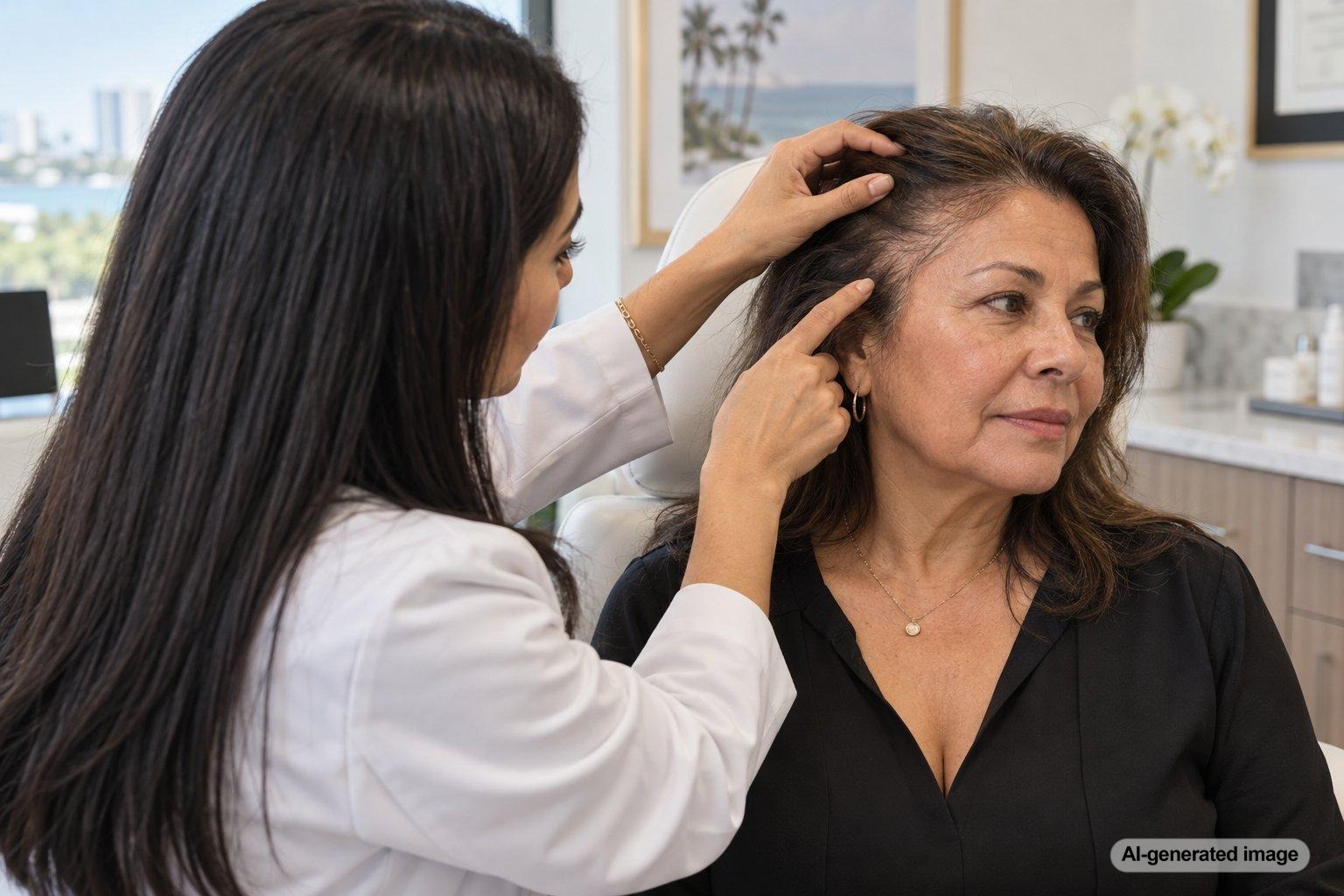
Noticing more short, uneven hairs around your temples can be frustrating, especially when the rest of your hair seems healthy. The temple area is particularly vulnerable to repeated pulling, friction, heat styling, and chemical processing. Sometimes, however, what looks like broken hair may actually reflect changes in hair growth or density that deserve a closer look.
The most useful first step is understanding whether the hair is snapping along the shaft, shedding from the root, or becoming thinner in a localized area. These changes can look similar in the mirror, but they may have different causes. A dermatologist can help distinguish everyday hair damage from conditions affecting the follicles, particularly when the change is persistent or accompanied by scalp symptoms.
Quick answer: Why does hair break more around the temples?
- Repeated tension: Tight ponytails, braids, buns, extensions, and similar styles can place extra stress on the temple hairline.
- Heat and chemical damage: Frequent flat ironing, blow-drying, coloring, or relaxing may weaken hair strands.
- Everyday friction: Repeated rubbing from headwear, accessories, or styling habits can contribute to breakage.
- Fragile hair strands: Fine, previously processed, or naturally delicate hair may break more easily with repeated manipulation.
- Changes in hair growth: Some forms of hair loss can resemble breakage, making a professional evaluation useful when the pattern is unclear.
Why the temple area is especially vulnerable
The temples sit along the edges of the hairline, where strands may be shorter, finer, and more exposed to daily styling. Hair in this area is frequently brushed backward, pulled into hairstyles, tucked behind the ears, or manipulated when arranging bangs and face-framing pieces.
When these small stresses happen repeatedly, individual strands may eventually snap. Hair near the temples may also have less surrounding hair to conceal uneven lengths, making breakage more noticeable than it would be elsewhere on the scalp.
Not every short hair is damaged, though. New hair growth can naturally create short strands around the hairline. The appearance of the hair tips, the overall density, and whether the area is changing over time can help clarify what is happening.
Common causes of hair breakage around the temples
Tight hairstyles and repeated pulling
One important possibility is repeated tension from hairstyles that pull hair away from the face. Tight ponytails, slicked-back buns, braids, and extensions can place ongoing strain on the temple area. Repeated pulling may contribute to broken strands and, in some circumstances, traction alopecia, a form of hair loss associated with tension on the follicles.
Traction alopecia may initially appear as thinning or short hairs along the hairline. Persistent tension can eventually affect follicle health, so recognizing the pattern early matters. Pain, tenderness, or a pulling sensation during styling should not be treated as a necessary part of achieving a hairstyle.
Heat styling near the face
Face-framing sections often receive extra attention during styling. Repeatedly passing a flat iron over the same small section or concentrating a hot blow-dryer near the temples may increase damage to the hair shaft.
Heat can make strands more brittle, especially when the hair has already been colored, chemically processed, or exposed to frequent mechanical styling. Breakage may become more apparent when the damaged sections are repeatedly brushed or pulled.
Coloring, relaxing, and other chemical treatments
Hair coloring, bleaching, relaxing, and certain straightening processes can change the structure and strength of the hair shaft. When treatments overlap on already processed hair, the strands may become increasingly fragile.
The delicate sections around the hairline may be particularly noticeable when damage develops because they are frequently handled and styled. Chemical treatments can also irritate the scalp in some individuals, which is a separate concern from simple shaft breakage.
Friction and frequent manipulation
Small daily habits may contribute to hair damage over time. Repeated brushing of the edges, vigorous towel drying, rubbing from tight headbands, and friction from helmets or other headwear can place additional stress on vulnerable strands.
Friction alone does not explain every case of temple breakage. However, when several sources of stress affect the same area, they may contribute to an ongoing pattern of short, uneven hairs.
Underlying hair or scalp conditions
Sometimes, the appearance of breakage is actually related to a change in hair density. Traction alopecia, certain inflammatory scalp disorders, and other forms of hair loss may produce thinning near the temples or hairline.
Some inflammatory conditions can also cause changes in scalp texture, redness, scaling, or follicular function. These findings deserve professional attention because treatment decisions depend on identifying the specific cause rather than assuming the hair simply needs more conditioning.
Is it hair breakage or actual hair loss?
Hair breakage and hair loss can overlap, but understanding the distinction can make your observations more useful.
- Hair breakage: Strands snap somewhere along their length, leaving shorter pieces that may have uneven or frayed ends.
- Hair shedding: Entire hairs are released during the hair growth cycle, often becoming noticeable during washing or brushing.
- Hair thinning: The area may appear less dense, reveal more scalp, or show progressive changes in the hairline.
- New growth: Short strands with tapered ends may represent developing hairs rather than damage, although appearance alone cannot confirm this.
A mixture of these patterns is possible. For example, someone may experience mechanical breakage while also developing a separate form of hair thinning. A dermatologist can examine the scalp and hair shafts to help distinguish these possibilities.
What can you do at home to reduce temple hair breakage?
Gentler hair care may help reduce additional mechanical damage while you observe whether the pattern changes.
- Choose lower-tension hairstyles. Consider looser ponytails, buns, and braids that do not pull tightly at the temples. Rotate styles rather than repeatedly stressing the same sections.
- Reduce direct heat exposure. Use lower heat settings when practical, avoid repeated passes over the same strands, and allow hair to air-dry when appropriate.
- Handle wet hair carefully. Wet strands can be vulnerable to stretching and breakage. Detangle gently with an appropriate comb or brush and avoid forceful pulling.
- Condition the hair lengths. A conditioner suited to your hair type may improve manageability and reduce friction during grooming, although it cannot repair every form of structural damage.
- Reconsider harsh processing. If breakage follows coloring, relaxing, or bleaching, discuss gentler options and adequate spacing between treatments with a qualified hair professional.
- Limit unnecessary friction. Avoid tight accessories, repetitive edge brushing, and vigorous towel rubbing around the hairline.
These measures focus on reducing damage to existing strands. They are not substitutes for medical evaluation when the follicles themselves may be affected.
How a dermatologist evaluates temple hair breakage
When hair changes persist, a dermatologist may begin by discussing your styling habits, chemical treatments, medical history, and the timing of the changes. They may examine the distribution of short hairs, compare hair density on both sides, and look for signs of scalp irritation or inflammation.
Magnified scalp examination, sometimes called trichoscopy, can help evaluate hair shafts and follicular openings. Additional testing may be considered when the examination suggests an underlying condition rather than routine mechanical damage.
Professional management depends on the findings. Common approaches may include reducing traction, adjusting hair-care practices, addressing an identified scalp condition, or discussing medical treatments when appropriate. Some forms of hair loss require earlier attention to reduce the risk of lasting follicular damage.
Procedures intended to support hair health are not interchangeable with treatments for every type of hair loss. At Waverly DermSpa, we offer PRFM for Hair Loss and can help you understand whether it may be appropriate.
When should you see a dermatologist?
Consider scheduling an evaluation if you notice changes that extend beyond occasional broken strands, especially when the temple area appears progressively thinner.
- The hairline is noticeably receding or one temple is becoming less dense than the other.
- You see smooth patches, widening areas of visible scalp, or persistent localized thinning.
- The scalp feels painful, tender, itchy, or unusually sensitive.
- Redness, scaling, bumps, crusting, or other visible scalp changes accompany the hair loss.
- Breakage continues despite reducing heat, tension, and chemical processing.
- You notice an abrupt increase in shedding or hair changes affecting several areas of the scalp.
Scalp pain, significant inflammation, or rapidly progressing hair loss warrants prompt professional assessment. Early evaluation is particularly important when a condition affecting the follicles is suspected.
Frequently asked questions
Why is my hair breaking at my temples but not anywhere else?
The temple area may experience more pulling, heat exposure, and manipulation than other parts of the scalp. Finer strands near the hairline can also make damage more visible. However, localized thinning can have causes unrelated to styling, so persistent changes deserve evaluation.
Can tight ponytails cause temple hair loss?
Yes. Repeated tension from tight ponytails and similar hairstyles can contribute to traction alopecia. This may begin with broken hairs or thinning along the hairline. Reducing tension is important, and a dermatologist can assess whether follicular changes have occurred.
Are short hairs around my temples always a sign of breakage?
No. Short hairs may represent new growth, naturally shorter hair, or strands that have broken. Uneven, frayed ends may suggest breakage, while changes in overall density can point toward a different issue. Visual clues alone are not always enough to determine the cause.
Will my temple hair grow back after it breaks?
If the follicle is healthy and the issue involves only shaft breakage, hair may continue growing normally from the scalp. The outcome can be different when an underlying condition affects the follicles. Recovery varies depending on the cause and whether ongoing damage is addressed.
Can stress or nutritional changes cause temple hair breakage?
Stress, nutritional deficiencies, and certain health changes can affect hair growth or shedding, but they do not necessarily cause isolated shaft breakage at the temples. A dermatologist can help assess whether a broader hair-growth issue is contributing to the pattern.
Should I use a hair-growth serum for broken temple hairs?
A hair-growth product may not address breakage caused by tension, heat, or chemical damage. Products marketed for hair growth vary in their ingredients and intended uses. Identifying whether the concern involves the hair shaft or the follicle is a more useful starting point before choosing a treatment.
Ready to get help?
Schedule an appointment or send a message and our team will get back to you.
Prefer to call? 954-666-3736
This article is for educational purposes and is not medical advice. For diagnosis and personalized treatment, please book an appointment with a board-certified dermatologist.
Sources & further reading
- American Academy of Dermatology (AAD) – Hairstyles that pull can lead to hair loss
- DermNet – Traction alopecia
