

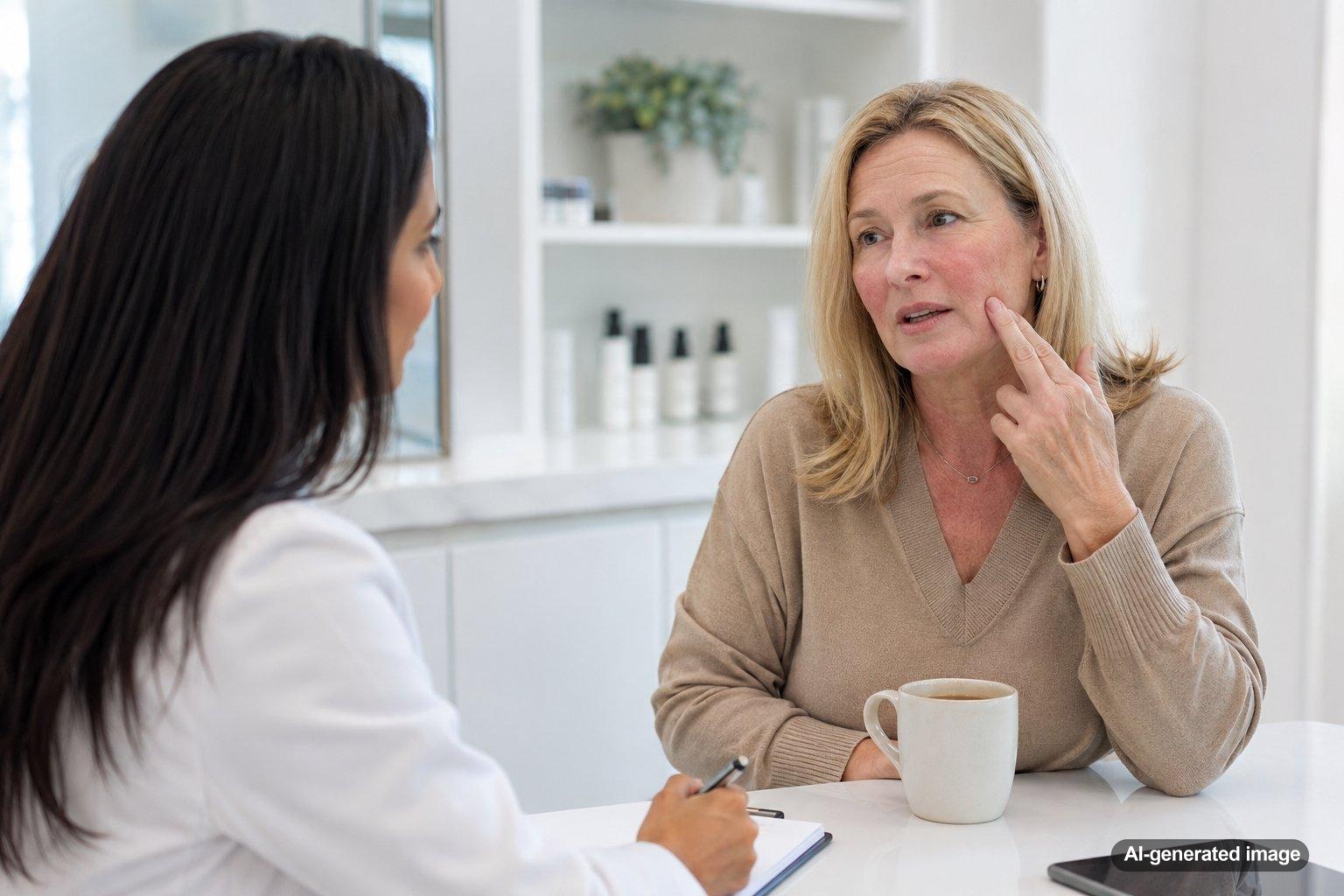
If your cheeks turn pink or red after coffee, tea, soup, or another hot drink, the simplest explanation is heat. Warm beverages can raise the temperature around the mouth and face, and in some people that warmth encourages tiny facial blood vessels to widen. The result can be a temporary flush that feels warm, visible, or slightly prickly.
For many people, this is harmless and fades on its own. For others, repeated flushing can be associated with sensitive skin, rosacea-prone skin, heat sensitivity, alcohol or spicy food triggers, or irritation from skin care products. The pattern matters: how often it happens, how long it lasts, and whether it comes with bumps, burning, eye irritation, or lasting redness.
Quick answer
- Hot drinks can make the face flush because warmth may widen facial blood vessels.
- The beverage temperature often matters more than the drink itself, although caffeine, alcohol, and spices can be additional triggers for some people.
- Rosacea-prone skin may react more easily to heat, hot beverages, sun, stress, and overheating.
- A simple trigger diary can help you notice patterns without over-restricting your routine.
- Persistent redness, burning, bumps, eye symptoms, or one-sided flushing should be evaluated by a dermatologist.
What is happening in the skin?
Facial flushing is a temporary increase in blood flow near the skin’s surface. When blood vessels widen, the skin can look pink, red, or deeper in tone depending on your natural complexion. The face is especially noticeable because the skin has a rich blood supply and is often exposed to heat, sun, wind, and skin care products.
A hot drink can act like a small heat exposure. Even before the drink changes your core body temperature, steam and warmth around the mouth, nose, and cheeks may be enough to trigger visible redness in someone who flushes easily.
Common causes or triggers
- Temperature: Hot coffee, tea, hot chocolate, soup, or steamed beverages can trigger flushing simply because they are warm.
- Rosacea-prone skin: Rosacea often includes easy flushing, persistent redness, visible vessels, acne-like bumps, stinging, or burning.
- Caffeine or alcohol: Some people notice more flushing with coffee, espresso drinks, hot cocktails, or wine, although individual triggers vary.
- Spicy add-ins: Cinnamon, chili, pepper, or spicy foods eaten with a hot drink may contribute for some people.
- Overheating: A warm room, hot weather, exercise, saunas, or sitting in the sun can make a hot beverage more likely to cause flushing.
- Sensitive or irritated skin: A disrupted skin barrier may make the face feel more reactive to heat, skin care products, or environmental changes.
What you can do at home
Small adjustments may help you understand your pattern while keeping your routine realistic.
- Let hot drinks cool for a few minutes before sipping.
- Try warm instead of very hot beverages and notice whether the flush is milder.
- Use a simple trigger diary for two to four weeks, noting drink temperature, caffeine, alcohol, spicy foods, sun exposure, exercise, stress, and skin care changes.
- Keep skin care gentle: a mild cleanser, moisturizer, and daily broad-spectrum sunscreen are often better tolerated than frequent exfoliation.
- Avoid scrubbing, harsh acids, strong retinoids, or fragranced products if your skin is already stinging or visibly irritated.
- Cool the skin gently with a fan, cool compress, or shade rather than ice directly on the face.
Professional options
If flushing is frequent, uncomfortable, or paired with lasting redness, a dermatologist can evaluate whether rosacea, irritation, medication effects, hormonal changes, or another cause may be involved. Common options may include trigger guidance, a rosacea-friendly skin care plan, prescription topical or oral medications when appropriate, and light or laser-based treatments for visible redness or vessels.
At Waverly DermSpa, we offer Excel V+ and can help you understand whether it may be appropriate.
When to see a dermatologist
It is worth booking a dermatology visit if flushing is new, worsening, long-lasting, or affecting your confidence. You should also seek medical evaluation if redness comes with acne-like bumps, burning, swelling, eye dryness or irritation, thickened skin, visible blood vessels, a rash that does not settle, or flushing that occurs mostly on one side of the face.
Because facial redness can have more than one cause, an exam is often the most efficient way to separate simple heat flushing from rosacea, irritation, allergy, medication-related flushing, or another skin concern.
FAQ
Does flushing after hot coffee mean I have rosacea?
Not necessarily. Many people flush from heat alone. Rosacea is more likely to be considered when flushing is frequent, lasts longer, or appears with persistent redness, visible vessels, bumps, burning, or eye symptoms.
Is caffeine the main reason my face turns red?
Sometimes, but not always. For many people, the temperature of the drink is the bigger trigger. Comparing iced coffee, warm coffee, and very hot coffee can help you notice whether heat, caffeine, or both seem to matter.
Can I still drink hot tea or coffee?
Often, yes. You may find that letting the drink cool, sipping slowly, choosing a smaller size, or avoiding other triggers at the same time makes flushing less noticeable.
Why does my face feel hot even after the redness fades?
Warmth, stinging, or burning can happen when the skin is reactive or the barrier is irritated. If this is recurring or uncomfortable, a dermatologist can help identify possible causes and safer skin care choices.
Should I use redness-reducing products?
Use caution. Products marketed for redness can still irritate sensitive skin, especially if they contain fragrance, exfoliating acids, or strong actives. A dermatologist can help you choose options that fit your skin.
Ready to get help?
Schedule an appointment or send a message and our team will get back to you.
Prefer to call? 954-666-3736
This article is for educational purposes and is not medical advice. For diagnosis and personalized treatment, please book an appointment with a board-certified dermatologist.
Sources & further reading
- American Academy of Dermatology (AAD) – Triggers could be causing your rosacea flare-ups
- Mayo Clinic – Rosacea – Symptoms and causes
- DermNet – Flushing
