

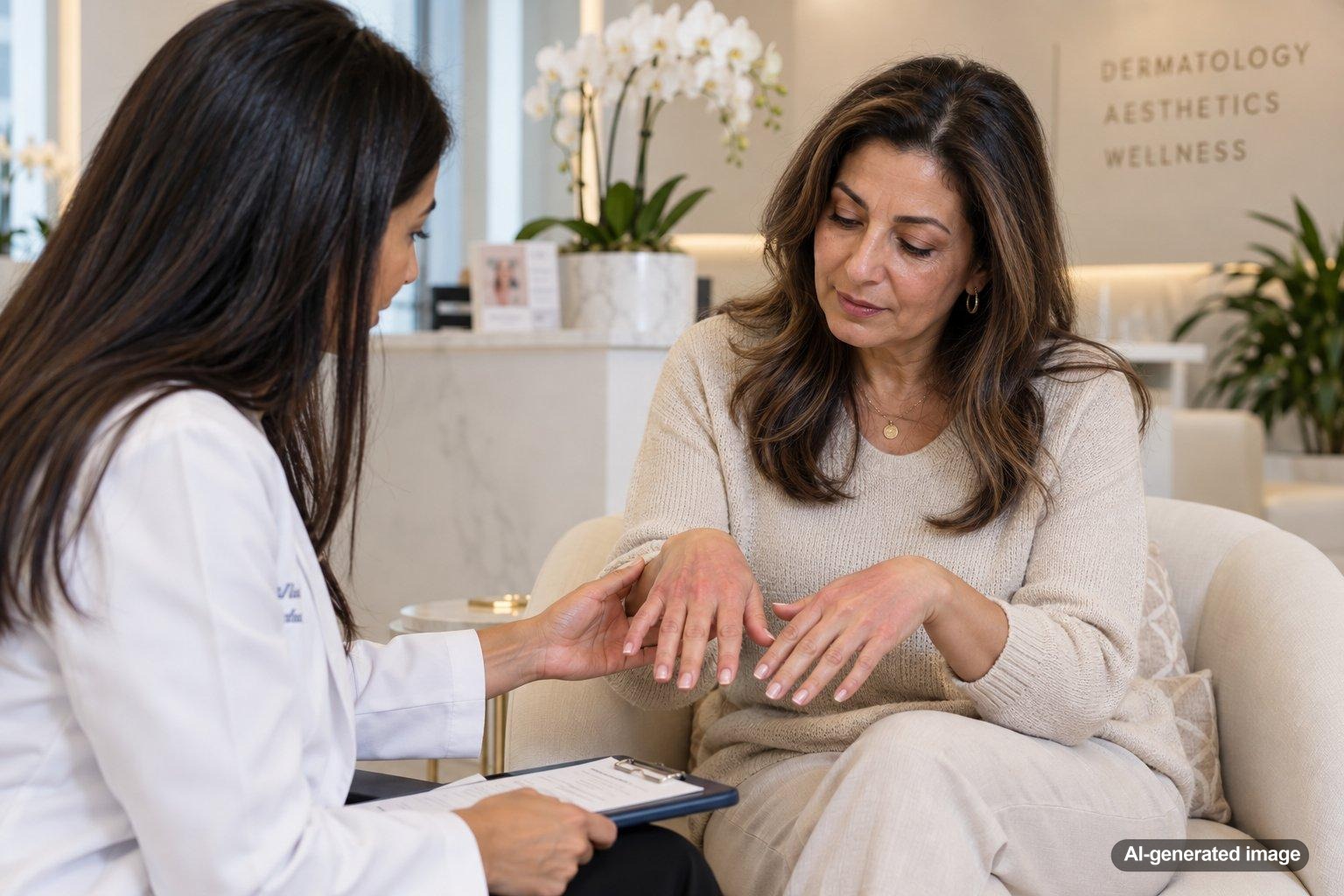
Finishing a workout with red, hot, itchy hands can feel surprisingly uncomfortable, especially when the rest of your body seems perfectly fine. You might notice warmth spreading across your palms, an urge to scratch your fingers, or redness that becomes more noticeable after running, lifting weights, or exercising outdoors.
Several processes may explain these symptoms. Exercise increases circulation and body temperature, which can temporarily make the skin appear flushed. Sweat, friction, and changes in skin sensitivity may contribute to itching. In some people, exercise or rising body temperature can also trigger hives. The appearance of the skin, timing of symptoms, and presence of swelling or other reactions help distinguish these possibilities. Understanding those differences can make it easier to decide whether simple adjustments are reasonable or a dermatology evaluation would be helpful.
Quick Answer: Why Do Hands Become Red, Hot, and Itchy During Exercise?
- Increased blood flow: Exercise widens blood vessels near the skin to help regulate temperature, sometimes producing noticeable redness and warmth.
- Heat and sweating: Rising body temperature and perspiration may contribute to itching or skin irritation.
- Exercise-related hives: Some people develop temporary itchy welts when their body temperature rises or they begin sweating.
- Friction and contact irritation: Exercise equipment, gloves, cleaning products, and sweat trapped against the skin may aggravate sensitive hands.
- Other medical causes: Persistent burning, unusual color changes, significant swelling, or recurring symptoms may warrant evaluation for conditions beyond ordinary exercise-related flushing.
What Happens to the Skin on Your Hands During Exercise?
Exercise changes how the body manages circulation and temperature. As your muscles work, your body produces heat. To help release some of that heat, blood vessels near the skin may widen, a process called vasodilation.
Increased blood flow can make the hands look pink or red and feel warmer than usual. This response varies depending on exercise intensity, ambient temperature, and individual circulation patterns.
Itching is a separate sensation, however. Although warmth and flushing may occur during a normal workout, pronounced itching suggests that additional factors could be involved, including irritation, hives, or a heightened response to heat.
The distinction matters because redness without a rash is different from redness accompanied by raised welts, swelling, or persistent burning.
Common Reasons Your Hands May Feel Red, Hot, and Itchy
1. Increased Circulation and Temporary Flushing
During physical activity, changes in circulation can make blood vessels near the skin more visible. This may produce a warm, flushed appearance on the palms and backs of the hands.
If the redness develops gradually during activity, is not associated with raised bumps or significant swelling, and fades after cooling down, temporary flushing may be part of the explanation.
However, blood flow changes alone do not explain every case of itching. Repeated episodes of intense discomfort deserve a closer look.
2. Cholinergic Urticaria: Hives Triggered by Rising Body Temperature
Cholinergic urticaria is a form of inducible hives associated with increased body temperature and sweating. Potential triggers include exercise, hot environments, emotional stress, and hot showers.
These episodes often involve small, raised, itchy bumps surrounded by redness. Some people describe a prickling, stinging, or burning sensation. Symptoms can develop within minutes of becoming warm and may improve as the body cools.
Cholinergic urticaria more typically affects areas such as the chest, neck, and upper body, although the limbs may also be involved. Isolated itching of the palms is not its classic presentation, so red, itchy hands alone should not be assumed to represent this condition.
A dermatologist can assess whether the appearance and timing of symptoms suggest inducible hives or another process.
3. Sweat, Friction, and Skin Irritation
Sweat can contribute to irritation when it remains trapped against the skin or mixes with substances already present on the hands.
For example, gripping exercise equipment repeatedly can create friction. Wearing workout gloves may increase heat and moisture against the skin. Residue from cleaning sprays, soaps, fragrances, or other products may also aggravate sensitive skin.
Unlike temporary flushing, irritation may leave the skin feeling rough, dry, or uncomfortable even after body temperature returns to normal.
4. Contact Dermatitis
Contact dermatitis occurs when substances touching the skin cause irritation or an allergic skin reaction. Exercise may make an existing problem more noticeable through heat, sweating, and friction.
Potential exposures include rubber or other glove materials, fragrances, equipment-cleaning products, and ingredients in skin care products.
Clues include persistent redness, dryness, scaling, cracking, or an itchy rash in areas that repeatedly touch a particular material. Allergic contact dermatitis can develop hours or days after exposure rather than immediately during exercise.
If symptoms consistently occur after using the same equipment or product, that pattern may be worth discussing with a dermatologist.
5. Heat-Associated Burning or Other Circulation-Related Symptoms
Not every episode of red, burning hands is a simple skin reaction. Certain conditions affecting small blood vessels or nerves can also produce unusual warmth, redness, and discomfort.
One example is erythromelalgia, an uncommon condition characterized by episodes of redness, increased skin temperature, and burning pain, often involving the feet but sometimes the hands. Heat or exertion may trigger symptoms.
This does not mean that burning hands after exercise indicate erythromelalgia. It is simply one reason persistent, painful, or recurrent episodes should not automatically be dismissed as ordinary workout flushing.
How Can You Tell Whether It Is Flushing, Irritation, or Hives?
A few observations can help a clinician understand the pattern.
- Flat redness and warmth: May suggest temporary vascular flushing, particularly when it fades as body temperature decreases.
- Raised, itchy welts: May indicate hives, especially when individual spots appear and disappear relatively quickly.
- Dryness, scaling, or cracking: May suggest irritation or contact dermatitis rather than a brief circulation change.
- Intense burning pain: May warrant assessment for a vascular, neurologic, or other medical cause.
- Swelling, widespread hives, or symptoms elsewhere in the body: May indicate a more significant reaction requiring prompt medical attention.
These patterns are useful clues rather than diagnostic rules. Different conditions can overlap, and the appearance of the skin may change before an appointment.
What Can You Do at Home When Your Hands Itch After a Workout?
For mild, brief symptoms without concerning associated reactions, conservative measures may help reduce discomfort while you observe the pattern.
- Cool down gradually: Move to a cooler environment and allow your body temperature to return toward baseline.
- Use a cool, damp cloth: Gentle cooling may soothe irritated skin. Avoid applying ice directly or using extreme temperatures.
- Wash away sweat gently: Use lukewarm water and a mild, fragrance-free cleanser when needed.
- Moisturize regularly: A fragrance-free moisturizer can support the skin barrier, particularly if dryness contributes to irritation.
- Review workout exposures: Consider whether particular gloves, grips, cleaning products, or topical products coincide with symptoms.
- Keep a symptom record: Note the exercise, environmental temperature, onset, duration, visible skin changes, and any symptoms beyond the hands.
If an episode includes severe symptoms, do not attempt to exercise through it. Recurrent suspected exercise-triggered hives should be medically evaluated before relying on changes in workout intensity as a management strategy.
Does Exercising in Fort Lauderdale’s Heat Make It Worse?
It can. South Florida’s warm, humid climate may make it harder for perspiration to evaporate efficiently, which can increase the body’s heat burden during outdoor activity.
For someone sensitive to increased body temperature, exercising in hot conditions may make flushing, sweating, or certain heat-associated skin reactions more noticeable.
This can be especially relevant for seasonal residents and visitors who are accustomed to exercising in cooler climates. A workout that feels comfortable elsewhere may create a different level of heat exposure in Fort Lauderdale.
Choosing cooler conditions and avoiding unnecessary overheating may help some people, but these adjustments should not replace medical assessment when symptoms are recurrent, painful, or accompanied by hives.
How Can a Dermatologist Evaluate Exercise-Related Hand Redness?
A dermatologist typically begins by reviewing the appearance and timing of symptoms, relevant exposures, and whether similar reactions happen with other activities, such as hot showers or time spent outdoors.
Photographs taken during an episode can be particularly useful because temporary redness or hives may disappear before the examination.
Depending on the findings, professional options may include:
- Evaluation for inducible urticaria: Reviewing trigger patterns and determining whether further assessment is appropriate.
- Assessment for contact dermatitis: Investigating products and materials that may be irritating the skin, with patch testing considered in selected cases.
- Skin barrier care: Developing a gentle cleansing and moisturizing approach when dryness or irritation contributes to symptoms.
- Medication discussions: Considering clinician-guided treatment options, such as antihistamines for certain types of hives, when medically appropriate.
- Referral when needed: Coordinating additional evaluation if the pattern suggests a vascular, neurologic, allergic, or other medical condition.
The most appropriate approach depends on the underlying cause. Treatments intended for one type of reaction may not be useful for another.
When Should You See a Dermatologist?
Consider scheduling an evaluation if your hands repeatedly become red, hot, and itchy during exercise, particularly when the episodes are becoming more frequent or disruptive.
Other reasons to seek medical assessment include:
- Visible welts or swelling that repeatedly appear with physical activity.
- Persistent redness, dryness, scaling, or cracking after workouts.
- Pronounced burning pain rather than mild warmth or itching.
- Symptoms that occur with progressively less activity or without an obvious trigger.
- Color changes, numbness, or unusual sensitivity affecting the fingers.
- Reactions that do not improve after stopping exercise and cooling down.
Seek emergency medical care immediately if exercise-related itching or hives occur with difficulty breathing, throat or tongue swelling, fainting, marked dizziness, or sudden severe weakness. These can be signs of a serious systemic allergic reaction, including exercise-induced anaphylaxis. Do not wait for a routine dermatology appointment if these symptoms occur.
Frequently Asked Questions
Is it normal for my palms to turn red after running?
Temporary redness can occur as circulation and body temperature change during physical activity. If the redness is accompanied by significant itching, swelling, pain, or recurring welts, another explanation may need to be considered.
Why do my hands itch during exercise even when I do not see a rash?
Heat, sweat, friction, or skin sensitivity may contribute to itching without an obvious visible eruption. Some skin changes are also subtle or temporary. Persistent or recurring itching without a rash is worth discussing with a clinician.
Can exercise cause an allergic reaction?
Exercise can trigger certain forms of hives, and, less commonly, a serious systemic allergic reaction. Some exercise-associated reactions may involve additional factors, including particular foods or medications. Breathing difficulty, throat swelling, or faintness during exercise requires emergency care.
Can dehydration cause red, itchy hands after a workout?
Dehydration can affect the body’s ability to manage heat, but red, itchy hands are not a specific sign of dehydration. Heat exposure, skin irritation, and other triggers may be more directly relevant. Maintaining appropriate hydration is important during exercise, but it does not replace evaluation of recurring skin symptoms.
Should I stop working out if my hands become itchy?
Stop the activity when symptoms begin, particularly if this is a new or unexplained reaction. If symptoms recur or include hives, swelling, or burning pain, seek medical guidance before resuming the triggering activity. Any breathing difficulty, faintness, or throat swelling requires emergency medical attention.
Can a dermatologist help if my hands only react during exercise?
Yes. A dermatologist can evaluate temporary symptoms even if the skin looks normal during the appointment. Photographs, a description of the reaction, and information about workout conditions can help identify patterns and guide next steps.
Understanding Your Skin’s Response to Exercise
Red, hot, itchy hands after exercise can reflect several different processes, ranging from temporary flushing to skin irritation or exercise-associated hives. The key details are whether the skin develops raised welts, how long symptoms persist, whether the reaction is painful, and whether anything else happens beyond the hands.
At Waverly DermSpa in Fort Lauderdale, Dr. Maryann Mikhail, MD, can evaluate recurring skin symptoms and help clarify whether a dermatologic condition may be contributing. A thoughtful evaluation can guide appropriate next steps without assuming every exercise-related reaction has the same cause.
Ready to get help?
Schedule an appointment or send a message and our team will get back to you.
Prefer to call? 954-666-3736
This article is for educational purposes and is not medical advice. For diagnosis and personalized treatment, please book an appointment with a board-certified dermatologist.
Sources & Further Reading
- DermNet – Cholinergic urticaria
- American Academy of Dermatology (AAD) – Hives: Causes
- American Academy of Dermatology (AAD) – Hives: How to get relief at home
