

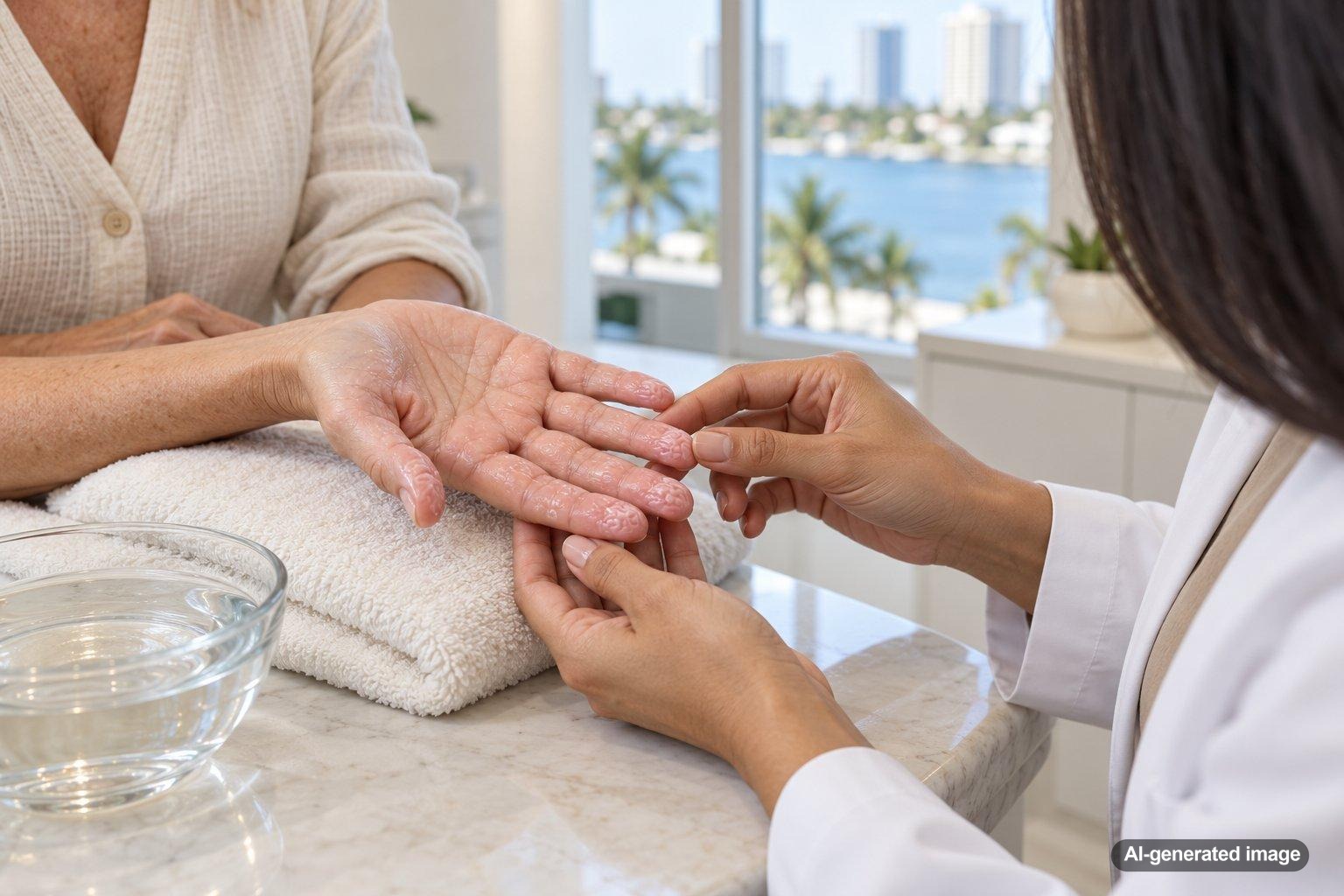
If your fingertips start looking pruney almost as soon as you wash your hands, step into the shower, or enter a swimming pool, you may wonder why your skin reacts so quickly. Finger wrinkling is a normal response to water exposure, but the speed and appearance of the changes can vary. When wrinkles develop unusually quickly, especially alongside temporary white bumps, swelling, or discomfort, dermatologists may consider a condition called aquagenic wrinkling of the palms.
Most water-related fingertip wrinkling is harmless and resolves after the skin dries. However, pronounced changes within just a few minutes can occasionally provide clues about sweating, skin conditions, medication effects, or other health factors. Understanding the difference between ordinary pruning and an exaggerated response can help you decide whether a dermatology evaluation is worthwhile.
Quick Answer: Why Do Fingertips Wrinkle So Quickly?
- Normal nerve responses: Water exposure activates an automatic nervous system response that changes blood flow in the fingers and produces wrinkles.
- Individual variation: Some people notice visible creases sooner than others, and water temperature or exposure conditions may influence the experience.
- Aquagenic wrinkling: An uncommon condition can cause pronounced wrinkling, whitish bumps, or swelling within minutes of water contact.
- Associated factors: Excessive sweating, certain inflammatory skin conditions, and some medications may be relevant.
- Persistent or uncomfortable symptoms: A dermatologist can assess whether the pattern represents ordinary pruning or something that deserves further evaluation.
What Actually Happens When Fingers Wrinkle in Water?
It is easy to assume that fingertips wrinkle simply because the skin absorbs water and swells. Although water interacts with the outer skin layer, the familiar pruning pattern involves a more sophisticated process.
When fingers remain wet, the autonomic nervous system, which regulates many involuntary functions, helps trigger narrowing of small blood vessels beneath the skin. This change in the underlying tissue contributes to the distinctive ridges and grooves visible on the fingertips.
Researchers have proposed that these grooves may improve handling of wet objects by helping move water away from contact surfaces. This remains an explanation of the possible functional advantage rather than a reason to assume that every person’s fingers should wrinkle at the same speed.
Normal wrinkling generally develops after several minutes of immersion and fades as the hands dry. The exact timing varies, so noticing wrinkles sooner than someone else does not automatically indicate a medical problem.
What Is Aquagenic Wrinkling of the Palms?
Aquagenic wrinkling of the palms is an uncommon skin condition characterized by an exaggerated reaction to water. It may also be described as aquagenic palmoplantar keratoderma or aquagenic acrokeratoderma.
Instead of developing only ordinary fingertip creases after prolonged soaking, someone with this condition may notice prominent wrinkles, transient swelling, and small whitish or translucent bumps after relatively brief exposure. The palms are commonly affected, although the fingertips may also show changes.
Symptoms can develop within approximately three minutes in some affected individuals, but timing alone is not sufficient for diagnosis. The skin may feel tight, itchy, tender, or uncomfortable. Changes typically improve after drying, although the time required varies.
The underlying mechanism is not completely understood. Researchers suspect that altered salt and water movement within the skin, together with sweat gland activity, may contribute to the reaction.
Importantly, having fingertips that wrinkle quickly does not necessarily mean you have aquagenic wrinkling. A dermatologist evaluates the complete pattern, including the skin’s appearance, associated symptoms, and relevant medical history.
Common Factors That May Contribute to Rapid Wrinkling
There is not one universal explanation for unusually fast fingertip pruning. Several factors may influence how the skin responds to water or help explain an exaggerated reaction.
- Normal physiological variation: The speed and visibility of ordinary wrinkling can differ between individuals.
- Water exposure conditions: Warm water and repeated immersion may make skin changes more noticeable.
- Excessive sweating: Hyperhidrosis, or unusually heavy sweating, has been associated with aquagenic wrinkling of the palms.
- Underlying skin conditions: Atopic dermatitis and other conditions affecting the skin may coexist with unusual responses to moisture.
- Certain medications: Some reported cases of aquagenic wrinkling have been associated with medications, including particular anti-inflammatory drugs.
- Inherited factors: Aquagenic wrinkling has a recognized association with cystic fibrosis and the cystic fibrosis carrier state.
These are possible associations, not a checklist for self-diagnosis. The presence of one factor does not establish the cause, and many cases of ordinary fingertip pruning require no treatment.
Does Rapid Finger Wrinkling Mean You Have Cystic Fibrosis?
No. Rapid fingertip wrinkling by itself does not establish a diagnosis of cystic fibrosis.
However, the distinction between ordinary water-induced wrinkles and clinically recognizable aquagenic wrinkling matters. The latter has been documented more frequently among people with cystic fibrosis and individuals who carry certain variants of the CFTR gene.
The CFTR protein helps regulate the movement of salt and water across cell surfaces. Changes in its function may influence how skin responds to water exposure.
If a dermatologist suspects aquagenic wrinkling of the palms, they may recommend discussing the finding with an appropriate medical clinician. Depending on personal history, family history, and other findings, further assessment could include consideration of sweat chloride testing or genetic evaluation.
This association should be interpreted carefully. Most people who occasionally notice quickly wrinkled fingers should not assume that they have cystic fibrosis or carry a related gene variant. The appearance of the skin and the broader clinical context are essential.
What Can You Do at Home?
If your fingers wrinkle rapidly but the changes are mild and disappear after drying, a few conservative habits may help support skin comfort.
- Use comfortably warm water: Choose lukewarm rather than very hot water for routine handwashing and bathing.
- Cleanse gently: Select a mild, fragrance-free hand cleanser when possible, particularly if your skin feels dry or sensitive.
- Moisturize after washing: Apply a fragrance-free hand cream after gently drying your hands to support the skin barrier.
- Limit unnecessary soaking: Reduce prolonged water exposure when it consistently produces discomfort.
- Consider protective gloves: Appropriate gloves may help during prolonged wet household tasks, although trapped moisture or sweating can sometimes worsen irritation.
- Document the pattern: If changes are striking, note how quickly they appear, whether white bumps develop, and how long the skin takes to return to its usual appearance.
These measures are intended to support general skin comfort. Moisturizers and protective gloves do not necessarily prevent true aquagenic wrinkling, which may require a different management approach.
Avoid experimenting with strong antiperspirants, harsh drying products, or medicated creams on irritated fingertips without professional guidance.
How Can a Dermatologist Evaluate and Manage It?
A dermatologist can begin by examining the skin and discussing the circumstances surrounding the wrinkling. Useful details include when the changes first appeared, whether both hands are involved, and whether symptoms occur with brief exposure or only after longer soaking.
Photographs taken during a typical episode may be helpful because the skin can return to normal before an office appointment. In selected cases, a clinician may observe how the hands respond to water under controlled conditions.
If aquagenic wrinkling is suspected, management depends on symptom severity and associated findings. Options discussed in dermatology literature include prescription-strength topical antiperspirants and, in selected cases involving excessive sweating, other clinician-directed treatments.
These approaches are not appropriate for everyone, and they may cause irritation or carry other considerations. A dermatologist can help determine whether treatment is necessary and whether additional medical evaluation would be useful.
For mild, asymptomatic wrinkling that represents a normal physiological response, reassurance may be all that is needed.
When Should You See a Dermatologist?
Consider scheduling a dermatology evaluation if your fingertips or palms develop an unusually pronounced reaction after brief water exposure, particularly when the pattern is new or becoming more noticeable.
Additional reasons to seek an assessment include:
- White or translucent bumps that repeatedly appear with water contact.
- Swelling, itching, burning, pain, or significant tightness during episodes.
- Skin changes that persist well beyond drying or begin occurring without water exposure.
- Cracking, persistent redness, or other signs of ongoing skin irritation.
- Excessive sweating that affects daily activities.
- A family history or other medical findings that make evaluation for an associated condition appropriate.
Seek prompt medical attention for sudden significant color changes, marked pain, numbness, or persistent loss of sensation in the fingers, particularly when these symptoms occur independently of ordinary water exposure.
For residents of Fort Lauderdale and seasonal visitors spending time in South Florida, changes may become especially noticeable during frequent swimming, showers, and other water activities. The setting itself does not establish a diagnosis, but recurrent symptoms are worth discussing if they affect comfort or raise concerns.
Frequently Asked Questions
Is it normal for fingers to wrinkle after only a few minutes?
Yes, visible wrinkling can begin after a relatively short period in water. Timing varies, and mild pruning that disappears after drying is usually a normal response. Pronounced swelling, white bumps, or discomfort developing very quickly may warrant further evaluation.
Can dehydration make my fingertips wrinkle immediately?
Water-induced fingertip wrinkling is primarily associated with an autonomic nervous system response, rather than being a reliable indicator of hydration status. Wrinkling speed alone cannot determine whether someone is dehydrated.
Why do my fingertips turn white and wrinkly after washing my hands?
Water can temporarily alter the appearance of the skin’s outer layer. However, recurring whitish bumps, swelling, and exaggerated wrinkling after brief contact may suggest aquagenic wrinkling of the palms. A dermatologist can assess the distinction.
Does hot water make fingertip wrinkles appear faster?
Warm or hot water may make water-related skin changes more noticeable and can contribute to dryness or irritation. If hot water repeatedly leaves your hands uncomfortable, switching to lukewarm water is a reasonable skin-care adjustment.
Can aquagenic wrinkling of the palms go away on its own?
The visible changes typically fade after the hands dry, but recurrent episodes may continue. The longer-term course varies according to the individual and any associated factors. A dermatologist can discuss management when symptoms are bothersome.
Should I see a dermatologist if only my fingertips wrinkle quickly?
Not necessarily. Mild, temporary pruning without other symptoms is commonly harmless. An evaluation becomes more useful if the reaction is unusually intense, occurs after very brief exposure, causes discomfort, or represents a significant change from your usual pattern.
Ready to get help?
Schedule an appointment or send a message and our team will get back to you.
Prefer to call? 954-666-3736
Disclaimer
This article is for educational purposes and is not medical advice. For diagnosis and personalized treatment, please book an appointment with a board-certified dermatologist.
Sources & further reading
- DermNet – Aquagenic wrinkling of the palms
- Cleveland Clinic – Why Water Turns Fingers and Toes Into Prunes
