

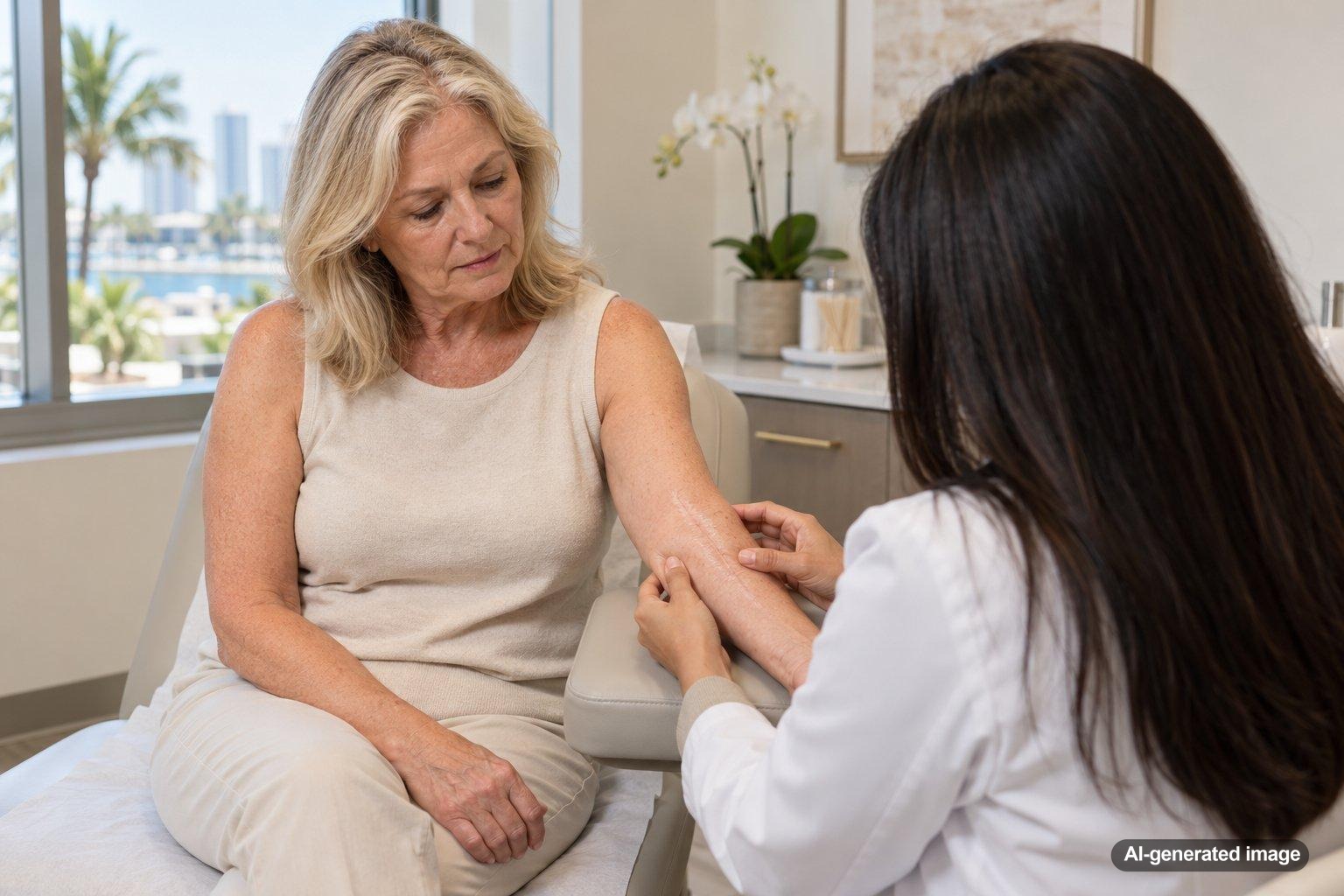
An old scar may look completely healed but still become itchy when you sweat. This can happen because scar tissue differs from the surrounding skin in its structure, nerve sensitivity, and ability to respond to moisture and friction. Heat, perspiration, and clothing that rubs against the area may make those differences more noticeable.
In Fort Lauderdale’s warm, humid climate, a scar that rarely bothers you indoors might suddenly itch during a walk, workout, or afternoon outdoors. Although occasional itching can occur long after an injury has healed, a persistent or changing sensation deserves attention. Understanding why scars respond differently to sweat can help you care for the area comfortably and recognize when a dermatologist should take a closer look.
Quick Answer: Why Does Sweat Make an Old Scar Itch?
- Scar tissue is structurally different from normal skin. Changes in collagen, skin appendages, and nerve function may contribute to sensitivity.
- Sweat and moisture can increase irritation. Perspiration, especially when trapped beneath clothing, may make sensitive skin feel itchy.
- Heat can intensify the sensation. Warm skin and increased sweating may make an existing itch more noticeable.
- Friction adds another trigger. Waistbands, bra straps, athletic clothing, and repetitive movement may irritate a healed scar.
- New or persistent symptoms need evaluation. Increasing redness, swelling, tenderness, drainage, or changes in the scar should not automatically be attributed to sweat.
What Happens to Skin When a Scar Forms?
When skin heals after an injury, surgery, burn, or other disruption, the body produces collagen to repair damaged tissue. The repaired area may look and feel different because its collagen arrangement and other structural features do not precisely match the original skin.
Depending on the depth of the injury, scar tissue may also contain fewer functioning sweat glands, hair follicles, and oil glands than the surrounding skin. These differences can affect how the area responds to heat, moisture, and dryness.
Nerves are another important part of the process. Nerve endings can be injured during the original event and may change as the tissue heals. Some scars become less sensitive, while others develop lingering itching, tingling, tenderness, or unusual sensations.
Even a scar that formed many years ago can remain more sensitive than nearby skin. Its age alone does not necessarily determine whether it can itch.
How Can Sweat Trigger Itching in an Old Scar?
Moisture Can Irritate Sensitive Skin
Sweat helps regulate body temperature, but prolonged moisture can be uncomfortable on sensitive skin. When perspiration remains against a scar, particularly beneath tight clothing, the surrounding skin may become irritated.
Although mature scar tissue may have fewer functioning sweat glands, sweat produced by neighboring skin can still collect across the scar’s surface. A scar does not need to produce much sweat itself to become uncomfortable during physical activity.
Heat Can Make Existing Itching More Noticeable
Heat changes blood flow and sensory activity in the skin. For some people, becoming warm may amplify an itching sensation that is barely noticeable at cooler temperatures.
This helps explain why a scar might feel comfortable in an air-conditioned office but become itchy during an outdoor activity. The change does not necessarily mean that the scar has reopened or that the original injury is returning.
Clothing Friction Can Add to the Irritation
Sweating often happens alongside movement. A shirt seam, waistband, sports bra, or other garment may repeatedly rub against a scar while the skin is warm and damp.
This combination of moisture and friction can be particularly uncomfortable when a scar is raised, firm, or located over a joint. Even ordinary activities may produce repeated contact with the same sensitive area.
Changes in Nerve Sensitivity May Play a Role
Scar-related itching is not always caused by irritation on the skin’s surface. Changes involving sensory nerve endings may also contribute to the sensation.
Some people describe a deep itch, prickling, tingling, or brief stinging sensation within a healed scar. These symptoms can overlap, and their description alone cannot establish the cause.
Are Certain Types of Scars More Likely to Itch?
Different scars can behave differently, even on the same person. The location, thickness, original injury, surrounding skin, and individual healing response all matter.
- Flat, mature scars: These may occasionally itch during sweating, friction, or changes in temperature, despite appearing fully healed.
- Hypertrophic scars: Raised scars that remain within the original injury boundaries may be associated with itching, tightness, or tenderness.
- Keloid scars: These raised growths extend beyond the original injury boundaries and may cause itching or other uncomfortable sensations.
- Burn scars: Depending on the injury, changes in nerves, sweat glands, and skin flexibility may contribute to sensitivity.
- Surgical scars: Their response may vary with scar location, nerve changes, movement, and contact with clothing.
A dermatologist can distinguish among these patterns and evaluate whether an itchy area reflects ordinary scar sensitivity or another skin concern.
What Can You Do at Home When an Old Scar Itches After Sweating?
When a scar is fully healed and the itching is mild, a few conservative habits may help reduce everyday irritation.
Gently Remove Sweat After Activity
Rinsing the area with lukewarm water or gently cleansing with a mild, fragrance-free product may help remove accumulated sweat and other irritants. Pat the skin dry rather than rubbing it vigorously.
Repeated aggressive washing or scrubbing can make sensitive skin more uncomfortable.
Choose Breathable, Comfortable Clothing
Consider whether a particular seam, waistband, or garment consistently touches the scar. Softer fabrics, a more comfortable fit, or moisture-wicking clothing may reduce prolonged contact with sweat and friction.
When possible, change out of damp exercise clothing after physical activity.
Support the Skin Barrier
A simple fragrance-free moisturizer may help reduce dryness and improve comfort around a fully healed scar. Apply it gently, particularly after bathing, when appropriate for your skin.
Avoid applying products to an open or draining area without medical guidance. Products containing fragrance, strong exfoliating ingredients, or other potential irritants may make sensitive skin feel worse.
Try a Cool Compress
A clean, cool compress may provide temporary comfort when the area feels warm or itchy. Avoid direct ice contact and extreme temperatures, particularly if sensation in the scar is reduced.
Avoid Scratching
Scratching can further irritate the skin and may damage its surface. If the itch is difficult to ignore, gentle cooling or reducing clothing friction may be more comfortable than repeated scratching.
These approaches are intended for minor irritation. Persistent itching, unusual sensations, or visible changes should be assessed rather than repeatedly managed with new over-the-counter products.
Can an Old Scar Become Itchy Even Without Sweating?
Yes. Sweat is only one possible trigger for scar-related itching. Other factors may include dry skin, changes in temperature, pressure, repetitive movement, and ongoing sensitivity associated with scar tissue.
Sometimes an itchy area that appears to involve a scar is actually related to the surrounding skin. Contact irritation from clothing or personal care products, for example, can affect skin near an old injury.
The timing and pattern of symptoms can provide useful information. If itching occurs only after a workout and improves after the skin cools and dries, heat and perspiration may be contributing. If the area itches constantly, changes appearance, or becomes increasingly uncomfortable, another explanation may need consideration.
What Professional Options Are Available for Persistent Scar Itching?
Professional care begins with understanding the scar itself. A dermatologist may examine its texture, thickness, color, location, and surrounding skin while asking about the original injury and how the symptoms have changed.
Depending on the findings, management may focus on reducing surface irritation, addressing an elevated scar, or evaluating unusual sensory symptoms.
For certain raised scars, dermatologists may discuss options such as silicone-based scar care, targeted injections, or selected procedural treatments. Some scars may be considered for laser-based approaches after an individualized assessment. These treatments have different goals, limitations, and potential risks, and they are not necessary or appropriate for every itchy scar.
When symptoms suggest significant nerve-related sensitivity or another medical issue, a dermatologist may recommend a different evaluation or management approach.
At Waverly DermSpa, we offer laser treatments and can help you understand whether they may be appropriate.
When Should You See a Dermatologist About an Itchy Scar?
Occasional mild itching during sweating may not indicate a serious problem. However, the following changes warrant professional attention:
- Itching that is persistent, worsening, or disrupting sleep or daily activities.
- A scar that becomes increasingly raised, firm, thick, or painful.
- New redness, warmth, swelling, crusting, or unexplained irritation.
- Drainage, bleeding, skin breakdown, or an area that does not heal.
- A new bump, sore, or changing pigmented area within or near the scar.
- Burning, tingling, numbness, or other unusual sensory symptoms that are becoming more prominent.
Prompt medical assessment is particularly important if the area becomes rapidly more red, swollen, or painful, or if drainage occurs with fever or other signs of illness.
Not every new symptom in the location of an old scar is caused by the scar itself. An examination can help distinguish scar-related discomfort from a separate skin condition.
Frequently Asked Questions
Is it normal for a scar to itch years after it healed?
It can happen. Long-standing changes in scar structure and sensory nerves may contribute to occasional itching years after healing. However, new, persistent, or worsening itching should not automatically be considered normal.
Does sweat damage old scar tissue?
Ordinary sweating generally does not mean that a mature, fully healed scar is being damaged. However, prolonged moisture and friction may irritate the skin over or around it. Broken skin, drainage, or increasing inflammation requires a different level of attention.
Why does my surgical scar itch when I exercise?
Exercise combines several potential triggers: rising body temperature, perspiration, movement, and clothing friction. Any of these may make a sensitive surgical scar more noticeable. A dermatologist can evaluate symptoms that are persistent, painful, or changing.
Why does my scar itch more in Florida’s humidity?
Humid conditions can make it harder for sweat to evaporate efficiently. Skin may remain damp longer, and clothing may cling to areas that are already sensitive. This can increase irritation around some healed scars.
Will moisturizing an old scar stop the itching?
Moisturizing may help when dryness or surface irritation contributes to the discomfort. It may be less helpful when itching is associated with changes in nerve sensitivity or a thickened scar. Persistent symptoms deserve individualized evaluation.
Can an itchy scar be a sign of something other than scar tissue?
Yes. Skin irritation, a separate growth, or another dermatologic condition can occur within or near an old scar. Changes in color, shape, texture, tenderness, or healing should be examined rather than assumed to be part of ordinary scar behavior.
Understanding Your Scar’s Response to Heat and Sweat
An old scar that itches during sweating is often responding to a combination of heat, moisture, friction, and the lasting differences between scar tissue and surrounding skin. For mild, occasional discomfort, gentle cleansing, breathable clothing, and basic skin care may improve comfort.
If the itching becomes frequent, changes noticeably, or occurs alongside other symptoms, a dermatology evaluation can help identify the cause and clarify which options, if any, may be useful.
Ready to get help?
Schedule an appointment or send a message and our team will get back to you.
Prefer to call? 954-666-3736
Disclaimer
This article is for educational purposes and is not medical advice. For diagnosis and personalized treatment, please book an appointment with a board-certified dermatologist.
