

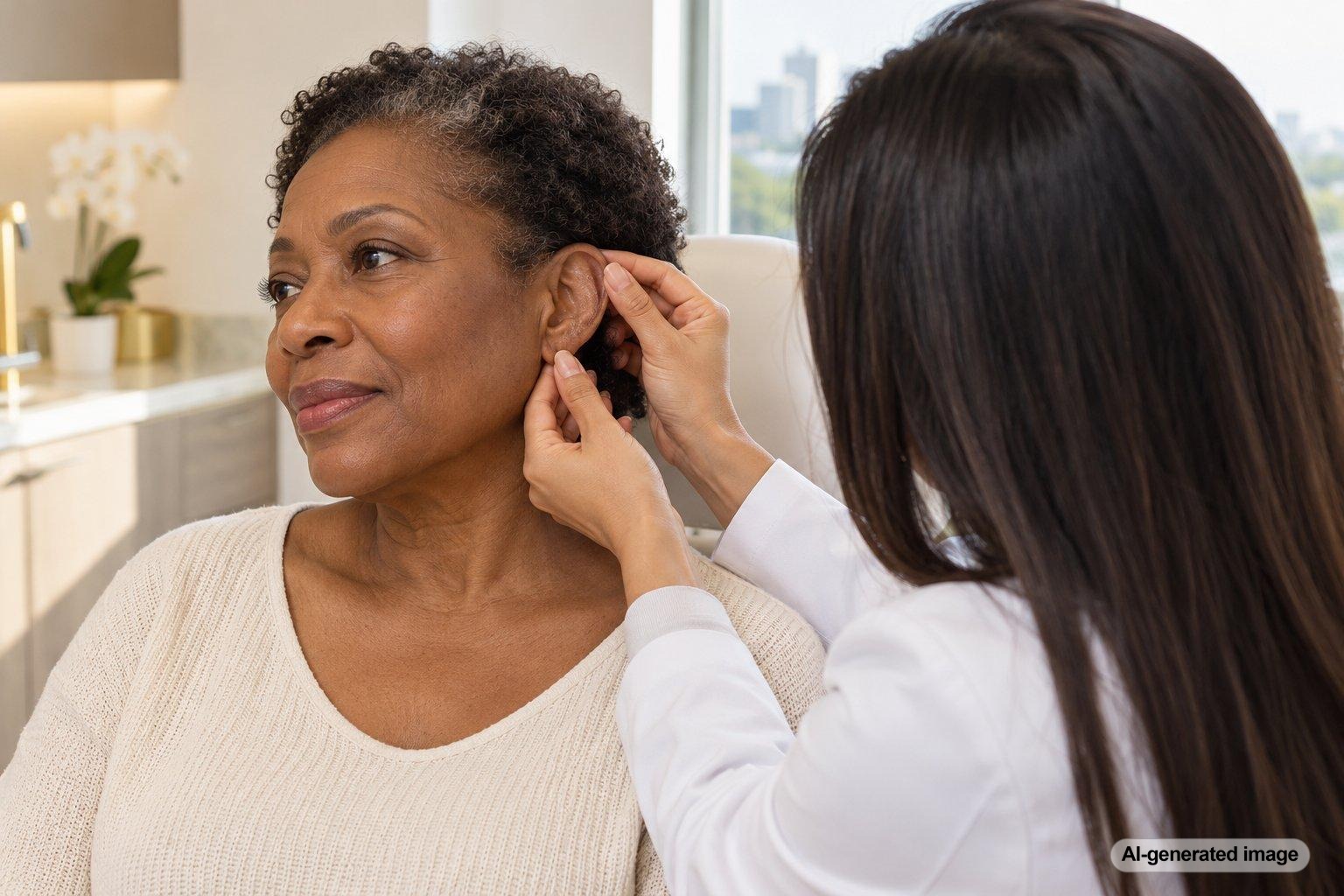
The skin inside your outer ear may peel because of dryness, irritation, eczema, seborrheic dermatitis, or another inflammatory skin condition. The curved area surrounding the entrance to your ear canal has delicate skin that can become flaky when its protective barrier is disrupted. Although occasional peeling may be minor, repeated flaking can indicate an underlying condition that deserves attention.
You might notice small white flakes collecting in the folds of your ear, a rough patch that returns after washing, or peeling accompanied by itching. Sometimes the skin looks normal apart from the flakes. Other times, there may be redness, discoloration, tenderness, or crusting. Understanding where the peeling occurs and what other symptoms accompany it can help distinguish everyday irritation from a concern that warrants a dermatology evaluation.
Quick Answer: Why Is the Skin Inside My Outer Ear Peeling?
- Dryness: Low humidity, frequent washing, and harsh cleansers can leave the outer ear flaky.
- Eczema: Inflammation may cause recurring dryness, itching, and peeling in the ear folds or near the canal opening.
- Seborrheic dermatitis: This condition can produce flaky or slightly greasy scales around the ears, especially when dandruff is also present.
- Contact dermatitis: Earbuds, headphones, hair products, jewelry, or skincare ingredients may irritate the skin or trigger an allergic reaction.
- Psoriasis or ear canal inflammation: Persistent scaling, thicker patches, pain, or drainage may point to a condition requiring professional assessment.
What Is Actually Peeling Inside the Outer Ear?
The visible outer ear, also called the auricle or pinna, includes several ridges and recessed areas. The bowl-shaped depression leading toward the ear canal is called the concha. This is often the area people mean when they describe peeling skin inside the outer ear.
Like skin elsewhere on the body, the outer ear continually sheds surface cells. Normally, this process is nearly invisible. When the skin becomes irritated, inflamed, or unusually dry, those cells may collect into noticeable flakes or scales.
The location matters. Flaking on the visible ear folds is not necessarily the same problem as peeling deeper inside the ear canal. The canal contains specialized skin and protective earwax, and symptoms extending into that space may require examination with an otoscope.
Flaky skin should also be distinguished from dry earwax. Earwax can form pale or brownish fragments, while peeling skin often appears as thin scales attached to or shedding from the skin surface. Appearance alone cannot reliably establish the cause.
Common Causes of Peeling Skin Inside the Outer Ear
1. Dry Skin and a Weakened Skin Barrier
Ordinary dryness is one possible explanation for fine, powdery flakes that occur without significant redness or discomfort. The outer ear is exposed to environmental changes, water, cleansing products, and friction, all of which may affect its protective barrier.
Frequent hot showers, aggressive cleaning, and products containing irritating fragrances can contribute to dryness. Air conditioning and changes in humidity may also affect sensitive skin, including among people moving between humid South Florida weather and drier indoor or seasonal environments.
When dryness is the main factor, the skin may feel mildly tight or rough rather than intensely itchy. However, persistent peeling should not automatically be attributed to dry skin.
2. Ear Eczema
Eczema is a common reason for itchy, flaky skin around the ears. It can involve the visible outer ear, the folds behind the ear, and sometimes the entrance to or lining of the ear canal.
People with eczema may notice recurring patches of dryness, scaling, discoloration, or irritation. Scratching can further damage the skin barrier and make the affected area more uncomfortable.
Ear eczema may occur alongside eczema elsewhere on the body, but it can also be especially noticeable around the ears. A dermatologist can evaluate the distribution and appearance of the inflammation to help determine whether eczema is involved.
3. Seborrheic Dermatitis
Seborrheic dermatitis is another frequent cause of scaling around the ears. It tends to affect areas with greater oil gland activity, including the scalp, eyebrows, sides of the nose, and ears.
Its flakes may appear white or yellowish and can have a slightly greasy texture. Some people notice scaling in the folds of the outer ear or behind the ear at the same time they experience dandruff.
Seborrheic dermatitis is associated with an inflammatory response involving naturally occurring skin yeast, among other factors. It is not simply a sign of poor hygiene.
Because seborrheic dermatitis and eczema can look similar, professional evaluation may be helpful when symptoms repeatedly return.
4. Irritant or Allergic Contact Dermatitis
The outer ear comes into contact with more products and materials than many people realize. Shampoo, conditioner, styling products, perfume, sunscreen, facial cleansers, and topical products can reach the ear folds during daily routines.
Earbuds and headphones may add friction, pressure, trapped moisture, or exposure to materials that irritate sensitive skin. Earrings containing certain metals can also trigger allergic contact dermatitis, particularly when the surrounding skin is affected.
Irritant contact dermatitis develops when exposure directly disrupts the skin barrier. Allergic contact dermatitis involves an immune reaction to a particular substance. Both can cause peeling, itching, and inflammation, but their management may differ.
If peeling begins after introducing a new product or accessory, that timing is worth mentioning during an evaluation.
5. Psoriasis
Psoriasis can affect the ears, particularly when it also involves the scalp. It may produce more defined patches with relatively thick, adherent scaling.
Some people experience itching or discomfort, while others primarily notice persistent flaky patches. Psoriasis can resemble eczema or seborrheic dermatitis, and these conditions can sometimes overlap.
The appearance of the skin inside the ear alone is not enough to confirm psoriasis. A dermatologist may examine the scalp, elbows, knees, nails, and other areas for additional clues.
6. Inflammation or Infection of the Ear Canal
Sometimes peeling near the ear opening accompanies inflammation extending into the ear canal. Otitis externa, often called swimmer’s ear when associated with infection, can involve itching, scaling, swelling, pain, or drainage.
Not every case of ear canal inflammation is caused by an infection. Dermatologic conditions and contact reactions may also affect the canal lining. However, new pain, discharge, swelling, or hearing changes deserve medical attention rather than attempts at self-treatment.
Why Does the Peeling Keep Coming Back?
Recurring peeling often means the underlying trigger has not been addressed or that an inflammatory skin condition is experiencing repeated flares.
For example, someone may repeatedly remove visible flakes while continuing to use the same irritating cleanser. Another person may moisturize the skin temporarily but have persistent seborrheic dermatitis that requires a different approach.
Repeated rubbing, picking, or inserting cleaning tools into the ear can also perpetuate irritation. Removing flakes may make the area look smoother briefly without resolving the reason they developed.
A useful observation is whether the peeling occurs alongside scalp dandruff, after wearing earbuds, following hair treatments, or during seasonal changes. These patterns are not diagnostic, but they can provide valuable context.
What Can You Do at Home for Mild Outer Ear Peeling?
If the peeling is limited to the visible outer ear and there are no concerning symptoms, gentle skin care may help reduce unnecessary irritation.
- Clean gently: Wash the visible outer ear with lukewarm water and a mild, fragrance-free cleanser when needed. Avoid vigorous scrubbing.
- Pat the area dry: After bathing, gently dry the accessible ear folds without rubbing or inserting anything into the canal.
- Support the skin barrier: A small amount of plain, fragrance-free moisturizer may be appropriate for intact skin on the visible outer ear. Do not place creams or ointments inside the ear canal unless a clinician recommends them.
- Review product exposure: Consider whether hair sprays, shampoos, perfumes, or skincare products may be reaching the irritated area.
- Reduce friction: Take a break from accessories that appear to aggravate the skin, including earbuds or headphones.
- Leave flakes alone: Avoid peeling, scraping, or picking at attached skin, which can cause additional irritation.
Do not use cotton swabs, fingernails, exfoliating tools, or other objects to clean deep inside the ear. Avoid putting alcohol, peroxide, essential oils, or household remedies into an irritated ear canal. These approaches can worsen irritation and may be unsafe in certain ear conditions.
Over-the-counter steroid creams should not be used inside the ear canal without medical guidance. Treatment choices depend on the location and cause of the peeling, as well as whether the ear canal or eardrum may be involved.
How Can a Dermatologist Evaluate Peeling Ear Skin?
A dermatologist can examine the visible outer ear and surrounding skin to look for patterns consistent with eczema, seborrheic dermatitis, psoriasis, or contact dermatitis.
The evaluation may include questions about itching, pain, scalp symptoms, personal care products, ear accessories, prior skin conditions, and how long the peeling has been present.
Depending on the findings, professional options may include:
- Skin barrier care: Recommendations for gentle cleansing, moisturizers, and reducing irritation.
- Anti-inflammatory treatment: Carefully selected topical therapies when an inflammatory skin condition is identified.
- Antifungal approaches: Treatment considerations when seborrheic dermatitis or a fungal condition is involved.
- Contact allergy evaluation: Review of potential exposures and, when appropriate, patch testing.
- Additional examination or referral: Assessment by an appropriate ear specialist if symptoms suggest involvement deeper in the canal.
The best approach depends on the diagnosis. A product that helps ordinary dryness may not adequately address psoriasis, infection, or allergic contact dermatitis.
When Should You See a Dermatologist?
Consider scheduling a dermatology evaluation when peeling persists, repeatedly returns, spreads beyond the original area, or is accompanied by significant itching, cracking, or inflammation.
It is especially important to have a persistent, localized scaly patch examined if it develops a sore, bleeds, forms a recurring crust, or changes in appearance. The external ear receives sun exposure, and not every persistent scaly lesion is eczema or dry skin.
Seek prompt medical evaluation if you develop increasing ear pain, swelling, warmth, pus-like drainage, fever, or a new change in hearing. Severe pain, rapidly worsening symptoms, or suspected infection in someone with diabetes or a weakened immune system warrants urgent assessment.
A dermatologist can assess skin conditions affecting the visible ear, while a primary care clinician or ear, nose, and throat specialist may be needed when symptoms involve the ear canal or hearing.
Frequently Asked Questions
Why does the inside of my outer ear peel but not itch?
Peeling without itching may be associated with simple dryness, mild irritation, or certain inflammatory skin conditions. Itching is common with eczema but is not required for every cause of scaling. Persistent flakes without other symptoms can still merit evaluation.
Is peeling skin inside the outer ear the same as earwax?
No. Earwax is a protective substance produced in the ear canal, while peeling skin consists of surface skin cells. Dry earwax and skin flakes can sometimes look similar, especially near the canal opening. A clinician can help distinguish them if the source is unclear.
Can dandruff cause flaky skin inside my ears?
Yes. Seborrheic dermatitis, which commonly causes dandruff, can also affect the folds of the ears and the skin behind them. Flaking in both the scalp and outer ears may suggest a related inflammatory process, although it does not establish a diagnosis.
Can earbuds make the skin inside my outer ear peel?
Earbuds may contribute to peeling through friction, pressure, trapped moisture, or contact with irritating or allergenic materials. If symptoms appear after prolonged earbud use, consider reducing exposure and discussing the pattern with a dermatologist if it continues.
Should I put petroleum jelly inside my ear for peeling skin?
A small amount of a plain moisturizer may help some dry patches on the visible outer ear, but products should not be inserted into the ear canal without clinician guidance. If the skin is painful, draining, or significantly inflamed, seek an evaluation before applying treatments.
Can peeling ear skin be a sign of something serious?
Most causes of flaky outer ear skin are inflammatory or irritation-related, but persistent sores, bleeding, changing lesions, significant pain, drainage, or hearing changes deserve professional attention. An examination can help determine whether the problem involves the skin, the ear canal, or another condition.
The Bottom Line
Peeling skin inside the outer ear can have several explanations, from temporary dryness to eczema, seborrheic dermatitis, contact reactions, or psoriasis. The most useful clues are the exact location, whether itching or discomfort is present, and whether the problem keeps returning.
Gentle care can reduce avoidable irritation, but persistent or changing symptoms should not be managed by repeatedly removing flakes. A dermatologist can help identify the cause and recommend an approach appropriate for the delicate skin around your ear.
Ready to get help?
Schedule an appointment or send a message and our team will get back to you.
Prefer to call? 954-666-3736
This article is for educational purposes and is not medical advice. For diagnosis and personalized treatment, please book an appointment with a board-certified dermatologist.
Sources & Further Reading
- Cleveland Clinic – Ear Eczema: Symptoms, Causes & Treatment
- DermNet – Otitis externa
- DermNet – Ear skin problems
- DermNet – Psoriasis
