

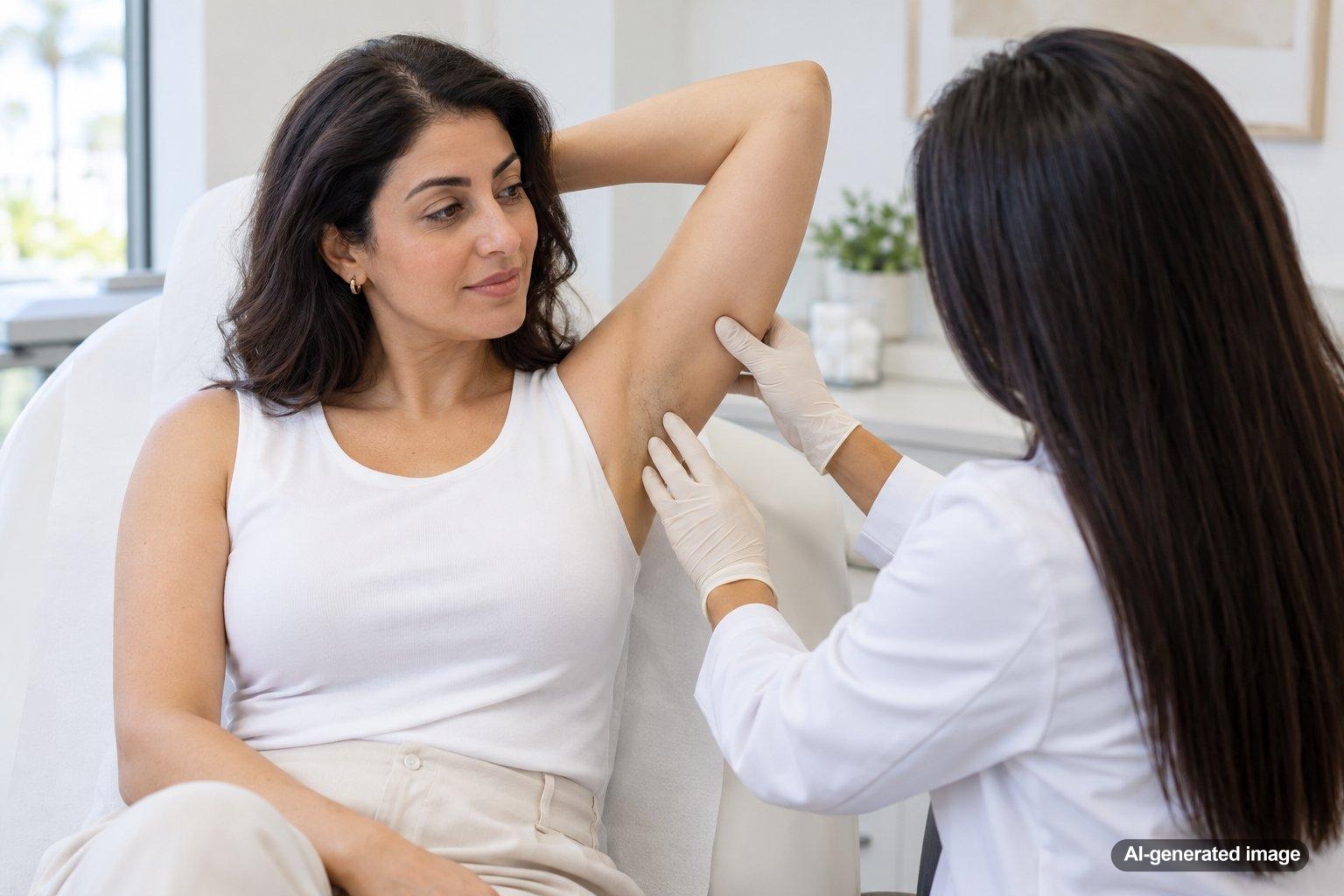
If you’ve noticed that one armpit smells stronger than the other, even after showering or applying deodorant, the difference may be surprising. Underarm odor doesn’t always develop evenly on both sides of the body. Small variations in sweating, skin bacteria, moisture, clothing contact, and daily habits can make one underarm noticeably more odorous than the other.
In many cases, this difference is harmless and doesn’t mean that one side is less clean. However, persistent or suddenly changing odor, particularly when accompanied by skin irritation, discomfort, or unusual sweating, deserves a closer look. Understanding how underarm odor develops can help you identify practical adjustments and recognize when a dermatologist’s evaluation may be useful.
Quick Answer: Why Does Only One Armpit Smell?
One armpit may smell stronger because the conditions that produce body odor aren’t identical on both sides of your body. The most common explanations include:
- Different skin bacteria: The mix and activity of microorganisms on one underarm may differ from the other.
- Uneven moisture: One side may retain more sweat or remain damp longer during daily activities.
- Clothing and friction: Fabric contact, movement, and trapped moisture may create different conditions under each arm.
- Deodorant application: Uneven product coverage or residue can influence how effectively odor is controlled.
- Local skin changes: Irritation, inflammation, or an underlying skin condition may sometimes contribute to a new odor difference.
The important distinction is whether the difference has always been present or represents a noticeable change from your usual pattern.
What Actually Causes Armpit Odor?
Body odor is more complicated than sweating alone. Much of the sweat released for temperature regulation contains primarily water and salts and has little odor when it first reaches the skin.
The underarms also contain apocrine sweat glands, which release secretions containing substances that bacteria on the skin can break down. As these substances are processed, odor-producing compounds develop. This explains why someone can sweat heavily without having a particularly strong smell, while another person may notice odor with relatively little visible moisture.
The medical term bromhidrosis describes unpleasant body odor. It can involve the underarms and may be influenced by bacterial activity, sweating, skin conditions, medications, and other factors. Having one noticeably stronger-smelling underarm doesn’t automatically indicate bromhidrosis or another medical condition.
Because each underarm has its own local environment, the intensity of odor doesn’t have to be symmetrical.
Common Reasons One Armpit Smells Stronger Than the Other
1. The Skin Bacteria May Be Different
Healthy skin naturally contains many types of microorganisms. The composition and activity of these organisms can vary between different areas of the body, including opposite underarms.
Some bacteria are particularly effective at breaking down underarm secretions into compounds with noticeable odors. Even a modest difference in bacterial activity may contribute to a difference in smell.
This doesn’t necessarily indicate an infection or poor hygiene. Normal skin has bacteria, and eliminating every microorganism isn’t a realistic or desirable skincare goal.
2. One Underarm May Stay Wetter Longer
Odor can become more noticeable when sweat remains against the skin and interacts with bacteria. One underarm may experience different moisture conditions because of posture, physical activity, clothing fit, or individual variation.
For example, carrying a bag against one side of the body or keeping an arm close to the torso for extended periods may reduce ventilation. These conditions can make one underarm feel warmer or damper.
Importantly, stronger odor doesn’t prove that the affected side produces more sweat. The amount of moisture and the intensity of odor are related but separate factors.
3. Clothing Can Trap Odor Unevenly
Sometimes what seems like a difference between your armpits is partly a difference in your clothing.
Shirt seams, tight sleeves, and fabric folds may hold moisture differently on each side. Certain synthetic materials can also retain odor compounds that become noticeable again when the fabric warms up or becomes damp.
If the smell appears mainly while wearing a particular shirt, the garment may be contributing. An odor that disappears after changing into a freshly washed, breathable top offers a useful clue.
4. Deodorant or Antiperspirant Coverage May Be Uneven
Most people apply underarm products quickly, often without noticing subtle differences between sides. You might use more pressure, make fewer passes, or miss part of one underarm when applying with your nondominant hand.
There is also an important difference between product types:
- Deodorant primarily helps manage or mask odor.
- Antiperspirant contains ingredients designed to reduce sweating.
Some products combine both functions. If moisture plays a significant role in the odor difference, changing how an antiperspirant is applied may be more helpful than simply adding fragrance.
5. Hair, Shaving, and Friction Can Affect the Skin
Underarm hair can hold moisture and provide additional surfaces where sweat and odor-related substances accumulate. Differences in hair density or grooming habits may therefore contribute to how each side smells.
Shaving can also temporarily irritate the skin, particularly when combined with friction or fragranced products. If one side develops more sensitivity or visible irritation, the local skin environment may change.
Hair removal is a personal choice, not a requirement for good hygiene. Gentle cleansing and comfortable skin care are generally more important than trying to remove every hair.
6. Skin Irritation or an Infection May Sometimes Be Involved
A new odor difference can occasionally accompany a localized skin problem. Moisture, friction, and irritation can affect the underarm folds, and certain bacterial or fungal conditions may develop in these environments.
Changes worth noticing include persistent redness or discoloration, scaling, tenderness, itching, unusual bumps, drainage, or changes involving the underarm hair.
These symptoms have several possible explanations, and odor alone cannot identify an infection. A dermatologist can examine the area and determine whether a specific skin condition is present.
Why Does One Armpit Smell Even After Showering?
If you’ve washed thoroughly but one underarm develops odor again quickly, it doesn’t necessarily mean you washed incorrectly.
Several factors may explain the experience. The bacteria normally living on the skin remain part of its natural environment after washing. Sweat production also resumes throughout the day. In addition, residue from deodorant, antiperspirant, or clothing may affect how odor is perceived.
Another possibility is that the odor is coming primarily from the shirt rather than the skin. Fabric that appears clean may still contain odor-related residue, especially around the underarm seams.
Instead of repeatedly scrubbing the affected underarm, consider whether the smell is present on freshly cleaned, dry skin before dressing, whether it develops only after activity, and whether it changes with different clothing.
Avoid aggressive scrubbing, concentrated alcohol, undiluted essential oils, or repeated acidic home treatments. Underarm skin can be sensitive, and irritation may create additional discomfort without addressing the underlying cause.
Does Your Dominant Arm Have Anything to Do With It?
It’s reasonable to wonder whether being right-handed or left-handed could explain why one underarm smells stronger.
Your dominant arm may be used differently throughout the day, and repetitive movement, contact with objects, or differences in clothing friction could influence local moisture conditions. However, there isn’t a reliable rule that the dominant-side armpit will smell worse.
Likewise, a stronger odor on the left or right side isn’t, by itself, evidence of a specific internal health problem.
Focus on changes in your usual pattern rather than assuming one particular side has a special medical significance.
What You Can Do at Home to Manage Uneven Underarm Odor
If the odor difference is mild and there are no concerning skin symptoms, a few conservative adjustments may help you understand and manage it.
- Wash gently: Clean both underarms regularly with a mild cleanser, then rinse thoroughly. Avoid harsh scrubbing or excessive washing.
- Dry the skin: Allow both underarms to dry before dressing or applying products.
- Check product coverage: Apply deodorant or antiperspirant according to its label, paying attention to consistent coverage on both sides.
- Wear clean, breathable clothing: Change out of damp exercise clothes promptly and make sure underarm areas are thoroughly washed and dried.
- Consider fragrance sensitivity: If deodorant causes burning, redness, or itching, a gentler fragrance-free option may be more comfortable.
- Observe patterns: Notice whether the difference develops after exercise, during stressful days, in humid weather, or with certain fabrics.
- Give irritated skin a break: If shaving or a new cosmetic product seems to aggravate the area, avoiding that trigger while the skin settles may help.
In Fort Lauderdale’s warm, humid climate, moisture management may be especially relevant. Clothing that allows airflow and changing after outdoor activity can support underarm comfort.
Try to avoid changing several products simultaneously. Making one gentle adjustment at a time can make it easier to recognize what actually affects the odor.
Professional Options for Persistent Underarm Odor
When a stronger-smelling underarm remains bothersome despite reasonable hygiene and product adjustments, a dermatologist can evaluate possible contributing factors.
The visit may include a review of when the odor began, whether one side sweats more, which products you use, and whether you’ve noticed itching, changes in skin color, or discomfort.
Depending on the findings, professional care may involve:
- Skin assessment: Examining the underarm for irritation, inflammation, hair-related changes, or possible infection.
- Sweat management: Discussing antiperspirant options or evaluating excessive sweating when appropriate.
- Targeted skin treatment: Addressing a confirmed underlying condition rather than relying on stronger deodorants alone.
- Routine adjustments: Identifying potentially irritating skincare ingredients, grooming practices, or product combinations.
Not everyone needs prescription treatment or an office procedure. The appropriate approach depends on whether the issue is primarily odor, moisture, skin irritation, or another condition.
When Should You See a Dermatologist?
A longstanding, mild difference in underarm odor without other symptoms is often less concerning than a new or progressively changing pattern. Consider scheduling an evaluation if:
- One underarm develops a sudden, unexplained odor that is clearly different from your usual scent.
- The smell persists despite gentle washing, clean clothing, and appropriate product use.
- You notice a rash, persistent discoloration, scaling, bumps, or changes in underarm hair.
- The area becomes tender, swollen, unusually warm, or begins draining fluid.
- You experience a new difference in sweating, particularly if one underarm becomes noticeably wetter or drier than the other.
- Excessive sweating disrupts work, clothing choices, exercise, or daily comfort.
- The odor change occurs alongside other unexplained symptoms.
Seek prompt medical attention for rapidly spreading redness, significant pain, fever, or substantial swelling. A sudden major change in sweating accompanied by neurological symptoms such as weakness or numbness warrants urgent medical evaluation.
Persistent odor can be frustrating, but it is a reasonable concern to discuss with a dermatologist. You don’t need to wait until the problem becomes severe to ask about it.
Frequently Asked Questions
Is it normal for one armpit to smell worse than the other?
Yes. Some variation in odor between underarms can occur because local sweating, bacterial activity, moisture retention, and clothing contact aren’t perfectly identical. A stable difference without other symptoms is not automatically a medical concern.
Does a stronger-smelling armpit mean there’s more bacteria on that side?
Not necessarily. Odor depends partly on which bacteria are present, their activity, and the substances available for them to break down. A stronger smell doesn’t prove there are more bacteria overall or that the skin is dirty.
Can hormonal changes make one armpit smell stronger?
Hormonal changes can influence sweating and body odor generally. They don’t reliably explain why only one underarm smells different, however. Local factors such as moisture, bacteria, and skin condition remain important considerations.
Why does one armpit smell worse when I’m stressed?
Stress can activate sweating, including sweat from glands involved in underarm odor. If the conditions under one arm favor stronger odor development, that difference may become more noticeable during stressful situations. Stress alone doesn’t establish the cause.
Can deodorant make one armpit smell worse?
Deodorant doesn’t ordinarily create the underlying body odor, but uneven application, fragrance interactions, product residue, or skin irritation may affect the experience. If a particular product causes redness or burning, consider discontinuing it and discussing the reaction with a dermatologist.
Should I use antibacterial soap if only one armpit smells?
Not automatically. Strong cleansers may irritate sensitive underarm skin, and routine body odor doesn’t necessarily require antibacterial treatment. Gentle cleansing is a reasonable starting point. If odor remains persistent or skin changes develop, a dermatologist can advise whether a targeted product is appropriate.
The Bottom Line
One armpit can smell stronger than the other because body odor develops through a combination of sweat, skin bacteria, moisture, and environmental factors that may differ between sides. Clothing, grooming habits, and product application can also influence the difference.
For many people, gentle skin care and attention to moisture and clothing are reasonable first steps. If the change is sudden, persistent, or accompanied by unusual skin symptoms, professional evaluation can help clarify the cause without unnecessary guesswork.
Ready to get help?
Schedule an appointment or send a message and our team will get back to you.
Prefer to call? 954-666-3736
Medical Disclaimer
This article is for educational purposes and is not medical advice. For diagnosis and personalized treatment, please book an appointment with a board-certified dermatologist.
Sources & Further Reading
- Cleveland Clinic – Body Odor
- DermNet – Bromhidrosis
- American Academy of Dermatology (AAD) – Should I use whole-body deodorant?
