

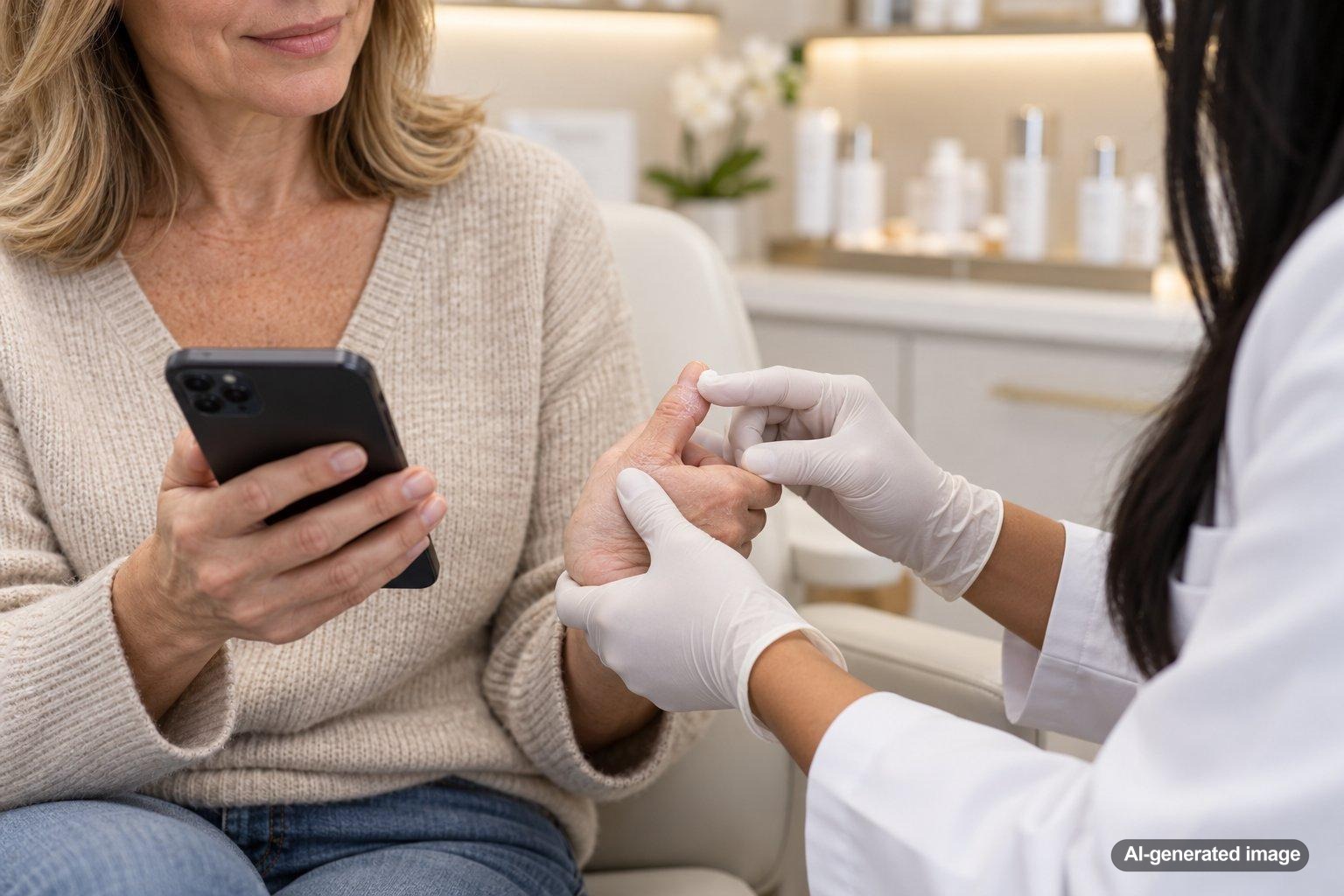
If you’ve noticed a rough, dry patch on your thumb where you regularly hold or scroll on your phone, repeated friction may be the explanation. The skin can respond to ongoing rubbing and pressure by becoming thicker, creating a small callus-like area. Dryness or irritation can make that patch feel even more noticeable.
Smartphones are part of everyday life, and the same finger may repeatedly press against a phone’s edge, grip its case, or glide across the screen. Over time, these small movements can affect the skin’s surface. Most isolated areas of friction-related thickening are not particularly concerning, but not every rough patch is a callus. Understanding the difference between ordinary friction, a disrupted skin barrier, and an inflammatory skin condition can help you decide what to do next.
Quick Answer: Why Your Thumb Feels Rough
- Repeated friction: Holding or scrolling on a phone can repeatedly rub the same area of your thumb.
- Localized pressure: Resting your thumb against a firm phone edge or case may encourage protective skin thickening.
- Dryness: Frequent handwashing, dry air, and insufficient moisturizing can make roughness more apparent.
- Skin irritation: Contact with certain materials, cleaners, or personal care products may contribute to an irritated patch.
- Other skin conditions: Persistent itching, inflammation, cracking, or spreading changes may suggest something beyond uncomplicated friction.
What Happens to Your Skin When You Hold Your Phone?
Your skin provides a physical barrier between your body and the environment. Its outermost layer contains cells that are continually renewed and shed. When a particular area experiences repeated friction or pressure, the outer layer may thicken as a protective response.
This thickened area is commonly called a callus. Although calluses are frequently associated with feet, they can develop on hands and fingers wherever repetitive mechanical stress occurs.
For smartphone users, a small area along the side or pad of the thumb may experience repeated contact with a device. Depending on how the phone is held, the thumb might press against the case, support part of the phone’s weight, or repeatedly move across the screen.
A friction-related patch may feel slightly harder, drier, or less smooth than surrounding skin. It may develop gradually without significant discomfort. However, a rough area that is itchy, inflamed, tender, or cracked deserves a closer look because those symptoms can have other explanations.
Common Reasons Your Phone-Holding Thumb Develops Rough Skin
Repeated Rubbing and Pressure
Friction is a straightforward explanation when roughness develops exactly where the phone contacts your thumb. Repeated pressure can encourage the skin to produce a thicker protective surface. This may be more noticeable when using a firm-edged case, gripping the device tightly, or supporting a larger phone with one hand.
Dryness and a Weakened Skin Barrier
Dry skin can exaggerate the texture of an existing callus. Frequent washing, repeated exposure to cleaning products, and environmental dryness can reduce the skin’s ability to retain moisture comfortably. In Fort Lauderdale, frequent transitions between outdoor humidity and air-conditioned indoor environments may also influence how dry your hands feel.
When the outer skin barrier becomes dry, a previously subtle rough spot may begin to feel flaky or tight.
Irritant or Allergic Contact Dermatitis
Sometimes a patch that resembles friction-related roughness is associated with contact dermatitis. Irritant contact dermatitis develops when exposure damages or disrupts the skin barrier. Allergic contact dermatitis involves an immune reaction to a substance that touches the skin.
Potential exposures can include certain metals, cleaning solutions, fragrances, or materials encountered during everyday activities. A phone or its accessories may be relevant in some cases, but the location of a rash alone cannot establish its cause.
Contact dermatitis may cause itching, scaling, tenderness, discoloration, or cracking. Unlike a simple callus, the area may feel inflamed or become more uncomfortable with continued exposure.
Hand Eczema or Another Skin Condition
Hand eczema can cause dry, scaly, thickened, or cracked patches on the fingers and palms. It may resemble ordinary dry skin, especially early on. Some people experience itching or burning, while others notice painful fissures.
Other localized skin changes, including certain growths, can also create an uneven surface. A dermatologist can examine the area rather than assuming that phone use explains every persistent patch.
How to Reduce Roughness Without Over-Treating Your Skin
If the roughness is mild and seems connected to a particular phone grip, conservative adjustments may help reduce ongoing irritation.
- Change your grip: Alternate hands, adjust where your thumb rests, or use a comfortable phone stand during longer viewing sessions.
- Consider your phone case: A smooth, comfortable case may reduce concentrated rubbing from hard or textured edges.
- Moisturize consistently: Apply a fragrance-free hand cream after washing and whenever your skin feels dry. A thicker, bland moisturizer may be helpful for particularly dry areas.
- Wash gently: Use a mild cleanser, avoid unnecessarily hot water, and pat your hands dry rather than rubbing aggressively.
- Avoid picking or cutting: Removing thickened skin with sharp tools or pulling at loose edges can damage healthy tissue.
- Be cautious with exfoliation: Avoid aggressive scrubbing, strong acids, or callus-removing products on irritated, cracked, or inflamed thumb skin.
A gentle routine is generally preferable to trying several exfoliating products at once. If you have reduced sensation, poor circulation, diabetes, or another condition that affects healing, seek individualized guidance before attempting to remove thickened skin.
Does Moisturizer Remove a Phone Thumb Callus?
Moisturizer can help improve how dry, thickened skin feels, but it does not necessarily remove the underlying reason the skin became thick. If friction continues in the same location, roughness may persist despite regular moisturizing.
Reducing repeated pressure while supporting the skin barrier offers a more practical approach. Some products formulated for calluses contain ingredients that soften thicker skin, but these are not automatically appropriate for every thumb patch. Products containing exfoliating acids or other active ingredients can irritate sensitive or damaged skin.
If you’re unsure whether the area is an uncomplicated callus, avoid treating it aggressively until it has been evaluated.
Professional Options for Persistent Rough Thumb Skin
Professional evaluation begins with identifying what is causing the texture change. A dermatologist may examine the location, appearance, and surrounding skin, along with your history of irritation, itching, occupational exposures, and repetitive activities.
If friction-related thickening is the likely explanation, guidance may focus on reducing pressure and using appropriate skin care. If contact dermatitis or hand eczema is suspected, management may involve identifying triggers, supporting the skin barrier, and considering medical treatment when indicated.
In selected situations, a dermatologist may recommend additional evaluation, such as patch testing when allergic contact dermatitis is a concern. These decisions depend on the clinical findings and are not necessary for every rough patch.
At Waverly DermSpa in Fort Lauderdale, Dr. Maryann Mikhail, MD, can evaluate persistent skin texture changes and help distinguish routine irritation from conditions that may require medical attention. Aesthetic skin care guidance may complement the evaluation when appropriate, but treatment selection should follow an accurate assessment.
When Should You See a Dermatologist?
A small, stable area of thickened skin associated with repeated pressure may respond to changes in your routine. However, certain features warrant professional attention rather than continued self-treatment.
- The patch persists despite reducing friction and maintaining gentle skin care.
- The area becomes painful, repeatedly cracks, bleeds, or interferes with everyday activities.
- You develop significant itching, burning, swelling, or an expanding rash.
- The surface develops an unexplained growth, changes noticeably in color or shape, or develops a sore that does not heal.
- There is spreading redness, warmth, pus, or increasing tenderness, which may indicate a possible infection.
- Similar patches appear elsewhere or the cause is not clear.
Prompt medical assessment is appropriate for rapidly worsening pain, spreading inflammation, or possible infection, particularly when accompanied by fever. A changing or nonhealing lesion should also be examined rather than attributed automatically to phone use.
Frequently Asked Questions
Can scrolling on my phone actually create a callus?
Repeated rubbing or pressure can cause callus formation on the hands. Smartphone use may contribute when the same part of your thumb repeatedly experiences friction, although a rough patch cannot be identified as a callus from its location alone.
Why is only one thumb rough?
You may hold or operate your phone predominantly with one hand. Differences in grip, pressure, and contact points can create uneven exposure to friction. However, one-sided roughness can also have causes unrelated to phone use.
Is rough thumb skin a sign of an allergy to my phone case?
Not necessarily. A dry, thickened spot without itching may be more consistent with friction, while itching, redness, or recurrent inflammation may raise concern for contact dermatitis. An examination and, when appropriate, allergy testing can help clarify the cause.
Should I use a pumice stone or exfoliating acid on my thumb?
Aggressive exfoliation can injure delicate or irritated skin. Before trying a callus-removing treatment, it is important to establish that the patch is actually caused by friction. Avoid filing or applying strong exfoliants to cracked, tender, or inflamed areas.
Will the rough patch go away if I change how I hold my phone?
If repetitive friction is the primary cause, reducing that friction may allow the thickened area to become less noticeable over time. The response varies, and persistent roughness may require evaluation for another cause.
Can hand eczema look like a phone callus?
Yes. Hand eczema can produce dry, thickened, scaly skin, sometimes with itching, inflammation, or cracking. Because several conditions can look similar, a dermatologist can help distinguish them when symptoms persist.
Protecting Your Thumb Skin Over Time
Rough skin from holding a phone often reflects a combination of repetitive contact and everyday dryness. Small changes in your grip, a more comfortable case, and consistent moisturizing may help protect the skin without requiring an elaborate routine.
The key is recognizing when a rough patch behaves differently from ordinary friction-related thickening. Persistent discomfort, inflammation, cracking, or an unexplained change deserves individualized attention. Keeping your routine simple while seeking evaluation when needed can support healthier, more comfortable hands.
Ready to get help?
Schedule an appointment or send a message and our team will get back to you.
Prefer to call? 954-666-3736
This article is for educational purposes and is not medical advice. For diagnosis and personalized treatment, please book an appointment with a board-certified dermatologist.
Sources & Further Reading
- American Academy of Dermatology (AAD) – How to treat corns and calluses
- American Academy of Dermatology (AAD) – Eczema types: Contact dermatitis signs and symptoms
- American Academy of Dermatology (AAD) – Dry, scaly, and painful hands could be hand eczema
