

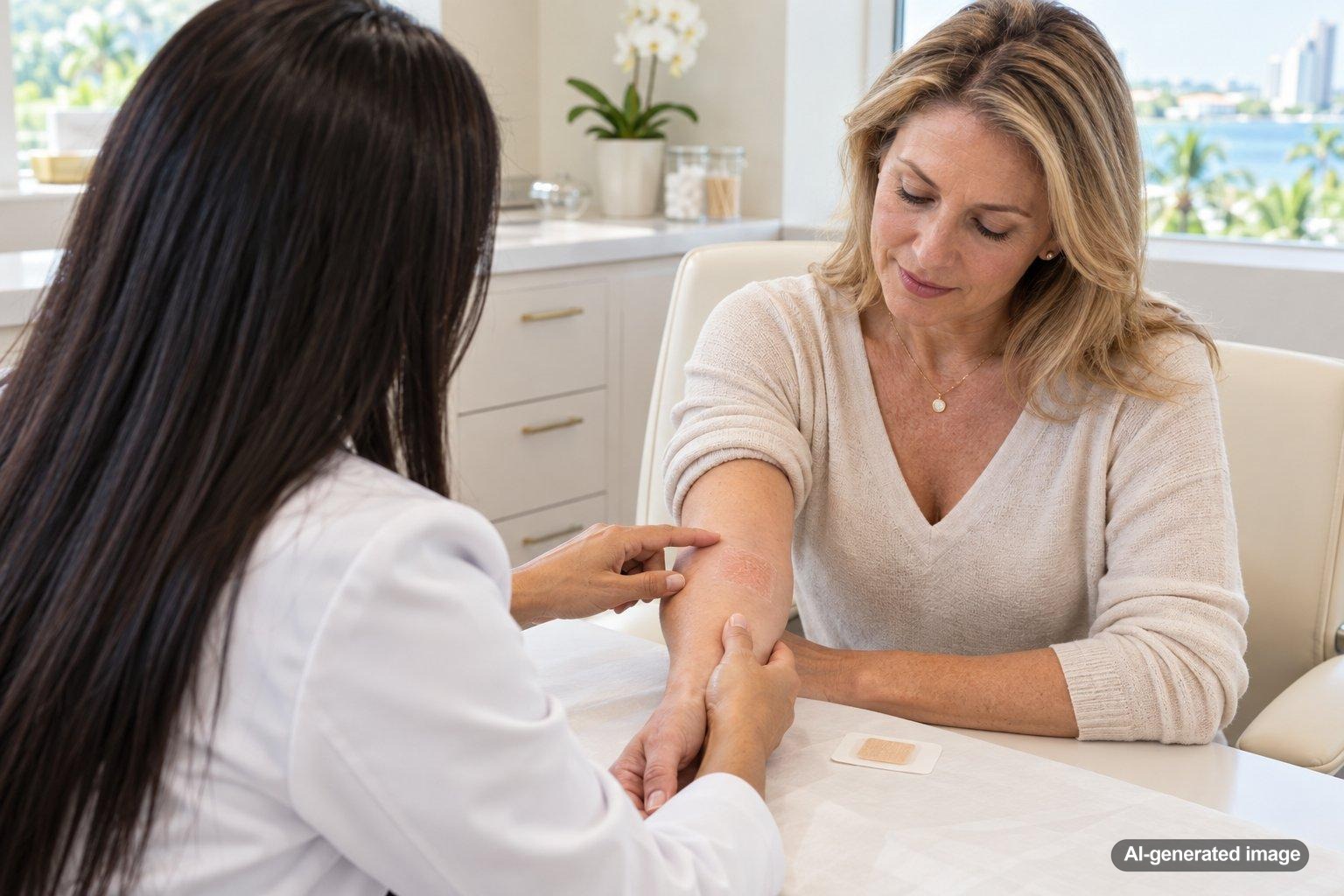
Skin peeling where you wear an adhesive patch usually happens because the adhesive irritates your skin, triggers a contact allergy, or pulls away delicate surface skin cells when the patch is removed. Moisture trapped beneath the patch and repeated application to the same area can also weaken the skin’s protective barrier. Although the peeling may look concerning, several different processes can cause it, and not all involve an allergy.
Whether you’re using a medication patch, a glucose sensor, a bandage, or medical tape, the pattern of peeling can offer useful clues. Some people notice mild flaking after removal, while others develop itching, redness, burning, or small blisters. Understanding when the reaction begins, where it appears, and how long it lasts can help you decide whether simple skin protection may be enough or whether a dermatologist should evaluate the area.
Quick Answer: Why Does Skin Peel Under an Adhesive Patch?
- Adhesive irritation: Prolonged contact with glue or other patch materials can irritate the skin and cause dryness, inflammation, and peeling.
- Allergic contact dermatitis: Some people develop a delayed immune reaction to an ingredient in an adhesive or another component of the patch.
- Skin stripping: Removing a strongly attached patch can lift away superficial skin cells, especially when the skin is fragile.
- Trapped moisture: Sweat and moisture beneath a patch may soften the outer skin and make it more vulnerable to damage.
- Repeated application: Placing adhesive on the same location repeatedly may prevent irritated skin from recovering between applications.
What Happens to Your Skin Beneath an Adhesive Patch?
Your skin’s outermost layer, called the stratum corneum, forms an essential part of the skin barrier. It helps retain moisture while limiting exposure to external irritants. Adhesive patches create close contact between this protective layer and a sticky material designed to remain attached during movement, daily activities, or bathing.
When a patch is worn for an extended period, the environment underneath it can change. Heat and moisture may accumulate, while friction from movement can place additional stress on the skin. Removing the adhesive introduces another mechanical force. If the patch bonds strongly to the skin, its removal may detach superficial cells along with the adhesive.
The result can be fine flaking, a visibly peeled area, or skin that feels unusually sensitive to touch. In some cases, inflammation causes additional scaling after the patch has been removed. The appearance alone does not reliably identify the underlying cause.
Common Causes of Skin Peeling From Adhesive Patches
1. Irritant Contact Dermatitis
Irritant contact dermatitis occurs when a material or repeated exposure disrupts the skin barrier and produces inflammation. Adhesive ingredients, friction, sweat, and prolonged contact can contribute to irritation. The skin may feel dry, tight, tender, or uncomfortable, with peeling developing during wear or after the patch is removed.
This type of reaction does not require an allergy. It can occur when the skin experiences enough cumulative irritation, particularly if the same area is exposed repeatedly.
2. Allergic Contact Dermatitis
Allergic contact dermatitis involves an immune response to a substance that touches the skin. Certain adhesive components, including some acrylates and resin-based ingredients, may act as allergens in susceptible individuals. Other patch components can also be responsible.
Unlike immediate mechanical irritation, an allergic reaction may appear hours or days after exposure. Itching, swelling, redness, small blisters, and subsequent peeling can occur. On darker skin tones, inflammation may look brown, purple, or darker than the surrounding skin rather than bright red.
An allergy may develop even after a person has used a similar product without previous problems. However, peeling after every patch does not automatically establish an adhesive allergy.
3. Mechanical Skin Stripping During Removal
Sometimes the problem occurs primarily when the patch comes off. Strong adhesives can pull away part of the outer skin layer, especially if the patch is removed quickly or against the direction of hair growth.
Skin stripping may be more noticeable in areas with thin or fragile skin, on previously irritated skin, or after repeated removal and replacement. The affected area can look shiny, raw, or superficially peeled and may sting when washed.
4. Moisture and Sweat Trapped Under the Patch
Adhesive materials that limit airflow can create a moist environment against the skin. Prolonged moisture exposure can soften the outer skin layer, a process called maceration. Macerated skin may appear pale, wrinkled, or unusually delicate and can become more susceptible to peeling when the patch is removed.
Warm weather, exercise, and humid conditions may make moisture-related irritation more noticeable. In Fort Lauderdale’s humid climate, perspiration beneath a long-wear patch can be a practical consideration.
5. Repeated Application to the Same Area
People who use wearable medical sensors, medication patches, or recurring bandages may expose the same location to adhesive again before the skin has fully recovered. Each application can add friction, moisture exposure, and removal-related stress.
Over time, this repeated disruption may produce persistent dryness, peeling, tenderness, or sensitivity. Whether application sites can be rotated depends on the specific product and its instructions.
How Can You Tell Whether the Problem Is Irritation or an Allergy?
Several patterns may help distinguish possible causes, although symptoms can overlap and a dermatologist may need to examine the area.
- Peeling immediately after removal: This pattern may suggest mechanical skin stripping, particularly when the skin feels raw or tender.
- Burning or stinging during wear: Irritation or friction may be contributing.
- Intense itching with a delayed rash: Allergic contact dermatitis becomes an important possibility.
- White, softened, wrinkled skin: Prolonged moisture exposure may be involved.
- Similar reactions with multiple adhesive products: Repeated mechanical irritation or sensitivity to a shared ingredient may warrant further investigation.
- A sharply outlined rash matching the adhesive border: This suggests a contact-related process but does not establish whether it is allergic or irritant.
It is also possible to react to something other than the adhesive itself. A medication delivered through the patch, a skin preparation product, or another material touching the area may contribute to the reaction.
What Can You Do at Home When Your Skin Peels From a Patch?
For mild superficial irritation, a few conservative skin-care measures may help limit additional discomfort while the area recovers.
Clean the Area Gently
Use lukewarm water and a mild, fragrance-free cleanser if cleansing is needed. Avoid vigorous scrubbing, exfoliating brushes, and rough washcloths. Pat the skin dry instead of rubbing.
Support the Skin Barrier
A simple fragrance-free moisturizer may help relieve dryness on intact skin. Products containing basic moisturizing ingredients can be preferable to elaborate formulas when the skin is sensitive.
If the area is raw, blistered, or open, seek guidance on appropriate wound care rather than applying unfamiliar creams or active skin-care products.
Avoid Additional Irritation
Temporarily avoid exfoliating acids, retinoids, fragranced lotions, and harsh cleansing products on the irritated area. Picking at loose skin can create further damage and increase discomfort.
Use a Cool Compress for Discomfort
A clean, cool compress may help soothe itching or mild inflammation. Avoid applying ice directly to the skin, particularly if the surface is already damaged.
Consider the Patch’s Medical Purpose
If the patch delivers medication or is part of a prescribed monitoring system, contact the prescribing clinician or care team before stopping or changing its use. Some patches have specific placement requirements, application schedules, or restrictions on products applied beneath them.
Do not place moisturizers, oils, barrier creams, or protective films underneath a medication patch unless the prescribing instructions or a clinician specifically permit them. These materials could interfere with adhesion or affect medication delivery.
How to Help Prevent Skin Peeling When You Need to Wear a Patch
Prevention depends on whether the primary problem is adhesive sensitivity, moisture, friction, or removal technique. The following considerations may help guide a conversation with your clinician or the product manufacturer.
- Follow product instructions: Apply the patch only to approved body locations and observe the recommended wear and replacement schedule.
- Start with appropriate skin preparation: When permitted by the product instructions, apply adhesive to clean, completely dry skin without residual lotion or oil.
- Ask about alternative adhesives: If a particular bandage or dressing repeatedly irritates your skin, a clinician may recommend an option designed for more sensitive skin.
- Consider approved site rotation: Some devices and patches allow rotation between application sites. Follow the product’s specific instructions.
- Reduce unnecessary friction: Clothing that repeatedly rubs the adhesive edges can increase mechanical stress.
- Use a gentle removal technique: When appropriate for the product, slowly peel the adhesive back close to the skin while supporting the surrounding area rather than pulling straight upward.
- Ask about adhesive removers: Certain medical adhesives can be removed with purpose-designed products, but compatibility with the device, medication, and skin condition should be confirmed first.
For someone who frequently experiences peeling, switching adhesives without understanding the cause may not solve the problem. Some alternative products contain ingredients that can trigger similar reactions.
How Can a Dermatologist Help With Adhesive-Related Skin Peeling?
A dermatologist can examine the affected skin and review the specific patches, dressings, medications, or devices involved. The timing of symptoms, distribution of the rash, and appearance after removal can help guide the evaluation.
If allergic contact dermatitis is suspected, patch testing may be considered. This testing places carefully selected allergens on the skin under controlled conditions to investigate delayed contact allergies. It is different from simply trying multiple commercial adhesive patches at home.
Depending on the findings, professional options may include:
- Identifying and reducing exposure to a suspected irritant or allergen.
- Providing guidance on compatible adhesive alternatives and skin protection.
- Recommending appropriate anti-inflammatory treatment for dermatitis when indicated.
- Evaluating areas of skin stripping or blistering and advising on wound care.
- Coordinating with the clinician who prescribed a medication patch or monitoring device when changes may be necessary.
The goal is to identify why the skin is reacting while preserving any medically necessary treatment or monitoring.
When Should You See a Dermatologist?
Occasional mild flaking after adhesive removal may improve once additional irritation is avoided. However, certain symptoms deserve professional attention.
- Peeling or inflammation that repeatedly returns whenever a patch is applied.
- Significant itching, pain, burning, or blistering.
- Raw, cracked, bleeding, or extensively stripped skin.
- Rashes that persist, worsen, or spread beyond the original contact area.
- Skin that becomes increasingly warm, swollen, tender, or develops pus, especially if accompanied by fever.
- Reactions that interfere with necessary medication delivery, wound protection, or medical monitoring.
Prompt medical evaluation is important if the skin looks infected or significant blistering occurs. Difficulty breathing or swelling of the lips, tongue, or throat requires emergency medical care.
If you are unsure whether the problem is an adhesive allergy, repeated irritation, or another skin condition, a dermatologist can help clarify the cause before further exposure leads to additional discomfort.
Frequently Asked Questions
Is it normal for skin to peel after removing an adhesive patch?
Mild superficial peeling can occur, especially after a strongly attached patch is removed. However, recurring peeling, painful skin stripping, or peeling accompanied by itching and blisters may indicate irritation or contact dermatitis that deserves evaluation.
Can you become allergic to medical tape after using it for years?
Yes. Allergic contact dermatitis can develop after previous exposures without an obvious reaction. Still, a new rash does not necessarily mean an allergy has developed. Friction, moisture, repeated application, and other ingredients can also explain changes in skin tolerance.
Why does my skin peel in the exact shape of the patch?
A clearly defined outline often reflects where the skin was exposed to adhesive, trapped moisture, friction, or a particular patch ingredient. The pattern supports a contact-related cause, but it cannot distinguish allergy from irritation by itself.
Can a hypoallergenic patch still cause peeling?
Yes. A product marketed as hypoallergenic may be designed to reduce certain reactions, but it can still produce mechanical irritation, moisture-related damage, or an individual allergic response. The label does not establish that a product will be tolerated by everyone.
Should I put moisturizer underneath an adhesive patch?
Not without checking the specific product instructions. Moisturizers and oils may interfere with patch adhesion, and products placed beneath medication patches could affect how the patch functions. A clinician or pharmacist can help determine which skin-care products are compatible.
How long does peeling from adhesive irritation take to go away?
Recovery varies according to the amount of skin damage, continued exposure, and whether inflammation or allergy is involved. Mild surface irritation may settle relatively quickly, while contact dermatitis can persist longer. Skin that is worsening or not improving deserves professional evaluation.
Ready to get help?
Schedule an appointment or send a message and our team will get back to you.
Prefer to call? 954-666-3736
Disclaimer
This article is for educational purposes and is not medical advice. For diagnosis and personalized treatment, please book an appointment with a board-certified dermatologist.
Sources & further reading
- American Academy of Dermatology (AAD) – Eczema types: Contact dermatitis diagnosis and treatment
- Cleveland Clinic – Contact Dermatitis: Symptoms, Causes, Types & Treatments
- American Academy of Dermatology (AAD) – Eczema types: Contact dermatitis overview
