

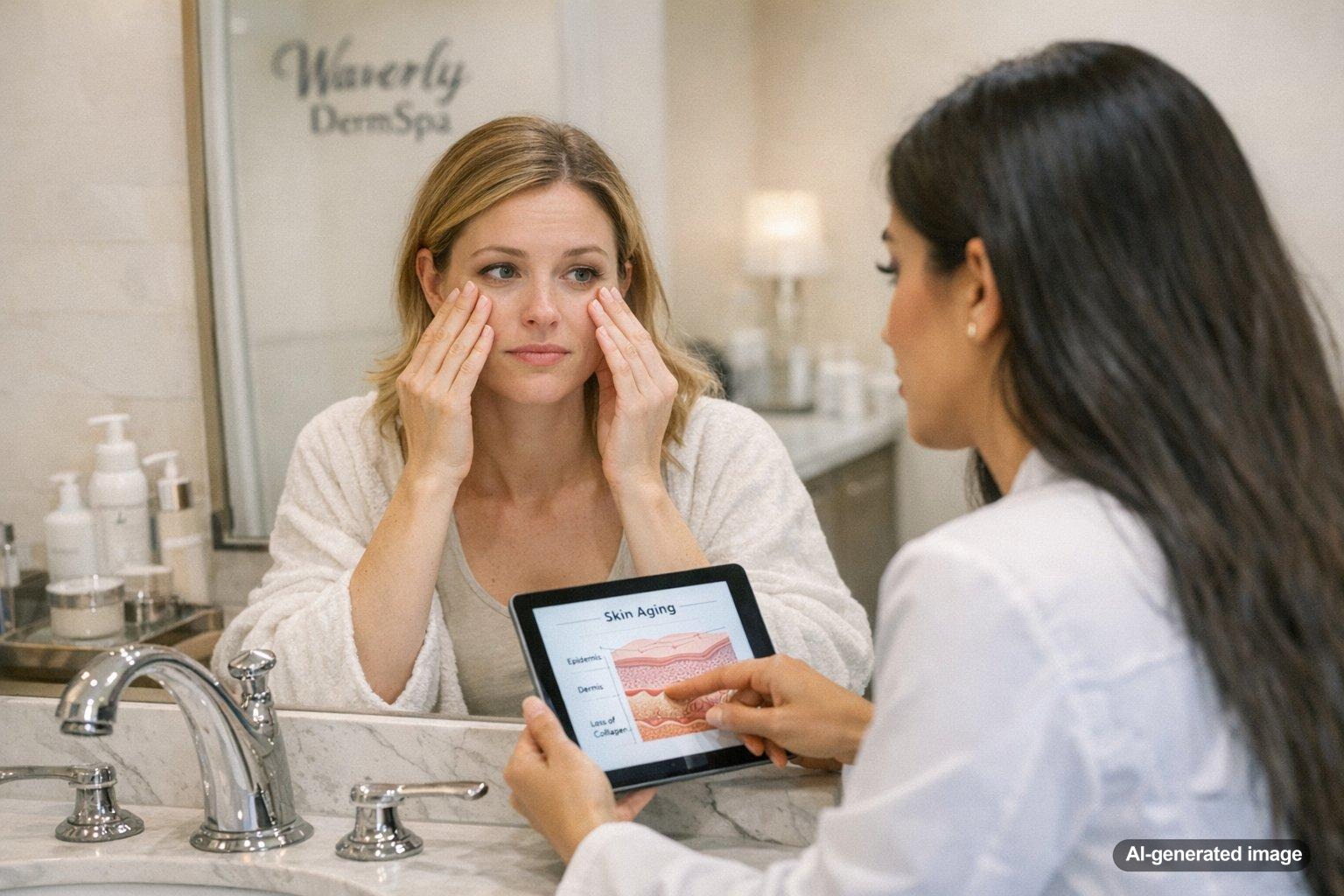
If your skin looks tired even when you feel like you are doing all the right things, you are not imagining it. Many people notice that their skin can seem dull, flat, dry, uneven, or less vibrant over time, especially during stressful seasons, travel-heavy months, or after long stretches of sun exposure.
The good news is that tired-looking skin does not point to one single issue. It is often a mix of surface dryness, buildup, lifestyle habits, and gradual changes in tone and texture. In many cases, a few smart adjustments can help. If the look is persistent or changing quickly, a dermatologist can evaluate what may be contributing.
Quick answer
- Tired-looking skin is often linked to dryness, dullness, uneven texture, stress, and cumulative sun exposure.
- A compromised skin barrier can make skin look less smooth, less reflective, and more reactive.
- Gentle cleansing, daily sunscreen, moisturizer, and a simple routine may help improve the overall look.
- In-office options may help when home care is not enough, especially for tone, texture, and visible signs of aging.
- If you notice sudden changes, irritation, or spots that concern you, it is worth getting checked.
What does “tired skin” usually mean?
When people say their skin looks tired, they are usually describing a combination of concerns rather than one diagnosis. Skin may appear dull instead of bright, rough instead of smooth, or uneven instead of fresh. Fine lines can stand out more when skin is dehydrated, and shadows can seem more obvious when tone and texture are not at their best.
In plain English, tired-looking skin often means the surface is not reflecting light well. That can happen when skin is dry, congested, irritated, or dealing with gradual collagen and pigment changes that come with time and sun exposure.
Common reasons skin can look tired
- Dryness or dehydration: When skin lacks moisture, it can look flat, tight, and less radiant.
- Dead skin buildup: A layer of dull surface cells can make skin feel rough and look less bright.
- Stress and poor sleep: These can affect how rested and refreshed your skin appears.
- Sun exposure: Over time, UV exposure can contribute to uneven tone, roughness, and premature aging.
- Skin barrier strain: Overusing strong products can leave skin irritated, dull, and harder to balance.
- Texture and tone changes: Fine lines, enlarged pores, and discoloration can all create a tired overall look.
- Routine mismatch: Sometimes the products you are using are too harsh, too complicated, or simply not a good fit for your skin.
What you can do at home
A simple, steady routine is often more helpful than chasing every new product. Start with a gentle cleanser, a moisturizer that supports the skin barrier, and broad-spectrum sunscreen every morning. If your skin is feeling stripped or reactive, scaling back can be more helpful than adding more steps.
You may also benefit from using a gentle exfoliating product occasionally rather than daily, especially if your skin looks dull from buildup. Hydrating serums and richer moisturizers can help skin look more comfortable and smooth. If your routine stings, burns, or leaves you red, that is usually a sign to simplify.
Professional options that may help
If tired-looking skin is tied to texture, sun damage, discoloration, or early laxity, professional treatment may help more than skincare alone. Common options include facials, chemical peels, microneedling, and laser-based treatments, depending on your skin goals and how sensitive your skin is.
The right approach depends on what is actually driving the tired appearance. At Waverly DermSpa, we offer HydraFacial and can help you understand whether it may be appropriate.
When to see a dermatologist
It is worth scheduling an evaluation if your skin looks persistently inflamed, feels unusually sensitive, changes suddenly, or develops new spots, patches, or bumps that concern you. You should also get checked if dryness or redness is not improving, if breakouts are worsening, or if you are unsure whether you are dealing with irritation, pigmentation, or something else.
A dermatologist can help sort out whether the issue is mostly routine-related, age-related, sun-related, or part of a broader skin condition that deserves a closer look.
FAQ
Can tired-looking skin just be from not drinking enough water?
Hydration plays a role, but it is usually not the whole story. Skin can also look tired because of dryness, product irritation, sun exposure, texture changes, and lifestyle factors.
Does over-exfoliating make skin look worse?
Yes, it can. Too much exfoliation may disrupt the skin barrier and leave skin looking dull, irritated, and uneven instead of smooth and fresh.
Can sunscreen really make a difference in how tired skin looks?
Yes. Daily sunscreen helps protect against ongoing UV damage that can contribute to discoloration, roughness, and early visible aging.
Should I switch all my products at once?
Usually not. A simpler routine is often easier to tolerate and easier to evaluate. Changing too many products at once can make it harder to tell what is helping or irritating your skin.
Ready to get help?
Schedule an appointment or send a message and our team will get back to you.
Prefer to call? 954-666-3736
This article is for educational purposes and is not medical advice. For diagnosis and personalized treatment, please book an appointment with a board-certified dermatologist.
