

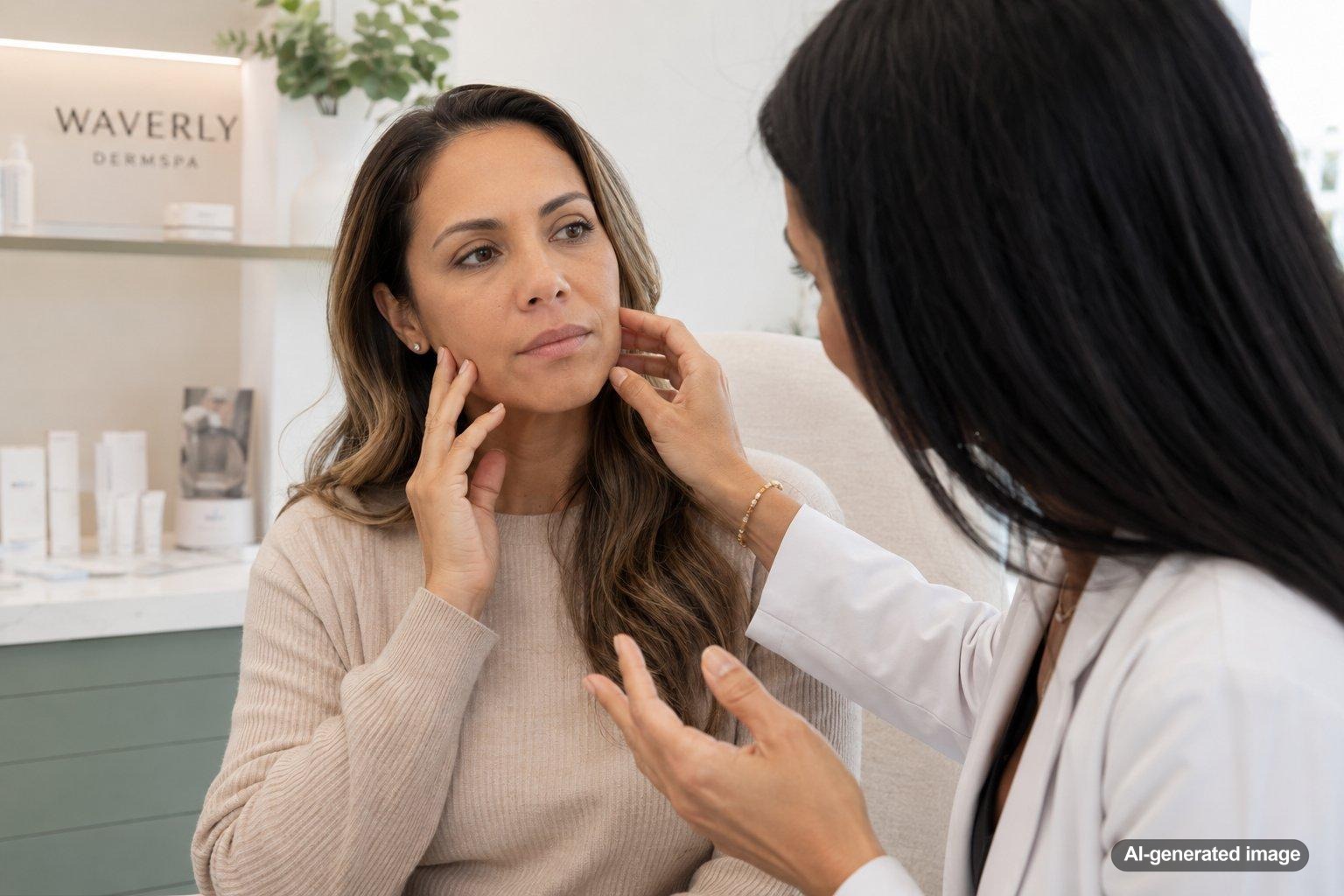
Waking up with lines pressed into your cheeks, forehead, or chest can feel surprising, especially when they seem to linger longer than they used to. In many cases, these marks are simply temporary pressure creases from your pillow, sleep position, or sheets.
The reason they may become more noticeable is that skin changes over time. Hydration, skin elasticity, collagen support, dryness, and the way your face rests overnight can all influence how quickly the skin smooths back out in the morning.
Quick answer
- Sleep lines often happen when skin is compressed against a pillow or bedding for several hours.
- They may linger more when skin is dry, dehydrated, sun-damaged, or naturally losing elasticity over time.
- Gentle hydration, consistent sunscreen, and a supportive nighttime routine may help skin look smoother.
- If lines become deeper, persistent, or are paired with irritation, texture changes, or concerning spots, a dermatologist can evaluate your skin.
What sleep lines are
Sleep lines are temporary creases that appear after your skin has been folded or pressed during sleep. They are different from expression lines, which form from repeated muscle movement, although both can become more noticeable as skin structure changes with age.
Think of sleep lines like fabric creases. A smooth, hydrated fabric releases wrinkles more easily than a dry or delicate one. Skin is more complex, but the idea is similar: when the skin barrier is dry or the skin has less bounce, pressure marks can take longer to soften.
Common causes or triggers
- Sleep position: Side and stomach sleeping can press the face into the pillow for hours.
- Pillow texture: Rougher fabrics, folds, or seams may leave more visible impressions.
- Dry or dehydrated skin: Skin that lacks moisture may look more creased in the morning.
- Natural changes in elasticity: Over time, skin may not rebound as quickly from pressure.
- Sun exposure history: UV exposure can contribute to visible texture changes and reduced firmness over time.
- Skin barrier stress: Over-exfoliation, harsh cleansers, or irritation can make skin look less smooth.
What you can do at home
A few gentle adjustments may help reduce the look of sleep creases without overcomplicating your routine.
- Use a soft pillowcase and smooth out folds before bed.
- Try sleeping on your back if it feels comfortable and realistic for you.
- Apply a simple moisturizer at night to support the skin barrier.
- Use daily broad-spectrum sunscreen in the morning, since UV exposure can affect visible firmness and texture over time.
- Avoid aggressive scrubbing or frequent harsh exfoliation, especially if your skin feels tight or sensitive.
- Stay consistent with skincare rather than switching products too often.
If your skin is easily irritated, keep the routine minimal: gentle cleanser, moisturizer, and sunscreen are often a practical foundation. A dermatologist or licensed skincare professional can help you decide whether ingredients like retinoids, peptides, or exfoliating acids make sense for your skin.
Professional options
When sleep lines are part of a broader concern about texture, firmness, dryness, or early visible aging, professional options may be discussed during an in-person skin evaluation. Common categories include medical-grade skincare guidance, hydrating facials, resurfacing treatments, microneedling-based treatments, injectables for expression-related lines, and energy-based treatments for texture or firmness.
These options are not one-size-fits-all. The right approach depends on your skin type, goals, medical history, sensitivity, downtime preferences, and whether the lines are mostly temporary pressure marks or more persistent creases.
At Waverly DermSpa, we offer HydraFacial and can help you understand whether it may be appropriate.
When to see a dermatologist
Sleep lines alone are usually not urgent. It is worth booking an evaluation if lines are accompanied by new irritation, persistent redness, scaling, discomfort, sudden texture changes, or a spot that is changing, bleeding, not healing, or concerning to you.
You may also benefit from a visit if the creases no longer fade during the day, if your skin feels chronically dry or sensitive, or if you want personalized guidance before adding stronger active ingredients or office treatments.
FAQ
Are sleep lines the same as wrinkles?
Not exactly. Sleep lines are often pressure marks from how your skin rests overnight. Wrinkles or persistent creases can be influenced by repeated movement, natural aging, sun exposure, skin structure, and genetics. Sometimes both can appear in the same area.
Why do my sleep lines last longer now?
Many people notice that skin rebounds more slowly over time. Dryness, dehydration, sun exposure, and changes in elasticity can all contribute to lines that linger longer after waking.
Can changing my pillowcase help?
It may help some people. A smoother pillowcase and fewer fabric folds can reduce friction and pressure marks, although it may not address deeper or more persistent lines.
Should I use a stronger anti-aging product?
Possibly, but it depends on your skin. Stronger active ingredients can be helpful for some people and irritating for others. If you have sensitive skin, rosacea-prone skin, dryness, or a history of irritation, it is best to ask a dermatologist before changing your routine.
Do I need a cosmetic treatment for sleep lines?
Not necessarily. Temporary sleep lines often improve with simple routine and lifestyle adjustments. If lines are becoming more persistent or you want a smoother overall appearance, a professional consultation can help clarify which options may be reasonable.
Ready to get help?
Schedule an appointment or send a message and our team will get back to you.
Prefer to call? 954-666-3736
Disclaimer
This article is for educational purposes and is not medical advice. For diagnosis and personalized treatment, please book an appointment with a board-certified dermatologist.
