

You wash your hair, rinse thoroughly, and enjoy that freshly cleaned feeling. Yet a few hours later, you notice an unpleasant, musty smell near your scalp. Sometimes the odor is noticeable immediately after washing, even though your hair looks clean. This can be frustrating, particularly when you are already careful about your hygiene.
A musty scalp smell despite clean hair often comes from a combination of natural scalp oils, sweat, microorganisms, or product residue. In some cases, inflammatory scalp conditions such as seborrheic dermatitis may contribute. The important distinction is that clean hair and a healthy, balanced scalp are not necessarily the same thing. Understanding what is happening at the skin level can help you make more informed decisions about your hair care routine and recognize when a dermatologist should evaluate persistent symptoms.
Quick Answer: Why Does a Clean Scalp Smell Musty?
- Natural oil and sweat: Sebum and perspiration can interact with microorganisms on the scalp and contribute to odor.
- Product buildup: Dry shampoo, styling products, conditioner, and oils may leave residue near the roots.
- Seborrheic dermatitis: This inflammatory condition can cause greasy scaling, irritation, and changes in the scalp environment.
- Prolonged moisture: Sweat, damp hair, and limited airflow can make unpleasant odors more noticeable.
- Other scalp conditions: Persistent odor accompanied by itching, bumps, crusting, or hair loss deserves professional evaluation.
Why Clean Hair Does Not Always Mean a Clean-Smelling Scalp
Your scalp is living skin containing numerous oil glands, sweat glands, and hair follicles. It also supports a natural community of bacteria and fungi, including yeasts that normally exist on human skin.
These microorganisms are not automatically harmful. They are part of the scalp’s normal environment. However, when sweat, oil, dead skin cells, and other substances accumulate, microbial activity can contribute to an unpleasant smell.
Hair washing removes surface debris, but the results depend on where shampoo is applied, how thoroughly it is rinsed, and what else is happening on the scalp.
For example, someone may concentrate shampoo on the lengths of their hair while barely cleansing the skin underneath. Another person may wash carefully but develop excess oil or scaling between washes. Both situations can produce odor without indicating that someone has poor hygiene.
Common Reasons Your Scalp Smells Musty After Washing
1. Natural Scalp Oil and Sweat
Sebum helps lubricate the skin and hair. Sweat contributes to temperature regulation. Neither substance necessarily has a strong odor on its own, but their interaction with skin microorganisms can create noticeable smells.
People with naturally oily scalps may notice odor returning sooner after washing. Exercise, humid weather, hats, and prolonged outdoor activity can also increase perspiration.
In Fort Lauderdale, where warm temperatures and humidity are familiar parts of daily life, a scalp may become sweaty even during relatively ordinary activities.
2. Seborrheic Dermatitis and Dandruff
Seborrheic dermatitis is an inflammatory skin condition that frequently affects the scalp. It is associated with several factors, including the skin’s response to Malassezia yeast, which normally lives on human skin.
Common features include greasy or dry-looking flakes, itching, irritation, and patches of scaling. Depending on skin tone, affected areas may appear red, pink, purple, lighter, or darker than surrounding skin.
Some people with seborrheic dermatitis also notice an unpleasant scalp smell. However, odor alone is not sufficient to identify this condition.
Persistent flaking or irritation warrants evaluation because other conditions, including psoriasis and certain infections, can produce overlapping symptoms.
3. Hair Product Residue
Dry shampoo, leave-in conditioner, styling cream, pomade, and hair oils can accumulate around the roots, especially when products are layered repeatedly.
Residue may combine with natural oils and sweat, making the scalp feel coated even after a recent wash. Heavy products can also make it more difficult to distribute shampoo directly onto the skin.
Consider whether the smell becomes more noticeable after using a particular styling product or following several days of dry shampoo application.
4. Damp Hair and Limited Airflow
Leaving dense or long hair wet for extended periods may contribute to a damp, musty sensation, especially when the roots remain moist beneath tightly arranged hair.
Going to bed with wet hair, wearing a hat over damp roots, or securing sweaty hair tightly can prolong moisture exposure.
Moisture does not automatically mean an infection is present. However, prolonged dampness can make an already oily or irritated scalp less comfortable and may contribute to noticeable odor.
5. Folliculitis or Other Scalp Infections
Folliculitis involves inflammation of hair follicles and can sometimes be associated with bacteria, yeast, or other factors. Scalp folliculitis may cause small itchy bumps, pustules, soreness, or crusting.
Some scalp infections can also produce changes in odor, particularly when drainage or significant inflammation is present. A fungal infection of the scalp may cause scaling, broken hairs, or patches of hair loss.
These conditions require an accurate diagnosis rather than repeated attempts to cover an odor with scented products. A dermatologist can determine whether an infection is present and whether prescription treatment is appropriate.
6. Scalp Psoriasis or Other Inflammatory Conditions
Scalp psoriasis can cause thicker patches of scale, itching, and irritation. Although psoriasis itself is not defined by a musty smell, accumulated scale, sweat, and other changes in the scalp environment may coexist with odor.
Contact dermatitis from hair products can also produce redness, burning, itching, or flaking. These symptoms sometimes become more noticeable after switching shampoos, coloring products, fragrances, or styling treatments.
Because several inflammatory conditions can look similar, a professional examination is helpful when symptoms persist.
What You Can Do at Home to Reduce Scalp Odor
If you have occasional scalp odor without concerning symptoms, a few conservative adjustments may help you understand what is contributing to it.
- Focus shampoo on the scalp: Gently work shampoo through the roots with your fingertips, allowing the lather to cleanse the skin rather than concentrating only on the hair lengths.
- Rinse thoroughly: Take time to remove shampoo and conditioner, particularly around the crown, behind the ears, and near the hairline.
- Adjust washing frequency thoughtfully: An oily, sweaty scalp may benefit from more frequent cleansing, while dry, tightly coiled, or sensitive hair and scalps may require a different schedule.
- Review styling products: Consider temporarily reducing heavy oils, dry shampoo, and products applied directly to the scalp to see whether residue is contributing.
- Dry the roots comfortably: Avoid leaving the scalp damp under hats, scarves, or tightly secured hairstyles for prolonged periods.
- Clean items that contact your hair: Regularly wash pillowcases, hats, brushes, and reusable hair accessories according to their care instructions.
- Choose gentle products: If your scalp is easily irritated, fragrance-free options may be more comfortable than heavily scented formulas.
Avoid aggressive scrubbing, scratching, or applying undiluted essential oils, alcohol, or household disinfectants to the scalp. These approaches may cause irritation without addressing the underlying reason for the odor.
Can a Medicated Shampoo Help?
When dandruff or seborrheic dermatitis is contributing to scalp symptoms, certain medicated shampoos may be helpful. Depending on the condition, a dermatologist may recommend products containing antifungal or scale-reducing ingredients.
These shampoos are not interchangeable, and they do not address every cause of scalp odor. The appropriate product, frequency, and contact time depend on the diagnosis, hair type, scalp sensitivity, and other individual factors.
If your scalp is already irritated, repeatedly switching between strong products may make it harder to determine which ingredients are helping and which are causing discomfort.
For persistent symptoms, a dermatologist can help distinguish ordinary product buildup from a condition that needs targeted treatment.
How a Dermatologist Evaluates Persistent Scalp Odor
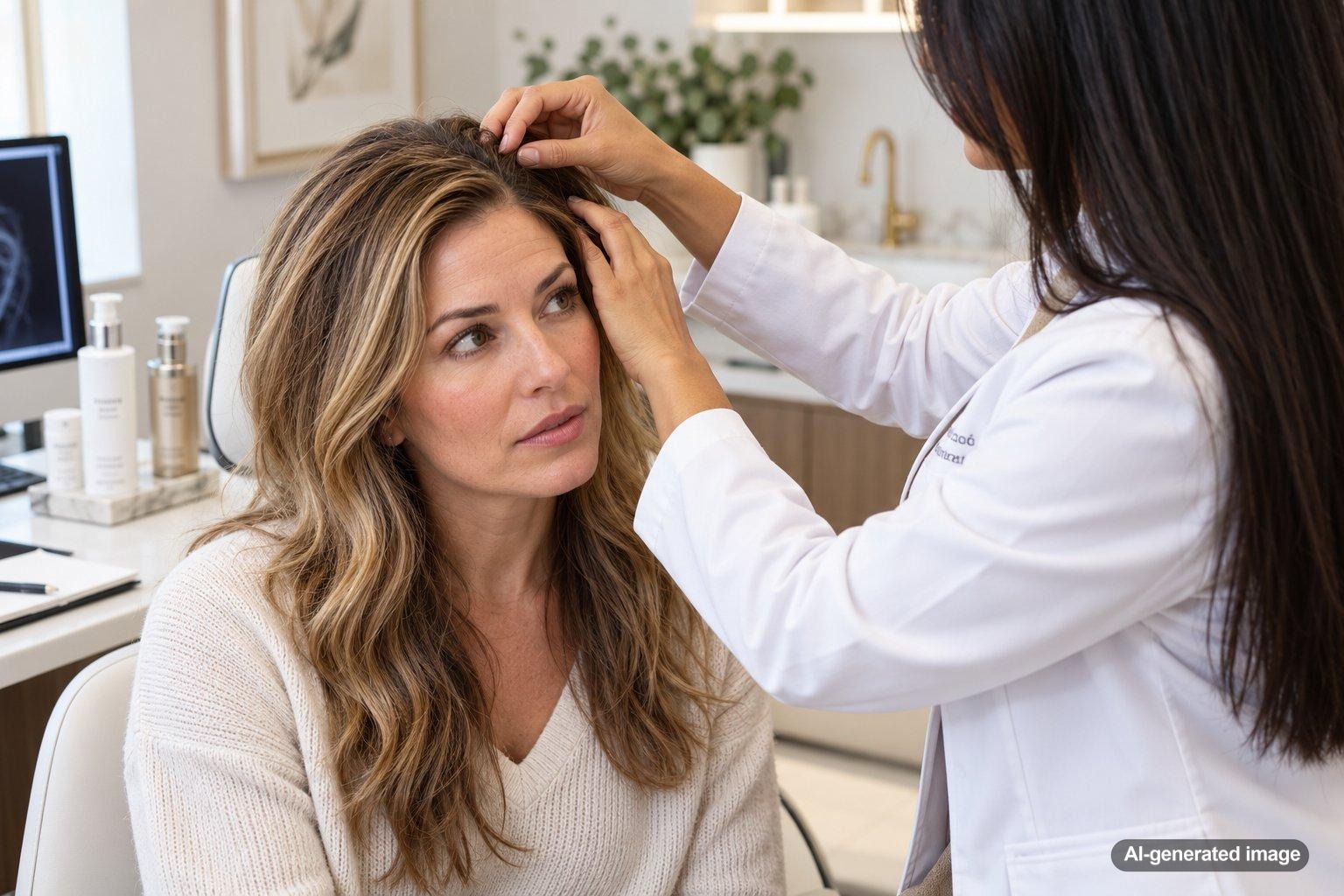
A dermatology visit generally begins with a review of your symptoms, hair care routine, and medical history. Your clinician may ask when the odor started, whether it appears immediately after washing, and whether itching, scaling, tenderness, or hair shedding occurs alongside it.
The scalp examination may focus on oiliness, inflammation, visible scale, follicular bumps, and changes in hair density.
Depending on the findings, professional options may include:
- Guidance on cleansing frequency and suitable scalp care products.
- Medicated shampoos for certain inflammatory or yeast-associated conditions.
- Prescription topical therapies when clinically appropriate.
- Additional testing when an infection or another specific scalp disorder is suspected.
- A personalized maintenance plan for conditions that tend to recur.
The goal is to identify what is happening on the scalp rather than simply masking an unpleasant smell with fragrance.
When Should You See a Dermatologist?
Occasional scalp odor after exercise or a humid day may not require medical attention. However, an examination is reasonable when the smell persists despite a consistent, gentle cleansing routine.
Consider scheduling an appointment if you notice:
- Recurring odor that returns quickly after washing.
- Persistent itching, burning, redness, or unusual scaling.
- Painful bumps, pustules, sores, or crusting.
- New patches of hair loss or increasing hair breakage.
- Scalp irritation that worsens after using hair products.
- Symptoms that interfere with sleep, comfort, or daily activities.
Seek prompt medical assessment if you develop rapidly spreading redness, significant swelling, severe pain, fever, or substantial drainage. These symptoms may indicate a condition that should not be managed through routine hair care alone.
Frequently Asked Questions
Why does my scalp smell musty right after I shampoo?
Possible explanations include residue that was not fully removed, natural oil accumulation, prolonged moisture, or an underlying scalp condition. If the odor consistently returns immediately after washing, a dermatologist can help evaluate the cause.
Does a smelly scalp mean I have a fungal infection?
No. Sweat, sebum, product buildup, and ordinary microbial activity can all contribute to odor. A fungal infection is only one possibility and cannot be confirmed by smell alone.
Can seborrheic dermatitis cause a musty scalp smell?
It may contribute to an unpleasant smell in some people, particularly when greasy scale and oil accumulate. Typical signs also include flaking, itching, or irritation. A dermatologist can distinguish seborrheic dermatitis from other scalp conditions.
Should I wash my hair every day if my scalp smells?
Not necessarily. Washing frequency depends on oil production, activity level, hair texture, and scalp sensitivity. Some people benefit from frequent cleansing, while others may experience dryness or irritation with daily shampooing.
Can sleeping with wet hair cause scalp odor?
Remaining damp for long periods may contribute to musty odors, especially when combined with sweat, oil, or limited airflow. However, wet hair alone does not establish that an infection or other medical condition is present.
Will a clarifying shampoo solve persistent scalp odor?
A clarifying shampoo may help when product residue is an important factor. It may not address seborrheic dermatitis, folliculitis, psoriasis, or other conditions. If odor continues or is accompanied by scalp symptoms, professional evaluation is appropriate.
A Healthier Approach to Scalp Comfort
A musty scalp smell does not automatically mean your hair is dirty or that you are doing something wrong. The scalp has its own complex balance of oil, moisture, microorganisms, and skin cell turnover. Even a careful washing routine may not fully address symptoms when that balance changes.
Simple adjustments to cleansing and product use may help with occasional odor. When the problem is persistent, understanding the underlying cause is more useful than repeatedly adding stronger shampoos or fragrance.
At Waverly DermSpa in Fort Lauderdale, Dr. Maryann Mikhail, MD, can evaluate scalp concerns and help you understand which next steps may be appropriate for your symptoms.
Ready to get help?
Schedule an appointment or send a message and our team will get back to you.
Prefer to call? 954-666-3736
Disclaimer
This article is for educational purposes and is not medical advice. For diagnosis and personalized treatment, please book an appointment with a board-certified dermatologist.
Sources & further reading
- Cleveland Clinic – Smelly Scalp
- American Academy of Dermatology (AAD) – Seborrheic dermatitis: Signs and symptoms
- American Academy of Dermatology (AAD) – Seborrheic dermatitis: Diagnosis and treatment
- DermNet – Scalp folliculitis
