

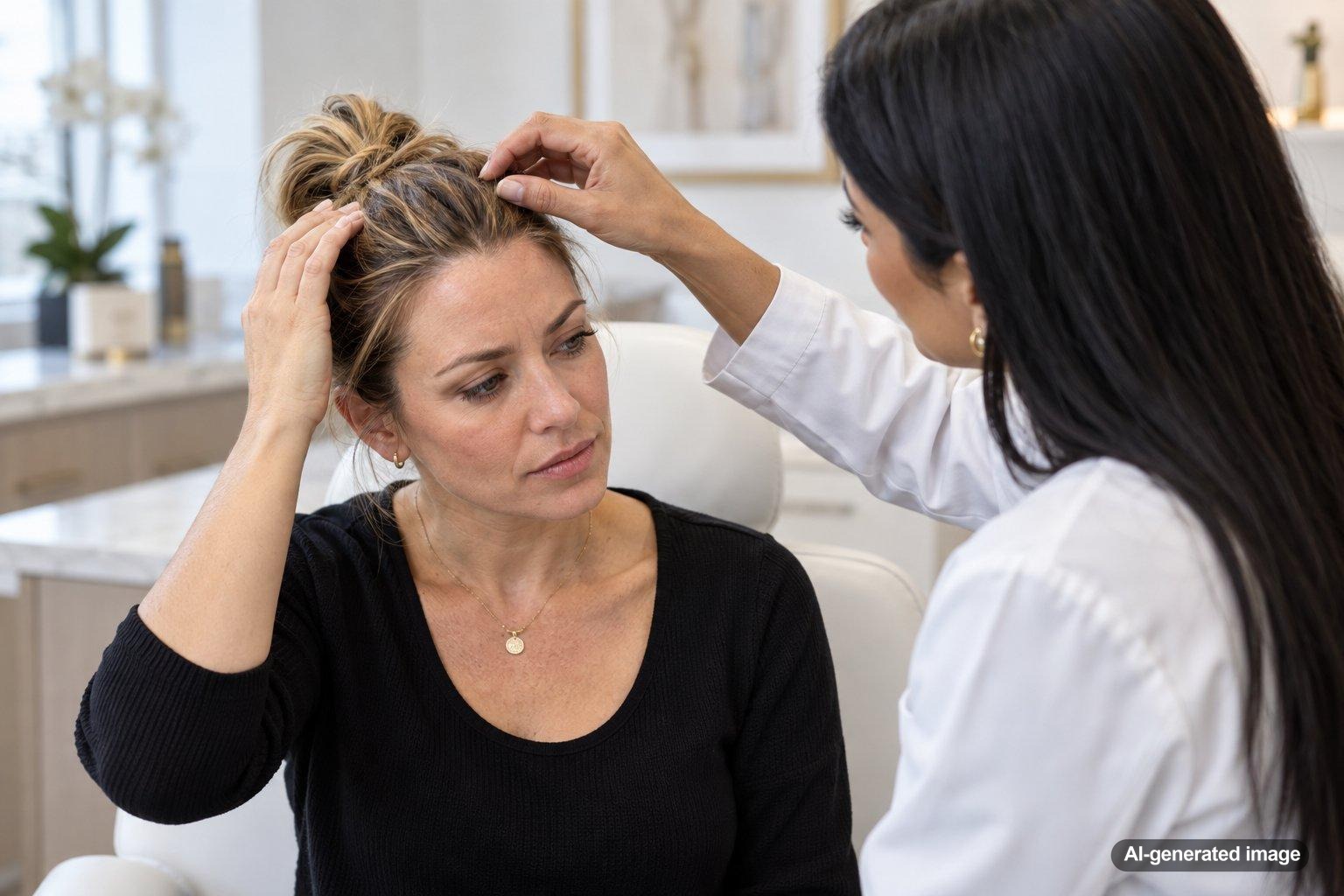
If your scalp feels tight, tender, or sore after wearing your hair in a ponytail, bun, braid, or other pulled-back style, the most likely explanation is mechanical tension. Hair follicles and the surrounding scalp can become uncomfortable when hair is held tightly in one direction for hours. The sensation may be especially noticeable when you take the style down and move your hair again.
Occasional mild soreness that improves after loosening your hairstyle is often related to styling pressure. Repeated or prolonged pulling, however, can place unnecessary stress on the hair and follicles. If soreness keeps returning, becomes intense, or is accompanied by bumps, scaling, broken hairs, or visible thinning, a dermatologist can evaluate whether something beyond simple hairstyle tension is contributing.
Quick answer
- Tight ponytails, buns, braids, extensions, and similar styles can place repeated tension on the scalp and hair follicles.
- Soreness after taking your hair down can occur because the hair has been held under tension in one direction for an extended period.
- Loosening the style and rotating hairstyles may help reduce repeated pulling.
- Persistent pain, scalp changes, breakage, or thinning are reasons to have the area evaluated.
What causes that tight, sore feeling?
Each hair grows from a follicle within the scalp. When many hairs are pulled tightly at the same time, that force is transferred to the follicles and surrounding skin. A high ponytail, sleek bun, tight braid, or heavy extension can create continuous tension while the style is in place.
Once you release the hairstyle, moving the hair in a different direction may make the scalp feel unusually sensitive for a while. The discomfort may be concentrated near the temples, hairline, crown, or wherever the style created the most pulling.
Common causes and triggers
- Tight ponytails or buns: Styles that feel secure enough to pull at the scalp can create localized tenderness.
- Repeated styling in the same direction: Wearing the same pulled-back style frequently can repeatedly stress the same areas.
- Braids, extensions, or added hair: Extra weight and tension may increase pulling on individual follicles.
- Hair clips, elastics, or accessories: Firm accessories can concentrate pressure in a small area.
- Existing scalp sensitivity: Irritation, dryness, or another scalp condition can make tension feel more noticeable.
Can tight hairstyles affect your hair?
Repeated pulling can sometimes contribute to traction alopecia, a form of hair loss associated with ongoing tension on the hair. Early clues can include discomfort from tight styles, broken hairs, or thinning in areas that receive the most tension, especially around the hairline.
This does not mean that temporary soreness automatically indicates hair loss. The concern is greater when tight styling is frequent, prolonged, or accompanied by visible changes in the hair or scalp.
What you can do at home
For mild discomfort that appears after a tight hairstyle, simple styling changes may reduce tension:
- Take down a hairstyle if it starts to hurt rather than waiting until the end of the day.
- Wear ponytails, buns, and braids more loosely.
- Alternate where you position your ponytail or bun instead of pulling the same area repeatedly.
- Use softer hair ties that do not require extreme tension to stay in place.
- Give your scalp breaks from tightly pulled styles.
- Be cautious with heavy extensions or accessories if they create noticeable pulling.
If a particular style consistently causes pain, that discomfort is useful feedback that the hairstyle may be placing too much tension on your scalp.
Professional evaluation and options
If soreness is persistent or there are signs of hair breakage or thinning, a dermatologist can examine the scalp and hair follicles. The goal is to determine whether the discomfort is primarily related to styling tension or whether another scalp or hair condition could be involved.
Depending on what is found, recommendations may focus on reducing traction, modifying hair-care practices, addressing scalp irritation, or discussing appropriate medical options when hair loss or another condition is present. Treatment choices depend on the cause, so an examination is more useful than trying to identify the problem from soreness alone.
When to see a dermatologist
Consider scheduling an evaluation if scalp soreness continues even when your hair is loose or if you notice:
- Persistent or worsening tenderness
- Visible thinning or a receding hairline
- Broken hairs concentrated around the hairline or another pulled area
- Redness, swelling, crusting, bumps, or drainage
- Significant itching, burning, or scaling
- Distinct patches of hair loss
- Scalp pain without an obvious connection to hairstyling
These findings can have several possible causes, and a dermatologist can evaluate the scalp directly rather than relying on symptoms alone.
FAQ
Why does my scalp hurt when I take my ponytail out?
A tight ponytail keeps many hairs under tension in the same direction. When you release the style and the hairs move again, the follicles and surrounding scalp may feel temporarily tender.
Is it normal for a bun to make my scalp sore?
Mild temporary soreness can occur when a bun is tight or heavy. A hairstyle that repeatedly causes pain is a reason to loosen it or change how you wear your hair.
Can wearing my hair up cause hair loss?
Repeated tension from tightly pulled hairstyles can be associated with traction alopecia. Risk depends on factors such as how tightly the hair is pulled, how frequently the style is worn, and how long the tension continues.
Should I stop wearing ponytails completely?
Not necessarily. The key is reducing excessive tension. Looser ponytails, changing the placement of the style, using gentler ties, and taking breaks from tightly pulled hairstyles can reduce repeated stress on the same areas.
Why does my scalp still hurt when my hair is down?
Lingering sensitivity may occur after prolonged tension, but scalp pain can also have other causes. If discomfort persists, occurs frequently, or comes with redness, scaling, bumps, or hair loss, a dermatologist can evaluate it.
Ready to get help?
Schedule an appointment or send a message and our team will get back to you.
Prefer to call? 954-666-3736
This article is for educational purposes and is not medical advice. For diagnosis and personalized treatment, please book an appointment with a board-certified dermatologist.
