

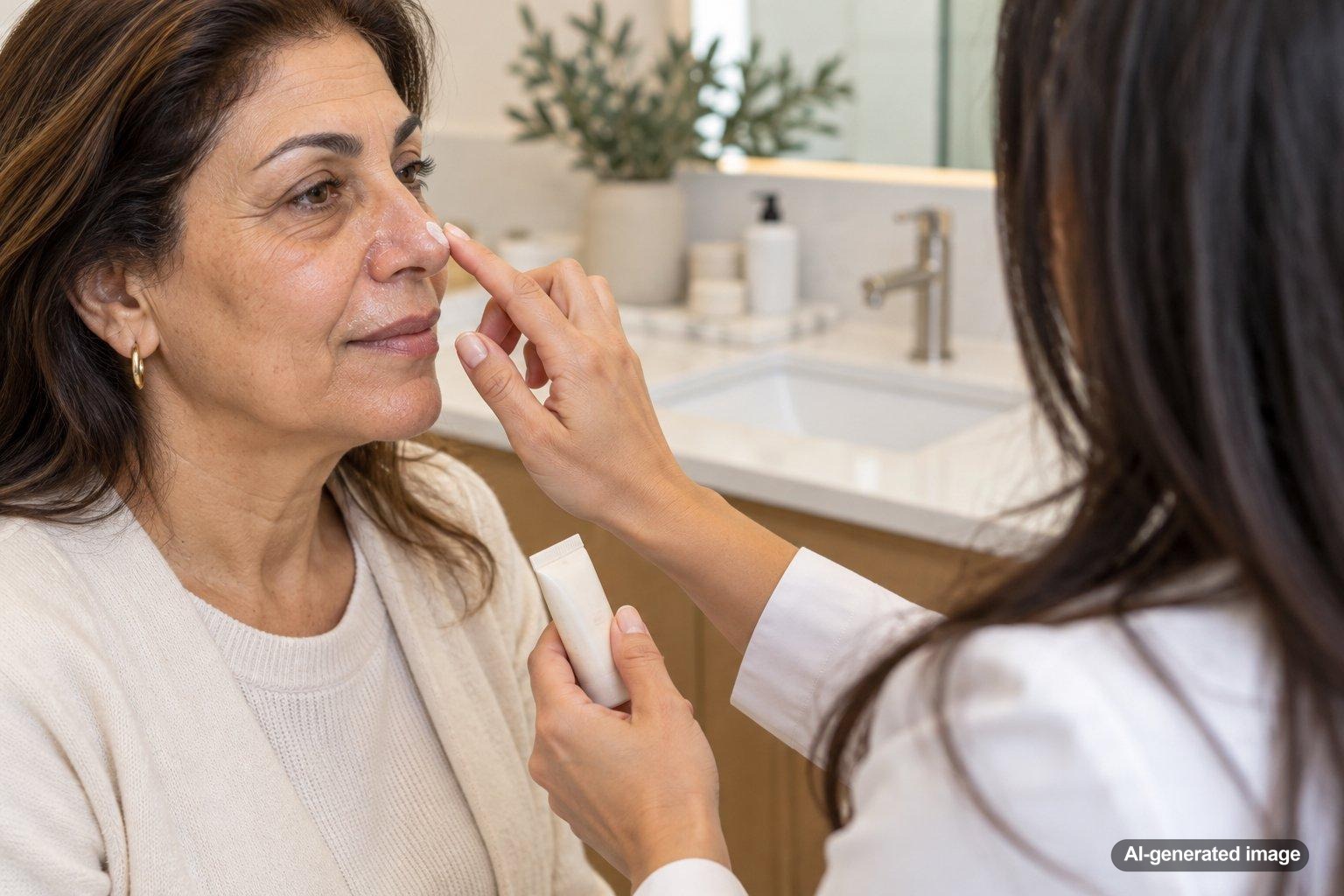
If your nose starts peeling after you apply an acne spot treatment, the most likely explanation is irritation and dryness caused by the product’s active ingredients. Treatments designed to clear clogged pores and reduce breakouts can also disrupt the skin’s protective barrier, especially when applied too frequently, in excessive amounts, or alongside other potentially irritating products.
The nose can be particularly frustrating to treat because it may look oily while still developing dry, sensitive patches. Flaking around the nostrils, peeling across the bridge, or a tight sensation after cleansing does not necessarily mean the acne medication is working better. Understanding why this happens can help you distinguish manageable dryness from irritation that deserves professional attention.
Quick Answer: Why Your Nose Is Peeling
- Acne ingredients can cause dryness. Benzoyl peroxide, salicylic acid, and topical retinoids may contribute to peeling and irritation.
- Too much product can increase irritation. Applying a thick layer or repeatedly treating the same area may aggravate the skin.
- The skin barrier may be stressed. Dryness, tightness, stinging, and visible flakes can occur when the skin becomes irritated.
- Other skincare products may contribute. Exfoliating cleansers, scrubs, and multiple acne treatments can compound the problem.
- Persistent or painful peeling deserves attention. A dermatologist can assess whether the reaction is ordinary irritation or another skin condition.
What Happens When Acne Treatments Make Skin Peel?
The outermost layer of skin helps retain moisture and protect against environmental irritants. Acne treatments influence processes such as oil production, clogged pores, inflammation, and the shedding of skin cells. Although these effects can be useful for acne management, certain ingredients can also make skin feel dry or uncomfortable.
When the skin becomes irritated, its protective function may be temporarily compromised. Moisture escapes more readily, and the surface can appear rough, flaky, or visibly peeling. Some people experience mild dryness without significant discomfort, while others develop redness, burning, or sensitivity.
Peeling is not a reliable measure of treatment effectiveness. An acne product does not need to cause visible flaking to be beneficial, and increasing irritation does not mean blemishes will resolve faster.
Which Acne Ingredients Commonly Cause Nose Peeling?
Benzoyl Peroxide
Benzoyl peroxide is commonly used to reduce acne-associated bacteria. It is available in cleansers, gels, and spot treatments. Dryness, peeling, stinging, and irritation are recognized potential side effects, particularly when the skin is adjusting to treatment or the product is used excessively.
Applying benzoyl peroxide repeatedly to a small area of the nose may leave the surrounding skin irritated even after the original blemish begins improving. Stronger formulations are not automatically more appropriate for sensitive skin.
Salicylic Acid
Salicylic acid helps loosen material that contributes to clogged pores and is frequently included in treatments for blackheads and whiteheads. Its exfoliating action can also contribute to dryness, especially when combined with exfoliating face washes, toners, or other active ingredients.
Peeling along the sides of the nose may become more noticeable when salicylic acid is applied over an already dry or irritated area.
Topical Retinoids
Retinoids such as adapalene and prescription tretinoin help regulate the processes involved in clogged pores and acne formation. They can also produce dryness and irritation, particularly during the early stages of use.
Retinoids are generally used according to a broader treatment plan rather than simply applying extra medication to individual pimples. A dermatologist can help determine an appropriate application schedule and supportive skincare routine.
Why the Nose Can React More Than Other Areas
The nose contains numerous oil-producing glands, but an oily appearance does not protect skin from becoming dehydrated or irritated. Several everyday factors may also make peeling more apparent in this area.
- Product accumulation: Creams and gels may collect around the creases beside the nostrils.
- Repeated application: A noticeable blemish can encourage frequent spot treatment of the same location.
- Friction: Tissues, facial cleansing, and rubbing the nose can aggravate sensitive skin.
- Overlapping products: Acne cleansers, exfoliating serums, and spot treatments may affect the same small area.
- Environmental exposure: Sun, wind, and dry indoor air can add to existing discomfort.
In Fort Lauderdale, outdoor activities and frequent sun exposure may introduce additional considerations for people using irritating acne treatments. Gentle skincare and consistent sun protection remain important even when the skin appears oily.
What You Can Do at Home for a Peeling Nose
If peeling begins after using a nonprescription acne product, consider whether the affected skin needs a break from potentially irritating ingredients. Avoid applying additional spot treatment to visibly raw, cracked, or uncomfortable areas. For prescription medications, contact the prescribing clinician before changing the regimen.
Keep Cleansing Gentle
Choose a mild, non-abrasive cleanser and use lukewarm water. Avoid cleansing brushes, rough washcloths, scrubs, and attempts to rub away loose skin. Gently pat the face dry rather than repeatedly wiping the irritated area.
Use a Simple Moisturizer
A fragrance-free moisturizer formulated for sensitive or acne-prone skin may help reduce dryness and support the skin barrier. Products labeled non-comedogenic are designed to minimize the likelihood of clogged pores. Applying moisturizer after gentle cleansing can help retain moisture.
Avoid Combining Multiple Exfoliating Products
Using several products containing salicylic acid, exfoliating acids, retinoids, or other potentially irritating ingredients can make it difficult to identify what is causing discomfort. Simplifying the routine may help reduce unnecessary irritation. A dermatologist can advise on which products should remain part of an acne treatment plan.
Protect the Area From Sun Exposure
Broad-spectrum sunscreen with SPF 30 or higher is an important part of daytime skincare. Choose a formula appropriate for sensitive, acne-prone skin. Shade and protective accessories can provide additional protection, particularly when the skin is irritated.
Do not pull or pick at peeling skin. Removing flakes prematurely can create additional irritation and may leave the area more uncomfortable.
Could It Be Something Other Than Acne Treatment Irritation?
Although a recent acne product is an important clue, not every peeling nose is caused by medication-related dryness. Other conditions can produce overlapping symptoms.
Irritant contact dermatitis can occur when repeated exposure to a product disrupts the skin’s protective surface. Allergic contact dermatitis involves an immune response to a substance and may produce itching, redness, or a rash. These reactions can look similar without a professional evaluation.
Seborrheic dermatitis can cause recurring flaky patches around the sides of the nose, sometimes accompanied by redness or greasy-looking scale. Eczema and other inflammatory skin conditions may also affect facial skin.
These possibilities matter when peeling continues despite simplifying the skincare routine, spreads beyond the treated area, or repeatedly returns in the same location. A dermatologist can examine the pattern and evaluate potential causes.
How a Dermatologist Can Help
When acne treatments repeatedly cause irritation, a dermatologist can review the active ingredients, product strengths, application habits, and other skincare products being used. The goal is to identify a treatment approach that addresses acne while considering the skin’s tolerance.
Depending on the evaluation, professional options may include adjustments to topical treatment, a different medication category, or a simplified skincare plan that emphasizes barrier support. Persistent or more extensive acne may require a broader treatment strategy.
Professional procedures are not automatically the right solution for peeling skin. In particular, additional exfoliating treatments may be inappropriate while the skin is actively irritated. At Waverly DermSpa, we offer Chemical Peels and can help you understand whether they may be appropriate. Any procedure should be considered only after the skin has been evaluated and its current condition taken into account.
When Should You See a Dermatologist?
Mild dryness can occur with topical acne products, but symptoms should not be ignored simply because they began during treatment. Consider arranging a dermatology evaluation when:
- Peeling persists or repeatedly returns despite gentle skincare.
- The skin becomes increasingly red, painful, swollen, or sensitive.
- Cracks, bleeding, or significant burning develop.
- A rash spreads beyond the area where the product was applied.
- The affected skin develops crusting, drainage, or other concerning changes.
- You cannot tolerate an acne treatment that was prescribed for ongoing use.
Severe swelling, blistering, or an intense reaction warrants prompt medical assessment. If symptoms include difficulty breathing or swelling of the lips, tongue, or throat, seek emergency medical care.
Frequently Asked Questions
Is peeling a sign that my acne spot treatment is working?
Not necessarily. Peeling can be a side effect of irritation or dryness rather than a sign of better acne control. Effective treatment does not require visible skin shedding.
Should I put more acne treatment on a peeling pimple?
Applying more medication to irritated skin can increase discomfort without improving results. Avoid additional nonprescription spot treatment on damaged skin, and ask your dermatologist about adjustments if you use a prescribed product.
Why does my nose peel even though it is oily?
Oil production and skin hydration are different processes. Your nose can produce noticeable oil while its surface becomes dry or irritated from acne products, cleansing habits, or environmental exposure.
Can I use moisturizer over acne-prone skin?
Yes. A gentle, non-comedogenic moisturizer can be useful for acne-prone skin, particularly when topical treatments cause dryness. Product selection should reflect your skin’s sensitivity and overall routine.
How long does peeling from acne treatments last?
The duration varies with the ingredient, frequency of use, degree of irritation, and individual skin sensitivity. If symptoms are not improving or are worsening, a dermatologist can evaluate the reaction rather than relying on a fixed recovery timeline.
Can peeling around my nostrils be caused by something else?
Yes. Irritant or allergic contact dermatitis, seborrheic dermatitis, and other inflammatory skin conditions may cause similar symptoms. Persistent or recurring flaking deserves evaluation, particularly when the pattern does not match where the acne product was applied.
Ready to get help?
Schedule an appointment or send a message and our team will get back to you.
Prefer to call? 954-666-3736
Disclaimer
This article is for educational purposes and is not medical advice. For diagnosis and personalized treatment, please book an appointment with a board-certified dermatologist.
Sources & Further Reading
- American Academy of Dermatology (AAD) – Moisturizer: Why you may need it if you have acne
- MedlinePlus (NIH) – Benzoyl Peroxide Topical: MedlinePlus Drug Information
- American Academy of Dermatology (AAD) – Acne: Diagnosis and treatment
