

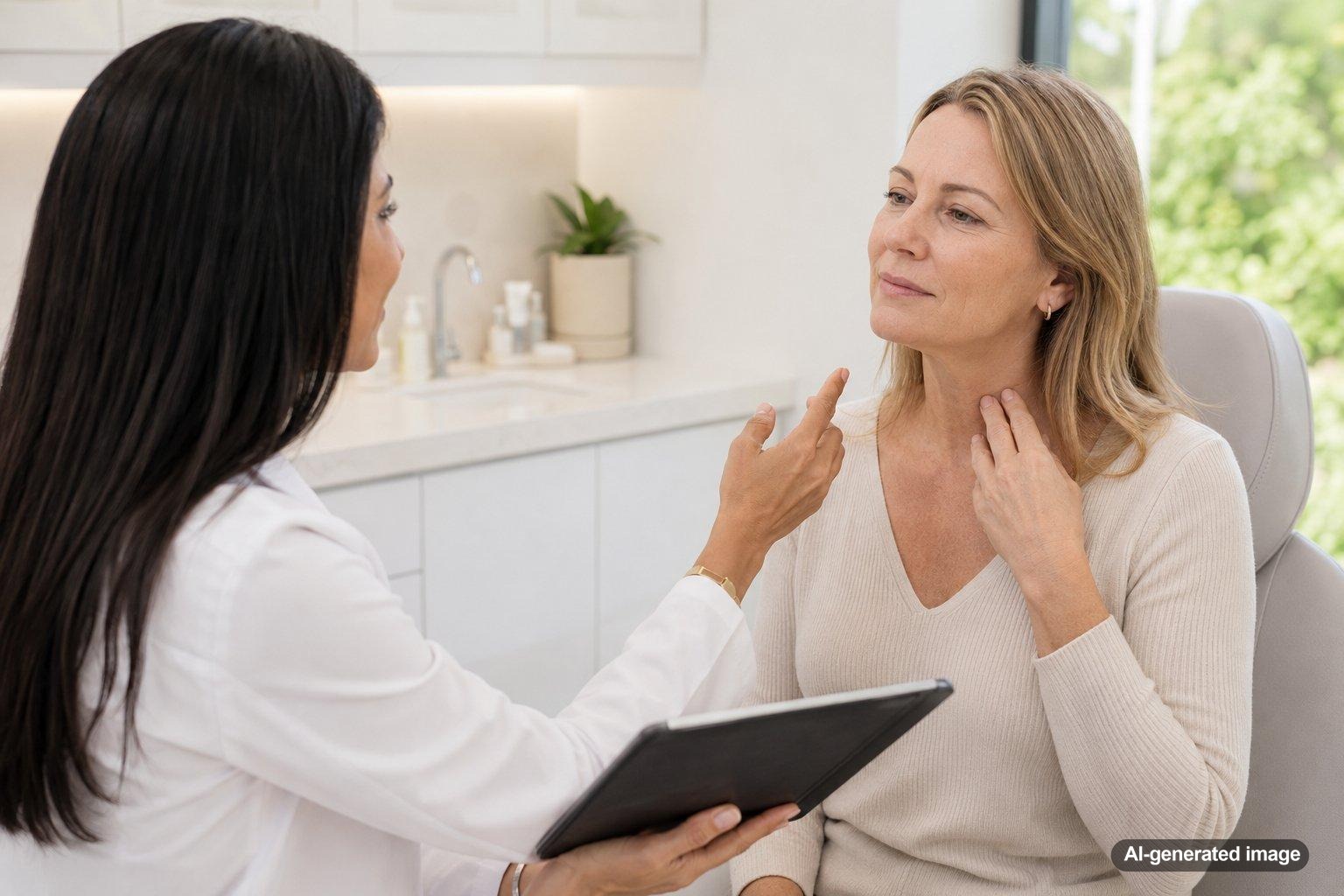
Many people notice that their neck seems to show signs of aging before their face. Fine lines, crepey texture, skin laxity, and visible bands can become noticeable even when facial skin still appears relatively smooth.
The good news is that this is a common concern. Several factors can contribute to faster aging in the neck area, and understanding them can help you make informed decisions about skincare, sun protection, and professional evaluation when needed.
Quick answer
- The neck has thinner skin than many areas of the face.
- Sun exposure often affects the neck over many years.
- Frequent movement and bending can contribute to visible lines.
- Many people focus skincare on the face and neglect the neck.
- Natural age-related changes in collagen and elasticity can become noticeable earlier in the neck.
What it is
Neck aging refers to gradual changes in skin texture, firmness, and appearance that occur over time. These changes may include fine lines, deeper folds, loose skin, uneven pigmentation, or prominent neck bands. While aging affects both the face and neck, the neck often reveals these changes earlier or more noticeably.
Common causes or triggers
- Thinner skin: The neck has delicate skin that can be more vulnerable to visible aging changes.
- Sun exposure: Ultraviolet exposure can contribute to changes in skin texture and pigmentation over time.
- Reduced collagen and elastin: Natural aging can affect the skin’s support structure.
- Repeated movement: Looking down at phones, reading, and everyday neck motion may contribute to visible creases.
- Skincare gaps: Sunscreen and anti-aging products are often applied to the face but not consistently to the neck.
- Genetics: Individual skin characteristics can influence how aging appears.
What you can do at home
- Apply sunscreen to the neck daily, not just the face.
- Extend your moisturizer and skincare routine down to the neck area.
- Use gentle cleansers that do not overly dry the skin.
- Maintain healthy lifestyle habits that support overall skin health.
- Be mindful of prolonged downward head positioning when possible.
Professional options
If neck aging is becoming a concern, a dermatologist can evaluate your skin and discuss appropriate options. Common approaches may include neuromodulators, fillers, energy-based treatments, skin resurfacing procedures, or collagen-stimulating treatments. Recommendations vary based on individual goals, anatomy, and skin characteristics.
At Waverly DermSpa, we offer Morpheus8 and can help you understand whether it may be appropriate.
When to see a dermatologist
- You notice rapid or unexpected changes in the appearance of your neck.
- You have concerns about skin texture, pigmentation, or laxity.
- Home skincare measures are not addressing your concerns.
- You’re interested in learning about professional treatment options.
- You’re unsure whether a change is related to normal aging or something that deserves evaluation.
FAQ
Is it normal for the neck to age before the face?
Yes. Many people notice neck aging earlier because the skin is delicate and exposed to daily movement and environmental factors.
Can sunscreen help slow visible neck aging?
Consistent sun protection may help reduce the impact of ongoing sun exposure on the neck.
Why do horizontal neck lines appear?
Horizontal lines can be associated with natural anatomy, repeated movement, and age-related skin changes.
Should I use my facial skincare products on my neck?
Many skincare products can be extended to the neck, although individual skin sensitivity varies.
Are professional treatments available for neck aging?
Yes. A dermatologist can discuss available options and help determine which approaches may align with your goals.
Ready to get help?
Schedule an appointment or send a message and our team will get back to you.
Prefer to call? 954-666-3736
Disclaimer
This article is for educational purposes and is not medical advice. For diagnosis and personalized treatment, please book an appointment with a board-certified dermatologist.
