

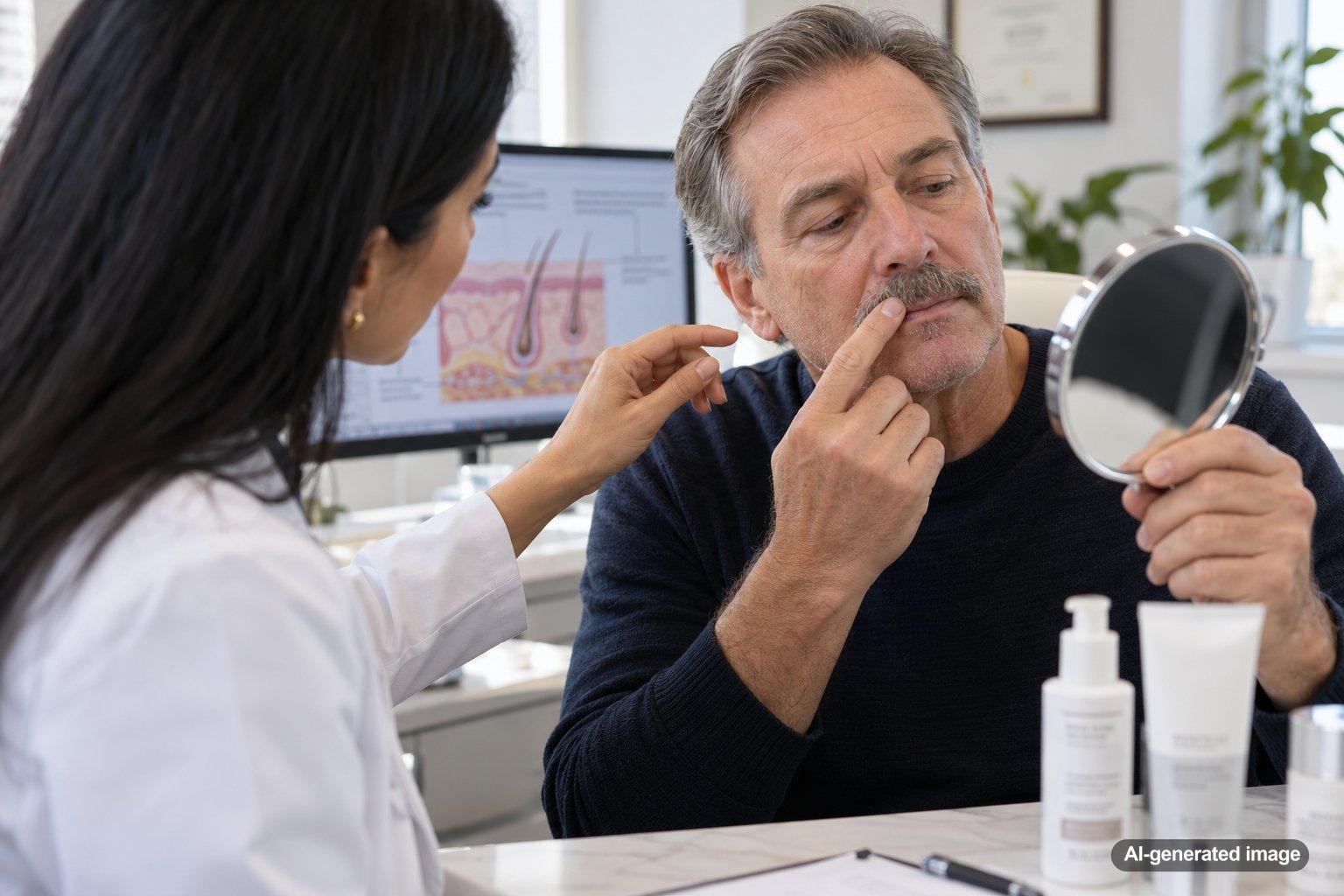
Flaky skin beneath your mustache can be frustrating, especially when your cheeks, forehead, and the rest of your face look completely normal. This localized flaking often happens because the skin around the upper lip has its own combination of oil production, facial hair, moisture exposure, and grooming habits. Seborrheic dermatitis, sometimes called facial dandruff, is one possible explanation, but ordinary dryness and irritation from shaving or grooming products can create similar symptoms.
The important distinction is that flakes do not always mean your skin simply needs more moisturizer. Their appearance, the condition of the underlying skin, and whether you experience itching or irritation can help a dermatologist distinguish between several possible causes. Understanding these differences can make it easier to choose gentle daily care and recognize when an examination would be useful.
Quick Answer: Why Does Only My Mustache Area Flake?
- Seborrheic dermatitis: This inflammatory condition often affects oil-rich, hair-bearing areas, including the mustache, eyebrows, and scalp.
- Product irritation: Toothpaste, shaving products, beard oils, fragrances, and facial cleansers may irritate the upper lip.
- Localized dryness: Frequent washing, harsh cleansers, and inadequate moisturizing can disrupt the skin barrier.
- Grooming friction: Trimming, shaving, rubbing, or brushing facial hair aggressively may aggravate sensitive skin.
- Other skin conditions: Contact dermatitis, psoriasis, and certain infections can sometimes resemble ordinary mustache dandruff.
What Is Happening to the Skin Beneath Your Mustache?
Flaking occurs when visible layers of dead skin cells separate from the surface. Normal skin continually sheds cells, but irritation, inflammation, and changes in the skin barrier can make that shedding more noticeable.
The mustache area is particularly interesting because facial hair can make it harder to see the skin directly. Small flakes may collect around individual hairs, making the condition appear more dramatic than similar scaling on an uncovered cheek. Grooming products can also remain close to the skin, while food, beverages, saliva, and repeated wiping create additional opportunities for irritation.
Another important factor is sebum, the oil produced by sebaceous glands. The upper lip and surrounding facial areas contain oil-producing glands, and some inflammatory conditions favor these locations. Consequently, your mustache area may develop noticeable scaling even when the rest of your complexion feels comfortable.
Common Reasons Mustache Skin Flakes
1. Seborrheic Dermatitis
Seborrheic dermatitis is one of the more recognizable explanations for recurring flakes in facial hair. It tends to affect areas with substantial oil-gland activity, including the scalp, eyebrows, sides of the nose, and beard or mustache region.
The condition involves inflammation and is associated with an altered skin response to Malassezia yeast, which normally lives on human skin. It does not mean someone has poor hygiene.
Possible clues include white or yellowish flakes, mildly greasy scale, itching, and patches of underlying redness or discoloration. Some people also notice scalp dandruff or occasional scaling around their eyebrows. However, seborrheic dermatitis can be localized, so the absence of flakes elsewhere does not exclude it.
2. Irritation From Toothpaste or Oral Care Products
The upper lip is repeatedly exposed to toothpaste residue, mouthwash, and water during daily oral hygiene. Certain flavorings, fragrances, and other ingredients may irritate sensitive skin, particularly when a product remains in contact with the mustache.
Flaking related to irritation may occur alongside stinging, tightness, or discomfort. If symptoms repeatedly become more noticeable after brushing your teeth or changing an oral care product, that pattern is worth mentioning during a dermatology appointment.
3. Beard Oils, Waxes, and Styling Products
Mustache waxes, grooming oils, balms, and scented conditioners can remain against the skin for extended periods. Although many people tolerate these products, some ingredients may cause irritation or allergic contact dermatitis.
A product marketed as moisturizing or natural is not automatically appropriate for every skin type. Essential oils, fragrance blends, and certain preservatives may be problematic for individuals with sensitive skin.
4. Repeated Shaving or Trimming
Clippers, razor blades, and frequent trimming can create friction along the upper lip. Shaving too closely or using excessive pressure may leave the skin irritated, especially when combined with fragranced aftershave products.
Flaking caused by mechanical irritation may be accompanied by tenderness, a rough texture, or discomfort immediately following grooming. Small bumps around hair follicles can suggest a different issue that may require examination.
5. A Weakened Skin Barrier
The skin barrier helps retain moisture and limit exposure to environmental irritants. Repeated washing, hot water, harsh soaps, and overuse of exfoliating ingredients can interfere with that function.
When the barrier becomes irritated, skin may feel tight, look rough, and shed visible flakes. Even if someone uses a moisturizer on the rest of the face, the product may not adequately reach the skin beneath a dense mustache.
6. Other Inflammatory or Infectious Conditions
Contact dermatitis and psoriasis can sometimes cause scaling in or around facial hair. Certain fungal or bacterial infections may also affect hair-bearing skin, although their appearance and management can differ considerably from ordinary dandruff.
Clues such as painful bumps, pustules, crusting, broken hairs, or patchy hair loss deserve professional evaluation rather than repeated attempts to treat the area as dry skin. Visual similarities between conditions are one reason persistent facial scaling should not be diagnosed from flakes alone.
How Can You Tell Dry Skin From Mustache Dandruff?
There is no single visual clue that establishes the cause, but a few patterns may help you describe the problem more accurately.
- Fine, dry-looking flakes with tightness: These may occur with dryness or irritation from cleansing and grooming.
- White or yellowish scale with an oily appearance: This can be associated with seborrheic dermatitis.
- Itching with redness or discoloration: This may suggest inflammation rather than uncomplicated dryness.
- Stinging after using a product: This may point toward an irritant reaction or contact dermatitis.
- Thicker, persistent plaques: These may warrant assessment for psoriasis or another inflammatory condition.
These observations are useful for communicating symptoms, not for confirming a diagnosis. Different conditions can overlap, and the same condition can look different across skin tones.
What Can You Do at Home for Flaky Mustache Skin?
For mild symptoms without concerning features, a conservative skincare approach may help reduce unnecessary irritation while you monitor the area.
Cleanse Gently and Rinse Thoroughly
Use a mild, fragrance-free facial cleanser and lukewarm water. Work carefully through the facial hair to reach the skin without vigorous scrubbing. Rinse thoroughly to remove cleanser residue, which can contribute to irritation.
Apply Moisturizer to the Skin, Not Just the Hair
A simple, fragrance-free facial moisturizer may help support the skin barrier. Use clean fingertips to distribute a small amount through the mustache and onto the underlying skin. Avoid assuming that a beard oil provides the same benefits as a moisturizer formulated for facial skin.
Simplify Your Grooming Routine
Consider temporarily reducing unnecessary styling products, especially recently introduced or heavily fragranced formulas. Keep trimming tools clean and avoid aggressive brushing, scraping, or picking at attached flakes.
Pay Attention to Repeated Irritants
After brushing your teeth, gently rinse away any residue around the mouth. Notice whether shaving, certain foods, prolonged moisture, or a particular grooming product seems to precede irritation. A brief record of these patterns can be helpful if symptoms continue.
Be Cautious With Medicated Products
When seborrheic dermatitis is involved, dermatologists sometimes recommend antifungal cleansing products or medicated shampoos suitable for the affected area. However, products designed for the scalp can irritate facial skin, and the correct approach depends on the diagnosis and formulation.
Avoid applying strong exfoliating acids, multiple medicated products, or topical steroids around the mouth without appropriate guidance. Facial skin can be sensitive, and prolonged or inappropriate steroid use may cause additional problems.
What Professional Treatments Might Help?
A dermatologist can examine the distribution of scale, assess the skin beneath the mustache, and ask about grooming habits, product exposures, and symptoms elsewhere on the body.
If seborrheic dermatitis is identified, options may include appropriately selected antifungal products and, in some circumstances, short-term anti-inflammatory treatment. Other diagnoses may call for a different strategy, such as identifying contact allergens, modifying skincare products, or evaluating possible infection.
Testing is not necessary for every case. Depending on the examination, a dermatologist may consider further assessment when the appearance is unusual, symptoms are persistent, or the initial diagnosis remains uncertain.
The goal is to address the underlying cause rather than repeatedly removing visible flakes. Cosmetic exfoliation alone may not be appropriate for inflamed or compromised skin.
When Should You See a Dermatologist?
Occasional mild flaking may respond to changes in cleansing and grooming, but professional evaluation is appropriate when symptoms continue, repeatedly return, or interfere with daily comfort.
Consider scheduling an examination if you notice:
- Persistent scaling despite a gentle skincare routine.
- Significant itching, burning, redness, or discoloration.
- Cracks, bleeding, or recurring tenderness.
- Thick plaques or an expanding rash.
- Pustules, crusting, broken hairs, or localized hair loss.
- Repeated flare-ups associated with products that are difficult to identify.
Rapidly spreading redness, substantial swelling, severe pain, fever, or other signs of a potentially significant infection warrant prompt medical attention.
At Waverly DermSpa in Fort Lauderdale, Dr. Maryann Mikhail, MD, can evaluate persistent facial flaking and help clarify whether the problem is related to inflammation, irritation, or another skin condition. An individualized assessment is especially helpful when several possible causes look similar.
Frequently Asked Questions
Can you have mustache dandruff without scalp dandruff?
Yes. Seborrheic dermatitis can affect the mustache or beard area even when the scalp appears clear. The distribution varies between individuals, and some people experience symptoms in only one area.
Why does the skin under my mustache flake after washing my face?
Hot water, harsh cleansers, incomplete rinsing, or vigorous rubbing may contribute to irritation and dryness. If washing repeatedly triggers discomfort, a dermatologist can help determine whether your skincare routine is aggravating an underlying condition.
Does shaving off a mustache help with flaking?
For some people with seborrheic dermatitis, removing facial hair may make cleansing the affected skin easier and reduce visible scale. However, shaving itself can irritate sensitive skin, and removing facial hair is not necessary or appropriate for every cause of flaking.
Can I use dandruff shampoo on my mustache?
Dermatologists sometimes recommend specific dandruff shampoos for seborrheic dermatitis in facial hair. Not every formulation is suitable for use around the mouth, however, and some ingredients can irritate facial skin. Ask a dermatologist which product and application method are appropriate for your situation.
Is flaky skin beneath a mustache contagious?
Common inflammatory causes such as seborrheic dermatitis and contact dermatitis are not contagious. Some infections can produce similar-looking symptoms and may require different precautions, so a persistent or unusual rash should be evaluated rather than assumed to be harmless dandruff.
Why does the flaking keep coming back even after moisturizing?
Moisturizer may improve dryness without addressing an underlying inflammatory condition, ongoing product irritation, or another trigger. Recurring flakes are a reason to review both your skincare routine and the possibility of a condition requiring targeted care.
Ready to get help?
Schedule an appointment or send a message and our team will get back to you.
Prefer to call? 954-666-3736
This article is for educational purposes and is not medical advice. For diagnosis and personalized treatment, please book an appointment with a board-certified dermatologist.
Sources & Further Reading
- American Academy of Dermatology (AAD) – Seborrheic dermatitis: Signs and symptoms
- DermNet – Seborrhoeic dermatitis
- American Academy of Dermatology (AAD) – Seborrheic dermatitis: Self-care
