

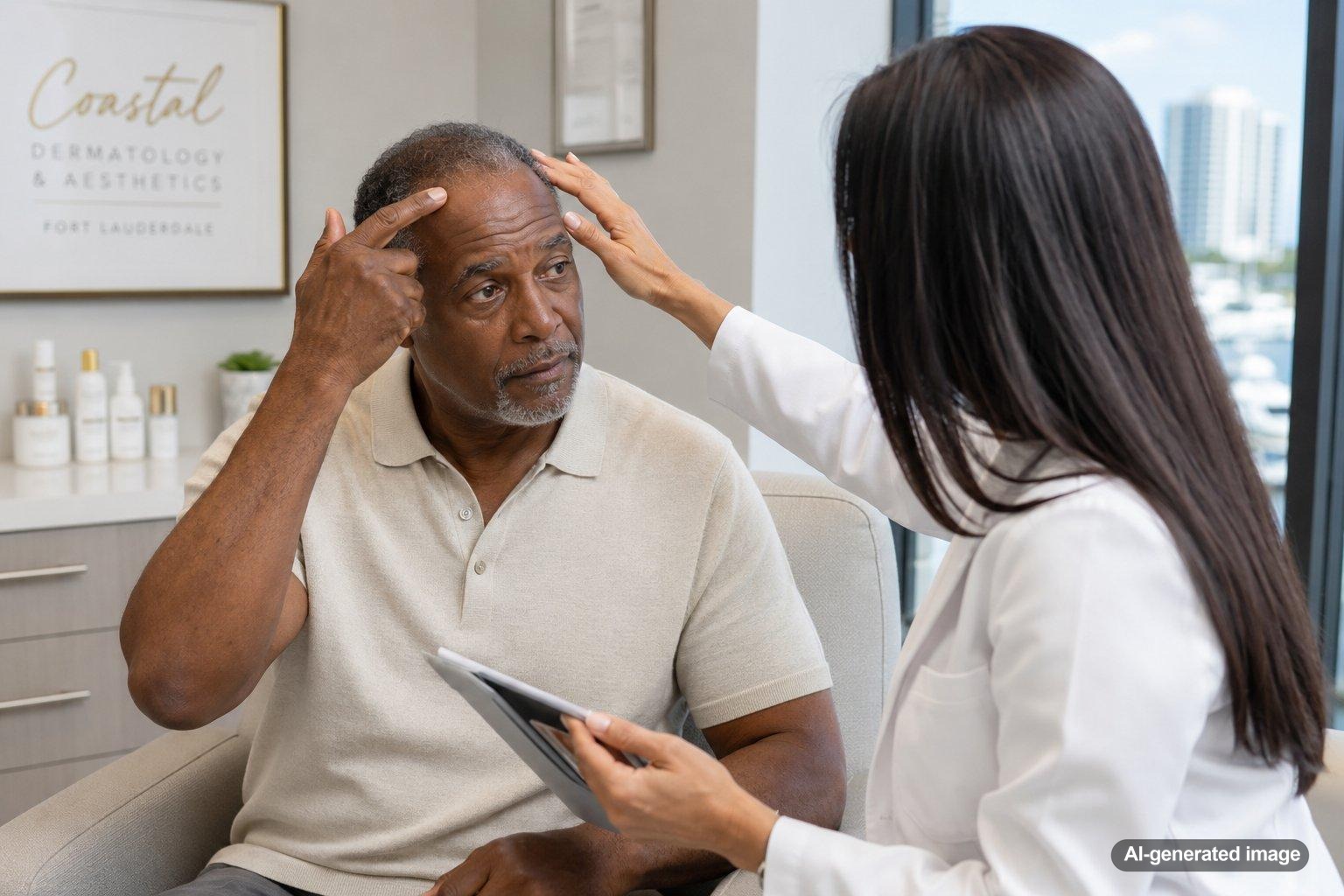
A tender or sore feeling along the hairline can sometimes appear around the same time as increased shedding, but tenderness does not automatically mean that hair is about to fall out. The sensation may come from irritation, tension on the follicles, inflammation, or a scalp condition that happens to occur alongside hair loss.
The details matter. A dermatologist will usually consider whether the scalp looks normal or has redness, scaling, bumps, sores, smooth patches of missing hair, or other changes. The pattern and speed of the shedding can also provide important clues.
Quick answer
- Hairline tenderness can occur with scalp irritation, tight hairstyles, inflammation, or certain forms of hair loss.
- Tenderness alone cannot identify the cause of shedding.
- Typical telogen effluvium usually causes increased shedding without scalp pain, burning, rash, or significant inflammation.
- Some people with alopecia areata notice tingling, itching, burning, or other sensations around areas where hair loss develops.
- Persistent tenderness, visible scalp changes, or rapid hair loss deserves a dermatologic evaluation.
Why tenderness and shedding can happen together
The scalp contains nerves, blood vessels, oil glands, skin, and thousands of hair follicles. A sensation that feels as though the hair itself hurts is generally coming from the skin or tissues surrounding the follicles rather than from the hair shaft.
If tenderness appears before or during shedding, it may simply mean that something is affecting both the scalp and the hair cycle at the same time. In other cases, the tenderness may have a separate cause from the shedding. That distinction is one reason a scalp examination can be useful when symptoms continue.
Common reasons the hairline may feel tender
- Tension from hairstyles. Tight ponytails, buns, braids, extensions, headbands, or other styles can put repeated pulling force on hairs near the frontal and temporal hairline. The area may feel sore or sensitive, particularly after prolonged tension.
- Scalp irritation. Hair color, styling products, fragranced products, aggressive cleansing, heat, or frequent scratching can irritate the skin around the hairline.
- Inflammatory scalp conditions. Redness, scaling, itching, bumps, or tenderness may point toward inflammation that should be evaluated rather than assumed to be normal shedding.
- Sun or environmental irritation. The exposed edge of the scalp can become sensitive after substantial sun exposure or other environmental irritation.
- Certain hair-loss disorders. Some forms of hair loss can be accompanied by unusual scalp sensations. The American Academy of Dermatology notes that some people with alopecia areata experience itching, tingling, burning, or stinging around areas of hair loss.
Is tenderness a sign of telogen effluvium?
Not necessarily. Telogen effluvium is a form of increased shedding that can follow a significant physical or emotional stressor or another change affecting the body. The shedding often becomes noticeable after the triggering event rather than immediately.
Importantly, uncomplicated telogen effluvium generally occurs on a scalp that otherwise looks and feels healthy. Cleveland Clinic notes that people with telogen effluvium typically should not have symptoms such as rash, itching, burning, pain, or flaking. If increased shedding is accompanied by persistent tenderness or visible inflammation, a clinician may therefore consider whether something else is contributing.
Could tight hairstyles affect the hairline?
Yes. Repeated tension is particularly relevant when soreness is concentrated around the frontal hairline, temples, or wherever a hairstyle pulls most strongly. If a style feels painful, creates bumps, or leaves the scalp sore afterward, loosening it is a sensible first step.
Continuing to place significant tension on the same hairs can contribute to hair loss in susceptible areas. Avoiding excessive pulling and rotating hairstyles may help reduce mechanical stress while the scalp settles.
What you can do at home
While you are figuring out what may be causing the tenderness, gentle scalp and hair care can help minimize additional irritation.
- Wear loose hairstyles and temporarily avoid styles that pull at the hairline.
- Reduce unnecessary heat, chemical treatments, and aggressive brushing.
- Use gentle hair-care products if the scalp has recently become sensitive.
- Avoid scratching, picking, or repeatedly rubbing tender areas.
- Take photos of your hairline in consistent lighting if you are concerned about progressive thinning.
- Pay attention to whether shedding is diffuse or concentrated in a particular area.
Avoid starting multiple supplements, topical products, or hair-loss treatments at once simply because shedding has begun. Different causes of hair loss are managed differently, and adding several products can also make it harder to identify what is irritating the scalp.
Professional evaluation for tenderness and shedding
A dermatologist can examine the scalp and determine whether the pattern looks more consistent with temporary shedding, mechanical tension, inflammatory disease, alopecia areata, pattern hair loss, or another process. Depending on the history and examination, additional evaluation may sometimes be appropriate.
Professional options depend entirely on the cause. Management might involve removing a trigger, treating an underlying scalp condition, modifying hair-care practices, or discussing medical hair-loss therapies when appropriate. Prescription therapies and procedures should be selected after an individualized evaluation rather than based on tenderness alone.
At Waverly DermSpa, we offer PRFM for Hair Loss and can help you understand whether it may be appropriate.
When to see a dermatologist
It is worth having the scalp examined if tenderness continues, repeatedly returns, or appears alongside noticeable hair loss. Consider making an appointment sooner if you notice:
- Rapid or substantial shedding
- Round or clearly defined areas of hair loss
- Progressive recession or thinning around the hairline
- Redness, significant scaling, swelling, crusting, or sores
- Pus, drainage, or painful bumps
- Persistent burning, stinging, or significant itching
- Loss of eyebrows, eyelashes, or hair elsewhere on the body
- Scarring or areas where the scalp surface looks unusually smooth or altered
These findings do not establish a particular diagnosis, but they can help a dermatologist decide what should be considered and whether treatment is needed.
FAQ
Can your scalp hurt before your hair falls out?
Some people experience tenderness, tingling, burning, or other scalp sensations around the time hair loss develops. However, scalp discomfort is not a universal feature of shedding and cannot identify the cause by itself.
Does telogen effluvium make the scalp tender?
Typical telogen effluvium generally causes increased shedding while the scalp otherwise appears healthy. Significant pain, burning, itching, rash, or flaking can be a reason to look for another or additional explanation.
Why does my hairline hurt after wearing my hair up?
A tight ponytail, bun, braid, extension, or similar style can place tension on follicles around the hairline. If the discomfort improves when the hairstyle is loosened, mechanical tension may be contributing. Repeated painful styling should be avoided.
Can alopecia areata cause sensations before hair loss?
It can in some people. The American Academy of Dermatology notes that itching, tingling, burning, or stinging may occur where alopecia areata hair loss is beginning or has already occurred. A dermatologist can evaluate smooth patches or other sudden patterns of hair loss.
Should I worry if my hairline is tender but I do not see hair loss?
Brief sensitivity can have many explanations and does not necessarily signal hair loss. If the tenderness persists, worsens, or is accompanied by redness, scaling, bumps, sores, or later thinning, it is worth getting checked.
Ready to get help?
Schedule an appointment or send a message and our team will get back to you.
Prefer to call? 954-666-3736
This article is for educational purposes and is not medical advice. For diagnosis and personalized treatment, please book an appointment with a board-certified dermatologist.
Sources & further reading
- American Academy of Dermatology (AAD) – Hair loss: Signs and symptoms
- Cleveland Clinic – Telogen Effluvium: Symptoms, Causes, Treatment & Regrowth
