

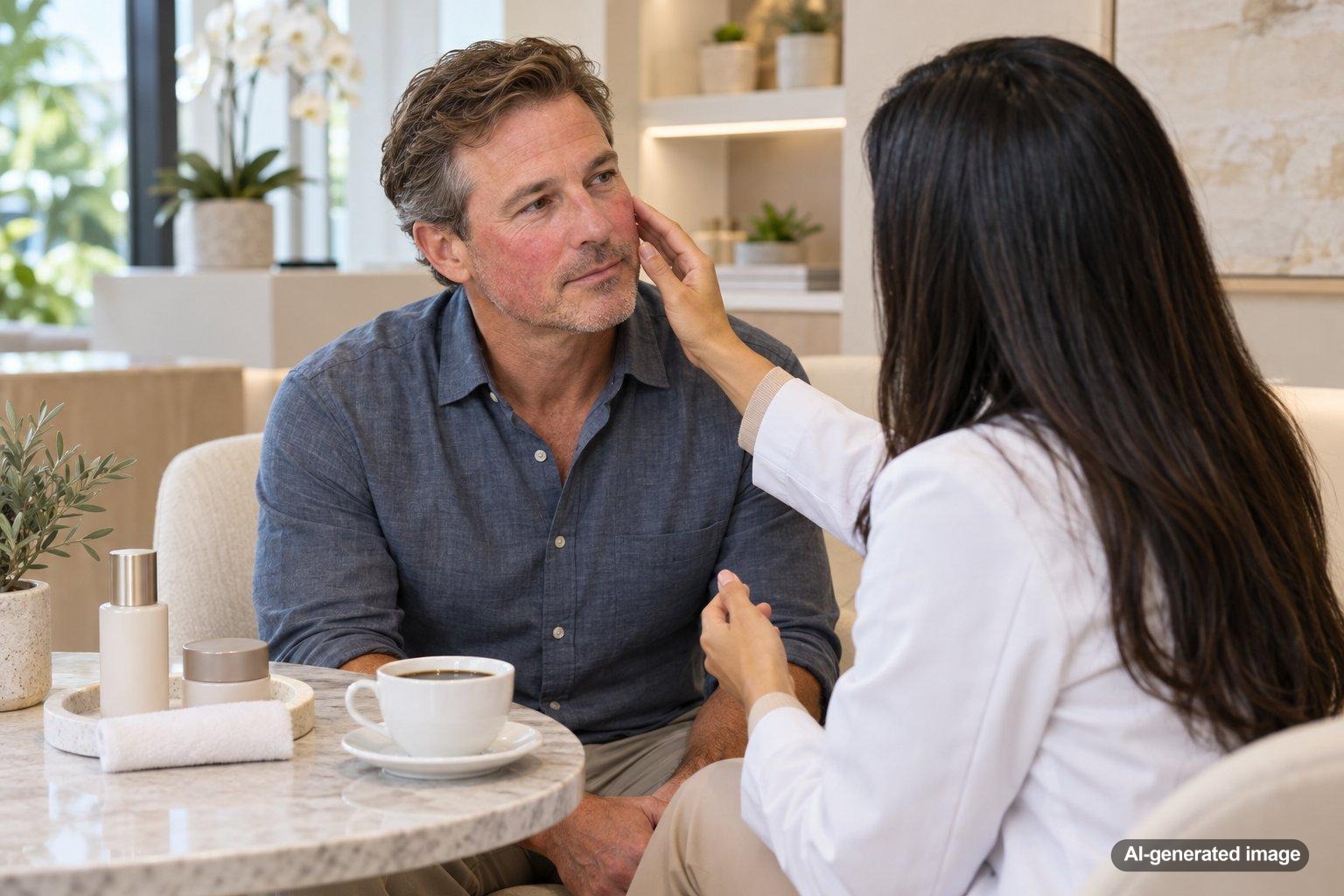
If your cheeks suddenly turn red or feel unusually warm after your morning coffee, you may wonder whether caffeine is affecting your skin. Facial flushing after drinking coffee can happen for several reasons, but the temperature of the beverage is often an important factor. Hot drinks can encourage temporary changes in facial blood flow, particularly in people whose skin is sensitive to heat or prone to rosacea.
Not every episode of flushing indicates a skin condition. Some people experience a brief sensation of warmth that settles naturally, while others notice recurring redness, burning, or sensitivity. Understanding the difference between a temporary reaction and a persistent skin concern can help you recognize when simple adjustments may be useful and when a dermatologist’s evaluation is appropriate.
Quick Answer: Why Does Coffee Make Your Face Flush?
- Hot beverage temperature: The heat from coffee may trigger facial flushing, especially in heat-sensitive skin.
- Rosacea: People with rosacea may experience redness or warmth after hot beverages.
- Individual sensitivity: Responses to caffeine and other beverage components can vary, and caffeine is not necessarily the cause.
- Overlapping triggers: Sun exposure, a warm environment, stress, and spicy breakfast foods may contribute to flushing around the same time.
- Persistent symptoms: Frequent flushing, lasting redness, or facial discomfort deserves professional evaluation.
What Happens to Your Skin During Facial Flushing?
Facial flushing occurs when blood flow increases near the surface of the skin. Small blood vessels widen, making the cheeks, nose, forehead, or other facial areas appear redder or darker than usual. The skin may also feel noticeably warm.
On lighter skin tones, flushing often appears pink or red. On deeper skin tones, the change may be subtler, appearing as a darker, violet, or reddish-brown discoloration. Sometimes warmth or sensitivity is more noticeable than the visible color change.
Flushing is a response rather than a diagnosis. Temperature changes, emotions, physical activity, and certain health conditions can all influence facial blood flow. The duration, accompanying symptoms, and frequency of episodes provide important clues about what may be happening.
Common Reasons Your Face Gets Flushed After Coffee
1. The Coffee Is Hot
Hot coffee can raise the sensation of warmth in the mouth and surrounding tissues. In susceptible individuals, the body’s response to heat may contribute to widening of superficial facial blood vessels and visible flushing.
For people with rosacea, hot beverages are a recognized potential trigger. The American Academy of Dermatology recommends considering cooler beverages or allowing hot drinks to reach a comfortable, lukewarm temperature when heat appears to provoke symptoms.
This distinction matters because someone who flushes after steaming coffee may tolerate iced coffee without experiencing the same reaction.
2. Your Skin May Be Prone to Rosacea
Rosacea is a chronic inflammatory skin condition that commonly affects the central face. It may cause recurrent flushing, persistent facial discoloration, visible blood vessels, burning sensations, and acne-like bumps.
Heat is a common rosacea trigger, although individual triggers vary. A person may notice facial warmth after coffee, exercise, sunlight, or entering an overheated room.
Flushing after coffee alone does not establish a rosacea diagnosis. However, a pattern of repeated flushing combined with lingering redness, sensitivity, or inflammatory bumps may warrant a dermatology consultation.
3. Caffeine Sensitivity May Be Part of the Picture
Caffeine affects the nervous system and can influence alertness, heart rate, and other physiological responses. Individual reactions vary depending on the amount consumed, usual caffeine intake, and personal sensitivity.
However, the relationship between caffeine itself and facial flushing is not straightforward. Caffeine should not automatically be blamed for redness that follows coffee, particularly when beverage temperature could explain the reaction.
Comparing your response to hot and iced versions of a similar drink may help identify whether temperature is an important contributor. A single observation cannot establish the cause, but repeated patterns can be informative.
4. Other Triggers May Be Occurring at the Same Time
Morning routines often combine multiple potential flushing triggers. Coffee consumed after a hot shower, during a stressful commute, or on a sunny patio may coincide with additional factors that influence facial blood flow.
Common contributors include:
- Warm rooms, hot showers, or humid outdoor conditions.
- Sun exposure, particularly without adequate sun protection.
- Emotional stress or sudden changes in body temperature.
- Spicy foods eaten alongside coffee.
- Skincare products that cause burning, stinging, or irritation.
- Alcohol consumption or certain medications.
Recognizing overlapping triggers is often more useful than assuming that coffee is responsible for every episode.
How Can You Tell Whether Coffee Temperature Matters?
Consider observing your skin’s response under different everyday circumstances without deliberately provoking uncomfortable symptoms. For example, you may notice that a warm or iced coffee causes less flushing than a very hot beverage.
A brief symptom diary can help organize these observations. Record the beverage temperature, approximate caffeine content, surrounding environment, and any accompanying skin sensations. Note whether the flushing resolves quickly or remains visible.
If symptoms also occur without coffee, such as during exercise or after sun exposure, that information may help a dermatologist evaluate whether rosacea or another cause is involved.
What Can You Do at Home to Reduce Coffee-Related Flushing?
Conservative changes may make coffee more comfortable for individuals who experience occasional facial warmth.
- Let coffee cool: Try drinking it warm rather than steaming hot.
- Consider iced coffee: A cooler beverage may be better tolerated when heat is the main trigger.
- Avoid overheating: Enjoy coffee in a comfortable environment, especially during hot or humid weather.
- Choose gentle skincare: Use a mild cleanser and moisturizer, and avoid products that repeatedly sting or irritate the face.
- Practice daily sun protection: Use broad-spectrum SPF 30 or higher sunscreen and seek shade when appropriate.
- Track recurring episodes: Notice whether redness is associated with coffee temperature, stress, sun exposure, or other activities.
Avoid applying ice directly to flushed skin or using harsh exfoliating products in an attempt to remove redness. Abrupt cooling and irritating skincare may increase discomfort in sensitive skin.
There is no universal reason to eliminate coffee solely because of occasional facial flushing. The appropriate response depends on the pattern of symptoms and any underlying condition.
What Professional Options Are Available for Persistent Facial Redness?
When flushing becomes frequent or facial redness persists, a dermatologist can examine the skin, review potential triggers, and evaluate for rosacea or other explanations.
If rosacea is diagnosed, management may include individualized skincare guidance, sun protection, trigger modification, prescription topical treatments, or other therapies chosen according to the symptoms present. Laser and light-based procedures may be considered for certain forms of persistent redness or visible blood vessels.
Not every patient with flushing needs medication or a procedure. Treatment selection depends on the examination, medical history, skin characteristics, and personal goals.
At Waverly DermSpa, we offer Excel V+ and can help you understand whether it may be appropriate.
When Should You See a Dermatologist?
Occasional, short-lived warmth after a hot beverage may not require medical treatment. An evaluation becomes more important when flushing is recurrent, uncomfortable, changing, or accompanied by other symptoms.
Consider scheduling a dermatology appointment if you notice:
- Facial redness that remains visible long after the beverage has been consumed.
- Frequent flushing triggered by ordinary activities or mild temperature changes.
- Burning, stinging, tenderness, or persistent facial sensitivity.
- Visible facial blood vessels or recurring acne-like bumps.
- Dry, irritated, red, or uncomfortable eyes occurring alongside facial symptoms.
- New flushing that appears after starting a medication or occurs with unexplained systemic symptoms.
Sudden flushing accompanied by difficulty breathing, throat or facial swelling, fainting, or severe dizziness requires immediate emergency medical attention rather than a routine dermatology appointment.
Frequently Asked Questions About Coffee and Facial Flushing
Does caffeine directly cause facial redness?
Not necessarily. Although individuals can respond differently to caffeine, the heat of coffee is a more clearly recognized trigger for flushing in people with rosacea. Timing alone does not establish that caffeine is responsible.
Can decaf coffee still make my face flush?
Yes. Decaffeinated coffee can still be served hot, and its temperature may provoke flushing in people who are sensitive to heat. Switching to decaf does not necessarily address a temperature-related trigger.
Is iced coffee better for rosacea-prone skin?
Some people with rosacea tolerate iced coffee better than hot coffee because it avoids the heat exposure associated with steaming beverages. Individual reactions vary, so personal symptom patterns remain important.
Does flushing after coffee mean I have rosacea?
No. Temporary flushing can occur for multiple reasons. Rosacea becomes a consideration when episodes are frequent or accompanied by lasting redness, burning, visible vessels, or inflammatory bumps. A dermatologist can assess these findings.
Why does my face flush after coffee only sometimes?
Beverage temperature, room temperature, sunlight, emotional stress, and other factors may differ from one occasion to another. These variations may explain why the same drink seems to affect your skin differently on different days.
Can a dermatologist help with flushing even if I don’t have acne-like bumps?
Yes. Facial flushing and persistent redness can occur without acne-like lesions. A dermatologist can evaluate the pattern, consider possible causes, and discuss appropriate management options.
Ready to get help?
Schedule an appointment or send a message and our team will get back to you.
Prefer to call? 954-666-3736
Medical Disclaimer
This article is for educational purposes and is not medical advice. For diagnosis and personalized treatment, please book an appointment with a board-certified dermatologist.
Sources & further reading
- American Academy of Dermatology (AAD) – How to prevent rosacea flare-ups
- Mayo Clinic – Rosacea: Symptoms and causes
- Cleveland Clinic – Skin Flushing: What It Is, Causes & Treatment
- American Academy of Dermatology (AAD) – Rosacea: Diagnosis and treatment
