

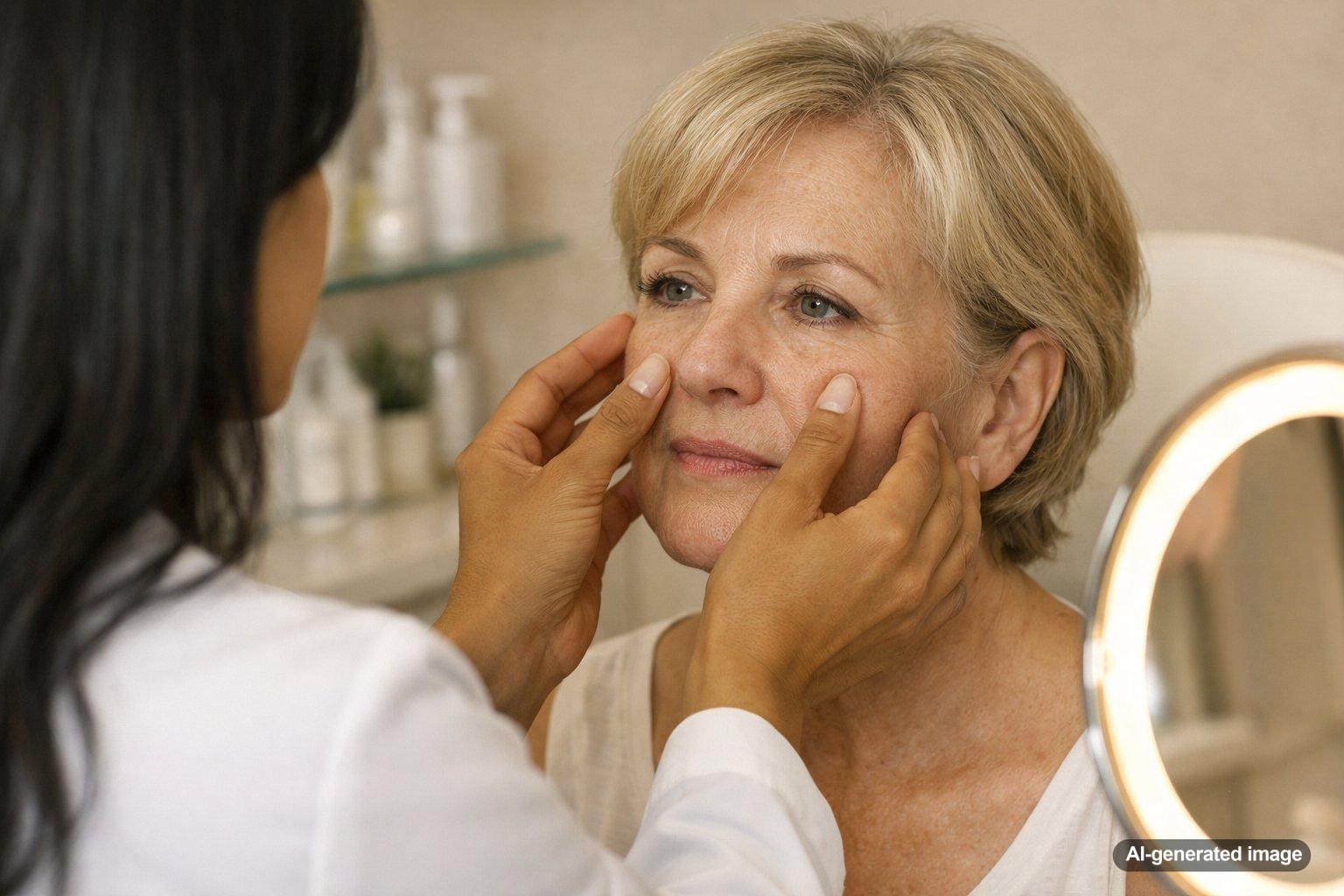
If your pores seem more noticeable lately, you’re not imagining it. Pores do not actually open and close, but they can look larger when they are stretched by oil, congestion, sun damage, loss of firmness, or simple lighting and skin texture changes.
The reassuring part is that visible pores are very common, and there are practical ways to make them look less obvious. The right approach depends on what is making them stand out in the first place.
Quick answer
- Pores often look bigger when skin is oilier, clogged, or less firm.
- Blackheads, dead skin buildup, and lingering acne can make pore openings more visible.
- Sun exposure and age-related collagen loss can make skin texture look rougher and pores more noticeable.
- Gentle cleansing, consistent sunscreen, and well-chosen skincare may help pores look smaller over time.
- If the change is sudden, severe, or hard to manage, a dermatologist can evaluate what is contributing.
What it is
Pores are tiny openings in the skin that allow oil and sweat to reach the surface. Everyone has them, and some people naturally have more visible pores than others. They are especially noticeable around the nose, cheeks, forehead, and chin because those areas tend to produce more oil.
What many people call large pores is usually a combination of visible pore openings, uneven texture, and light reflecting off the skin. In other words, it is often about how the skin surface looks, not just the pore itself.
Common causes or triggers
- Excess oil production: Oilier skin can make pores look more prominent, especially in the T-zone.
- Clogging from dead skin and debris: When material builds up inside the pore, it can stretch the opening and make it stand out more.
- Blackheads and acne: Ongoing congestion can make texture look rough and pores appear larger.
- Sun damage: Over time, sun exposure can affect collagen and make the skin around pores look less firm.
- Loss of firmness with age: As skin support changes, pore edges may look more noticeable.
- Harsh skincare: Over-scrubbing or irritating products can leave skin inflamed and textured, which may draw attention to pores.
- Genetics: Some people simply have naturally more visible pores, even with a good routine.
What you can do at home
A simple, steady routine usually works better than trying too many products at once. Start with a gentle cleanser, especially if your skin feels stripped or tight after washing. Heavy scrubs and rough cleansing tools can make texture look worse instead of better.
Look for products that help keep pores clear without overwhelming the skin. Depending on your skin type, ingredients that support smoother-looking texture may help. A lightweight moisturizer can also be useful, even for oily skin, because dehydrated skin can sometimes look rougher and more uneven.
- Wash gently and avoid aggressive scrubbing.
- Remove makeup and sunscreen thoroughly at the end of the day.
- Use non-comedogenic products when possible.
- Wear sunscreen every day, because UV exposure can make texture concerns more noticeable over time.
- Be patient and consistent. Skin often responds better to routines than quick fixes.
Professional options
If home care is not enough, professional treatment may help improve the look of pores and texture. Common options include treatments that focus on congestion, surface renewal, collagen support, or overall skin quality. The best choice depends on whether oiliness, acne, sun damage, or loss of firmness is the main driver.
At Waverly DermSpa, we offer Chemical Peels and can help you understand whether it may be appropriate.
When to see a dermatologist
It is worth booking an evaluation if your pores seem more noticeable along with frequent breakouts, persistent blackheads, redness, irritation, or a sudden change in skin texture that does not improve. A dermatologist can help sort out whether this is mostly a cosmetic texture issue or whether acne, rosacea, irritation, or another skin concern is playing a role.
If you’re unsure, it’s worth getting checked. Sometimes a small change in routine is enough, and sometimes a more targeted plan makes the process much less frustrating.
FAQ
Can pores actually shrink?
Pores do not disappear, and they do not truly open and close. What usually improves is how visible they look.
Why do my pores look worse in some lighting?
Shadows, makeup texture, and surface dryness can make pores stand out more than they do in softer light.
Does oily skin always mean larger-looking pores?
Not always, but excess oil is a common reason pores become more noticeable.
Can over-exfoliating make pores look worse?
Yes. When skin becomes irritated or its barrier feels disrupted, the surface can look rougher and more uneven.
Should I worry if my pores suddenly look bigger?
A sudden change may simply reflect congestion, irritation, or a product issue, but if it persists or comes with other symptoms, a dermatologist can evaluate it.
Ready to get help?
Schedule an appointment or send a message and our team will get back to you.
Prefer to call? 954-666-3736
This article is for educational purposes and is not medical advice. For diagnosis and personalized treatment, please book an appointment with a board-certified dermatologist.
