

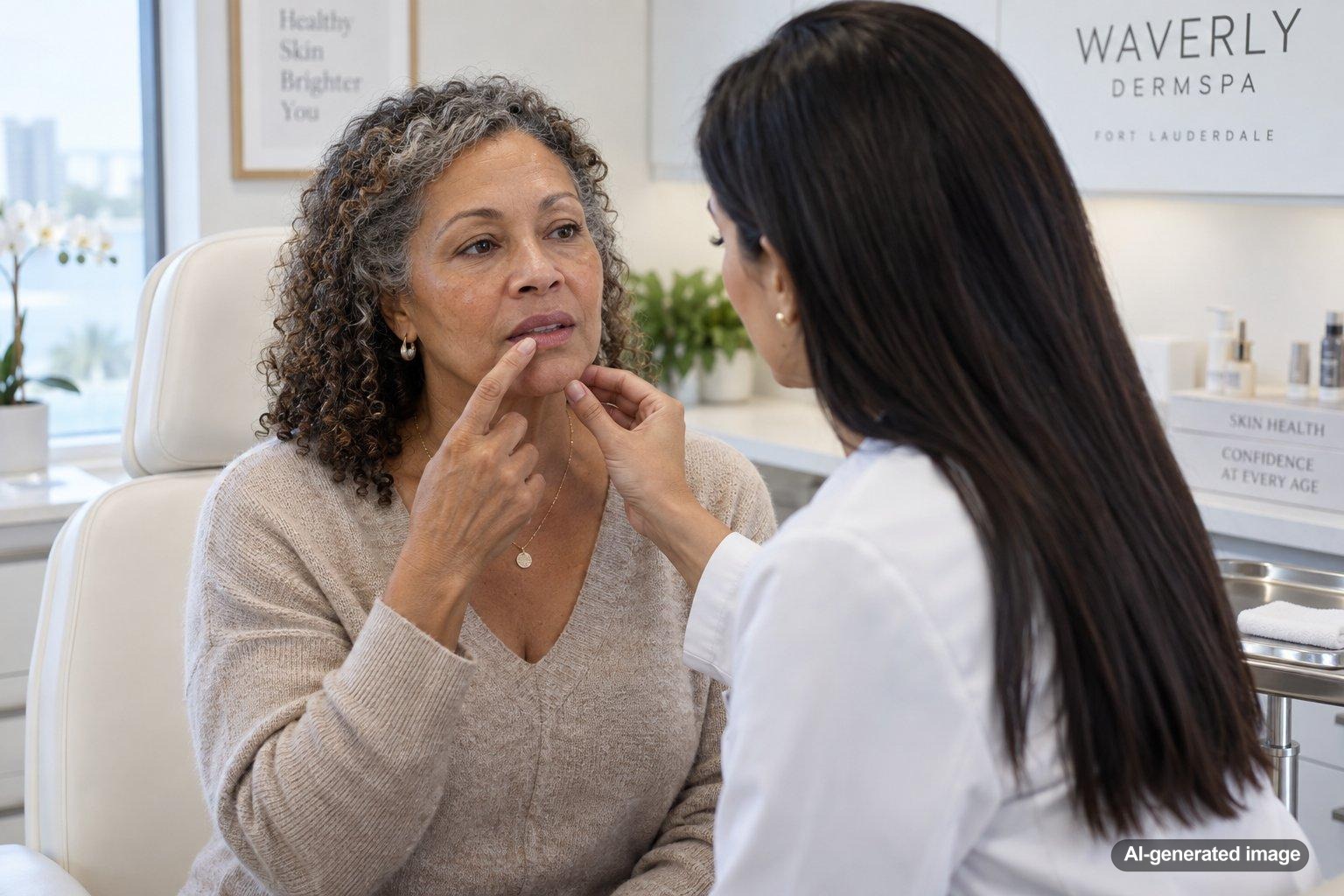
When one small area of your lip keeps peeling while the rest looks relatively normal, the repetition can be frustrating. A recurring spot often means that the same area is being exposed to an irritant, repeatedly rubbed or picked, or having trouble fully restoring its protective barrier between episodes. Lip products, toothpaste, food, saliva, weather, and everyday habits can all play a role.
The pattern matters. A dermatologist may look at exactly where the peeling occurs, what touches that area, whether it burns or itches, and whether there are other changes such as cracking, swelling, crusting, or a persistent rough patch.
Quick answer
- A single recurring peeling spot can result from repeated irritation or friction in exactly the same location.
- Lip balm, lipstick, sunscreen, toothpaste, flavorings, dental products, and other substances that contact the lips can sometimes trigger irritation or an allergic contact reaction.
- Licking, biting, picking, or rubbing the same area can prevent the surface from fully recovering.
- A simple, fragrance-free barrier product and temporarily simplifying what touches the lips may help reveal whether an everyday exposure is contributing.
- A spot that keeps returning despite conservative care, or develops pain, bleeding, significant crusting, swelling, or another persistent change, is worth having evaluated by a dermatologist.
Why can the exact same area keep peeling?
The lips have a delicate surface barrier. Once one small area becomes irritated, it may be easier to disturb again before it has completely recovered. That can create a cycle in which the area dries, flakes, feels rough, gets rubbed or picked, briefly improves, and then starts peeling again.
Location can also offer clues. A product applicator may repeatedly touch one area first. Toothpaste may collect near one portion of the mouth. A person may unconsciously lick or bite the same place. Even a habitual sleeping position, musical instrument, dental appliance, or object that regularly contacts the mouth can expose a very specific section of the lip.
Common causes and triggers
- Repeated licking: Saliva can temporarily make dry lips feel better, but repeated wetting and evaporation may further irritate the surface.
- Picking or biting: Removing a loose flake can also remove skin that has not finished recovering, restarting the cycle.
- Lip products: Balms, glosses, lipsticks, plumpers, sunscreens, fragrances, flavorings, preservatives, and other ingredients can irritate sensitive lips or contribute to contact reactions in some people.
- Toothpaste and oral care products: Flavorings and other ingredients in toothpaste, mouthwash, or dental products can contact the lip border repeatedly.
- Food contact: Acidic, spicy, salty, or otherwise irritating foods may repeatedly reach the same area depending on how you eat or where a small crack is located.
- Dry air and sun exposure: Environmental stress can make an already vulnerable section of the lip easier to irritate.
- Contact dermatitis: Irritant or allergic contact reactions can produce dryness, scaling, cracking, burning, or itching. The pattern may be localized when exposure consistently occurs in one place.
What you can do at home
A useful first step is to make the routine around your lips as simple as possible. The goal is not to identify a diagnosis on your own, but to reduce unnecessary exposures and give the barrier a chance to settle.
- Try not to lick, bite, rub, or peel the affected area.
- Use a simple, fragrance-free lip moisturizer or bland protective ointment rather than rotating through multiple flavored or fragranced products.
- Consider pausing recently introduced lip products while the area settles.
- Pay attention to toothpaste, mouthwash, lipstick, sunscreen, dental products, foods, and other items that repeatedly touch the same location.
- Protect the lips from excessive sun, wind, and dry conditions.
- Avoid repeatedly exfoliating the peeling area with scrubs, brushes, acids, or other aggressive products.
If simplifying your routine makes the spot less reactive, that observation can be helpful when discussing the pattern with a dermatologist. If the peeling immediately returns when a particular product is reintroduced, mention that history at your visit rather than repeatedly testing an irritating product yourself.
How a dermatologist may approach a recurring lip spot
Because several different problems can look similar on the lips, evaluation usually begins with the pattern and history rather than appearance alone. Your dermatologist may ask when the area first appeared, whether it itches or burns, which products touch your lips, whether you lick or bite the area, and whether anything consistently makes it better or worse.
If a contact allergy is suspected, patch testing may sometimes be considered. Other persistent lip changes may require a different evaluation depending on their appearance and symptoms. The appropriate approach is individualized, especially when the same small area continues to recur without an obvious trigger.
When should you see a dermatologist?
Consider scheduling an evaluation if the same spot repeatedly returns despite simplifying your routine, or if you cannot identify a clear source of irritation. It is also worth getting checked if the area becomes increasingly painful, swollen, crusted, ulcerated, persistently rough, or prone to bleeding, or if you notice a change that does not behave like ordinary dry skin.
A dermatologist can distinguish common irritation from conditions that may need a more specific evaluation and can help determine whether contact allergy testing or another diagnostic step makes sense.
FAQ
Can lip balm make one area of my lip peel?
It can in some people. Lip products may contain fragrances, flavorings, preservatives, sunscreens, or other ingredients that irritate sensitive skin or trigger a contact reaction. Even a product marketed for dry lips may not agree with every person.
Why does the peeling return as soon as I pull the loose skin off?
Pulling a flake can remove skin before the surface underneath has fully recovered. That can leave the area more vulnerable to dryness, friction, and another round of peeling.
Could toothpaste be causing the problem?
Possibly. Toothpaste and other oral hygiene products regularly contact the lips, and certain flavorings or ingredients can irritate some people. The location and timing of the reaction can help a dermatologist evaluate whether an oral care product may be contributing.
Should I exfoliate a patch of peeling lip skin?
Usually, repeated scrubbing is not a gentle strategy for an already irritated area. Minimizing friction and supporting the barrier is generally more conservative while you determine why the peeling keeps returning.
Is recurring peeling always caused by dryness?
No. Dry air can contribute, but repeated localized peeling can also be associated with friction, habits, contact irritation, allergic contact reactions, or other lip conditions. Persistent or unusual changes deserve an in-person assessment.
Ready to get help?
Schedule an appointment or send a message and our team will get back to you.
Prefer to call? 954-666-3736
Disclaimer
This article is for educational purposes and is not medical advice. For diagnosis and personalized treatment, please book an appointment with a board-certified dermatologist.
Sources & further reading
- American Academy of Dermatology (AAD) – Itchy rash could be contact dermatitis
- DermNet – Allergic contact cheilitis
