

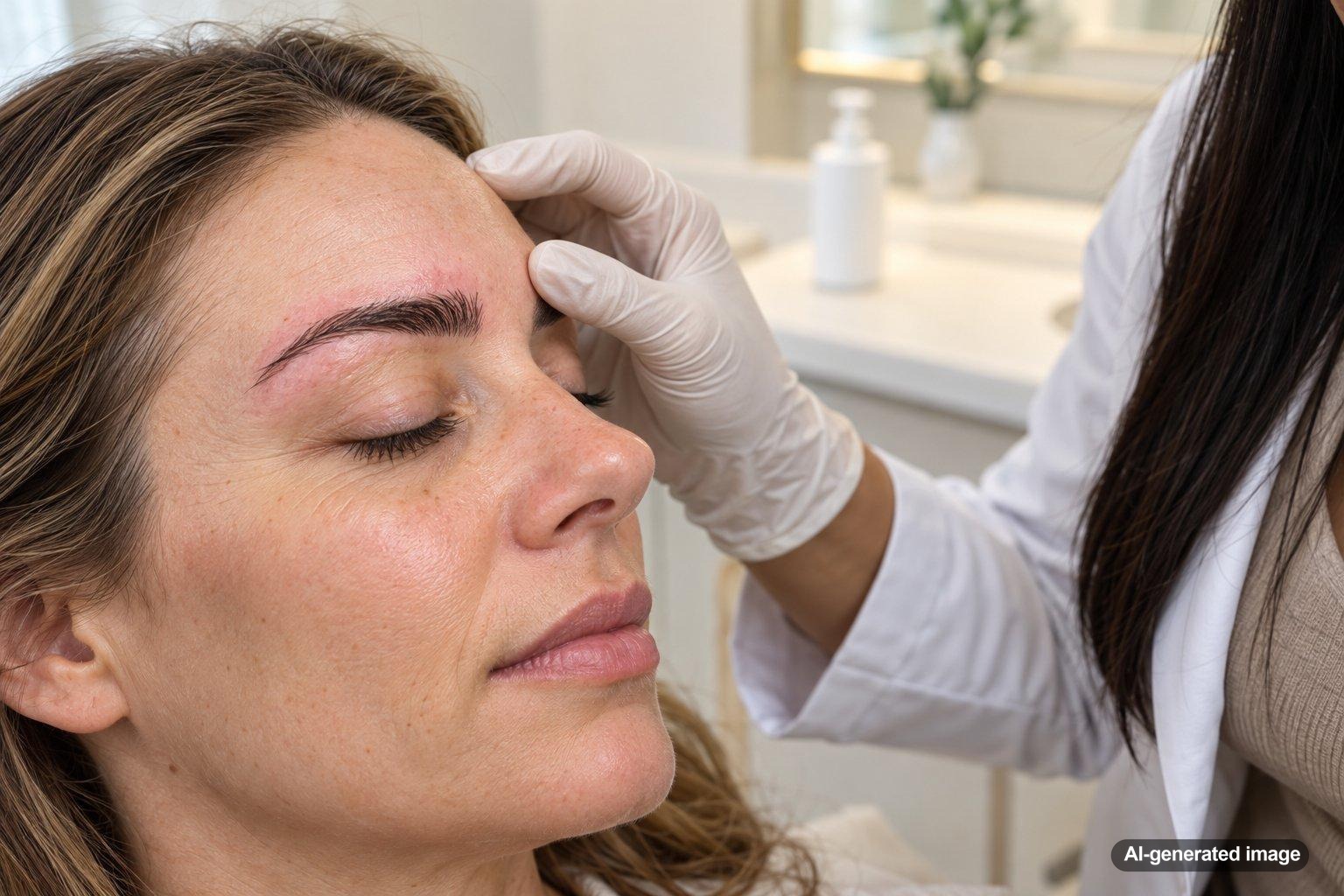
Eyebrow tinting can create fuller-looking, more defined brows without daily makeup. But when your eyebrows begin itching after an appointment, the experience can become uncomfortable. The skin beneath your brows is delicate, and itching may indicate temporary irritation, sensitivity to an ingredient, or an allergic reaction to the tinting product.
So why do your eyebrows itch after tinting? The most common explanations involve contact with coloring ingredients, developers, fragrances, or other substances used during the service. Sometimes the reaction is mild and settles after the product is removed. Other times, persistent itching, redness, swelling, or a developing rash deserves attention from a dermatologist. Understanding the difference can help you respond thoughtfully and protect your skin.
Quick Answer: Why Eyebrows Itch After Tinting
- Temporary irritation: Tinting solutions and their developers may irritate the skin, particularly when the skin barrier is already sensitive.
- Allergic contact dermatitis: Some people develop an immune reaction to dye ingredients, preservatives, or fragrances.
- Delayed symptoms: An allergic reaction may appear hours or days after the appointment rather than immediately.
- Skin preparation: Recent exfoliation, waxing, or irritating skincare products can make the brow area more reactive.
- Persistent symptoms: Significant swelling, blistering, worsening discomfort, or recurring reactions should prompt professional evaluation.
What Happens to Your Skin During Eyebrow Tinting?
Eyebrow tinting uses coloring products to darken the brow hairs and enhance their appearance. Depending on the formula and application technique, some color may also temporarily stain the skin beneath the eyebrows.
Although the treatment is primarily intended for the hair, the surrounding skin can come into contact with the tint, developer, cleansing products, and other ingredients. These substances may disrupt the outer skin barrier or trigger a reaction in susceptible individuals.
The brow area also sits close to the eyelids, where the skin is particularly thin and sensitive. Irritation that begins around the eyebrows may therefore become noticeable near the eyes.
Itching alone cannot establish whether a reaction is allergic. The appearance of the skin, the timing of symptoms, previous exposures, and the products used can all help a dermatologist identify the likely cause.
Common Reasons Your Eyebrows Itch After Tinting
1. Irritant Contact Dermatitis
Irritant contact dermatitis occurs when a substance directly disrupts or irritates the skin. Eyebrow tint ingredients, developers, or cleansing products may cause stinging, dryness, tightness, or itching, especially when the skin barrier is already compromised.
Symptoms may develop during the treatment or shortly afterward. Irritation does not necessarily mean the person has developed an allergy, but repeated exposure can still worsen discomfort.
2. Allergy to Hair Dye Ingredients
Some eyebrow tint formulations contain dye-related compounds capable of triggering allergic contact dermatitis. One recognized hair dye allergen is paraphenylenediamine, often abbreviated as PPD. Not every eyebrow tint contains PPD, and other coloring agents can also cause reactions.
An allergic response may involve intense itching, redness, swelling, scaling, or small blisters. Unlike simple irritation, allergic contact dermatitis involves an immune response to a particular substance.
Importantly, a person may react to a product they have used previously without difficulty. Allergic sensitivity can develop after earlier exposures, so a history of successful tinting does not completely rule out an allergy.
3. Fragrances and Preservatives
The coloring ingredient is not always responsible. Fragrances, preservatives, and other components in cosmetic formulations can also trigger irritation or contact allergy.
Even products marketed as gentle or designed for sensitive skin may contain ingredients that cause reactions in certain individuals. A dermatologist can help distinguish sensitivity to the primary dye from a reaction to another component.
4. A Compromised Skin Barrier
The skin may be more reactive if the eyebrow area was recently waxed, exfoliated, scrubbed, or exposed to strong skincare ingredients.
For example, using retinoids or exfoliating acids near the brows may contribute to dryness and sensitivity. Applying tint to already irritated skin can make itching more noticeable.
Someone with naturally dry or sensitive skin may also experience discomfort without having a true allergy to the tint.
5. Residual Product and Friction
Product residue, repeated rubbing, or aggressive cleansing may further irritate the skin after tinting. Scratching can aggravate the area and prolong discomfort, even if the original reaction was relatively mild.
How to Tell Mild Irritation From a Possible Allergy
Mild irritation and allergic contact dermatitis can look similar, and their symptoms can overlap. A few patterns may help explain why a clinician asks about the timing and appearance of a reaction.
- Mild irritation: May involve localized itching, dryness, tightness, or stinging soon after contact.
- Possible allergy: May cause increasing itch, redness, scaling, swelling, or blistering, sometimes beginning several hours or days after exposure.
- Reaction involving the eyelids: Swelling or inflammation around the eyes deserves particular attention because the surrounding skin is delicate.
- Recurring reactions: Symptoms that return with the same tint or similar products may raise concern about a specific ingredient sensitivity.
These patterns are not diagnostic. Irritant reactions can be significant, while allergic reactions may initially appear subtle. Professional evaluation is the most reliable way to clarify persistent or repeated symptoms.
What Can You Do at Home for Itchy Eyebrows?
When discomfort is mild and there are no concerning symptoms, conservative skincare measures may help reduce additional irritation while the skin settles.
- Avoid further tinting: Do not reapply the suspected product while the area is irritated.
- Cleanse gently: If product residue remains, carefully rinse the skin with lukewarm water and a mild cleanser, keeping products out of the eyes.
- Use a cool compress: A clean, cool, damp cloth applied briefly to closed eyes or the surrounding skin may provide comfort.
- Keep skincare simple: Avoid scrubs, exfoliating acids, retinoids, fragranced products, and additional brow cosmetics until irritation has settled.
- Limit scratching: Rubbing and scratching can worsen inflammation and disturb the skin barrier.
- Consider a bland moisturizer: A small amount of a fragrance-free moisturizer suitable for the area may help with dryness, provided it does not worsen symptoms or enter the eyes.
Avoid experimenting with multiple topical medications around the eyelids without professional guidance. The location and underlying cause matter when choosing an appropriate treatment.
How Can a Dermatologist Help?
If itching persists, returns after tinting, or is accompanied by a visible rash, a dermatologist can examine the area and review the products involved.
Depending on the findings, professional care may include:
- Evaluating whether the reaction appears more consistent with irritant or allergic contact dermatitis.
- Reviewing ingredient lists from the tint, developer, and other products used during the appointment.
- Considering professional patch testing to identify relevant contact allergens when appropriate.
- Recommending skin-barrier support and treatment options suited to the sensitive facial area.
- Helping you understand which ingredients or future cosmetic procedures may need to be avoided.
Professional patch testing is different from a salon’s preliminary product sensitivity check. It evaluates selected allergens under controlled conditions and may be useful when the cause of repeated reactions is unclear.
Bringing a photograph of the reaction and information about the products used can make the consultation more informative.
When Should You See a Dermatologist?
Itching that is mild and improving may not require extensive treatment. However, a professional assessment is advisable when symptoms are persistent, worsening, or recurring.
Consider contacting a dermatologist if you notice:
- Significant or increasing redness and swelling around the eyebrows or eyelids.
- Blisters, crusting, weeping, or painful skin.
- Itching that interferes with sleep or everyday activities.
- A rash spreading beyond the original tinting area.
- Symptoms that do not improve after avoiding the suspected product.
- Repeated reactions after eyebrow tinting or related hair-coloring treatments.
Seek urgent medical evaluation for eye pain, vision changes, or substantial swelling affecting the eye area. Difficulty breathing, throat tightness, or swelling of the tongue or lips requires immediate emergency medical care.
How to Reduce the Risk Before Your Next Brow Appointment
Prevention begins with understanding what caused the original reaction. If you suspect an allergy, avoid repeating the treatment until a qualified clinician has evaluated the concern.
Ask the tinting professional for the complete ingredient information and follow product-specific safety instructions. A manufacturer-recommended sensitivity test may help identify certain reactions, but a negative result does not eliminate the possibility of a future allergy.
It is also sensible to avoid scheduling eyebrow tinting immediately after aggressive exfoliation, waxing, or other procedures that leave the skin irritated.
Products advertised as natural, botanical, or PPD-free are not automatically free from potential allergens. If an allergy has been identified, selecting alternatives should be based on the actual ingredients and your dermatologist’s guidance rather than marketing descriptions alone.
Frequently Asked Questions
Is it normal for eyebrows to itch after tinting?
Some people experience mild, temporary itching, but discomfort should not automatically be considered an expected part of the procedure. Persistent itching, redness, or swelling may indicate irritation or a contact allergy that deserves attention.
How long does itching after eyebrow tinting last?
The duration varies with the cause and severity. Mild irritation may improve after the offending product is removed and further exposure is avoided. Allergic reactions can persist longer and may require medical evaluation. There is no single timeline that applies to everyone.
Can I develop an eyebrow tint allergy after years of tinting?
Yes. Allergic contact dermatitis can develop after repeated exposure to an ingredient. Previous tolerance does not mean a future reaction is impossible.
Can eyebrow tinting cause swollen eyelids?
Yes. Reactions to certain cosmetic ingredients can affect the sensitive eyelid area, sometimes even when the product was applied primarily to the eyebrows. Noticeable or worsening eyelid swelling should be medically evaluated.
Should I use hydrocortisone cream on itchy eyebrows?
Do not assume an over-the-counter steroid cream is appropriate for the brow or eyelid area. Skin near the eyes requires special caution, and medication choice depends on the diagnosis. Ask a dermatologist before applying medicated creams to this region.
Can I tint my eyebrows again with a different brand?
That depends on the cause of the reaction and the ingredients in the alternative product. Different brands can share allergens. If an allergic reaction is suspected, a dermatologist can help assess whether another product is appropriate before further exposure.
Understanding Your Skin’s Response
Itchy eyebrows after tinting are often associated with cosmetic irritation or contact dermatitis, but the underlying reason is not always obvious. Paying attention to the timing of symptoms, avoiding additional exposure, and seeking evaluation when needed can help protect the delicate skin around your brows.
At Waverly DermSpa in Fort Lauderdale, Dr. Maryann Mikhail, MD, can evaluate persistent or recurrent skin reactions and help patients understand appropriate next steps. Whether you live locally or are visiting South Florida, an individualized dermatology assessment can help clarify the cause of your symptoms.
Ready to get help?
Schedule an appointment or send a message and our team will get back to you.
Prefer to call? 954-666-3736
Medical Disclaimer
This article is for educational purposes and is not medical advice. For diagnosis and personalized treatment, please book an appointment with a board-certified dermatologist.
Sources & further reading
- DermNet – False eyelashes and eyebrows
- DermNet – Paraphenylenediamine and hair dye contact allergy
- American Academy of Dermatology (AAD) – How to test skin care products
- American Academy of Dermatology (AAD) – Patch testing can find what’s causing your rash
