

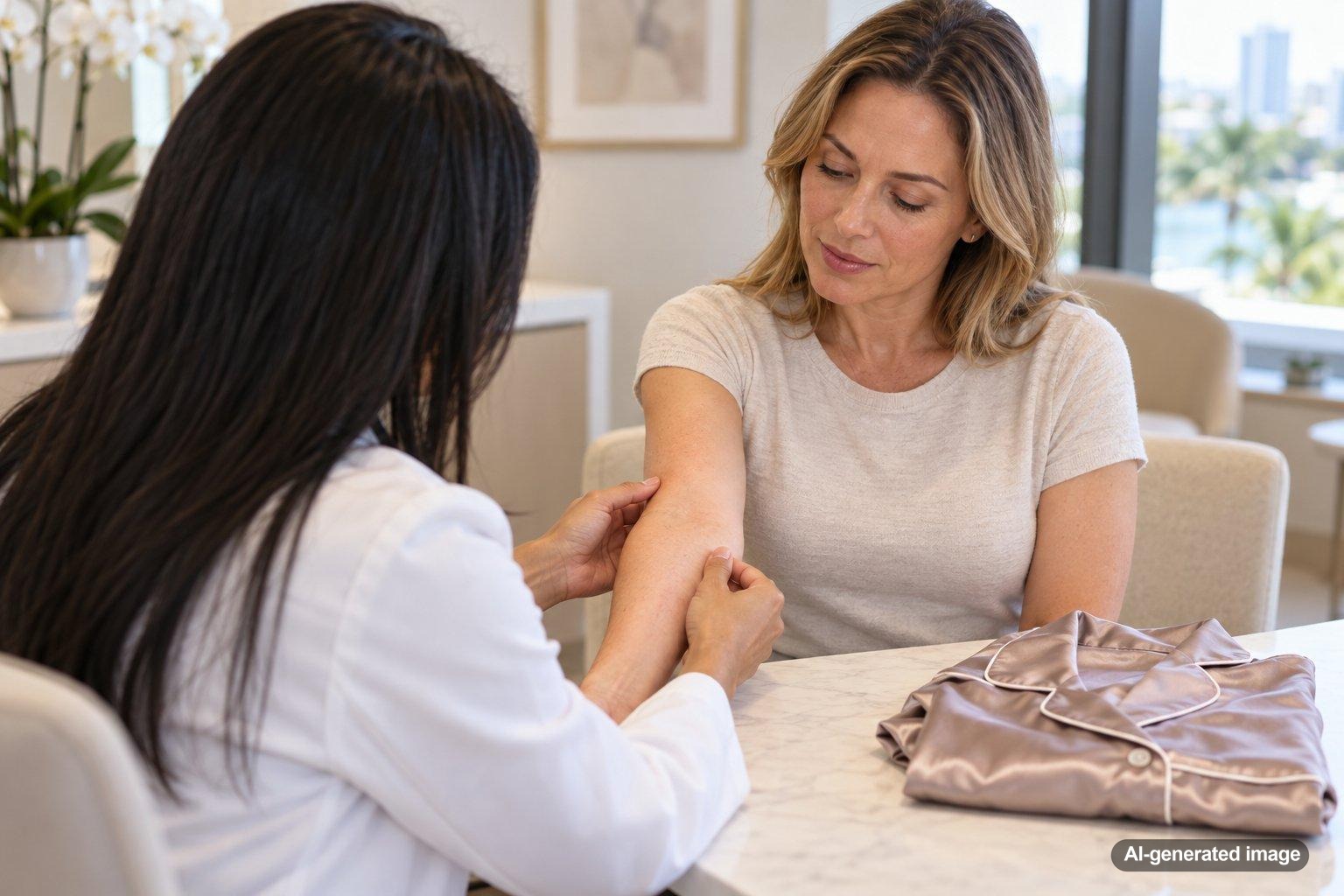
If your skin starts itching after you slip into synthetic pajamas, the fabric may be contributing to the discomfort. Polyester, nylon, and certain synthetic blends can irritate sensitive skin through friction, trapped heat, perspiration, or contact with dyes and finishing chemicals. The sensation may be especially noticeable at night, when your skin stays in prolonged contact with the same fabric.
However, itching after wearing synthetic sleepwear does not automatically mean you are allergic to polyester or another fiber. Several overlapping factors can produce similar symptoms, including dry skin, irritation from laundry products, and contact dermatitis. Understanding these differences can help you make more comfortable clothing choices and recognize when a dermatologist should evaluate persistent symptoms.
Quick Answer: Why Synthetic Pajamas May Make You Itch
- Heat and perspiration: Some synthetic fabrics or garment constructions can hold warmth and moisture against the skin, increasing irritation.
- Friction: Tight-fitting pajamas, seams, and textured fibers may repeatedly rub sensitive areas.
- Fabric dyes and finishes: Certain textile processing chemicals can trigger allergic contact dermatitis in susceptible individuals.
- Skin barrier sensitivity: Dry skin or existing eczema may make otherwise tolerable clothing feel uncomfortable.
- Laundry residue: Fragrances, fabric softeners, and detergents may contribute to irritation independently of the fabric itself.
What Happens When Synthetic Fabric Irritates Your Skin?
Your skin has a protective outer barrier that helps retain moisture and limit contact with environmental irritants. When that barrier becomes compromised, everyday sensations such as pressure, rubbing, heat, or perspiration may become more uncomfortable.
Synthetic fabrics include polyester, nylon, and elastane, commonly called spandex. These materials are not inherently harmful, and many modern synthetic textiles are designed to manage moisture effectively. Still, their comfort depends on fabric construction, fit, breathability, finishing treatments, and individual skin sensitivity.
Two important possibilities are irritant contact dermatitis, in which exposure or friction disrupts the skin, and allergic contact dermatitis, in which the immune system reacts to a particular substance. Both can cause itching, but they have different underlying mechanisms.
An allergic reaction to the actual textile fiber is relatively uncommon. Dyes, formaldehyde-based finishing resins, elastic components, and other manufacturing additives are more frequently implicated in textile-related allergic reactions.
Common Reasons Synthetic Pajamas Trigger Itching
- Overheating: Pajamas that retain warmth may increase sweating, particularly in humid environments or under heavy bedding.
- Moisture and friction: Damp fabric rubbing against the body can aggravate skin folds, waistbands, and areas beneath elastic.
- Textile dyes: Certain dyes used in synthetic garments can provoke allergic contact dermatitis in susceptible people.
- Wrinkle-resistant finishes: Some clothing treatments contain substances that may irritate or sensitize the skin.
- Detergent or softener exposure: Fragranced laundry products may be responsible for itching that appears related to a particular garment.
- Existing skin conditions: Eczema and other causes of skin barrier impairment can increase sensitivity to rough fabrics and temperature changes.
Is It an Allergy or Simple Fabric Irritation?
The timing and appearance of symptoms may provide useful clues, although neither can establish a diagnosis on its own.
Mechanical or irritant reactions may produce itching, stinging, or discomfort during wear, particularly where the fabric is tight or rubbing. Symptoms may improve after changing clothes or cooling the skin.
Allergic contact dermatitis can develop hours or even days after exposure. It may produce persistent redness, discoloration, dry patches, scaling, or small blisters. A person can also develop sensitivity to a substance they previously tolerated.
Itching without a visible rash is possible, but it is less specific. Dry skin, sweating, environmental conditions, and other medical causes can also contribute. Repeated symptoms deserve attention rather than an assumption that the pajamas are solely responsible.
Why Itching May Feel Worse at Night
Bedtime creates several conditions that can make fabric-related discomfort more noticeable. Prolonged skin contact, accumulated warmth beneath blankets, and pressure from lying in one position may amplify irritation.
In Fort Lauderdale’s warm, humid climate, bedroom temperature and moisture can also affect sleepwear comfort. A fabric that feels pleasant in an air-conditioned store may behave differently when worn for hours beneath bedding.
Nighttime itching is not always caused by clothing. If symptoms continue after changing fabrics, involve multiple household members, or occur without a clear relationship to sleepwear, a dermatologist can consider other possible explanations.
What You Can Do at Home
A few conservative changes may help you identify whether your pajamas are contributing to irritation.
- Try breathable, loose-fitting sleepwear. Soft cotton or linen may feel more comfortable for sensitive skin. Choose garments without tight waistbands or abrasive seams.
- Wash new pajamas before wearing them. Washing may reduce some residual dyes and processing substances, although it cannot eliminate every potential allergen.
- Choose fragrance-free laundry products. Avoid heavily scented detergents, dryer sheets, and fabric softeners while assessing possible triggers.
- Keep your sleeping environment comfortable. Lightweight bedding and appropriate room ventilation may help reduce overheating and perspiration.
- Support your skin barrier. A simple, fragrance-free moisturizer may help reduce dryness-related discomfort.
- Pay attention to patterns. Note whether symptoms occur with particular garments, fabric colors, detergents, or room temperatures.
Consider changing one factor at a time when practical. For example, comparing a loose cotton pajama set with a specific synthetic garment while keeping your laundry routine consistent may provide more useful observations than replacing every product simultaneously.
Avoid repeatedly exposing irritated skin to a garment that consistently seems to provoke symptoms. If the skin becomes inflamed, broken, or increasingly uncomfortable, seek professional guidance rather than experimenting with multiple medicated products.
How a Dermatologist Can Help
When symptoms recur, a dermatologist can examine the affected areas and review your history of clothing exposures, laundry products, existing skin conditions, and symptom timing.
If allergic contact dermatitis is suspected, patch testing may help identify sensitivity to particular substances, including selected textile dyes or chemical additives. Patch testing is different from testing for immediate food or environmental allergies.
Management depends on the underlying cause. Professional options may include identifying avoidable triggers, developing a skin barrier care routine, or discussing appropriate anti-inflammatory treatment when clinically indicated.
Not every patient needs allergy testing or prescription treatment. An individualized evaluation helps distinguish simple irritation from conditions requiring more specific care.
When Should You See a Dermatologist?
Consider scheduling an evaluation if itching repeatedly disrupts sleep, persists despite changing sleepwear, or is accompanied by a rash that spreads, returns, or fails to improve.
Other reasons to seek medical attention include painful cracking, significant swelling, blistering, or changes in skin color and texture that remain after the suspected exposure ends.
Increasing warmth, tenderness, pus, or fever may suggest an infection and warrants prompt medical assessment. Difficulty breathing or swelling of the tongue or throat requires emergency medical care.
Frequently Asked Questions
Can polyester pajamas cause an allergic reaction?
They can be associated with allergic contact dermatitis, but an allergy to polyester fiber itself is uncommon. Dyes, finishing agents, and other chemicals used in clothing production are often more relevant allergens. A dermatologist can determine whether testing is appropriate.
Why do my pajamas itch even after washing?
Washing may remove some residual substances, but it does not change the fabric’s basic texture, fit, or all of its chemical treatments. Detergent residue, trapped warmth, and an existing skin condition may also contribute.
Are cotton pajamas always better for sensitive skin?
Many people with sensitive skin find soft, loose cotton comfortable because it tends to be breathable and less abrasive. However, comfort varies, and cotton garments can still contain dyes or finishes that provoke reactions.
Can synthetic pajamas make eczema worse?
Some synthetic garments may aggravate eczema-prone skin, especially when they create friction or contribute to overheating. This does not mean every synthetic material will cause a flare. Fabric selection and individualized skin care both matter.
Does itching without a rash mean I have a fabric allergy?
No. Itching without visible inflammation has many possible explanations, including dry skin, heat, and other medical conditions. A fabric allergy cannot be established from itching alone.
Should I stop wearing all synthetic fabrics?
Not necessarily. If only one garment seems problematic, its fit, dye, finish, or construction may be relevant. A dermatologist can help determine whether targeted avoidance is more appropriate than eliminating an entire fabric category.
Ready to get help?
Schedule an appointment or send a message and our team will get back to you.
Prefer to call? 954-666-3736
Disclaimer
This article is for educational purposes and is not medical advice. For diagnosis and personalized treatment, please book an appointment with a board-certified dermatologist.
Sources & further reading
- DermNet – Textile contact dermatitis
- American Academy of Dermatology (AAD) – Itchy rash could be contact dermatitis
- American Academy of Dermatology (AAD) – Eczema types: Contact dermatitis tips for managing
