

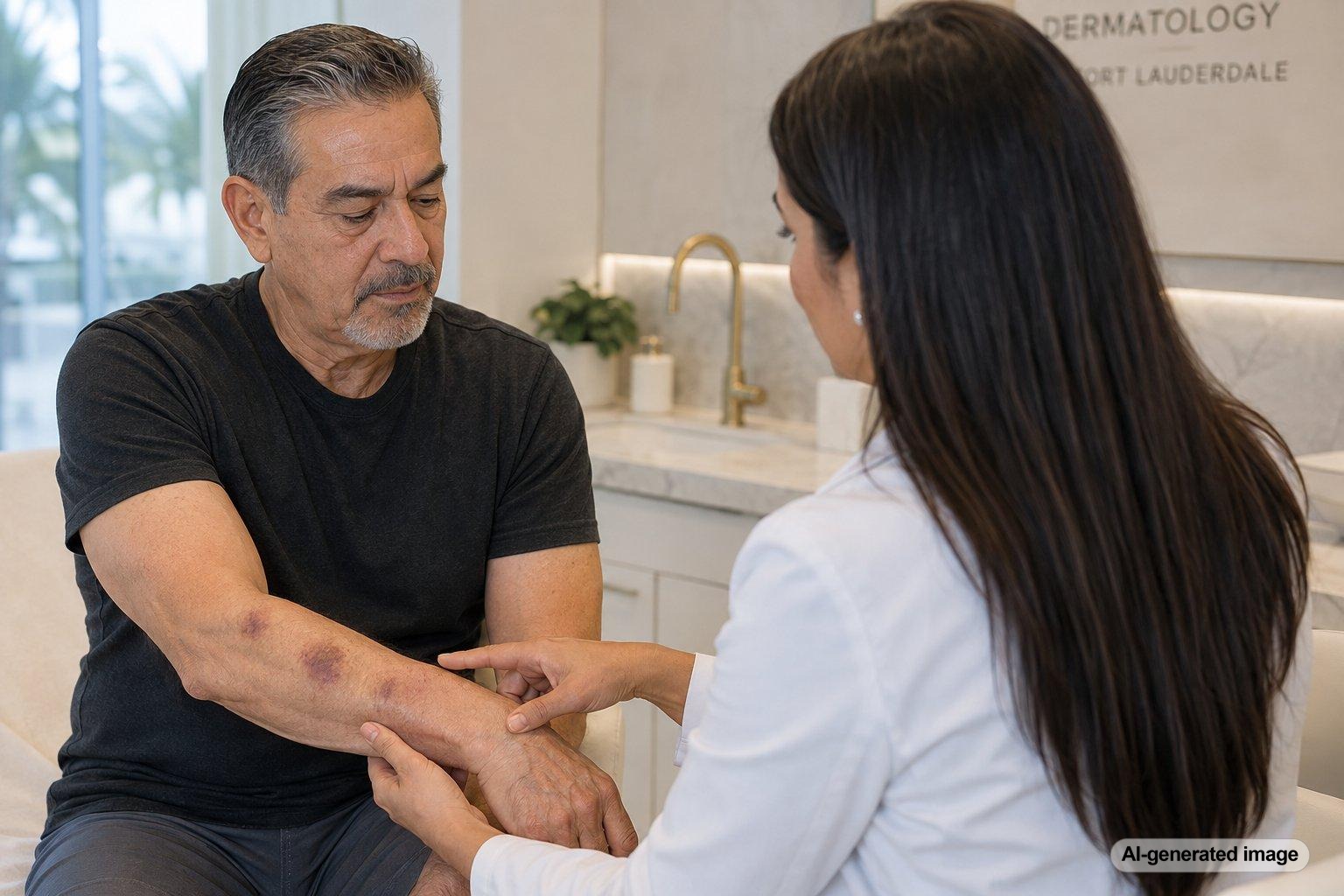
Bruising easily on your arms and legs can happen for surprisingly ordinary reasons. A small bump you barely noticed may break tiny blood vessels beneath the skin, especially in areas that regularly encounter furniture, countertops, exercise equipment, or everyday activities. Age-related skin thinning, sun exposure, certain medications, and individual differences can also make bruises appear more readily.
Still, a noticeable change in how often you bruise, bruises that appear without an obvious explanation, or bruising accompanied by unusual bleeding deserves attention. The pattern matters, and a clinician can help determine whether the issue is primarily related to the skin or whether another medical evaluation is appropriate.
Quick answer
- Bruises form when small blood vessels beneath the skin break and blood collects in nearby tissue.
- The arms and legs are common locations because they are frequently bumped during everyday activities.
- Thinner skin, aging, cumulative sun exposure, and some medications can make bruising more noticeable.
- New, frequent, unusually large, painful, or unexplained bruises should be discussed with a healthcare professional.
- Bruising together with unusual nosebleeds, gum bleeding, prolonged bleeding, or other new symptoms warrants medical evaluation.
Why bruises form so easily on the arms and legs
A bruise develops when an impact damages small blood vessels beneath intact skin. Blood leaks into the surrounding tissue, creating the familiar red, purple, blue, green, or yellow discoloration that changes as the body gradually clears it.
The arms and legs are particularly exposed to minor trauma. You might bump the edge of a desk, brush against a door frame, kneel on a hard surface, carry a heavy bag against your forearm, or encounter something during exercise without remembering it later. For someone who bruises easily, a relatively minor impact may leave a noticeable mark.
Common reasons you may be bruising more easily
There is no single explanation for every person who notices frequent bruises. Some common possibilities include:
- Normal individual variation: Some people simply develop visible bruises more readily than others after minor bumps.
- Thinner skin: As skin becomes thinner with age, there is less cushioning around superficial blood vessels, making them more vulnerable to minor trauma.
- Cumulative sun exposure: Years of sun exposure can contribute to changes in the structure and resilience of exposed skin, particularly on the forearms and hands.
- Physical activity: Exercise, sports, gardening, moving furniture, or other activities can cause small impacts that are easy to forget.
- Medications: Aspirin, anticoagulants, antiplatelet medications, corticosteroids, and some other medicines may contribute to easier bruising. Do not stop a prescribed medication because of bruising without speaking with the clinician who prescribed it.
- Supplements: Certain supplements can affect bleeding or interact with medications. Tell your healthcare professional about vitamins, herbs, and supplements you use.
- Blood or clotting problems: Less commonly, frequent unexplained bruising can be associated with platelet or clotting abnormalities and may need further medical evaluation.
Why skin changes can make bruises more visible
Healthy skin and the tissue beneath it provide some protection for small blood vessels. When that protective layer becomes thinner or more fragile, minor trauma may be more likely to produce visible discoloration.
This is one reason easy bruising often becomes more noticeable with age. Areas with substantial lifetime sun exposure, such as the forearms, can also show increased fragility. A dermatologist can examine the skin itself and help distinguish common age- or sun-related changes from findings that merit additional evaluation.
Could medications be contributing?
Yes. Some medications can make bruising more likely or more noticeable. Medicines that reduce the blood’s ability to clot, including certain anticoagulants and antiplatelet drugs, are well-known examples. Aspirin and some nonprescription anti-inflammatory medications may also affect bleeding. Corticosteroids can contribute to skin thinning with prolonged use.
If your bruising changed after starting a medicine, changing a dose, or adding a supplement, mention the timing to your healthcare professional. Bring a complete medication and supplement list to your appointment. Your clinician can decide whether any adjustment or additional evaluation is appropriate. Do not discontinue prescribed medication on your own.
What you can do at home
For an ordinary bruise related to a minor bump, conservative care is usually reasonable. You can protect the area from additional impact, rest it if it is sore, and use a cold pack wrapped in a cloth during the early period after an injury to help with discomfort or swelling. Elevating the area may also be useful when practical.
For prevention, consider the environments and activities where bumps commonly occur. Good lighting, clear walking paths, protective clothing during gardening or physical work, and attention to sharp furniture edges may reduce minor injuries. Consistent sun protection is also sensible for maintaining the health of exposed skin over time.
Avoid trying to puncture, drain, or aggressively massage a bruise.
What a professional evaluation may involve
The appropriate evaluation depends on the pattern of bruising and your overall health history. A clinician may ask when the bruising began, whether the pattern has changed, where bruises appear, whether they follow known injuries, and whether you have any other bleeding symptoms.
Your medication and supplement list is especially important. Depending on the findings, your healthcare professional may determine that no further testing is necessary or may recommend blood tests or evaluation by another medical specialist. A dermatologist can be particularly helpful when skin thinning, sun-related fragility, or another visible skin change appears to be contributing.
When to see a dermatologist or healthcare professional
It’s worth getting checked if bruising is new, significantly more frequent than it used to be, or difficult to explain. Seek medical guidance if you notice:
- Frequent large bruises without a clear injury.
- A sudden increase in bruising.
- Bruising that began after starting a new medication or supplement.
- Bruising along with frequent nosebleeds, gum bleeding, unusually prolonged bleeding, or other unexpected bleeding.
- Very painful or significantly swollen bruised areas.
- A persistent lump or substantial swelling associated with a bruise.
- Bruises in unusual locations without a clear explanation.
- A personal or family history of unusual bleeding or easy bruising.
If you develop severe pain, rapidly increasing swelling, substantial bleeding, faintness, weakness, or another concerning acute symptom, seek prompt medical care rather than waiting for a routine skin appointment.
FAQ
Is it normal to bruise without remembering an injury?
It can be. Minor bumps are easy to forget, especially on the arms and legs. However, frequent bruises that seem to appear without any plausible injury, particularly if this is a new pattern, are worth discussing with a healthcare professional.
Why do I suddenly bruise more easily as I get older?
Skin generally becomes thinner with age and loses some of the cushioning tissue that protects small blood vessels. This can make relatively minor impacts produce more visible bruising. A clinician can assess whether your pattern looks consistent with common skin changes or deserves further investigation.
Can sun damage make my arms bruise more easily?
Long-term sun exposure can contribute to structural changes and fragility in exposed skin. This may make bruising more noticeable on areas such as the forearms. Daily sun protection can help limit additional cumulative sun damage.
Can blood thinners cause bruises on my arms and legs?
Medications that reduce clotting can contribute to easier bruising. If you take one and notice a change in your bruising pattern, talk with the healthcare professional managing the medication. Do not stop or change it without medical guidance.
How long should a bruise take to disappear?
Bruise healing varies with the size and depth of the injury, your age, medications, circulation, and other individual factors. Bruises commonly change color as they resolve. If a mark is persistent, worsening, unusually painful, or doesn’t behave like your typical bruises, have it evaluated.
Should I see a dermatologist for easy bruising?
A dermatologist can evaluate whether skin thinning, sun-related changes, or another dermatologic issue may be contributing. If the pattern raises concern for a blood, platelet, medication, or systemic issue, additional evaluation by your primary care clinician or another specialist may also be appropriate.
Ready to get help?
Schedule an appointment or send a message and our team will get back to you.
Prefer to call? 954-666-3736
This article is for educational purposes and is not medical advice. For diagnosis and personalized treatment, please book an appointment with a board-certified dermatologist.
