

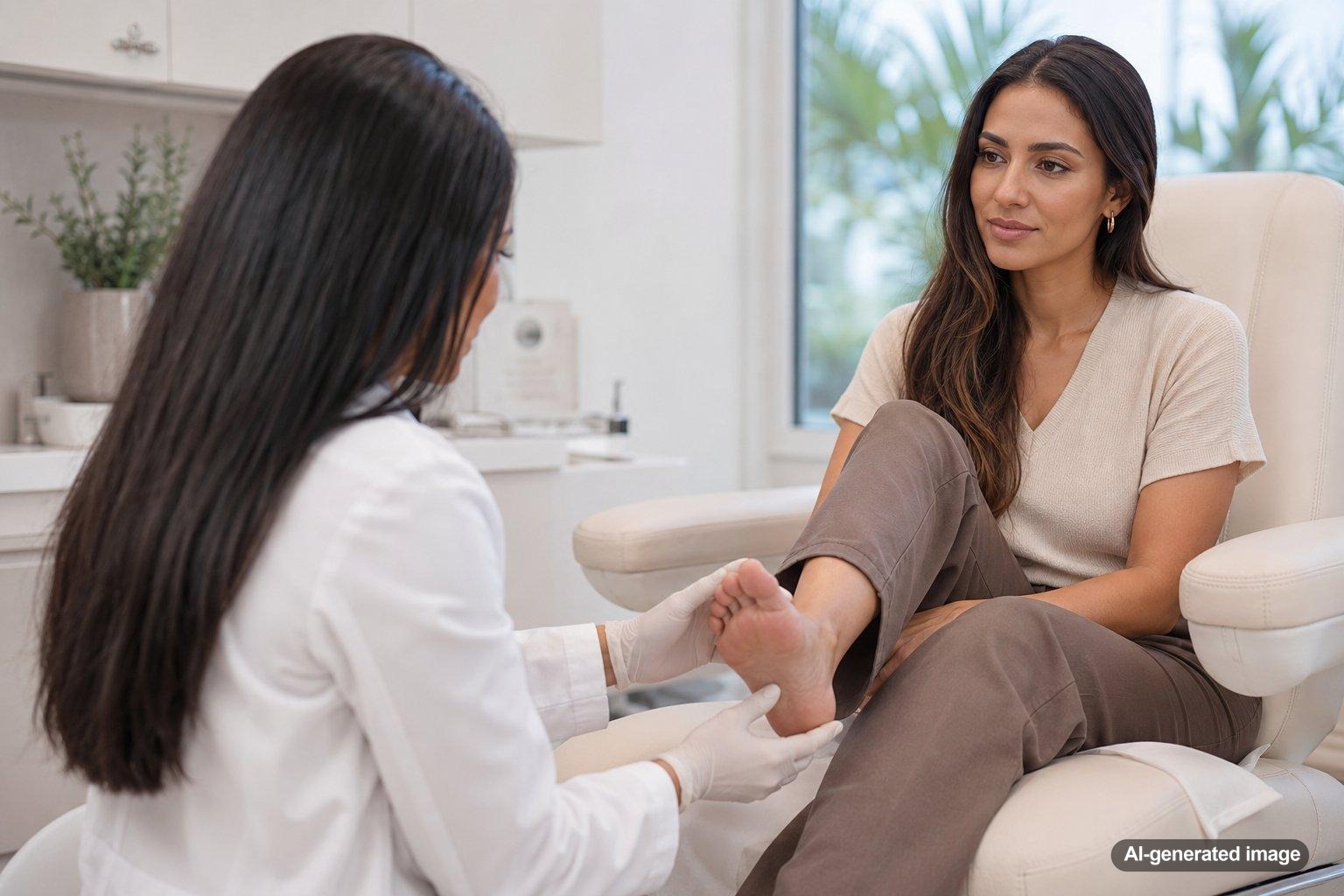
Yes, you can get athlete’s foot even when your feet are clean. Cleanliness matters, but athlete’s foot is not simply a sign of poor hygiene. It is a common fungal skin infection that tends to thrive when the right conditions are present: warmth, moisture, friction, and contact with contaminated surfaces, socks, towels, or shoes.
In Fort Lauderdale, where heat, humidity, sandals, pools, gyms, travel, and long days in closed shoes often overlap, those conditions can show up easily. The goal is not to feel frustrated or embarrassed. The goal is to understand why it may keep happening and when a dermatologist can help confirm what is actually going on.
Quick answer
- Athlete’s foot can occur even with daily washing because fungi prefer warm, damp spaces, especially between the toes.
- Clean feet can be re-exposed through shared floors, showers, locker rooms, towels, socks, or shoes.
- Sweat, tight footwear, humid weather, and not fully drying between the toes can make recurrence more likely.
- Peeling, itching, cracking, burning, blisters, or changes between the toes can have several causes, so evaluation may help if symptoms persist.
- If the rash is spreading, painful, recurrent, or involves the nails, a board-certified dermatologist can assess it and discuss appropriate options.
What athlete’s foot is
Athlete’s foot, also called tinea pedis, is a fungal infection of the skin on the feet. It often starts between the toes, but it can also affect the soles, sides of the feet, heels, or tops of the feet. Some people notice itching and flaking, while others notice cracking, burning, stinging, soggy-looking skin between the toes, or small blisters.
The name can be misleading. You do not have to be an athlete to develop it, and having clean feet does not make someone immune. Fungi can live in damp environments and on items that touch the feet. When skin stays moist or irritated, the fungus may have an easier time growing.
Common reasons it happens even when your feet are clean
- Your feet may stay damp after washing. Washing removes sweat and debris, but moisture left between the toes can create a favorable setting for fungal growth.
- Your shoes may be holding moisture. Closed shoes, tight footwear, and shoes worn repeatedly without drying time can trap heat and sweat.
- Florida humidity can work against you. Warm, humid weather can make it harder for skin, socks, and shoes to stay dry throughout the day.
- You may be getting re-exposed. Pool decks, gym showers, locker rooms, hotel bathrooms, and shared floors can be sources of contact, especially when walking barefoot.
- Socks and towels can play a role. Reusing damp towels or wearing socks that do not wick moisture well can keep the skin environment too wet.
- Nails may be involved. Fungal nail changes can sometimes act as a continuing source of exposure for the surrounding skin.
- It may not actually be athlete’s foot. Eczema, irritation, psoriasis, contact dermatitis, bacterial issues, or dry skin can sometimes look similar.
What you can do at home
Simple foot-care habits may help reduce the conditions that allow athlete’s foot to keep coming back. These steps are general education, not a diagnosis or personalized treatment plan.
- Dry carefully between the toes after bathing, swimming, or sweating.
- Change socks when they become damp, especially after exercise or long periods outdoors.
- Choose breathable shoes when possible and rotate pairs so they have time to dry.
- Wear shower sandals or flip-flops in shared wet areas such as gym showers, hotel bathrooms, pool decks, and locker rooms.
- Avoid sharing towels, socks, nail tools, or shoes.
- Wash towels and socks regularly and allow them to dry fully before reuse.
- Consider whether footwear, sweating, or repeated friction may be irritating the skin barrier.
Professional options
If symptoms are mild and clearly consistent with athlete’s foot, non-prescription antifungal products are commonly used for fungal skin infections. However, rashes on the feet can overlap in appearance, and using the wrong product can delay more appropriate care. A dermatologist can examine the area, consider whether testing is useful, and discuss options that fit the pattern, location, recurrence, and your overall health.
For recurring or more persistent cases, a clinician may review whether there are related nail changes, footwear factors, sweating, irritation, or another diagnosis. Prescription therapies may be discussed when appropriate, but the right approach depends on an in-person evaluation.
When to see a dermatologist
It is worth getting checked if the rash is not improving, keeps returning, spreads to the nails or other areas, or if you are unsure whether it is truly athlete’s foot. You should also seek medical evaluation sooner if you notice increasing redness, swelling, warmth, drainage, significant pain, open cracks, fever, or if you have diabetes, circulation concerns, immune suppression, or another condition that makes foot problems higher risk.
A calm, accurate diagnosis can be especially helpful when symptoms have been treated several times but keep coming back. The issue may be fungal, but it may also be a different type of rash or a combination of factors.
FAQ
Does athlete’s foot mean my feet are dirty?
No. Athlete’s foot is associated with fungal exposure and a warm, damp skin environment. Clean feet can still be affected, especially if moisture, sweat, shared surfaces, or footwear habits keep reintroducing the fungus.
Why does it keep coming back?
Common reasons include damp shoes, sweaty socks, humid weather, incomplete drying between the toes, walking barefoot in shared wet areas, or possible involvement of the toenails. A dermatologist can help look for patterns that may be contributing.
Can I spread athlete’s foot to other areas?
Fungal infections can spread by contact, including through hands, towels, clothing, or shared surfaces. Keeping the area clean and dry, washing hands after touching the feet, and avoiding shared towels may help reduce spread.
Can moisturizer make it worse?
Moisturizer is not automatically a problem, but heavy products between the toes can trap moisture. If the skin is cracked or irritated, ask a clinician what type of skin barrier support is appropriate for your situation.
When should I stop trying to handle it on my own?
If symptoms persist, recur, worsen, involve the nails, or are painful or spreading, it is reasonable to schedule a dermatology visit. It is also important to get checked sooner if you have diabetes, circulation concerns, or immune system concerns.
Ready to get help?
Schedule an appointment or send a message and our team will get back to you.
Prefer to call? 954-666-3736
Disclaimer
This article is for educational purposes and is not medical advice. For diagnosis and personalized treatment, please book an appointment with a board-certified dermatologist.
Sources & further reading
- American Academy of Dermatology (AAD) – How to prevent athlete’s foot
- Centers for Disease Control and Prevention (CDC) – Ringworm Basics
- Mayo Clinic – Athlete’s foot – Symptoms and causes
- Centers for Disease Control and Prevention (CDC) – Treatment of Ringworm
