

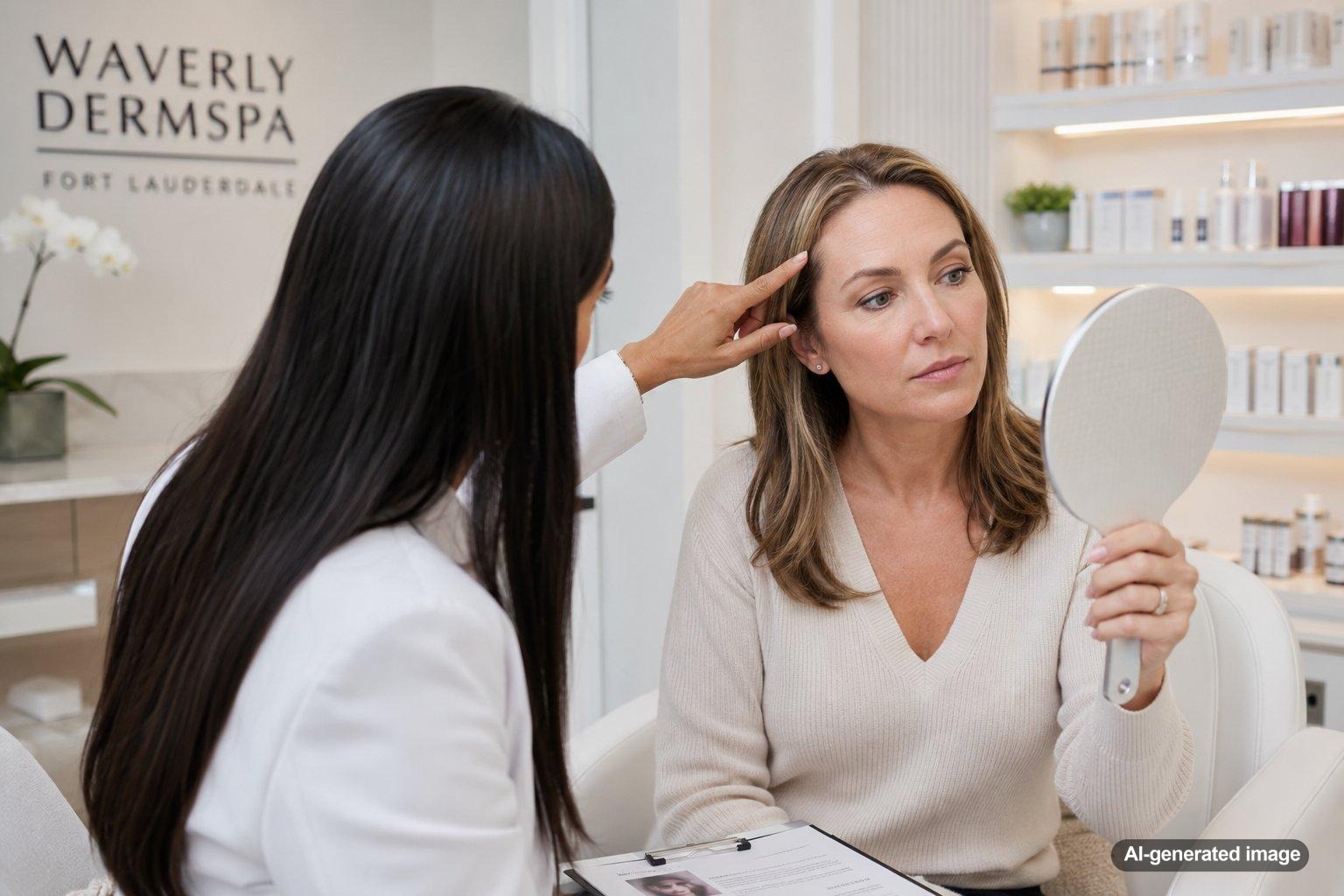
Noticing white eyebrow hairs or changes in eyebrow fullness can be surprising, especially when the change seems to happen gradually. Eyebrow hairs can become lighter with natural aging, but changes in color or shedding can also be associated with a range of factors, including normal hair cycles, irritation, nutritional concerns, or certain skin and hair conditions.
If you are wondering why your eyebrow hairs are changing, a dermatologist can help evaluate the pattern, review your health history, and discuss possible next steps. The right approach depends on the cause of the change.
Quick answer
- White eyebrow hairs can occur as pigment production in hair follicles changes over time.
- Eyebrow shedding can be part of a normal hair cycle or may be associated with irritation, inflammation, or other factors.
- Changes that are sudden, patchy, or accompanied by skin symptoms are worth discussing with a dermatologist.
- Gentle eyebrow care and avoiding unnecessary irritation may help support healthier-looking brows.
What it is: why eyebrow hairs can turn white and fall out
Hair color comes from pigment produced inside hair follicles. Over time, some follicles may produce less pigment, which can make individual hairs appear gray or white. Eyebrow hairs can also shed naturally and regrow as part of the hair growth cycle.
When eyebrow thinning or shedding is more noticeable, possible contributing factors can include changes in the hair growth cycle, repeated irritation, skin inflammation, or certain medical conditions. A change in appearance alone does not identify a specific cause.
Common causes or triggers
- Natural aging: Hair follicles may gradually produce less pigment, leading to white or gray hairs.
- Normal shedding: Individual eyebrow hairs have their own growth cycles and can naturally fall out.
- Irritation or over-treatment: Frequent rubbing, harsh products, or repeated cosmetic procedures may affect the appearance of brows.
- Inflammatory or autoimmune conditions: Some conditions that affect hair follicles can be associated with eyebrow thinning or patchy loss.
- Nutritional or health factors: Certain changes in the body may be associated with hair changes and can be reviewed with a healthcare professional.
What you can do at home
- Use gentle cleansers and avoid rubbing the eyebrow area aggressively.
- Choose skincare and cosmetic products that are comfortable for your skin.
- Avoid repeated plucking if you are concerned about eyebrow fullness.
- Take note of when changes started and whether there are other symptoms, such as itching, redness, or scaling.
- Maintain balanced nutrition and discuss supplements with a healthcare professional if you have concerns.
Professional options
A dermatologist can assess eyebrow changes by reviewing your medical history and examining the skin and hair pattern. Depending on the findings, common options may include monitoring changes, addressing contributing factors, or discussing medical treatments when appropriate.
At Waverly DermSpa, we offer PRFM for Hair Loss and can help you understand whether it may be appropriate.
When to see a dermatologist
Consider scheduling a dermatology visit if eyebrow hair loss is sudden, occurs in distinct patches, continues to progress, or is accompanied by changes such as redness, scaling, discomfort, or other skin concerns. A dermatologist can help determine whether further evaluation is appropriate.
FAQ
Can eyebrow hairs naturally turn white?
Yes. Like scalp hair, eyebrow hairs can become gray or white as pigment production changes over time.
Does losing eyebrow hair always mean there is a medical condition?
No. Eyebrow hairs naturally shed, but noticeable or persistent changes may be worth discussing with a dermatologist.
Can stress affect eyebrow hair?
Stress can be associated with changes in the hair growth cycle for some people. A dermatologist can help evaluate possible contributing factors.
Should I stop using eyebrow products?
If a product seems to irritate your skin, reducing use may be helpful. A dermatologist can help you choose appropriate options if irritation continues.
Ready to get help?
Schedule an appointment or send a message and our team will get back to you.
Prefer to call? 954-666-3736
Disclaimer
This article is for educational purposes and is not medical advice. For diagnosis and personalized treatment, please book an appointment with a board-certified dermatologist.
Sources & further reading
- American Academy of Dermatology (AAD) – Alopecia areata: Overview
- Mayo Clinic – Alopecia areata: Symptoms and causes
