

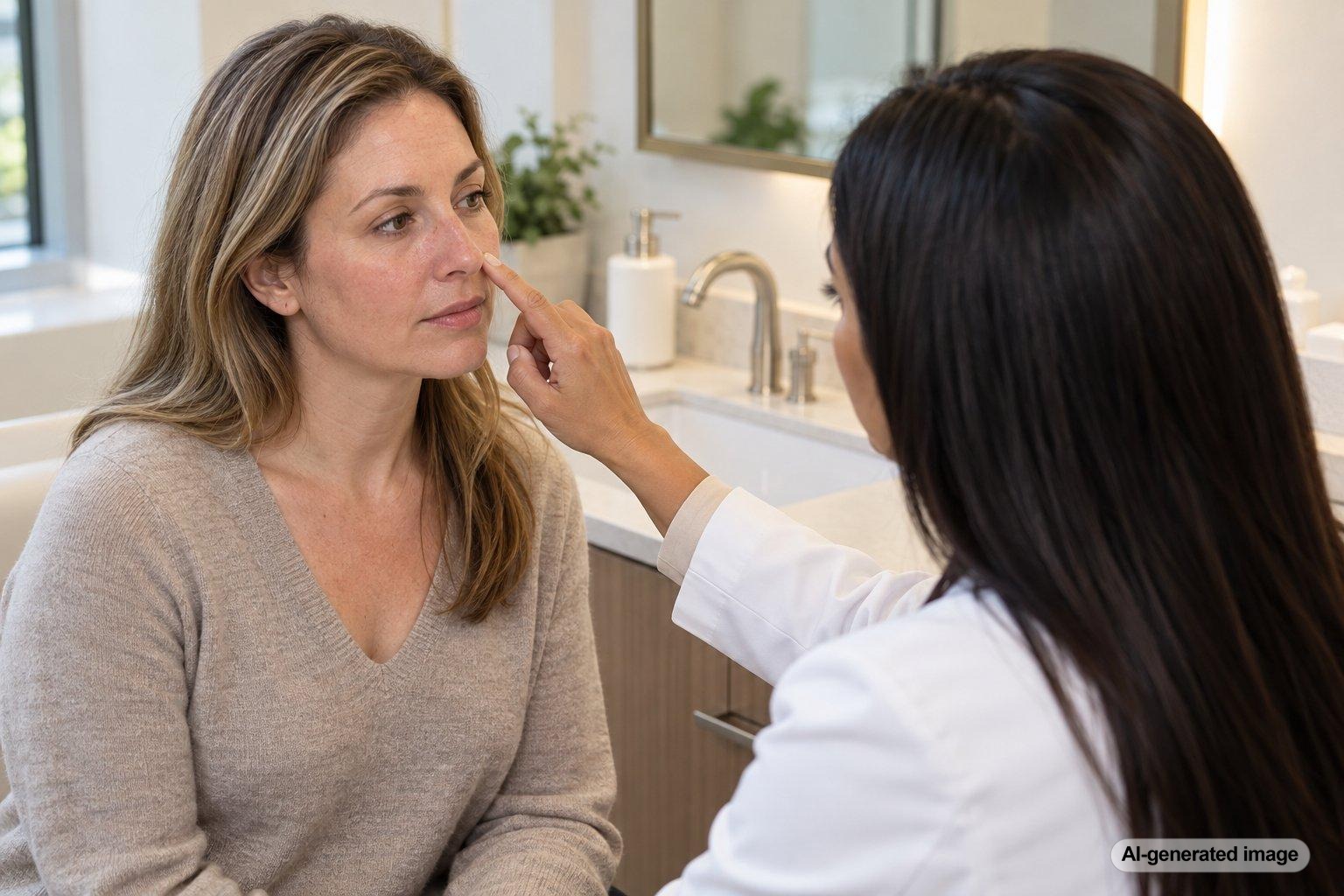
White, flaky skin in the little creases beside your nose can be surprisingly persistent. You may notice fine flakes when you wash your face, apply moisturizer, or put on makeup. Sometimes the skin underneath looks pink or red. Other times, it looks relatively normal until the flakes return a few hours later.
One possible explanation is seborrheic dermatitis, an inflammatory skin condition that frequently affects the folds around the nose. However, dryness, irritation from skincare products, and other forms of dermatitis can create a similar appearance. The location of the flakes offers a useful clue, but it does not establish a diagnosis. Understanding why this particular area becomes irritated can help you choose gentler skincare habits and recognize when a dermatologist should evaluate the problem.
Quick Answer: Why Is the Skin Beside My Nose Flaking?
- Seborrheic dermatitis is a common possibility. It frequently causes white or yellowish flakes in the creases beside the nose, sometimes with redness or mild itching.
- Dryness and a disrupted skin barrier can contribute. Harsh cleansers, excessive exfoliation, and environmental changes may make the area peel.
- Contact dermatitis can look similar. Fragrance, cosmetics, topical medications, and other products may irritate sensitive skin or trigger an allergic reaction.
- Flakes do not necessarily mean your skin needs more exfoliation. Scrubbing can worsen inflammation and make the area more uncomfortable.
- Recurring or persistent flaking deserves attention. A dermatologist can distinguish among possible causes and recommend an appropriate treatment approach.
What Is Happening in the Creases Beside Your Nose?
The folds running from the sides of your nose toward the corners of your mouth are called the nasolabial folds. The upper portions of these folds are a frequent location for facial scaling because they contain oil-producing glands and can be affected by inflammatory skin conditions.
Flaking occurs when surface skin cells become visibly loosened and shed in small clusters. These clusters may appear as fine white powder, thin peeling sheets, or slightly thicker scales. The appearance depends on the underlying condition and the degree of inflammation.
Although people often describe this area as dry, the skin does not necessarily lack oil. In fact, seborrheic dermatitis commonly develops in oil-rich areas, including the sides of the nose, eyebrows, scalp, and behind the ears. This explains why someone may experience both an oily T-zone and visible flakes in the same location.
Common Causes of White Flaky Skin Around the Nose
1. Seborrheic Dermatitis
Seborrheic dermatitis is an inflammatory condition that commonly affects areas with greater oil production. The creases beside the nose are a characteristic location.
Possible signs include fine white or yellowish scales, mild redness, occasional itching, and recurring patches that seem to improve and then return. The flakes may appear dry or slightly greasy. Similar scaling may also be present around the eyebrows, ears, or scalp.
Seborrheic dermatitis is associated with an inflammatory response involving Malassezia, a yeast that normally lives on human skin. Its presence does not mean someone has poor hygiene. The condition is not considered contagious.
Flare-ups may be associated with stress, seasonal changes, or other individual factors. Because the condition can recur, management often focuses on controlling inflammation and minimizing symptoms rather than simply removing visible flakes.
2. Irritant Contact Dermatitis
The skin around the nose may become irritated by products that are otherwise well tolerated on other parts of the face. Strong cleansers, exfoliating acids, retinoids, acne treatments, and fragranced products can contribute to dryness, peeling, or stinging.
Irritation may be particularly noticeable when several active ingredients are used together. Frequent washing, rubbing with tissues, or repeatedly wiping the nose can add friction to an already sensitive area.
3. Allergic Contact Dermatitis
Some people develop a delayed skin reaction to an ingredient in a cosmetic, skincare product, or another substance that touches the face. This can cause redness, scaling, itching, or swelling.
Unlike simple irritation, allergic contact dermatitis involves an immune response to a specific substance. A dermatologist may consider patch testing when the pattern suggests an allergy or the reaction keeps returning.
4. Dry Skin and Skin Barrier Disruption
Dry indoor air, changes in climate, hot water, and frequent cleansing may contribute to moisture loss. When the skin barrier becomes less effective at retaining water, the surface can feel tight, rough, and flaky.
This is especially relevant for people moving between different climates, such as seasonal visitors traveling between cooler destinations and South Florida. Air-conditioned interiors may also contribute to a feeling of dryness, even in a humid environment.
5. Other Inflammatory Skin Conditions
Atopic dermatitis, psoriasis, and certain other inflammatory conditions can sometimes involve facial skin. They may produce scaling that resembles seborrheic dermatitis, although the pattern and associated symptoms can differ.
For example, psoriasis may produce more clearly defined scaly patches, while eczema can be associated with itching and sensitive skin. Appearance alone is not always enough to distinguish these conditions, particularly when the affected area is small.
Clues That May Help Explain the Flaking
The location, appearance, and timing of your symptoms can provide useful information for a dermatology appointment.
- Flakes beside the nose plus dandruff or eyebrow scaling: This pattern may suggest seborrheic dermatitis.
- Burning or stinging after applying products: Irritation or skin barrier disruption may be contributing.
- Itching after introducing a new cosmetic: Contact dermatitis may be worth considering.
- Flaking that becomes worse after exfoliation: The area may be reacting to excessive cleansing or active ingredients.
- Thicker, sharply outlined patches elsewhere on the body: A dermatologist may consider psoriasis or another inflammatory condition.
These clues are not diagnostic. Different conditions can overlap, and more than one factor may be present at the same time.
What Can You Do at Home?
When the area is mildly flaky and otherwise comfortable, a conservative skincare approach may help reduce unnecessary irritation while you determine whether professional evaluation is needed.
Cleanse Gently
Choose a mild, fragrance-free facial cleanser and use lukewarm rather than hot water. Avoid scrubbing the folds beside your nose with washcloths, brushes, or exfoliating pads. Pat the skin dry instead of rubbing.
Use a Simple Moisturizer
A fragrance-free moisturizer containing ingredients such as glycerin or ceramides may help support the skin barrier. Apply it gently without trying to peel away attached flakes.
Moisturizer can be useful for dryness and irritation, but it may not adequately address an underlying inflammatory condition such as seborrheic dermatitis.
Reconsider Strong Active Ingredients
If peeling began after introducing an exfoliating acid, retinoid, acne treatment, or another active product, consider whether your routine has become too irritating. Avoid adding multiple new treatments in an effort to remove the flakes.
If a product was prescribed by your clinician, ask for guidance before making changes to the prescribed regimen.
Protect the Area From Friction
Frequent nose wiping, aggressive makeup removal, and repeated attempts to scrape away flakes can worsen discomfort. Gentle handling is especially important when the skin is already red or tender.
Keep Track of Recurring Patterns
Notice whether the flaking appears alongside scalp dandruff, follows a skincare change, or becomes more noticeable during seasonal transitions. These observations may help your dermatologist identify potential triggers.
Should You Use Dandruff Shampoo on the Sides of Your Nose?
You may have heard that certain dandruff shampoos can help with seborrheic dermatitis on the face. Some medicated antifungal products are used in the management of this condition, but products intended for the scalp are not automatically suitable for facial use.
The skin around the nose can be sensitive, and formulations vary. Certain ingredients may cause irritation, particularly when used close to the eyes or on already inflamed skin.
If seborrheic dermatitis is suspected, a dermatologist can help determine whether a facial antifungal product, another topical treatment, or a different approach is appropriate. Avoid experimenting with multiple medicated products without understanding the cause of the flaking.
Professional Options for Persistent Flaking
If the flakes repeatedly return or do not respond to gentle skincare, a dermatologist can examine the affected area and assess whether seborrheic dermatitis, contact dermatitis, eczema, psoriasis, or another condition is involved.
Depending on the diagnosis and severity, professional management may include:
- Targeted topical antifungal treatments: These may be considered when seborrheic dermatitis is identified.
- Short-term anti-inflammatory therapies: A clinician may recommend a carefully selected treatment for inflamed facial skin.
- Skin barrier support: Simplifying the skincare routine and identifying irritating ingredients may be important components of care.
- Allergy evaluation: Patch testing may be appropriate if allergic contact dermatitis is suspected.
- Assessment of other skin conditions: Additional examination can help distinguish overlapping causes of facial scaling.
Because the skin beside the nose is delicate, prescription treatments should be selected and used with professional guidance. In particular, applying topical steroids to the face without appropriate direction may cause unwanted effects.
Cosmetic exfoliation, strong chemical peels, and aggressive facial treatments are generally not the first step when the area is actively inflamed or irritated. Establishing the cause should come before pursuing treatments intended primarily to improve skin texture.
When Should You See a Dermatologist?
Occasional mild flaking may improve with gentler skincare, but ongoing symptoms should not be dismissed as ordinary dryness.
Consider a dermatology appointment if:
- The same patches keep returning despite a simplified skincare routine.
- The skin becomes persistently red, itchy, painful, or uncomfortable.
- Flaking spreads to the eyebrows, eyelids, scalp, or other areas.
- The affected skin develops cracks, significant tenderness, or irritation.
- You are uncertain whether a cosmetic or prescribed product is contributing.
- You need guidance about using medicated products safely on facial skin.
Seek prompt medical evaluation if the area develops rapidly worsening redness, marked swelling, increasing pain, pus, or other signs of infection. Symptoms involving the eyes also warrant timely attention.
Frequently Asked Questions
Why do I have white flakes around my nose even though my skin is oily?
Oily skin can still develop inflammation and scaling. Seborrheic dermatitis commonly affects oil-rich areas, including the folds beside the nose. Visible flakes do not necessarily mean the skin lacks oil or simply needs more moisturizer.
Is flaky skin beside the nose always seborrheic dermatitis?
No. Seborrheic dermatitis is one possibility, but dryness, irritant contact dermatitis, allergic contact dermatitis, and other inflammatory conditions may produce similar symptoms. A dermatologist can evaluate the pattern and help identify the cause.
Can I exfoliate the white flakes away?
Exfoliation may temporarily remove visible scales, but it does not necessarily address the underlying cause. Scrubbing or using strong exfoliating ingredients on irritated skin can worsen redness and peeling. Gentle cleansing is generally a more conservative starting point.
Why do the flakes keep coming back after I moisturize?
Moisturizer may reduce dryness without fully addressing inflammation. If an underlying condition such as seborrheic dermatitis is responsible, the area may continue to develop flakes until the condition is appropriately managed.
Is seborrheic dermatitis around the nose contagious?
No. Seborrheic dermatitis is not considered contagious. Although Malassezia yeast is associated with the condition, this yeast is a normal component of human skin flora. The condition involves the skin’s inflammatory response rather than an infection that spreads through ordinary contact.
Can weather changes make the skin beside my nose flake?
Yes. Changes in temperature, humidity, indoor air conditions, and skincare habits can affect the skin barrier. Some people also notice seasonal changes in seborrheic dermatitis symptoms. The relationship varies, so recurring patterns are worth discussing with your dermatologist.
Understanding the Cause Is More Useful Than Removing the Flakes
The creases beside your nose are a small area, but persistent scaling there can have several explanations. White flakes may reflect seborrheic dermatitis, product-related irritation, dryness, or another inflammatory skin condition. Treating every case as simple dry skin can overlook the actual source of the problem.
A gentle routine may help protect the skin while you monitor mild symptoms. When flaking continues or frequently returns, a dermatologist can assess the area and recommend care suited to the underlying cause.
Ready to get help?
Schedule an appointment or send a message and our team will get back to you.
Prefer to call? 954-666-3736
Disclaimer
This article is for educational purposes and is not medical advice. For diagnosis and personalized treatment, please book an appointment with a board-certified dermatologist.
