

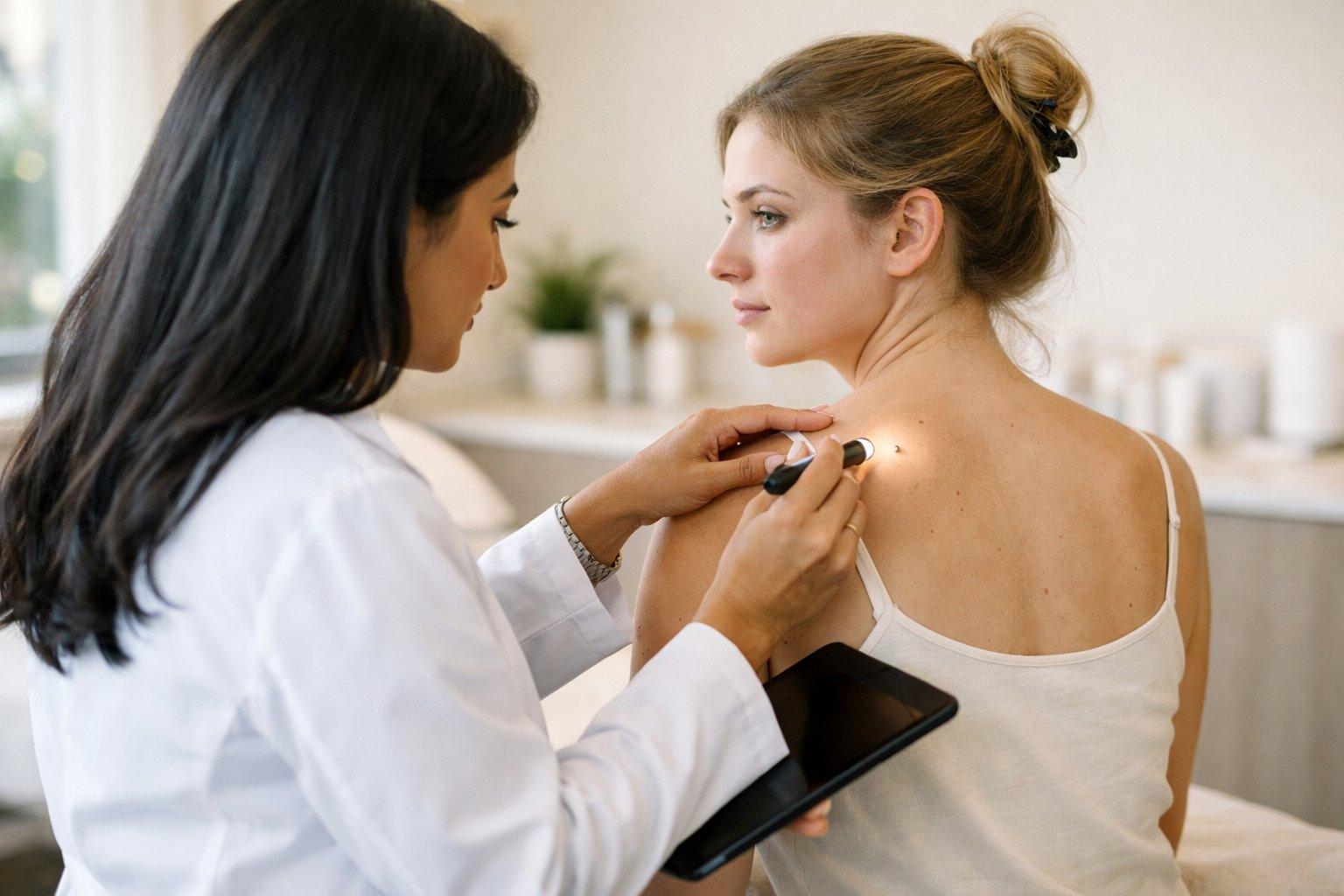
Noticing a mole that looks different can feel unsettling. Many moles are harmless and can change slightly over time, especially with age or sun exposure. Still, certain changes deserve closer attention. Understanding what is typical and what is not can help you decide when it is worth getting a professional evaluation.
The goal is not to create anxiety, but to stay aware. A thoughtful skin check and knowing a few key warning signs can make a meaningful difference in catching potential concerns early.
Quick answer
- A mole that changes in size, shape, or color may need evaluation.
- Irregular borders, multiple colors, or asymmetry are common warning signs.
- New moles appearing in adulthood should be checked.
- Symptoms like itching, bleeding, or crusting are worth attention.
- If you are unsure, it is reasonable to have a dermatologist take a closer look.
What does it mean when a mole changes?
Moles are clusters of pigment-producing cells, and many people have them. It is normal for some moles to evolve slowly over time. However, more noticeable or rapid changes can be associated with abnormal cell activity. Dermatologists often use a simple visual framework called the ABCDE rule to help identify features that may need further evaluation.
Common warning signs to watch for
- Asymmetry: One half of the mole does not match the other.
- Border changes: Edges appear uneven, blurred, or irregular.
- Color variation: Multiple shades such as brown, black, red, or white appear in one spot.
- Diameter: Growth larger than about a pencil eraser, though smaller spots can still be important.
- Evolving: Any noticeable change in size, shape, color, or sensation.
Other changes that deserve attention
Beyond visual differences, certain sensations can also be meaningful. A mole that begins to itch, bleed, crust, or feel tender may benefit from evaluation. Similarly, a spot that looks distinctly different from your other moles, sometimes called the “ugly duckling,” can be a helpful clue.
What you can do at home
Regular self-checks can help you stay familiar with your skin. Choose a well-lit space and use a mirror to examine areas that are harder to see. Taking photos every few months can make it easier to notice subtle changes over time. Daily sun protection, including sunscreen and protective clothing, can also help reduce the risk of future changes.
Professional evaluation and next steps
If something looks different or concerning, a dermatologist can evaluate the area with specialized tools. In some cases, they may recommend monitoring or a biopsy to better understand the cells involved. These decisions are individualized, and your clinician can help you weigh the options based on your history and what they see.
When to see a dermatologist
- A mole is changing quickly or looks noticeably different from others.
- You see irregular borders, uneven color, or asymmetry.
- The mole is new and appeared in adulthood.
- You experience bleeding, itching, or persistent irritation.
- You simply feel unsure about a spot on your skin.
FAQ
Are all changing moles dangerous?
No. Many moles change in harmless ways over time. However, certain patterns of change may warrant a closer look.
Can sun exposure cause moles to change?
Yes, sun exposure can influence the appearance of moles and may contribute to changes over time.
Is it normal to get new moles as an adult?
New moles can appear, but it is generally recommended to have new spots evaluated, especially after early adulthood.
How often should I check my skin?
Many people benefit from monthly self-checks and periodic professional exams, depending on their risk factors.
What happens during a mole check?
A dermatologist examines your skin visually and may use magnification. If needed, they may suggest monitoring or further testing.
Ready to get help?
Schedule an appointment or send a message and our team will get back to you.
Prefer to call? 954-666-3736
This article is for educational purposes and is not medical advice. For diagnosis and personalized treatment, please book an appointment with a board-certified dermatologist.
Sources & further reading
- American Academy of Dermatology (AAD) – ABCDEs of melanoma
- The Skin Cancer Foundation – Melanoma information
- Mayo Clinic – Melanoma symptoms and causes
