

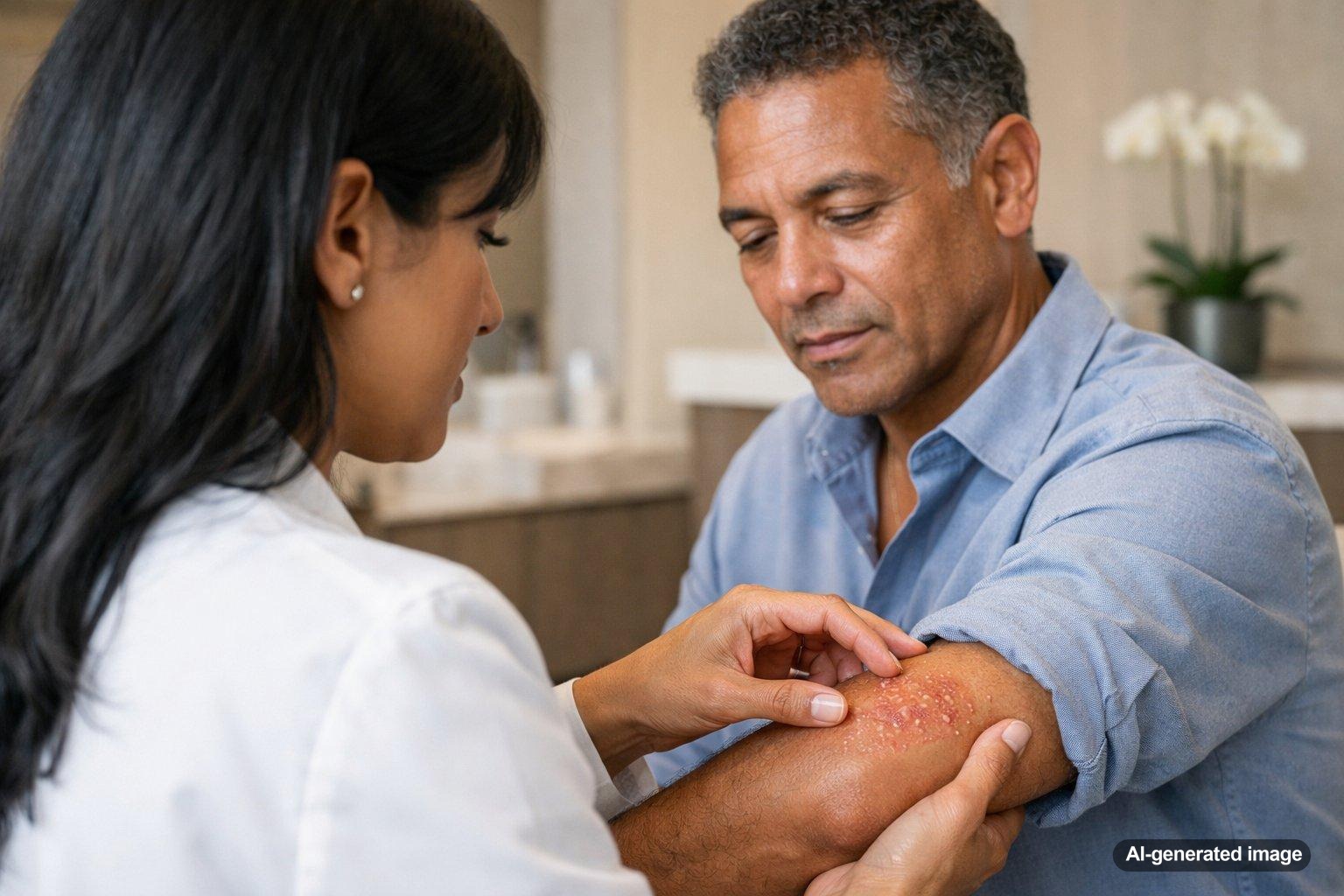
Most rashes are uncomfortable, inconvenient, and understandably stressful, but many are not emergencies. Still, some skin changes deserve prompt attention because the pattern, symptoms, or speed of change can point to a more serious problem. Knowing what to watch for can help you decide when home care may be reasonable and when it is worth getting checked quickly.
In general, a rash deserves urgent evaluation if it is spreading fast, painful, blistering, affecting the eyes or mouth, happening with fever or trouble breathing, or showing signs of infection. If you are unsure, it is worth getting checked rather than waiting and wondering.
Quick answer
- Seek urgent care right away for a rash with trouble breathing, swelling of the lips or tongue, or trouble swallowing.
- Prompt evaluation is important if a rash is widespread, rapidly worsening, blistering, or causing raw or peeling skin.
- A rash with fever, significant pain, or involvement of the eyes, mouth, or genitals should not be ignored.
- Rashes that look infected, such as those with pus, warmth, tenderness, or red streaking, need medical attention.
- If a new rash starts after a medication, especially with other symptoms, a dermatologist or urgent care clinician can evaluate what to do next.
What this means in plain English
A rash is a visible change in the skin, but the cause can vary widely. It may be related to irritation, allergy, eczema, psoriasis, infection, heat, medication, or an inflammatory skin condition. The reason urgency matters is not simply how a rash looks. It is also about where it appears, how quickly it is changing, and what other symptoms come with it.
For example, an itchy patch after trying a new product may be less concerning than a rash that is spreading by the hour, forming blisters, or coming with fever and feeling unwell. A dermatologist can evaluate the pattern, ask about triggers, and decide whether testing, prescription treatment, or a closer workup is needed.
Common causes or triggers
- Contact with an irritant or allergen, such as fragrance, plants, detergents, or skin care products
- Eczema or other barrier-related skin inflammation
- Psoriasis and other chronic inflammatory skin conditions
- Viral, bacterial, or fungal infections
- Medication reactions
- Heat, sweat, friction, or prolonged moisture on the skin
- Insect bites or environmental exposures
What you can do at home while you are monitoring it
If the rash is mild, not rapidly progressing, and not accompanied by warning signs, simple supportive care may help. Stop any new products that may be irritating your skin. Keep the area cool, avoid scratching, use a gentle fragrance-free moisturizer, and choose mild cleansers. Loose clothing and short lukewarm showers can also reduce irritation.
It is also helpful to take note of timing. Think about any new medications, supplements, skin care products, detergents, travel, illness, sun exposure, or plant contact. A short timeline and a few clear photos can make an office evaluation more efficient if the rash changes or does not settle down.
Professional options
Professional care depends on the pattern and severity of the rash. Common options may include a focused skin exam, review of triggers, prescription anti-inflammatory treatment, patch testing for possible contact allergy, or testing when infection or another underlying condition is suspected. In some situations, a dermatologist may recommend a biopsy or lab work to better understand what is happening.
The goal is not just to calm the visible rash, but to identify whether there is an underlying cause that needs a different kind of treatment or closer follow-up.
When to see a dermatologist urgently
- The rash is spreading quickly or covering a large part of the body.
- You have fever, feel significantly unwell, or the rash is painful rather than simply itchy.
- The skin is blistering, peeling, or becoming raw.
- The rash affects the eyes, inside the mouth, or the genital area.
- You notice swelling of the lips or tongue, trouble breathing, or trouble swallowing. This needs emergency care right away.
- There are signs of infection such as pus, increasing warmth, tenderness, or red streaking.
- The rash began after starting a new medication.
- You have a weakened immune system, are pregnant, or have a rash that does not improve as expected.
FAQ
Can an itchy rash still be serious?
Yes. Itching alone does not tell you whether a rash is minor or more concerning. The full picture matters, including whether it is spreading, blistering, painful, or associated with fever or swelling.
Should I go to urgent care or wait for a dermatology visit?
If the rash is rapidly changing, painful, blistering, infected-looking, or comes with fever or swelling of the face or throat, same-day evaluation is appropriate. If breathing or swallowing is affected, seek emergency care right away.
What if a rash started after a new medication?
A medication-related rash can range from mild to more serious. Because the next steps depend on the appearance of the rash and your overall symptoms, it is best to get timely medical guidance rather than guessing.
Can I use over-the-counter creams first?
For a mild rash without warning signs, some people try simple supportive care and a bland moisturizer while they monitor for changes. But if the rash is worsening, widespread, painful, blistering, or accompanied by other symptoms, evaluation is the safer next step.
Ready to get help?
Schedule an appointment or send a message and our team will get back to you.
Prefer to call? 954-666-3736
This article is for educational purposes and is not medical advice. For diagnosis and personalized treatment, please book an appointment with a board-certified dermatologist.
Sources & further reading
- American Academy of Dermatology (AAD) – Rash 101 in adults: When to seek medical treatment
- MedlinePlus (NIH) – Rash
- Cleveland Clinic – Fever Rash Causes & Treatment
