

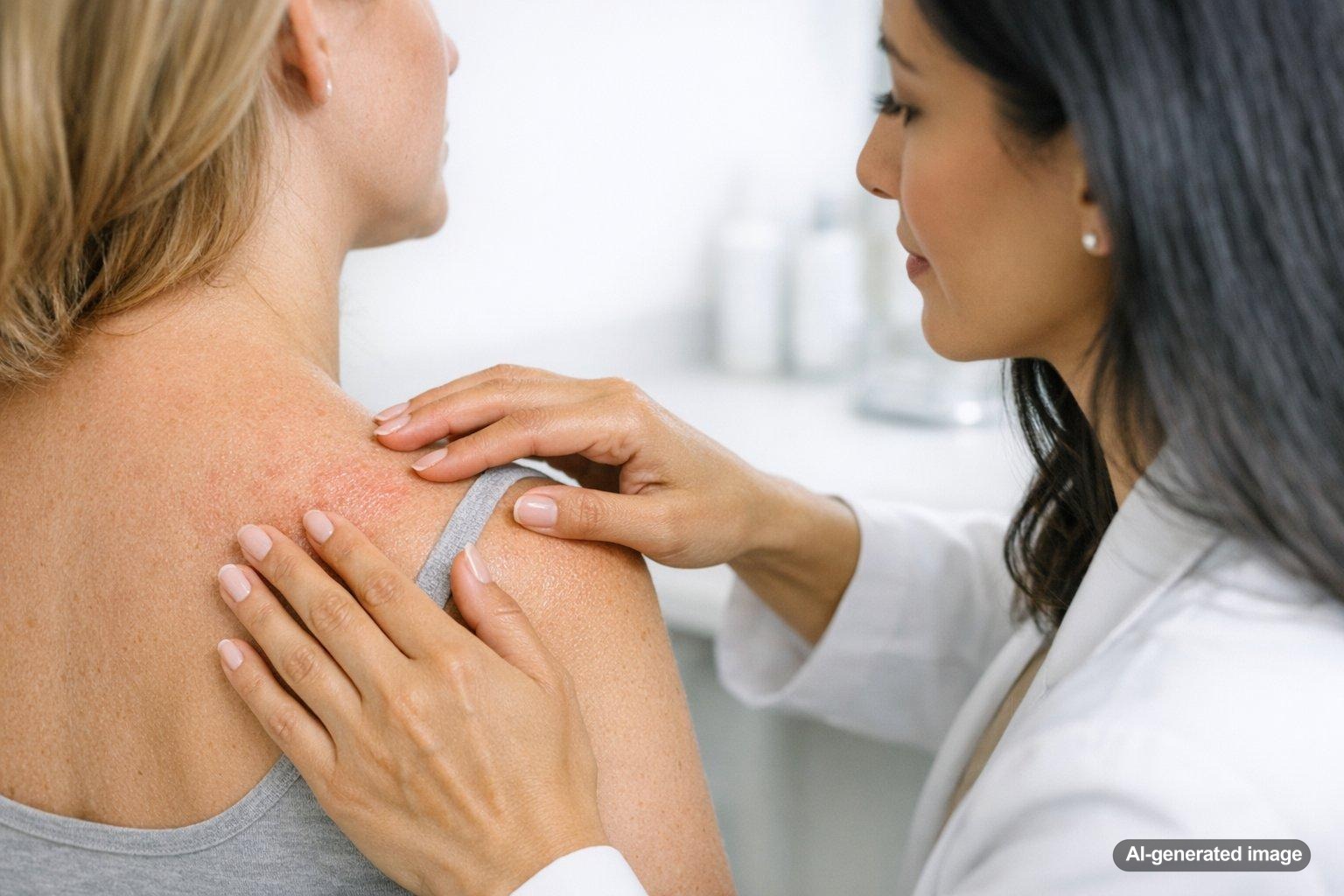
At the start, a shingles rash may feel less like a typical rash and more like a strange nerve sensation. Many people notice burning, tingling, itching, tenderness, or a sensitive patch of skin before visible blisters appear. The feeling is often on one side of the body or face, and it may seem out of proportion to what you can see on the skin.
Because early shingles can mimic other skin or pain concerns, it is worth getting checked promptly if you notice a new painful, tingly, or blistering rash, especially if it is limited to one side. A dermatologist can evaluate the skin, discuss whether shingles is possible, and help you understand next steps.
Quick answer
- Early shingles often feels like burning, tingling, itching, stinging, tenderness, or skin sensitivity.
- The sensation may begin before the rash is obvious.
- The rash commonly appears on one side of the body or face.
- Blisters may develop after the early discomfort begins.
- If the rash is near the eye, face, or you are unsure what it is, prompt medical evaluation is important.
What early shingles can feel like
In the beginning, shingles can feel like a localized nerve irritation. Some people describe the area as hot, prickly, sore, itchy, or unusually sensitive to clothing or touch. The skin may look normal at first, or it may appear mildly pink before small blisters develop.
One helpful clue is the pattern. Shingles often follows a nerve pathway, so the discomfort and rash may appear in a band-like area on one side of the torso, face, neck, or another region. It usually does not look like a scattered, all-over rash.
Why shingles can feel painful before the rash is obvious
Shingles is related to reactivation of the varicella-zoster virus, the same virus that causes chickenpox. When it reactivates, it can affect nerves before the skin findings become clear. That is why the first sensation may be burning, tingling, aching, or tenderness rather than visible redness.
Not every painful or itchy rash is shingles. Contact dermatitis, insect bites, herpes simplex, eczema flares, allergic reactions, and other skin conditions can overlap in appearance. A clinician can help sort out what is most likely based on the pattern, timing, symptoms, and medical history.
Common early signs to watch for
- Burning or stinging: A hot or irritated feeling in one focused area.
- Tingling or prickling: A pins-and-needles sensation before bumps are visible.
- Tenderness to touch: Clothing, a towel, or light pressure may feel uncomfortable.
- Itching: The area may itch before or along with pain.
- One-sided pattern: Symptoms often stay on the left or right side rather than crossing the midline.
- Blister-like bumps: Small fluid-filled blisters may appear as the rash develops.
What you can do at home while you arrange care
While you are waiting to be evaluated, keep the area clean, avoid scratching, and cover the rash with loose, breathable clothing when possible. Cool compresses may help some people feel more comfortable. Avoid applying harsh exfoliants, fragranced products, or strong active skincare ingredients to the area, since irritated skin can become more uncomfortable.
If blisters are present, avoid picking them. Wash your hands after touching the area, and be especially cautious around people who may be more vulnerable to infection, including newborns, pregnant people who have not had chickenpox or vaccination, and people with weakened immune systems.
Professional options
If shingles is suspected, a medical clinician may discuss prescription antiviral medication, symptom support, and ways to reduce irritation while the rash heals. Timing can matter, so it is best not to wait several days if the rash is new, painful, blistering, or close to the eye.
A dermatologist can also help determine whether the rash is actually shingles or another condition that needs a different approach. This is especially important when the rash is unusual, widespread, recurrent, very painful, or occurring in someone with a weakened immune system.
When to see a dermatologist promptly
- The rash is painful, blistering, or appears in a one-sided band.
- The rash is on the face, near the eye, or around the ear.
- You have fever, headache, light sensitivity, or feel generally unwell.
- You are pregnant, immunocompromised, or unsure whether you have had chickenpox or vaccination.
- The pain is severe, worsening, or continues after the rash begins to improve.
- You are not sure whether the rash is shingles, an allergic reaction, or another infection.
FAQ
Can shingles start with pain but no rash?
Yes, shingles can begin with pain, burning, itching, or tingling before the rash is visible. Because pain without a clear rash can have many causes, it is important to get medical guidance rather than trying to self-diagnose.
Does shingles always blister?
Shingles commonly causes a blistering rash, but the early stage may look subtle. The area may first feel sensitive, tingly, or sore before fluid-filled bumps become noticeable.
Is early shingles itchy or painful?
It can be either, and sometimes both. Many people notice burning, stinging, tenderness, itching, or a pins-and-needles sensation in the area where the rash develops.
How quickly should I get checked?
If shingles is possible, prompt evaluation is recommended, especially when the rash is new. This is particularly important if the rash is near the eye or face, if symptoms are severe, or if you have a weakened immune system.
Can shingles be mistaken for something else?
Yes. Early shingles can resemble other rashes or pain conditions, including contact irritation, bug bites, eczema, herpes simplex, or other infections. A dermatologist can evaluate the pattern and symptoms to help guide appropriate care.
Ready to get help?
Schedule an appointment or send a message and our team will get back to you.
Prefer to call? 954-666-3736
Disclaimer
This article is for educational purposes and is not medical advice. For diagnosis and personalized treatment, please book an appointment with a board-certified dermatologist.
Sources & further reading
- American Academy of Dermatology (AAD) – Shingles: Signs and symptoms
- Centers for Disease Control and Prevention (CDC) – Shingles Symptoms and Complications
- Mayo Clinic – Shingles: Symptoms and causes
