

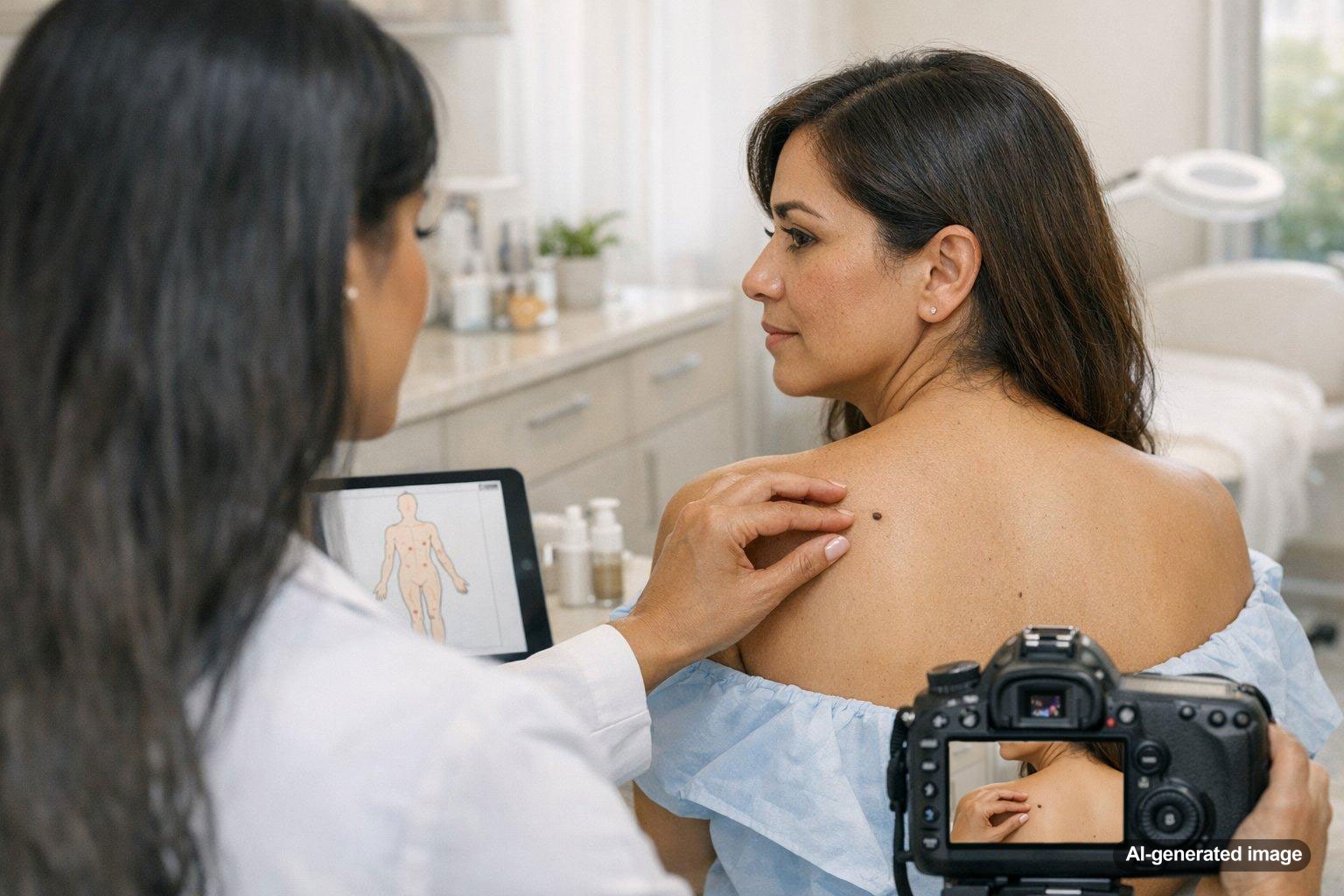
Yes, a changing mole can mean more than a normal variation, especially when the change is noticeable, ongoing, or paired with symptoms like itching or bleeding. Not every change is dangerous, but size, shape, color, border, and texture changes deserve attention because they can be associated with skin cancer or another skin condition that should be evaluated.
In plain terms, a mole is more concerning when it starts looking different from your other spots, grows quickly, develops multiple colors, becomes uneven, or starts to itch, bleed, or crust. If you are not sure whether a change is meaningful, it is worth getting checked rather than watching it for too long.
Quick answer
- A changing mole is one that is growing, darkening, becoming uneven, or developing a new symptom.
- Warning signs often include asymmetry, irregular borders, several colors, larger size, or evolution over time.
- Itching, bleeding, crusting, or a sore that does not heal are also reasons to schedule an evaluation.
- A spot that looks different from your other moles, sometimes called the ugly duckling sign, also deserves attention.
- When you are unsure, a dermatologist can evaluate it with a closer exam and decide whether any next step is needed.
What does “changing” really mean?
When dermatologists talk about a changing mole, they usually mean a spot that is not staying stable. That may include a visible shift in size, shape, color, border, surface, or sensation. A mole that slowly looks more raised, develops a jagged edge, or starts showing more than one shade can count as changing. So can a spot that starts itching, bleeding, crusting, or becoming tender.
Another useful clue is whether one spot stands out from the rest of your skin. If most of your moles look similar but one suddenly looks darker, larger, more irregular, or simply different, that can be worth a closer look.
Common changes that matter
- Size: A mole that is getting noticeably larger, especially over a short period.
- Shape: A round or oval mole that becomes uneven or lopsided.
- Border: Edges that become blurred, scalloped, jagged, or less defined.
- Color: A spot that darkens, lightens, turns red, or develops multiple colors.
- Elevation or texture: A mole that becomes more raised, rough, scaly, crusted, or firm.
- Symptoms: Itching, tenderness, bleeding, or a sore-like change.
A simple way to remember warning signs
The ABCDE guide can help you keep the big warning signs straight:
- A for asymmetry: One half does not match the other.
- B for border: The edge looks irregular or poorly defined.
- C for color: The spot has more than one color or changes color over time.
- D for diameter: Larger spots can deserve attention, especially if they are growing.
- E for evolving: Any noticeable change over time can be important.
Of those, evolution is often the most practical one to watch at home because it focuses on what is new or different for your skin.
What you can do at home
A calm, regular skin check can help you notice changes earlier. Once a month, look over your skin in good lighting, including areas that are easy to miss like the scalp, back, soles, and nails. Taking simple phone photos for your own comparison can help you tell whether a spot is actually changing or whether it only feels that way from memory.
Try not to pick, scratch, or repeatedly irritate a mole you are watching. And if a spot is changing quickly, avoid relying on internet images to reassure yourself. A professional exam is more helpful than guessing.
Professional options
If a mole looks suspicious, a dermatologist can evaluate it with a full skin exam and, when appropriate, a dermatoscope for a closer look. In some cases, the next step may simply be monitoring. In others, a biopsy may be recommended to clarify what the spot is. The right approach depends on the appearance of the lesion, your history, and how the spot has been changing.
When to see a dermatologist
- A mole is changing in size, shape, color, or height.
- A spot itches, bleeds, crusts, or becomes painful.
- You notice a new dark or unusual spot that looks different from your other moles.
- A lesion does not heal or keeps recurring in the same area.
- You have many moles, a history of atypical moles, a personal or family history of skin cancer, or significant past sun exposure.
If you are unsure, it is reasonable to schedule a skin check. It is far better to ask early than to sit with uncertainty.
FAQ
Can a normal mole change over time?
Some moles can change slowly over the years, especially with age, hormones, or sun exposure. The concern rises when a change is obvious, persistent, or paired with irregular features or symptoms.
Is itching always a warning sign?
Not always. A mole can itch from irritation or dryness, but itching that is new, persistent, or paired with other changes is worth having evaluated.
Does a mole have to be large to be concerning?
No. While size can matter, smaller spots can still be important if they are evolving or look different from the rest of your moles.
What if a spot bleeds only after I scratch it?
Minor trauma can make many spots bleed, but a mole that bleeds easily, repeatedly, or without much friction deserves attention.
Should I wait a few months to see what happens?
If the change is clear or the spot has warning signs, it is better not to wait too long. A dermatologist can help determine whether it needs monitoring or a biopsy.
Ready to get help?
Schedule an appointment or send a message and our team will get back to you.
Prefer to call? 954-666-3736
This article is for educational purposes and is not medical advice. For diagnosis and personalized treatment, please book an appointment with a board-certified dermatologist.
Sources & further reading
- American Academy of Dermatology: ABCDEs of melanoma
- American Academy of Dermatology: How to perform a skin self-exam
- The Skin Cancer Foundation: Melanoma warning signs and images
