

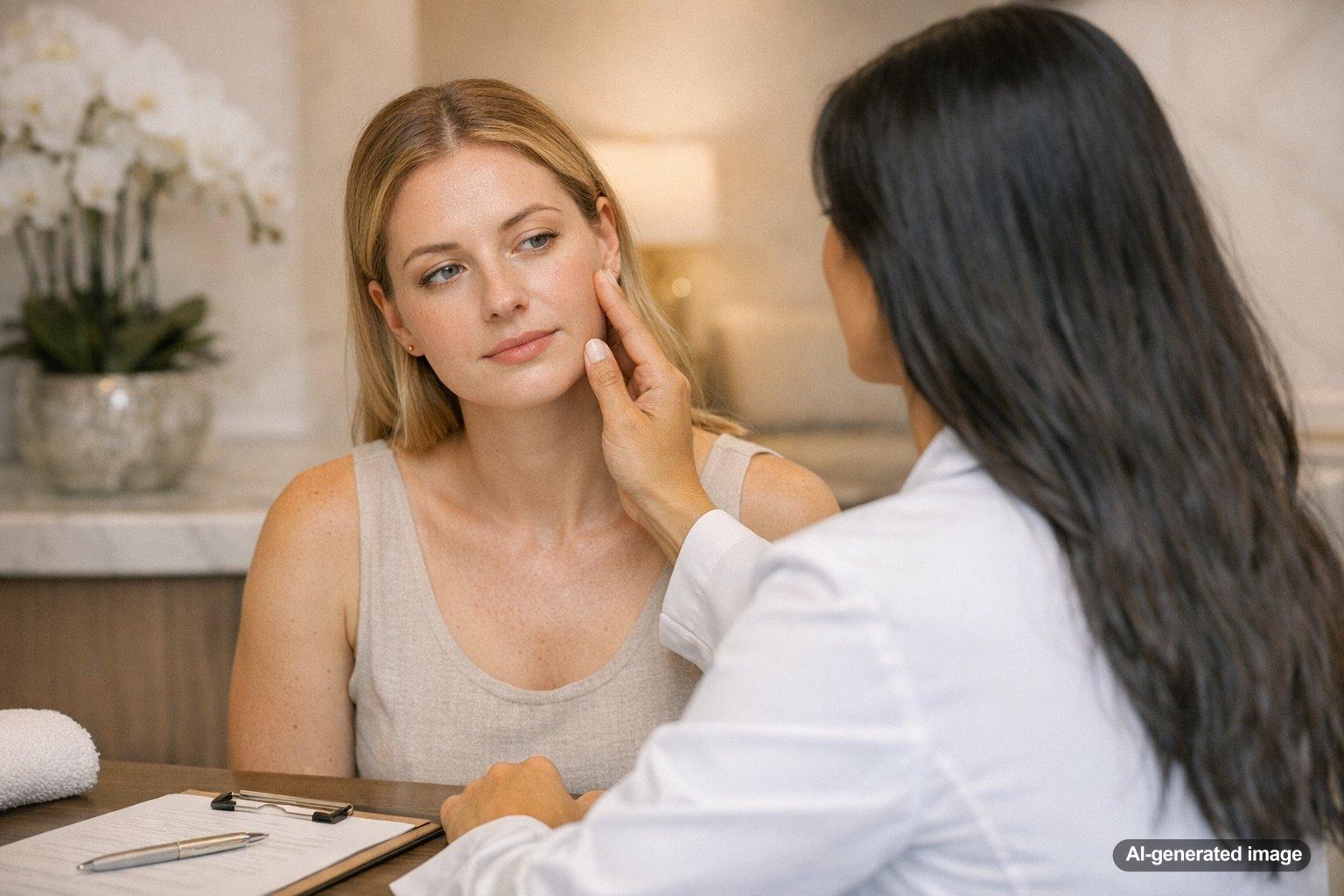
Deep, painful cystic acne can feel different from a typical whitehead or small breakout. These bumps often sit under the surface, feel tender, and may linger because the inflammation is happening deeper in the skin.
The short answer: cystic acne is usually linked to a mix of clogged pores, excess oil, bacteria that normally live on the skin, and a strong inflammatory response. Hormonal shifts, genetics, stress, certain products, and friction can also play a role. Because deep acne can scar or become more painful, it is worth having a dermatologist evaluate it early.
Quick answer
- Deep painful cystic acne often starts when oil, dead skin cells, and inflammation collect deeper in the pore.
- Hormonal changes can be associated with deeper breakouts, especially along the jawline, chin, neck, chest, or back.
- Genetics may influence how oily or inflammation-prone the skin tends to be.
- Heavy products, sweat, friction, and picking can worsen irritation in some people.
- A dermatologist can evaluate whether prescription options or in-office care may be appropriate.
What deep cystic acne is
Cystic acne is a deeper form of inflammatory acne. Instead of forming only at the surface, the blockage and inflammation develop farther down in the skin. This can create a firm, swollen, tender bump that may not come to a head.
Because the inflammation is deeper, squeezing or trying to extract the spot at home can make irritation worse and may increase the chance of discoloration or scarring. Gentle care and professional guidance are often more helpful than aggressive scrubbing or spot treating.
Common causes or triggers
- Excess oil: Oil can mix with dead skin cells and contribute to clogged pores.
- Dead skin buildup: When skin cells do not shed smoothly, they can help form a plug inside the pore.
- Inflammation: Some skin reacts strongly once a pore becomes blocked, leading to swelling and tenderness.
- Hormonal shifts: Breakouts may be associated with menstrual cycles, stress, certain life stages, or other hormone-related changes.
- Genetics: Family tendency can influence oiliness, pore behavior, and inflammatory acne patterns.
- Comedogenic or heavy products: Some rich creams, oils, hair products, or makeup may contribute to clogged pores in acne-prone skin.
- Friction and heat: Masks, helmets, tight collars, sweaty clothing, and frequent touching can aggravate certain areas.
- Picking or squeezing: Manipulating a deep bump can drive more inflammation into the area.
What you can do at home
At home, the goal is to reduce irritation and support the skin barrier while avoiding habits that can make deep inflammation worse. Use a gentle cleanser, keep moisturizer lightweight and non-comedogenic, and avoid harsh scrubs or repeated spot treatments on the same area.
- Wash gently once or twice daily, especially after sweating.
- Avoid squeezing deep bumps, even if they feel swollen or tender.
- Choose products labeled non-comedogenic when possible.
- Keep hair products away from acne-prone areas like the forehead, jawline, neck, and back.
- Use sunscreen daily, since inflamed acne can leave discoloration more easily after sun exposure.
- If a product stings, burns, or causes peeling, scale back and consider professional guidance.
Professional options
Deep painful cystic acne often benefits from a dermatologist’s evaluation because the right approach depends on the pattern, severity, skin type, medical history, and risk of scarring. Common options may include prescription topical medications, oral medications, targeted treatment for inflamed lesions, and guidance on skincare products that fit your skin.
Some patients may also be candidates for supportive in-office treatments, depending on the type of acne and whether active inflammation is present. A dermatologist can help you understand which options may be reasonable and which ones to avoid during a flare.
At Waverly DermSpa, we offer chemical peels and can help you understand whether they may be appropriate.
When to see a dermatologist
It is a good idea to see a dermatologist if acne is painful, deep, recurrent, leaving dark marks, causing texture changes, or affecting your confidence. You should also get checked if a bump is rapidly worsening, very swollen, draining, or not behaving like your usual acne.
A dermatologist can evaluate whether the issue is cystic acne or another skin condition that can look similar. Early guidance may help reduce irritation, limit scarring risk, and make your routine feel more manageable.
FAQ
Why does cystic acne hurt?
It can hurt because the inflammation is deeper in the skin, where swelling places pressure on surrounding tissue. This is one reason deep acne can feel tender even before anything is visible at the surface.
Can cystic acne go away on its own?
Some deep bumps may calm down over time, but recurring or painful cystic acne often needs professional evaluation. Waiting too long can allow inflammation and discoloration to linger.
Is deep acne always hormonal?
No. Hormones can be associated with cystic acne, but genetics, oil production, inflammation, product use, friction, and other factors may also contribute.
Should I pop a deep cystic pimple?
It is best not to squeeze deep acne. These bumps usually do not drain easily, and pressure can worsen inflammation or increase the chance of marks and scarring.
What products should I avoid?
Try to avoid heavy, greasy, or pore-clogging products on acne-prone areas. Harsh scrubs and strong drying treatments can also irritate the skin barrier and may make inflammation feel worse.
Ready to get help?
Schedule an appointment or send a message and our team will get back to you.
Prefer to call? 954-666-3736
Disclaimer
This article is for educational purposes and is not medical advice. For diagnosis and personalized treatment, please book an appointment with a board-certified dermatologist.
