

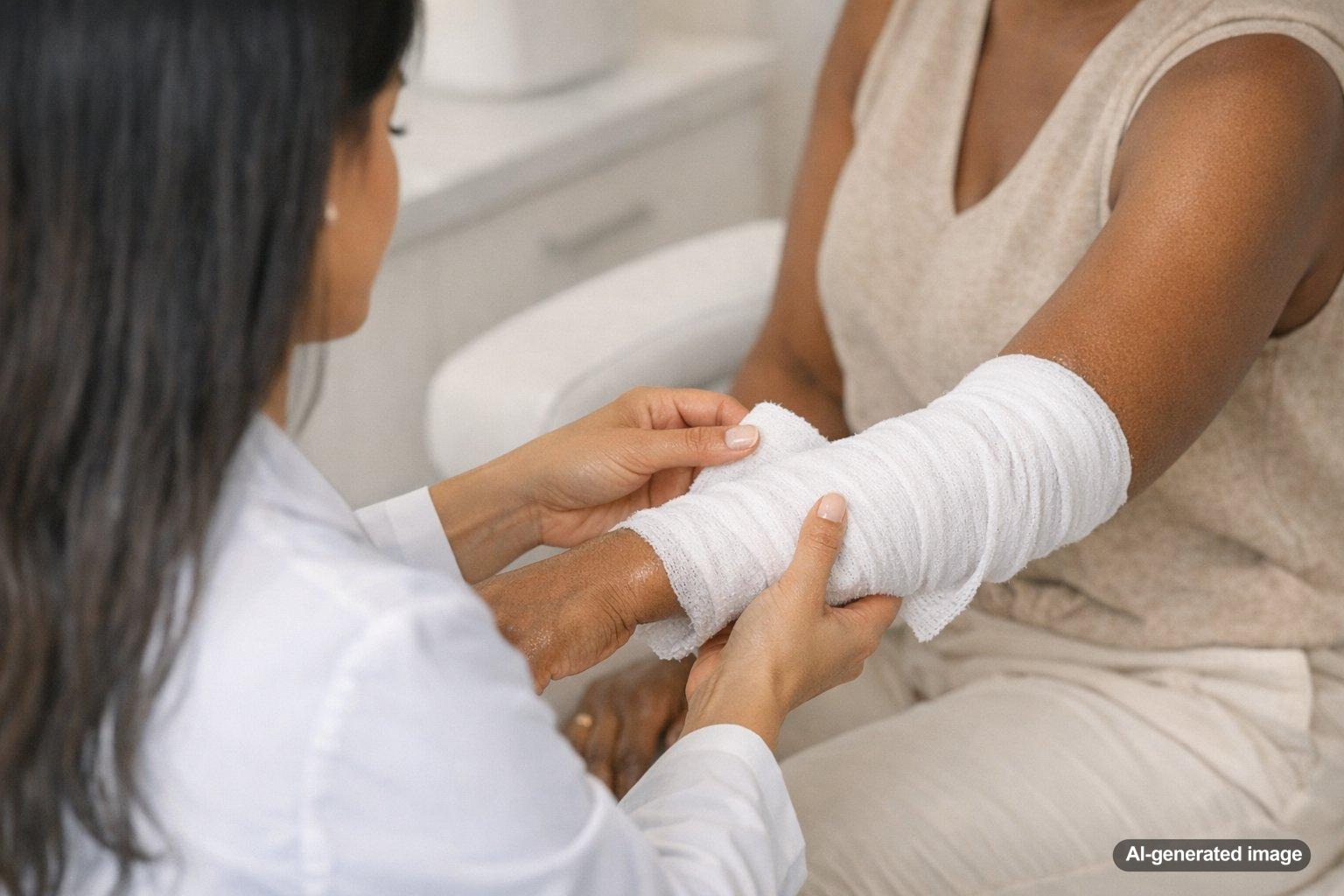
Wet wrap therapy is a short-term technique that may help calm a significant eczema flare by pairing hydration, topical treatment, and a protective wrap. It is often discussed when itching, dryness, or inflammation is more intense than a basic moisturizer routine can comfortably manage.
The key point: wet wraps can be helpful, but they are not something to improvise with prescription medication. Because wraps can make topical products absorb more strongly, it is best to ask a dermatologist how, when, and where to use them safely.
Quick answer
- Wet wrap therapy usually means applying moisturizer or a prescribed topical medication, then covering the area with a damp layer and a dry layer.
- It is most often used for eczema flares with intense itch, dryness, or irritation.
- It may help protect the skin from scratching and support hydration while the skin barrier feels vulnerable.
- Ask a dermatologist before using wet wraps over medicated creams, widespread rashes, open areas, or signs of infection.
What wet wrap therapy is
Wet wrap therapy is a controlled wrapping method used to support irritated, inflamed skin. In many routines, the skin is first gently hydrated, then treated with a moisturizer or medication selected by a clinician. A damp layer, such as gauze or soft clothing, is placed over the area, followed by a dry outer layer.
The damp layer helps reduce the dry, tight feeling that can come with eczema, while the dry layer helps keep everything in place. The wrap also creates a physical barrier that may make scratching less tempting. When prescription medication is involved, the plan should come from a dermatologist because the wrap can increase the strength of what is applied underneath.
Common situations where it may be discussed
Wet wraps are typically considered when eczema symptoms feel more active or uncomfortable. A dermatologist may discuss them when there is:
- Intense itching that is disrupting sleep or daily comfort
- Dry, inflamed patches that are not settling with a simple moisturizer routine
- A flare that needs short-term support while a broader treatment plan is adjusted
- Scratching that is making the skin barrier feel more fragile
- Widespread eczema that may require closer medical guidance
Wet wraps are not a replacement for diagnosis. Similar-looking rashes can have different causes, including irritation, allergy, infection, psoriasis, or other inflammatory skin conditions.
Possible eczema triggers to review
If wet wraps are being considered, it can also be useful to look at what may be aggravating the skin. Common eczema triggers can vary from person to person, but often include:
- Fragrance in skincare, laundry products, or household items
- Harsh soaps, scrubs, or hot water
- Sweat, heat, or sudden climate changes
- Dry air or frequent travel between climates
- Rough fabrics or tight clothing
- Stress, illness, or skin barrier disruption
For Fort Lauderdale residents, snowbirds, and international visitors, changes in humidity, sun exposure, pool or ocean time, and travel routines can all make the skin feel less predictable.
What you can do at home
Conservative skin barrier care is a reasonable place to start while you decide whether to book a visit. Keep the routine simple: use lukewarm water, avoid scrubbing, choose fragrance-free products, and apply a bland moisturizer while the skin is still slightly damp.
If you have already been given a wet wrap routine by your clinician, follow that plan exactly, including which product goes underneath, how long the wrap stays on, and how often it is repeated. Avoid placing wet wraps over prescription-strength products unless your dermatologist has explained how to do that safely.
Professional options a dermatologist may discuss
A dermatologist can first confirm whether the rash pattern fits eczema or whether another condition may be involved. From there, common options may include barrier repair guidance, trigger review, topical anti-inflammatory medication, nonsteroidal prescription creams, infection evaluation when appropriate, or other therapies for more persistent disease.
Wet wrap therapy may be one part of that plan, especially during a more uncomfortable flare. For some patients, it is taught as a home technique; for more extensive or severe cases, closer supervision may be recommended.
When to ask a dermatologist
It is worth booking a dermatology visit if the rash is spreading, painful, oozing, crusting, bleeding, waking you at night, or not improving with gentle skincare. You should also seek medical guidance before wrapping skin that looks infected, using wraps on a child, or combining wraps with prescription topical medication.
Because wet wrap therapy can change how a topical product behaves on the skin, personalized instructions matter. A dermatologist can help you decide whether it fits your situation or whether a different approach would be safer.
FAQ
Can adults use wet wrap therapy?
Yes, adults may use wet wrap therapy when a clinician recommends it. The exact method can differ depending on the body area, the severity of the flare, and what is placed under the wrap.
Can I put steroid cream under a wet wrap?
Only if your dermatologist tells you to. Wet wraps can increase absorption, so prescription topical medication should be used under a wrap with clear instructions.
How long should wet wraps stay on?
The timing varies. Your clinician may recommend a specific duration based on the skin area, product used, and severity of symptoms. Avoid guessing, especially with medicated products.
Can wet wraps be used on the face?
The face is more delicate and more prone to irritation from certain topical medications. Ask a dermatologist before using wet wraps on facial skin.
Are wet wraps the same as a moisturizer routine?
No. A moisturizer routine supports the skin barrier day to day, while wet wrap therapy is a more intensive technique usually reserved for more active flares or specific clinician-guided situations.
Ready to get help?
Schedule an appointment or send a message and our team will get back to you.
Prefer to call? 954-666-3736
Disclaimer
This article is for educational purposes and is not medical advice. For diagnosis and personalized treatment, please book an appointment with a board-certified dermatologist.
Sources & further reading
- American Academy of Dermatology (AAD) – 3 techniques that can strengthen eczema treatment
- National Eczema Association – Wet Wrap Therapy for Eczema
- Mayo Clinic – Atopic dermatitis (eczema): Diagnosis and treatment
