

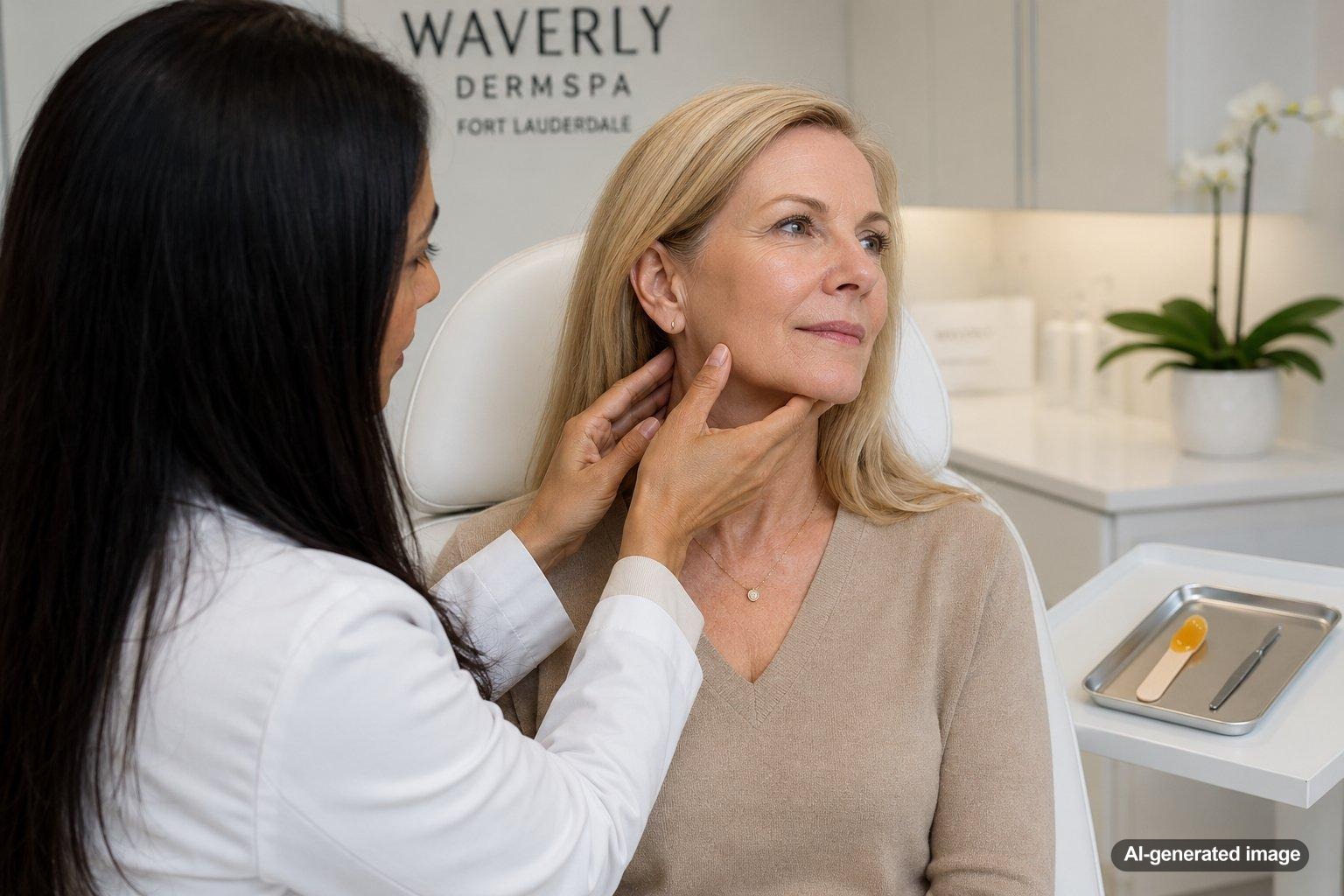
Peach fuzz, also called fine vellus hair, can catch light, soften makeup application, and make skin texture feel more noticeable. For people who want a smoother surface, waxing and dermaplaning are two common options, but they work in very different ways.
Waxing removes hair from the root, while dermaplaning uses a sterile blade technique to gently remove fine surface hair and the outermost buildup of dead skin cells. The right choice depends on your skin sensitivity, comfort level, timing, skincare routine, and whether your main goal is longer-lasting hair removal or a smoother, brighter-looking surface.
Quick answer
- Waxing may be better if your priority is removing hair from the root and you tolerate waxing well.
- Dermaplaning may be better if your priority is a smooth surface, makeup glide, and a soft refreshed look.
- Waxing can be more irritating for some people, especially if the skin is reactive, recently exfoliated, or using certain active ingredients.
- Dermaplaning is not the same as shaving in a professional setting; it is a controlled exfoliating treatment performed with a specialized blade technique.
- Neither option is right for everyone, so a consultation can help you choose based on your skin type and current routine.
| Comparison point | Waxing | Dermaplaning |
|---|---|---|
| How it works | Removes hair from the root with wax. | Removes fine surface hair and superficial dead skin buildup with a blade technique. |
| Best for | People who want longer-lasting hair removal and have skin that tolerates waxing. | People who want smoother texture, better makeup glide, and a polished skin surface. |
| Comfort | Can feel sharper because hair is pulled from the root. | Often feels gentle when performed on appropriate skin. |
| Skin considerations | May be too harsh for some sensitive or recently exfoliated skin. | May not be appropriate over active breakouts, irritated skin, or certain rashes. |
How waxing works for peach fuzz
Facial waxing uses warm or soft wax to grip the hair and remove it from the follicle. Because the hair is removed from the root, many people choose waxing when they want a clean feel that may last longer than methods that only remove surface hair.
For peach fuzz, waxing can be effective, but the face is more delicate than areas like the legs or arms. The upper lip, cheeks, jawline, and sides of the face can react with temporary redness, tenderness, or small bumps, especially if the skin barrier is already stressed.
Pros of waxing for peach fuzz
- It removes hair from the root rather than only at the surface.
- It can be efficient for areas with more visible facial hair.
- It may feel like a good option for people who already tolerate facial waxing well.
- It does not exfoliate the entire face in the same way dermaplaning does, which some people may prefer.
Cons of waxing for peach fuzz
- It can be uncomfortable because the hair is pulled out quickly.
- It may cause temporary redness, tenderness, or small bumps.
- It may not be ideal if your skin is very sensitive, recently sun-exposed, or recently exfoliated.
- It can be risky to combine with certain active skincare ingredients without professional guidance.
- It may not provide the same smooth, polished surface effect that dermaplaning can provide.
How dermaplaning works for peach fuzz
Dermaplaning is a professional exfoliating treatment that uses a controlled blade technique to remove fine vellus hair and superficial dead skin buildup from the surface of the face. The result is often a smoother feel and a more refined-looking surface, which is why many people like it before special events or when makeup has been sitting unevenly.
Dermaplaning does not remove hair from the root. It is focused on surface smoothing, not long-term hair reduction. For many people, the appeal is the fresh, clean feel rather than the idea of stopping hair growth.
Pros of dermaplaning for peach fuzz
- It can make the skin feel smoother almost immediately after the appointment, though individual experiences vary.
- It may help makeup and tinted sunscreen apply more evenly.
- It removes fine surface hair without pulling from the root.
- It offers gentle physical exfoliation when performed on appropriate skin.
- It can be a good option for people who dislike the snap or pull of waxing.
Cons of dermaplaning for peach fuzz
- It does not remove hair from the root, so the hair returns as part of the normal growth cycle.
- It may not be appropriate over active acne, irritated skin, open areas, or certain rashes.
- It requires thoughtful aftercare, including gentle products and sun protection.
- It should be performed with clean technique and appropriate tools to reduce avoidable irritation.
- It may not be the right fit if the main concern is coarse facial hair rather than fine peach fuzz.
Will peach fuzz grow back thicker?
Many people worry that removing peach fuzz will make it come back darker or thicker. Surface hair removal does not change the structure of the follicle. What can happen is that short regrowth may feel different to the touch at first because the hair has a fresh edge, but that does not mean the follicle itself has changed.
If facial hair suddenly seems coarser, darker, or more widespread than usual, it is worth discussing with a dermatologist or medical clinician. Hormonal changes, medications, and other factors can influence hair patterns, and a professional can help you decide whether further evaluation is appropriate.
Which option is better for sensitive skin?
There is no single best choice for all sensitive skin. Some people find waxing too reactive because of the pulling and adhesion to the skin. Others may need to avoid dermaplaning if they have active inflammation, breakouts, or a compromised skin barrier.
A conservative approach is to avoid scheduling either treatment right after strong exfoliation, sun exposure, or irritation. It is also wise to pause harsh scrubs, strong acids, and retinoid-style products around facial hair removal unless your clinician gives you personalized guidance.
What to do before and after either treatment
- Arrive with clean skin and avoid heavy makeup before the appointment when possible.
- Tell your provider about recent peels, lasers, prescription skincare, retinoid use, irritation, or sun exposure.
- Keep aftercare simple with gentle cleanser, moisturizer, and daily sunscreen.
- Avoid picking, scrubbing, or layering multiple active products right after treatment.
- Plan ahead if you are preparing for an event, because temporary redness can happen with either option.
When to see a dermatologist
Book an evaluation before facial hair removal if you have an active rash, open skin, painful bumps, significant acne flare, recent procedure, or a history of unusual reactions after waxing or exfoliating treatments. It is also worth getting checked if facial hair growth changes quickly or feels out of pattern for you.
A dermatologist can evaluate your skin, review your current products, and help you decide whether waxing, dermaplaning, or another approach makes sense. At Waverly DermSpa, we offer dermaplaning-style facial smoothing support and can help you understand whether it may be appropriate.
FAQ
Is dermaplaning better than waxing for peach fuzz?
It depends on your goal. Dermaplaning is often chosen for surface smoothness and makeup glide, while waxing is chosen for removing hair from the root. Your skin sensitivity and current skincare routine matter.
Does waxing exfoliate the face?
Waxing can remove some superficial skin cells along with hair, but it is not the same as a full-face dermaplaning treatment. That extra pull on the skin is one reason some people experience redness or tenderness after waxing.
Can I dermaplane if I have acne?
Dermaplaning may not be appropriate over active, inflamed, or open acne lesions. A dermatologist or trained provider can evaluate your skin and recommend a safer timing or alternative if needed.
How should I choose between waxing and dermaplaning?
Choose based on your priority. If you want root-level hair removal and tolerate waxing, waxing may fit. If you want a smoother surface and a polished skin feel, dermaplaning may be the better conversation to have with your provider.
Can I wax and dermaplane in the same week?
It is usually better not to stack multiple exfoliating or hair removal methods too close together without guidance. Spacing treatments can help reduce the chance of unnecessary irritation.
Ready to get help?
Schedule an appointment or send a message and our team will get back to you.
Prefer to call? 954-666-3736
This article is for educational purposes and is not medical advice. For diagnosis and personalized treatment, please book an appointment with a board-certified dermatologist.
