

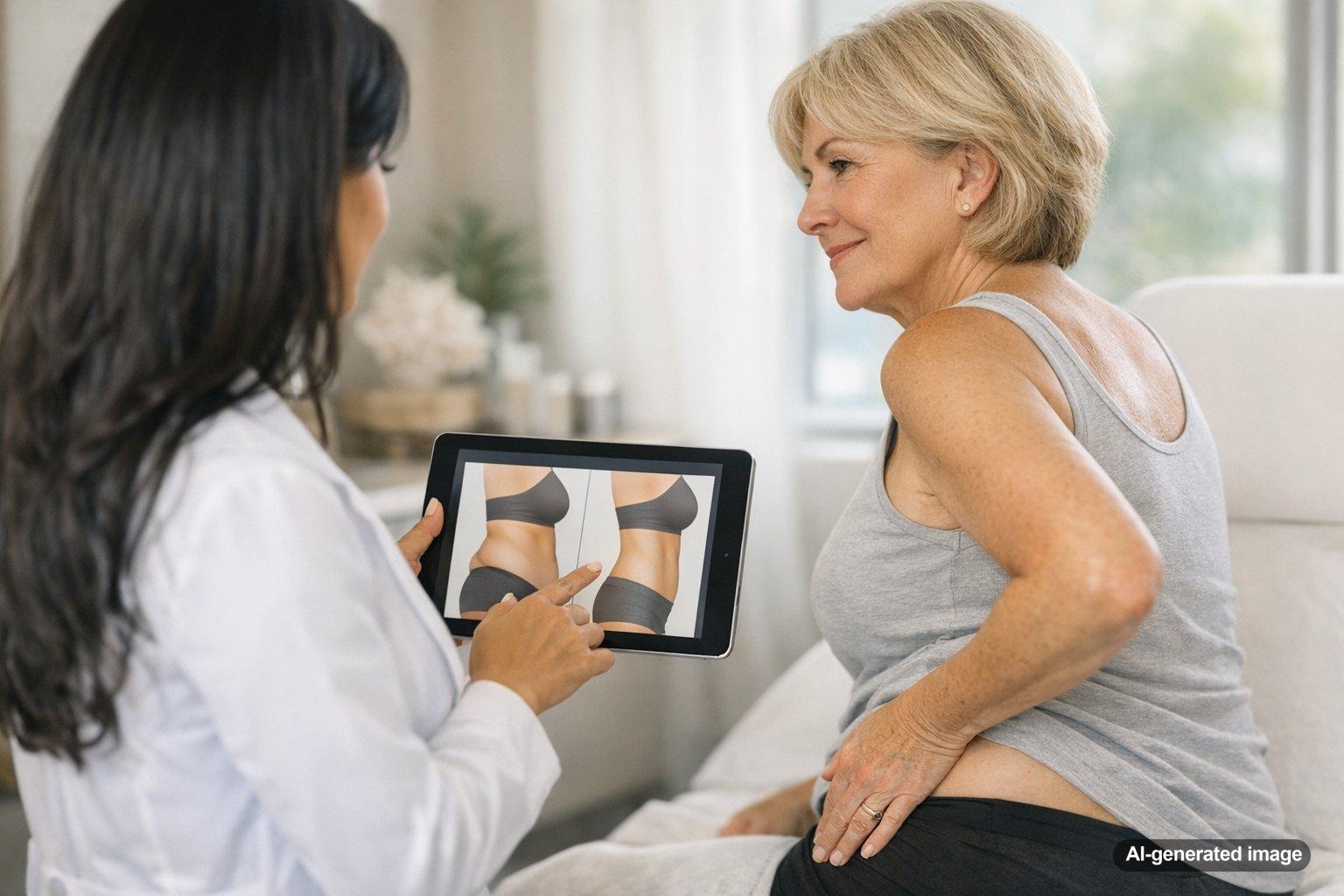
Flanks and love handles are common areas people ask about because they can feel resistant to steady exercise, balanced eating, and otherwise healthy routines. In Fort Lauderdale, that conversation often includes people who want a treatment that fits around work, travel, beach season, or a seasonal visit without sounding overly dramatic or surgical.
truSculpt iD and CoolSculpting are both noninvasive body-contouring approaches, but they are not the same. The simplest difference is energy: truSculpt iD uses radiofrequency heat, while CoolSculpting uses controlled cooling. The better fit depends on your anatomy, skin sensitivity, goals, medical history, and how your clinician evaluates the flank area in person.
Quick answer
- truSculpt iD uses radiofrequency energy to warm targeted tissue during treatment.
- CoolSculpting uses controlled cooling, also called cryolipolysis, to target localized fat.
- For flanks and love handles, both approaches are used for contouring rather than weight loss.
- Comfort, applicator fit, skin response, and medical history can influence which option is more appropriate.
- An in-person evaluation is the safest way to decide because flank fullness, skin laxity, and treatment goals vary from person to person.
| Comparison point | truSculpt iD | CoolSculpting |
|---|---|---|
| Energy type | Radiofrequency heat | Controlled cooling |
| General goal | Noninvasive body contouring for selected areas | Noninvasive fat reduction for selected areas |
| Treatment sensation | Warmth that is monitored during the session | Cold, pulling, pressure, or numbness during the session |
| Best discussed for | People who prefer a heat-based approach and whose anatomy fits the applicator plan | People who prefer or tolerate a cooling-based approach and whose anatomy fits the applicator plan |
How truSculpt iD works for the flank area
truSculpt iD is a radiofrequency body-contouring treatment. In plain English, it uses controlled warmth over a selected area while the provider monitors the treatment. For the flanks, the goal is not to change overall body weight. It is to address localized contour concerns when a person is otherwise a reasonable candidate.
The flank area can be uneven from side to side, especially in people who have natural asymmetry, prior weight changes, or a mix of fat and skin laxity. That is why placement matters. During a consultation, your clinician can look at whether the area is pinchable, how the skin behaves, and whether the contour concern is likely to respond to a noninvasive approach.
How CoolSculpting works for love handles
CoolSculpting is a brand name commonly associated with cryolipolysis, a cooling-based approach for localized fat reduction. During treatment, the device applies controlled cooling to the selected area. Some people notice pulling, pressure, cold sensation, tingling, or numbness during or after a session.
For love handles, the applicator must fit the area well. A good fit can matter as much as the device category because flank fullness is not always shaped like a neat pocket. A consultation helps determine whether the area can be treated comfortably and whether expectations are realistic.
Key differences for flanks and love handles
The biggest practical difference is heat versus cold. truSculpt iD is often discussed with people who are interested in a radiofrequency approach, while CoolSculpting is discussed with people who are comfortable with a cooling-based approach. Neither should be framed as a substitute for healthy habits, and neither is meant for major weight loss.
- Sensation: truSculpt iD is associated with warmth, while CoolSculpting is associated with cold, pressure, and possible temporary numbness.
- Applicator planning: both require thoughtful placement, especially around the waistline where curves and asymmetry are common.
- Skin response: skin sensitivity, prior procedures, scarring, and medical history can affect planning.
- Expectations: both are contouring treatments, so the conversation should focus on refinement rather than a dramatic size change.
- Recovery planning: many people return to normal routines quickly, but temporary tenderness, redness, swelling, tingling, or sensitivity may occur depending on the treatment and the individual.
Who may be a better candidate for one over the other?
A good candidate for noninvasive flank contouring is often someone near a stable weight with a localized area they would like to refine. The right choice may depend on the shape of the area, how much tissue is present, whether there is laxity, and whether heat or cold is more appropriate for the person’s history.
Cool-based treatment may not be appropriate for some people with certain cold-related conditions or sensitivities. Heat-based treatment may not be appropriate for some people with certain implanted devices, active skin issues, or other considerations. These are the kinds of details that should be reviewed before treatment rather than after.
What you can do before a consultation
- Think about whether your concern is localized fullness, skin laxity, or both.
- Bring up any prior body-contouring treatments, surgeries, or scars in the area.
- Share medical history, medications, implants, and skin sensitivity concerns.
- Ask what a realistic outcome may look like for your specific anatomy.
- Avoid choosing a device based only on social media photos, since lighting, pose, and body type can change the way results appear.
Professional options and limitations
Professional body-contouring options may include radiofrequency-based treatment, cryolipolysis, other energy-based approaches, injectables for select areas, or surgical options for people who need a larger change. A dermatologist or trained clinician can help separate a contouring concern from a weight-loss concern and explain which options are realistic.
At Waverly DermSpa, we offer truSculpt iD and can help you understand whether it may be appropriate.
When to see a dermatologist before body contouring
It is worth getting evaluated before treatment if you have pain, a new lump, unexplained swelling, a rash, active infection, recent surgery, a history of unusual scarring, implanted medical devices, significant numbness, or a condition that affects your response to heat or cold. A dermatologist can also help if you are unsure whether the area is fat, skin laxity, swelling, or another concern.
FAQ
Is truSculpt iD better than CoolSculpting for love handles?
Not automatically. truSculpt iD and CoolSculpting use different technologies, and either may or may not be appropriate depending on your anatomy, preferences, and medical history. The best choice starts with an in-person assessment.
Is body contouring the same as weight loss?
No. Noninvasive body contouring is generally intended for localized areas, not overall weight reduction. A clinician can help set expectations around what contouring can and cannot do.
Can flanks be treated if I have loose skin?
Sometimes, but skin laxity changes the conversation. If the main concern is loose skin rather than localized fullness, your clinician may discuss different options or a different treatment plan.
Does CoolSculpting have risks?
Yes. Like any cosmetic procedure, it can have side effects and limitations. Temporary redness, swelling, tenderness, numbness, or sensitivity may occur, and rare complications should be discussed before treatment.
How should I decide between heat and cold treatments?
Start with comfort, safety, and fit. Your clinician can review whether a radiofrequency or cooling-based approach makes more sense for your flank anatomy, treatment history, and goals.
Ready to get help?
Schedule an appointment or send a message and our team will get back to you.
Prefer to call? 954-666-3736
Disclaimer
This article is for educational purposes and is not medical advice. For diagnosis and personalized treatment, please book an appointment with a board-certified dermatologist.
Sources & further reading
- U.S. Food and Drug Administration (FDA) – Non-Invasive Body Contouring Technologies
- U.S. Food and Drug Administration (FDA) – 510(k) Premarket Notification K221407 truSculpt iD
- U.S. Food and Drug Administration (FDA) – CoolSculpting System 510(k) Summary K151179
- American Academy of Dermatology (AAD) – Non-invasive fat removal: What can you expect?
- Cleveland Clinic – Fat Freezing Cryolipolysis
