

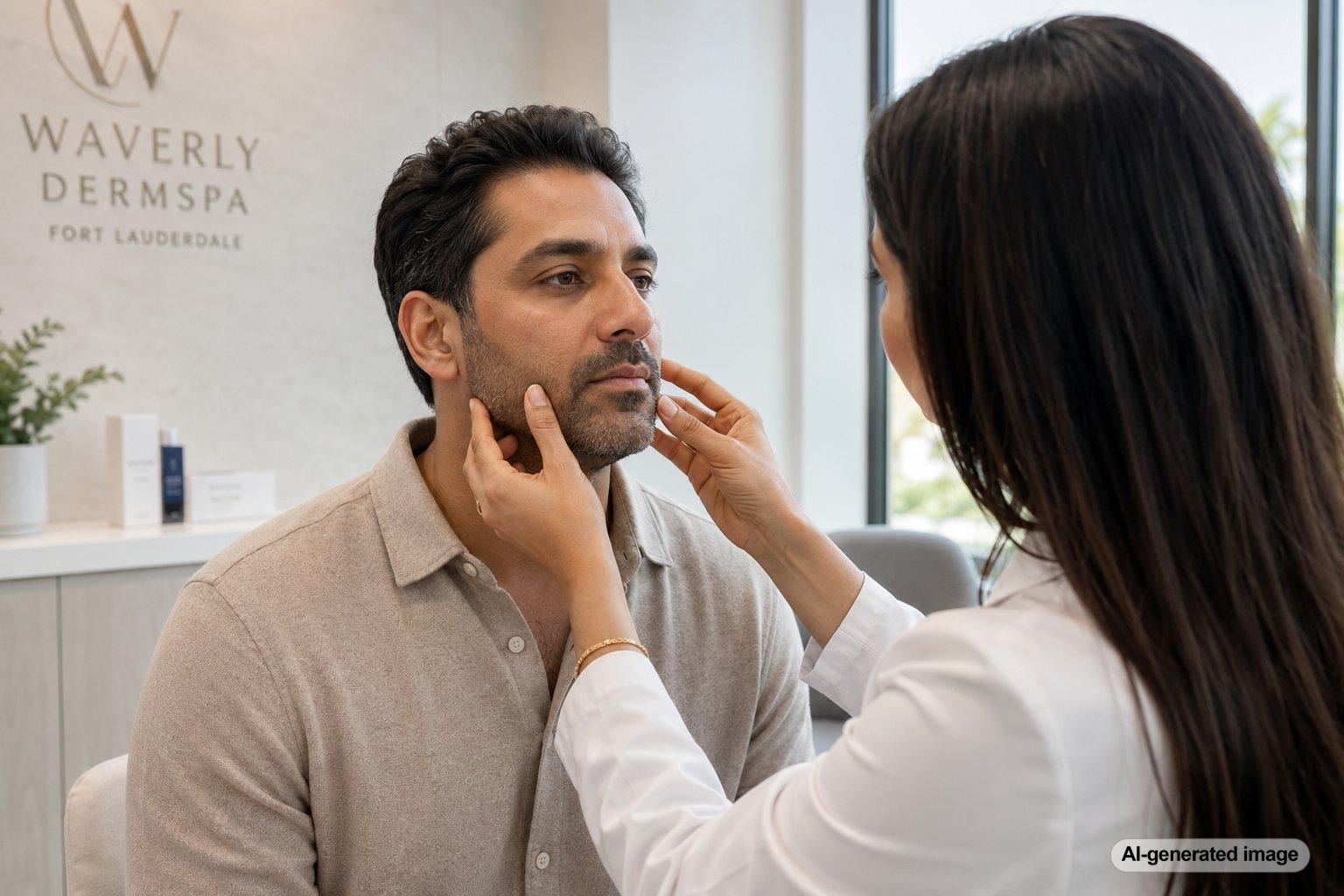
Finding clusters of tiny dark hairs in a single pore can be surprising, especially when the area resembles blackheads that never seem to clear. This pattern may be associated with trichostasis spinulosa, a common follicular condition in which several short, fine hairs remain bundled inside one widened hair follicle.
Trichostasis spinulosa is generally harmless, but it can be persistent and may affect the appearance or texture of the skin. It often develops on the nose, cheeks, chin, upper arms, back, or chest. Because other concerns can look similar, a dermatologist can evaluate the area and confirm what is causing the visible dots or roughness.
Quick answer
- Trichostasis spinulosa occurs when multiple fine hairs collect inside a single follicle.
- The affected pores may look like blackheads, dark dots, or tiny brush-like plugs.
- It is usually harmless and is not considered contagious.
- Gentle exfoliation and appropriate hair-removal methods may help improve its appearance.
- A dermatologist can distinguish it from acne, ingrown hairs, and other follicular conditions.
What is trichostasis spinulosa?
Normally, a hair follicle releases individual hairs as they grow. With trichostasis spinulosa, several very fine hairs remain packed together within the same follicular opening. A small amount of keratin, oil, and cellular debris may also collect around them.
From a distance, the follicles may resemble blackheads. Up close, they can appear as tiny bundles of short hairs emerging from one pore. The surface may feel slightly rough, although some people notice only the dark dots.
The condition does not usually cause significant pain or inflammation. Mild itching or irritation may occur, particularly if the skin is dry, frequently rubbed, or repeatedly picked.
Where does it commonly appear?
Trichostasis spinulosa may occur anywhere fine hair grows, but it is often noticed in areas with visible pores or regular friction. Common locations include:
- The nose and sides of the nose
- The cheeks, chin, or forehead
- The upper arms and shoulders
- The upper back or chest
- The thighs or other hair-bearing areas
Facial spots are especially easy to mistake for blackheads because the trapped hairs can create a dark, dotted appearance.
What causes multiple hairs to become trapped in one pore?
The exact reason some follicles retain several fine hairs is not always clear. The condition appears to involve slowed shedding of short hairs from the follicle. Instead of releasing normally, the hairs accumulate in a compact bundle.
Factors that may make the follicles more noticeable or contribute to buildup include:
- Natural differences in hair growth and follicle structure
- Excess keratin or dead skin around the follicular opening
- Oil and debris collecting inside enlarged pores
- Dry skin that does not shed evenly
- Repeated friction from clothing, masks, shaving, or skin contact
- Sun-related changes that make pores and skin texture more visible
Trichostasis spinulosa is not caused by poor hygiene. Aggressive scrubbing may irritate the skin without removing the deeper bundles.
How is it different from a blackhead?
A blackhead is an open comedone formed when oil and dead skin block a pore. The surface darkens after the material is exposed to air. Trichostasis spinulosa may look similar, but the dark center is largely created by a cluster of fine hairs inside the follicle.
A magnified skin examination can often reveal the difference. With trichostasis spinulosa, a clinician may see multiple short hair shafts grouped together. A blackhead is more likely to contain a plug of oil and keratin without the characteristic hair bundle.
Is it the same as an ingrown hair?
No. An ingrown hair curves or grows back into the surrounding skin instead of exiting normally. Ingrown hairs may cause redness, tenderness, itching, or a raised bump.
Trichostasis spinulosa usually involves several fine hairs sitting together within an open follicle. It often creates a flat or slightly raised dark dot rather than a painful inflamed bump. However, irritation from shaving or picking can make the area red and harder to identify.
What can you do at home?
Home care should focus on reducing surface buildup without damaging the skin barrier. Conservative options may include:
- Use a gentle cleanser: Wash the area without abrasive brushes, harsh scrubs, or forceful squeezing.
- Introduce mild exfoliation carefully: Products containing salicylic acid, lactic acid, or glycolic acid may help loosen dead skin around the follicular opening. Start gradually, especially if your skin is sensitive.
- Moisturize consistently: A lightweight, non-comedogenic moisturizer can reduce dryness and support more even shedding.
- Avoid picking: Digging at individual pores may lead to irritation, discoloration, or scarring.
- Review shaving habits: Use a clean razor, shaving lubricant, and light pressure. Repeated passes over the same area may increase irritation.
- Use daily sun protection: Sunscreen can help limit contrast between visible follicles and surrounding skin while protecting against additional sun-related texture changes.
Not every exfoliating product is appropriate for every skin type. Combining several acids, scrubs, retinoids, or acne treatments at once may cause dryness and inflammation. A clinician can help simplify your routine if the area becomes irritated.
Professional options
When the appearance is persistent or bothersome, professional care may help reduce visible hair bundles and follicular buildup. Options depend on the location, skin type, degree of irritation, and whether another condition is present.
Common approaches may include:
- Gentle extraction: A trained professional may remove superficial bundles using appropriate technique. The hairs can return because the follicle continues producing them.
- Prescription or professional exfoliation: A dermatologist may recommend stronger topical ingredients or an in-office peel when appropriate.
- Retinoid-based care: Certain topical retinoids may support more regular cell turnover, but they can also cause dryness and should be selected with professional guidance.
- Hair-reduction procedures: Laser hair removal may reduce hair growth in suitable areas and skin types. Results and candidacy vary, so an evaluation is important.
- Texture-focused treatments: Selected procedures may improve surrounding roughness or visible pores, although they do not necessarily prevent every follicle from collecting new hairs.
Because trichostasis spinulosa can resemble blackheads or other follicular concerns, confirming the diagnosis before pursuing treatment helps avoid unnecessary irritation.
When to see a dermatologist
Consider scheduling an evaluation if the spots are new, changing, widespread, or difficult to identify. It is also worth getting checked when you notice:
- Persistent redness, swelling, pain, or drainage
- Bleeding, crusting, or sores that do not heal
- Rapidly changing color, shape, or size
- Significant itching or burning
- Dark marks or scarring caused by repeated picking
- No improvement despite a gentle, consistent skincare routine
A dermatologist can examine the follicles, rule out acne or other skin conditions, and recommend options based on your skin tone, sensitivity, and treatment goals.
Frequently asked questions
Can trichostasis spinulosa go away on its own?
The visible bundles may temporarily clear as hairs shed, but the condition can return because the follicles continue producing fine hairs. Some people notice that it becomes more or less visible over time.
Can I pull the hairs out with tweezers?
A visible bundle may sometimes be removed, but repeated tweezing can irritate the follicle and may contribute to inflammation or discoloration. Professional evaluation is safer when many follicles are involved or the area is difficult to treat.
Is trichostasis spinulosa contagious?
No. It is a follicular hair-retention pattern and does not spread through touch, shared towels, or close contact.
Does it mean my skin is dirty?
No. The condition is related to hair and material remaining inside the follicle, not inadequate cleansing. Overwashing or harsh scrubbing may make the skin more irritated.
Can pore strips remove the trapped hairs?
Pore strips may lift some superficial material, but they generally do not address the way hairs collect inside the follicle. They may also cause irritation in sensitive or dry skin.
Can laser hair removal help?
Laser hair removal may reduce hair growth and make the bundles less noticeable in appropriately selected patients. Suitability depends on the treatment area, hair characteristics, skin tone, and medical history. A dermatologist can help you decide whether it may be appropriate.
Ready to get help?
Schedule an appointment or send a message and our team will get back to you.
Prefer to call? 954-666-3736
This article is for educational purposes and is not medical advice. For diagnosis and personalized treatment, please book an appointment with a board-certified dermatologist.
