

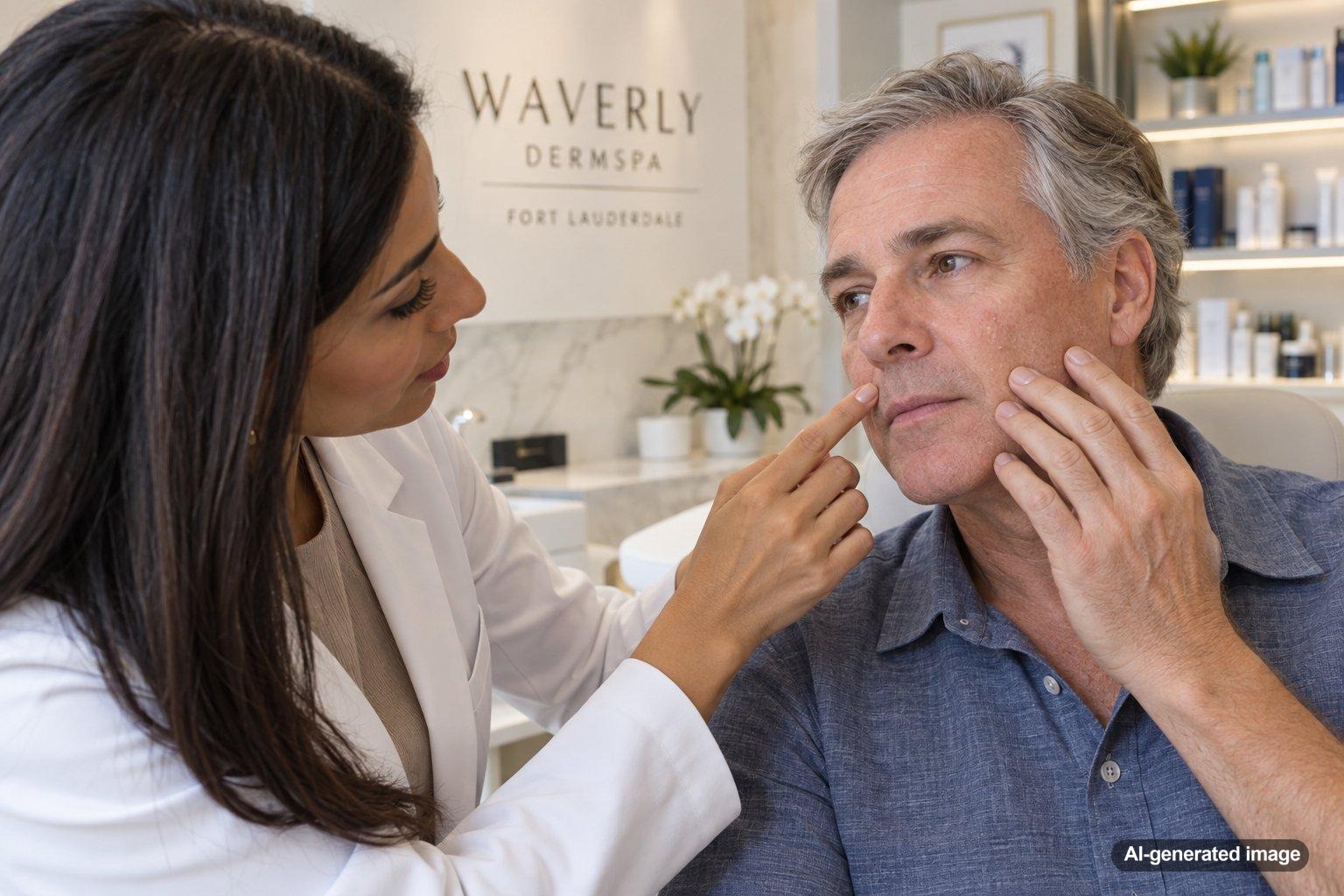
Tiny white bumps on the cheeks are common, and they are not always pimples. Small, firm bumps may be milia, which form when keratin becomes trapped beneath the surface of the skin. Other bumps can come from clogged pores, oil-gland changes, irritation, or normal variations in skin texture. Because several conditions can look similar, appearance alone is not always enough to identify the cause.
The most useful clues are how the bumps feel, whether they become red or tender, how long they have been present, and whether they change with your skincare routine. A dermatologist can evaluate persistent or unusual bumps and help distinguish between conditions that may need very different approaches.
Quick answer
- Firm, pearly-white bumps that do not become inflamed may be milia.
- Skin-colored or white bumps associated with congestion may be closed comedones.
- Persistent bumps with a central indentation or yellowish tone can have other causes that are worth evaluating professionally.
- Picking or squeezing can irritate the skin and may leave discoloration or marks.
- If the bumps are persistent, multiplying, changing, painful, or difficult to identify, a dermatologist can evaluate them.
What are tiny white bumps on the cheeks?
There is no single explanation for every tiny white facial bump. The cheek area contains hair follicles, oil glands, and layers of keratin-producing skin cells, so several different processes can create a similar raised appearance.
One common possibility is milia. These are small cyst-like bumps containing keratin beneath the surface of the skin. They often feel firm and may look white or slightly cream-colored. Unlike a typical acne pustule, they usually do not contain visible fluid and may not become red or sore.
Another possibility is a closed comedone, which develops when oil and dead skin cells collect within a pore. These bumps can be white or skin-colored and may occur alongside blackheads, occasional inflamed pimples, or generally congested skin.
Common causes and look-alikes
- Milia: Small, firm keratin-filled bumps that can occur on the cheeks, around the eyes, or elsewhere on the face.
- Closed comedones: Clogged pores that create smooth, flesh-colored or whitish bumps beneath the surface.
- Product-related congestion: Some people notice more bumps after introducing heavier moisturizers, cosmetics, sunscreens, or hair products that contact the cheeks.
- Skin irritation: Over-exfoliation, friction, or an impaired skin barrier can make normal texture more noticeable and may contribute to small bumps.
- Oil-gland growths: Certain benign oil-gland changes can resemble acne or milia, particularly in adults.
- Other benign skin growths: Several harmless facial growths can look white, yellowish, or skin-colored and may require an in-person examination to identify accurately.
How can you tell milia from pimples?
Milia often stay small, firm, and relatively unchanged. They usually lack the redness, tenderness, or fluctuating appearance that can accompany inflammatory acne. Trying to squeeze them may produce nothing because the material is enclosed beneath a thin layer of skin.
Acne-related bumps are more likely to occur with other signs of pore congestion, including blackheads, additional closed comedones, oily areas, or occasional inflamed lesions. Even so, these patterns overlap, so a dermatologist may be needed when the distinction is unclear.
What can you do at home?
A gentle routine is usually a sensible starting point while you observe the bumps. Avoid trying to extract unfamiliar facial bumps yourself, especially with needles or sharp tools.
- Wash with a mild cleanser without aggressive scrubbing.
- Use a moisturizer appropriate for your skin type to support the skin barrier.
- Introduce new skincare products gradually so you can notice whether a particular product changes the texture.
- Avoid repeatedly squeezing, scraping, or picking at the bumps.
- If you use exfoliating ingredients, avoid layering multiple strong exfoliants at once.
- Use daily sun protection, particularly if irritation or picking has caused discoloration.
If the bumps started after a new cosmetic, sunscreen, moisturizer, or hair product, reviewing what changed in your routine may provide a useful clue. That does not necessarily mean the product is inherently problematic; individual skin responses vary.
Professional options
The appropriate approach depends on what the bumps actually are. A dermatologist can examine their color, firmness, distribution, and surface features before recommending treatment.
For milia, professional extraction may sometimes be considered. For acne-related congestion, a clinician may discuss topical skincare or prescription options when appropriate. Other benign growths may require a different approach entirely, which is one reason self-treatment based only on photographs or descriptions can be frustrating.
An aesthetician may also help with routine skincare, gentle maintenance, and product selection when the issue is primarily cosmetic and does not require medical diagnosis. When the identity of a bump is uncertain, dermatologist evaluation should come first.
When should you see a dermatologist?
Consider having the area evaluated if the bumps remain despite a consistent gentle routine, keep increasing in number, repeatedly become inflamed, or are difficult to distinguish from other skin growths. An appointment is also appropriate if a bump changes noticeably in size, shape, color, texture, or behavior.
Professional evaluation can be particularly helpful before attempting extraction or applying stronger active ingredients. Identifying the type of bump first can prevent unnecessary irritation from treatments that do not match the underlying issue.
FAQ
Can milia appear on the cheeks?
Yes. Milia can occur on the cheeks as well as around the eyes, nose, and other facial areas. They often appear as small, firm, pale bumps beneath the surface.
Can tiny white bumps be clogged pores?
They can. Closed comedones are clogged pores that may look white or skin-colored. They are more likely when there are additional signs of acne or congestion, but an examination may be needed to distinguish them from milia and other growths.
Should I squeeze a hard white bump on my cheek?
It is generally safer not to squeeze or puncture an unidentified bump. Repeated pressure can cause irritation, discoloration, or marks, and some bumps are not easily removable without professional techniques.
Can heavy skincare products cause small bumps?
Some people notice congestion after adding richer skincare, makeup, sunscreen, or hair products that contact the face. If the timing lines up with a new product, simplifying the routine and observing the skin can provide useful information.
Will exfoliating get rid of milia?
Gentle exfoliation may help improve overall surface texture, but established milia may persist because the keratin is trapped beneath the skin. Aggressive exfoliation can cause irritation, so persistent bumps are better evaluated before escalating treatment.
Ready to get help?
Schedule an appointment or send a message and our team will get back to you.
Prefer to call? 954-666-3736
Disclaimer
This article is for educational purposes and is not medical advice. For diagnosis and personalized treatment, please book an appointment with a board-certified dermatologist.
