

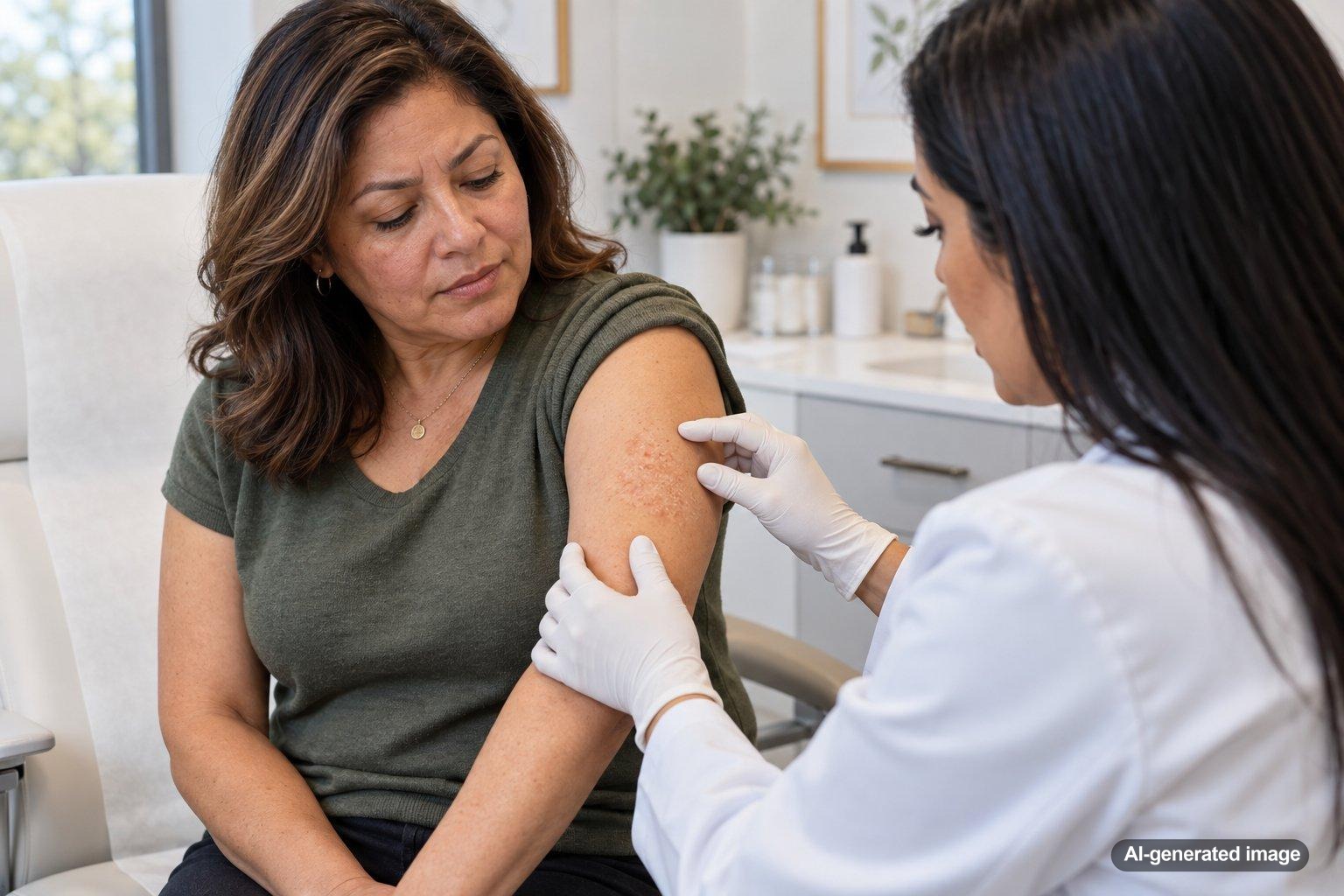
A small patch of tiny, rough bumps on just one arm can happen for several reasons. Sometimes the texture reflects dry or plugged hair follicles. In other cases, something touching or rubbing that particular area may be contributing. The fact that it is limited to one arm does not identify the cause by itself, but the location, appearance, symptoms, and recent changes in your routine can provide useful clues.
If the patch is new, persistent, uncomfortable, changing, or simply difficult to explain, a dermatologist can examine it directly and help distinguish between common follicular texture, irritation, inflammation, and other skin conditions.
Quick answer
- Tiny rough bumps can develop when keratin and dry skin collect around hair follicles.
- A one-sided patch may reflect localized friction, pressure, sun exposure, clothing, products, or something that regularly contacts that arm.
- Redness, itching, tenderness, drainage, or rapid spreading can suggest something other than simple dry follicular texture.
- Gentle moisturizing and reducing friction may help some mild rough patches, but persistent or changing areas are worth having evaluated.
Why can rough bumps appear on only one arm?
Skin does not always behave symmetrically. Even when a condition commonly affects both arms, one side may be more noticeable because of differences in friction, exposure, moisture, or daily habits.
Think about what happens to that particular arm during an ordinary day. It may rest against a desk, car door, chair arm, workout surface, bag strap, uniform, or bedding. One arm may also receive more sunlight while driving or more contact with a particular skincare or hair product. Small differences repeated over time can create surprisingly localized changes in texture.
Common possibilities behind tiny rough bumps
Several relatively common skin processes can create a patch of fine, sandpapery, or goosebump-like texture. An examination is needed to determine what a specific patch represents, but possibilities a dermatologist may consider include:
- Follicular plugging: Keratin can collect around hair follicles and create small, firm bumps. This type of texture is often associated with keratosis pilaris, which commonly appears on the upper arms and can be more noticeable in some areas than others.
- Dry skin: Dehydrated surface skin can make follicles and normal skin texture feel much rougher than they look.
- Friction or pressure: Repeated rubbing from clothing, athletic equipment, furniture, straps, or habitual positioning may make one localized area feel bumpy or irritated.
- Product irritation: Fragrance, body products, detergents, topical medications, or substances transferred from another surface can affect only the area they contact.
- Follicular irritation: Sweat, shaving, occlusive clothing, and repeated rubbing can make individual follicles more prominent or inflamed.
These possibilities can look similar from a distance, which is why texture alone is not enough to make a diagnosis.
Clues that can help narrow down the cause
Before assuming the bumps are simply dry skin, pay attention to the details. A dermatologist may ask when the patch started, whether it has changed, and what makes it better or worse.
- Color: Are the bumps skin-colored, pink, red, brown, or noticeably different from the surrounding skin?
- Sensation: Do they itch, burn, hurt, or feel completely normal aside from the texture?
- Follicle pattern: Does each bump appear centered around a hair follicle?
- Surface: Is the area dry, flaky, crusted, smooth between bumps, or visibly inflamed?
- Distribution: Is the patch on the outer upper arm, forearm, elbow area, or an area that regularly touches another surface?
- Timing: Did it appear after changing soap, lotion, detergent, clothing, exercise habits, or another part of your routine?
What you can do at home
If the bumps are mild, stable, and not painful or significantly inflamed, a simple skin-barrier-focused routine may be reasonable while you observe the area.
- Wash gently rather than aggressively scrubbing the bumps.
- Use a fragrance-free moisturizer regularly, especially after bathing.
- Avoid picking, squeezing, or scratching individual bumps.
- Reduce repeated friction or pressure on the area when possible.
- Pause any newly introduced body product that seems connected with the change.
- Use sun protection on exposed arms, particularly in South Florida where incidental sun exposure can be substantial throughout the year.
Avoid using several strong exfoliating products at once. Over-exfoliation can make a rough area more irritated and may temporarily worsen redness or sensitivity.
What professional evaluation may involve
A dermatologist can usually learn a great deal by examining the pattern, follicular involvement, color, scale, and surrounding skin. Your recent product use, activities, medications, and exposure history may also help provide context.
Depending on what the area looks like, professional recommendations may focus on restoring the skin barrier, reducing follicular buildup, avoiding an irritant, calming inflammation, or evaluating another suspected cause. Prescription therapies or additional testing are generally considered only when the examination suggests they may be appropriate.
If the primary concern is persistent rough texture without warning signs, your dermatologist can also help you decide whether ingredients that encourage gentle surface renewal are appropriate for your skin and how frequently they should be used.
When should you see a dermatologist?
Consider scheduling an evaluation if the patch does not improve with gentle care, repeatedly returns, or has been present long enough that you are unsure what it is. An in-person examination becomes more important when the bumps are rapidly changing or accompanied by additional symptoms.
Seek medical guidance sooner if you notice significant pain, warmth, swelling, drainage, blistering, crusting, rapid spreading, bleeding, a persistent open area, or other changes that concern you. It is also worth getting checked if the texture appeared after starting a medication or if you cannot identify any reasonable explanation for a new and persistent skin change.
FAQ
Can keratosis pilaris affect just one arm?
Keratosis pilaris commonly affects areas such as the upper arms and is often present on both sides, but its visibility and severity do not always match perfectly. A distinctly isolated new patch should not automatically be assumed to be keratosis pilaris, especially if it is red, itchy, painful, or changing.
Does rough texture mean my skin is too dry?
Dryness can make small bumps and follicles feel much more prominent, but it is only one possibility. If moisturizing consistently does not improve the texture, another cause may be contributing.
Should I exfoliate rough bumps on my arm?
Gentle exfoliating ingredients may be useful for some types of follicular roughness, but aggressive scrubbing can irritate the skin. If you do not know what is causing the bumps, keeping the routine simple until the area is evaluated can help avoid making it more inflamed.
Why would friction cause bumps in one small area?
Repeated contact can affect the skin barrier and follicles exactly where rubbing occurs. A desk edge, clothing seam, strap, exercise surface, or habitual arm position may repeatedly affect one location without causing the same change elsewhere.
Can a dermatologist tell what the bumps are just by looking?
Many common causes have recognizable patterns, and an in-person examination can often narrow the possibilities considerably. If the appearance is unusual or the diagnosis is uncertain, your dermatologist can decide whether any additional evaluation is appropriate.
Ready to get help?
Schedule an appointment or send a message and our team will get back to you.
Prefer to call? 954-666-3736
This article is for educational purposes and is not medical advice. For diagnosis and personalized treatment, please book an appointment with a board-certified dermatologist.
