

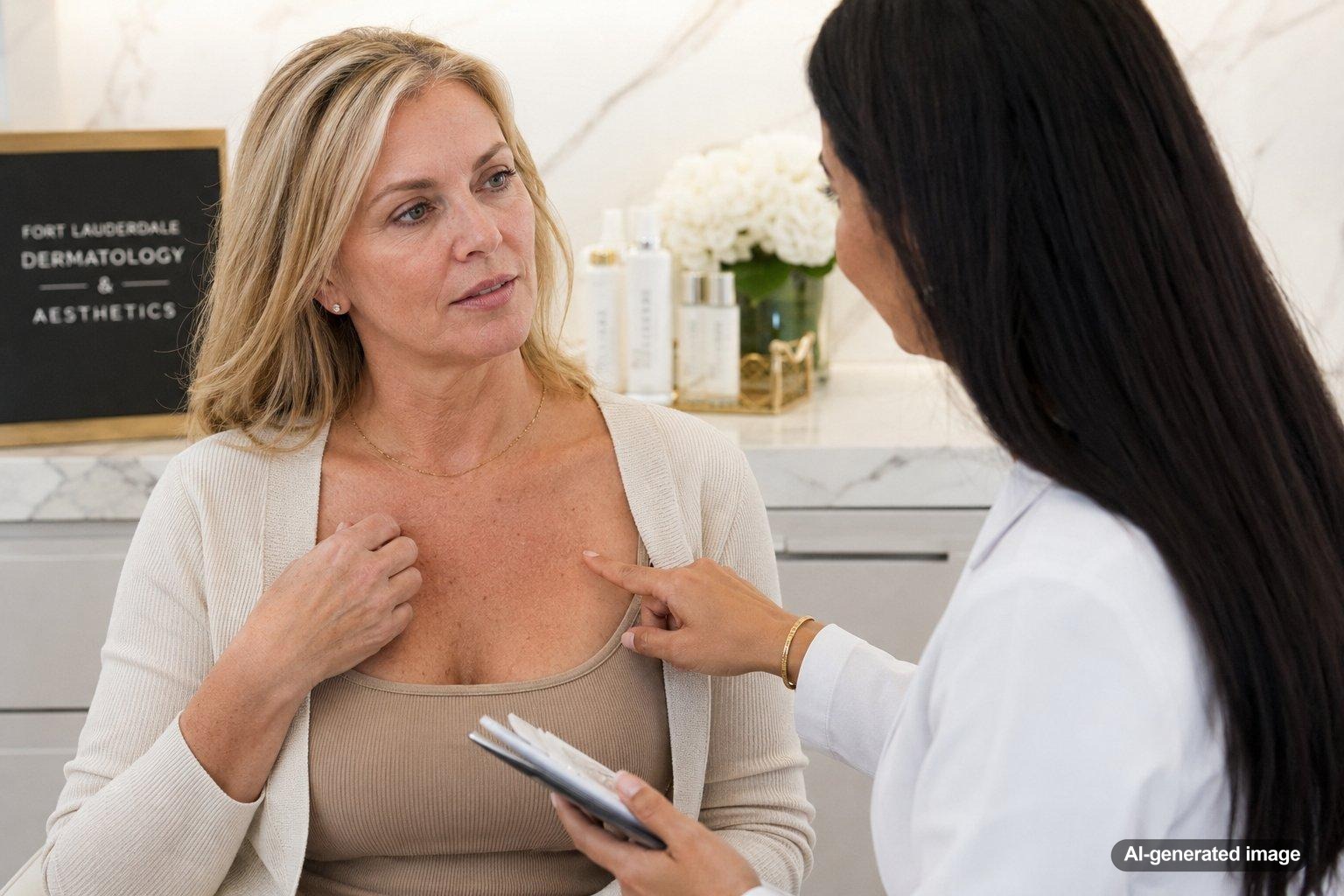
A cluster of tiny, dark bumps on the chest can have several possible explanations, and eruptive vellus hair cysts are one possibility a dermatologist may consider. These small bumps develop around fine vellus hairs, the soft, short hairs that cover much of the body. They often appear in groups and may be skin-colored, reddish-brown, or darker than the surrounding skin.
Because many common skin conditions can look similar at a glance, appearance alone is not enough to determine what a cluster of bumps represents. A dermatologist can examine the area, consider how long the bumps have been present, and decide whether further evaluation is appropriate.
Quick answer
- Eruptive vellus hair cysts are small bumps associated with hair follicles and fine vellus hairs.
- They commonly occur in clusters and can develop on the chest, abdomen, or other areas of the body.
- The bumps may look skin-colored, reddish-brown, or darker, which can make them easy to confuse with other follicular or skin growth conditions.
- They are often more of a cosmetic concern than a symptom-driven problem, although individual experiences vary.
- If bumps are new, changing, irritated, painful, bleeding, or difficult to identify, a dermatologist can evaluate them.
What are eruptive vellus hair cysts?
Eruptive vellus hair cysts are small cyst-like bumps that form in association with vellus hair follicles. Vellus hairs are the very fine, usually lightly pigmented hairs found across much of the skin. When material such as keratin and tiny hair fragments becomes enclosed within a follicular structure, a small papule or bump can develop.
These bumps are often only a few millimeters across and can occur in noticeable groups. The chest is a frequently discussed location, although similar bumps may occur elsewhere on the trunk or limbs. Their color and texture can vary, so they do not always have one distinctive appearance.
Why can they appear in clusters?
Eruptive vellus hair cysts involve multiple individual hair follicles, which helps explain why they may appear as a collection of similar-looking bumps rather than as one isolated spot. In some people, there may be a familial tendency. In others, they appear without an obvious family history or identifiable trigger.
What matters most is that clustered bumps are not specific to this condition. Follicular plugging, acne-related bumps, keratosis pilaris, certain benign growths, and other skin conditions can sometimes create a similar pattern. A dermatologist can help distinguish among these possibilities based on the appearance and clinical history.
Why might the bumps look dark?
The color of these bumps can vary with natural skin tone, inflammation, pigmentation, and the material within the bump. Some may look brown, reddish-brown, grayish, or simply darker than the surrounding skin. Previous irritation or picking can also contribute to lingering discoloration.
Color by itself does not confirm the cause. If a bump has noticeably changed in color, shape, size, or surface characteristics, or if one lesion looks different from the rest, it is worth having the area assessed rather than assuming every bump in the cluster has the same explanation.
What can you do at home?
Gentle skin care is usually the safest starting point while you are figuring out what the bumps may represent. Avoid squeezing, digging at, or repeatedly scratching the area, since manipulation can lead to irritation, discoloration, or scarring.
- Use a mild cleanser and avoid aggressive scrubbing.
- Choose non-irritating moisturizers if the surrounding skin feels dry or sensitive.
- Avoid trying to puncture or extract the bumps yourself.
- Pay attention to changes in size, color, tenderness, drainage, or number.
- Consider taking a clear photo for your own reference if you want to track visible changes over time.
Over-the-counter products marketed for acne or rough texture are not necessarily appropriate for every type of bump. If the area is persistent or you are unsure what you are treating, a professional evaluation can help prevent unnecessary irritation.
What professional options may be considered?
If a dermatologist determines that the bumps are consistent with eruptive vellus hair cysts, management depends on how bothersome they are, their location, skin type, and the risk of pigment changes or scarring. Some people may choose observation when the bumps are stable and not uncomfortable.
When treatment is desired, a dermatologist may discuss options intended to address individual cysts, follicular plugging, or surface texture. Depending on the situation, these can include topical approaches or office-based procedures. Results can vary, and some methods may carry a risk of temporary irritation, discoloration, or scarring, particularly when many small bumps are treated.
Your clinician can help you decide whether treatment is worthwhile and which approach is most appropriate for your skin.
When should you see a dermatologist?
It is reasonable to schedule an evaluation when a cluster of bumps is persistent, unexplained, cosmetically bothersome, or difficult to distinguish from acne or another skin condition. Getting the diagnosis right is especially helpful before using strong exfoliating products or attempting extraction.
Seek professional evaluation more promptly if you notice a bump that is rapidly changing, bleeding without an obvious reason, repeatedly crusting, becoming painful, draining, or looking distinctly different from the surrounding bumps. Those features do not automatically indicate a serious problem, but they deserve individual assessment.
FAQ
Are eruptive vellus hair cysts the same as acne?
No. They can sometimes resemble small acne bumps, but they arise from a different follicular process. Because the two can look similar, a dermatologist may need to examine the area before recommending treatment.
Can eruptive vellus hair cysts appear on the chest?
Yes. The chest and other areas of the trunk are commonly associated with this type of clustered bump. Location alone, however, cannot establish the diagnosis.
Are these bumps contagious?
Eruptive vellus hair cysts are not generally considered an infectious or contagious process. If bumps are spreading quickly, draining, inflamed, or accompanied by other symptoms, a dermatologist can evaluate whether another condition may be responsible.
Should I squeeze or extract the bumps?
It is better to avoid squeezing or puncturing them at home. Doing so can irritate the skin and may increase the chance of discoloration or scarring.
Do eruptive vellus hair cysts need treatment?
Not necessarily. When they are stable and not causing symptoms, some people may choose to leave them alone. If their appearance is bothersome, a dermatologist can explain available options and their limitations.
How can I tell if my chest bumps are eruptive vellus hair cysts?
It can be difficult to tell from appearance alone because several conditions may produce small clustered bumps. A dermatologist can evaluate the pattern, texture, color, history, and other clinical features to determine what is most likely.
Ready to get help?
Schedule an appointment or send a message and our team will get back to you.
Prefer to call? 954-666-3736
This article is for educational purposes and is not medical advice. For diagnosis and personalized treatment, please book an appointment with a board-certified dermatologist.
