

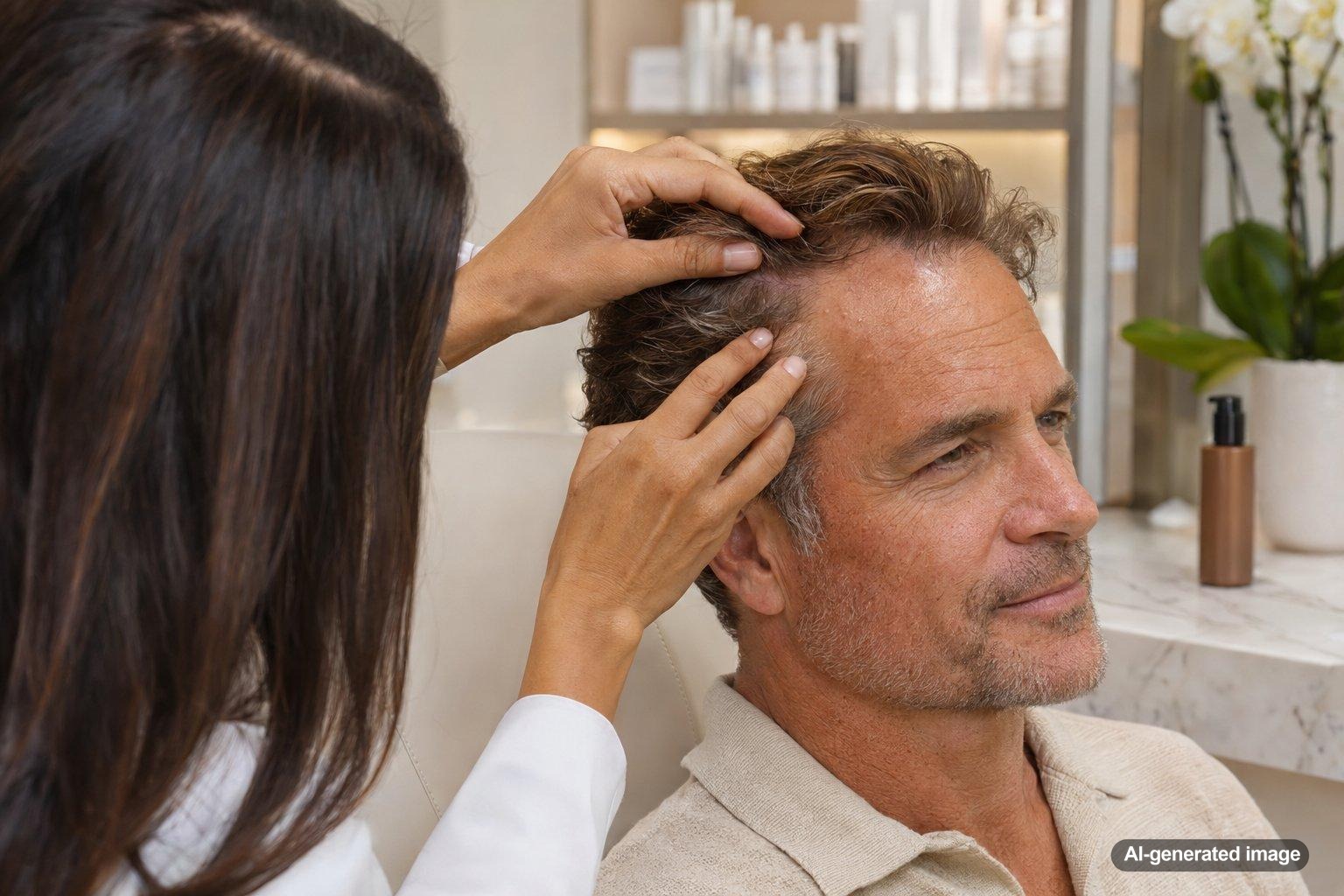
If you notice tiny bumps near your hairline after applying self-tanner, the reaction may be related to clogged pores, irritation from the formula, or contact with other products already sitting along your forehead. The hairline is particularly vulnerable because self-tanner can overlap with sunscreen, moisturizer, conditioner, styling products, and natural skin oils.
Not every bump represents acne, and the tanning ingredient itself is not necessarily responsible. The appearance of the bumps, whether they itch, and how soon they develop can offer useful clues. Understanding these differences can help you make more comfortable product choices without giving up the appearance of a sunless tan.
Quick Answer: Why Does Self-Tanner Cause Tiny Hairline Bumps?
- Clogged pores: Certain self-tanning creams, oils, or moisturizing ingredients may contribute to small acne-like bumps, particularly when layered with other products.
- Product irritation: Fragrance, preservatives, and other formulation ingredients can irritate sensitive skin.
- Contact dermatitis: An irritating or allergic reaction may produce itchy, red, or rough bumps where the product touches your skin.
- Hair product overlap: Styling oils, leave-in conditioners, and pomades can contribute to breakouts near the forehead.
- Application habits: Heavy layering, friction, and leaving excess product around the hairline may make existing skin concerns more noticeable.
What Are These Tiny Bumps Along the Hairline?
Small bumps that appear after self-tanning can look similar while having different underlying causes. Some are closed comedones, which develop when oil and dead skin cells accumulate within pores. Others are inflammatory bumps associated with irritation or sensitivity to a cosmetic ingredient.
Closed comedones often look like tiny, skin-colored or whitish elevations. They may feel slightly textured without causing much discomfort. When cosmetics contribute to these breakouts, the condition is commonly called acne cosmetica.
Irritant or allergic contact dermatitis can produce a different pattern. The skin may itch, sting, burn, become visibly red, or feel unusually dry. Depending on the reaction, small bumps may appear alongside roughness or swelling.
The distinction matters because acne-oriented products are not always appropriate for irritated skin. A dermatologist can evaluate the pattern rather than relying on appearance alone.
Why the Hairline Is Especially Prone to Reactions
The border between your forehead and scalp is an area where several cosmetic routines meet. Even someone who rarely experiences facial breakouts may notice texture here after introducing a new self-tanner.
1. Self-Tanner Can Mix With Hair Styling Products
Leave-in conditioners, styling creams, pomades, and hair oils may migrate onto the forehead. Some formulas contain ingredients that can contribute to clogged pores. Adding a self-tanning moisturizer over that residue introduces another layer of cosmetic ingredients.
The American Academy of Dermatology recognizes that hair care products can cause acne cosmetica along the hairline and forehead. This means the self-tanner may be one part of the problem rather than the only trigger.
2. Rich Formulas May Not Suit Acne-Prone Skin
Self-tanning products come in lotions, creams, mousses, gels, and drops. Their moisturizing bases can differ substantially. A rich body lotion that feels comfortable on the legs may feel heavy when applied around the forehead.
Some people find that lightweight facial formulations are more comfortable in areas where they already experience clogged pores. However, product texture alone cannot determine whether a formula will cause breakouts.
3. Fragrance and Other Ingredients Can Trigger Irritation
Many self-tanners contain dihydroxyacetone, commonly called DHA, which reacts with components in the outermost layer of skin to create a temporary darker appearance. DHA is not the same as a UV tanning treatment.
DermNet notes that DHA-containing products can be associated with dryness, irritation, and contact dermatitis in some individuals. Fragrances and other ingredients in a finished formula may also be relevant.
A reaction that causes itching, burning, or visible redness deserves different consideration from a few non-itchy clogged pores.
4. Friction and Sweat May Add to Skin Discomfort
The forehead frequently comes into contact with headbands, hats, hair, and sweat. Applying multiple products before exercise or wearing a tight headband over freshly treated skin may increase friction and discomfort.
These factors do not establish that self-tanner caused the bumps. They may, however, help explain why the hairline reacts differently from surrounding facial skin.
How to Tell Whether the Bumps Are Acne or Irritation
Although only an appropriate clinical evaluation can determine the cause, several observations may help you describe the problem accurately.
- Small, skin-colored bumps without itching: These may be consistent with closed comedones or cosmetic-related acne.
- Itchy bumps with redness: This pattern may suggest irritation or contact dermatitis.
- Burning or stinging soon after application: This can point toward product sensitivity or disruption of the skin barrier.
- Bumps that develop gradually with repeated applications: Consider whether the product or other overlapping cosmetics may be contributing to clogged pores.
- Repeated reactions to the same formula: A specific ingredient or combination of products may deserve closer examination.
Timing is useful but not definitive. Cosmetic acne can develop gradually, while some allergic reactions are delayed rather than immediate. More than one condition can also occur at the same time.
What You Can Do at Home
When bumps appear after a new cosmetic product, a conservative approach is generally preferable to introducing several corrective treatments at once.
Pause the Suspected Product
Consider stopping the self-tanner that seems associated with the reaction. Avoid repeatedly applying it to affected skin simply to determine whether the bumps will return. If the area is actively irritated, allow it to settle before considering any new tanning product.
Keep Cleansing Gentle
Use a mild cleanser and lukewarm water to remove cosmetic residue. Avoid harsh scrubs, abrasive cleansing tools, or repeated washing. Aggressive exfoliation may worsen discomfort, particularly when the skin is already irritated.
Review Everything Touching Your Hairline
Look beyond the self-tanner. Hair oil, dry shampoo, conditioner, sunscreen, and makeup may all contact the same area. If breakouts are a recurring concern, consider products labeled non-comedogenic or oil-free when appropriate.
Keep styling products away from the forehead when possible, and wash pillowcases or headbands that accumulate product residue.
Avoid Overloading the Area With Treatments
It can be tempting to apply exfoliating acids, retinoids, acne treatments, or strong spot treatments to every small bump. These ingredients can aggravate skin that is reacting to an irritant or allergen.
If your skin is uncomfortable, keeping the routine simple and using a well-tolerated, fragrance-free moisturizer may be more appropriate while you determine what caused the reaction.
How to Reduce the Chance of Hairline Bumps Next Time
Once your skin has returned to its usual condition, thoughtful product selection and application may help reduce future problems.
- Choose a facial self-tanner: Look for a formulation intended for facial skin rather than automatically using a rich body tanning lotion on your forehead.
- Consider fragrance-free options: This can be especially useful if your skin has reacted to fragranced cosmetics before.
- Evaluate pore-clogging potential: Non-comedogenic labeling can be helpful for acne-prone skin, although no label ensures an individual product will be tolerated.
- Apply a thin, even layer: Avoid unnecessary buildup along the hairline and follow the manufacturer’s application directions.
- Keep hair products separate: Move hair away from the face during application and minimize contact between styling products and freshly treated skin.
- Introduce one new product at a time: This makes it easier to recognize a potential trigger.
For a new cosmetic product, the American Academy of Dermatology recommends testing a small area before broader use. However, if you have already experienced a significant reaction, do not deliberately reapply the suspected product to reproduce it. A dermatologist can advise whether formal patch testing is appropriate.
Does DHA Itself Cause the Bumps?
DHA is the active color-producing ingredient in many sunless tanning products, but a reaction after self-tanning does not automatically mean DHA is responsible.
A finished product contains multiple ingredients that affect its texture, scent, preservation, and application. The moisturizing base or an added fragrance may be relevant. Some people also develop bumps because of cosmetic layering rather than sensitivity to the tanning ingredient.
If similar reactions occur with several unrelated self-tanners, a dermatologist may review their ingredient lists and consider whether an underlying skin condition or contact allergy is involved.
Remember that a self-tan does not provide reliable sun protection. Continue using appropriate broad-spectrum sunscreen and other sun-protective measures regardless of how dark your skin appears after application.
Professional Options for Persistent Hairline Bumps
When the cause remains unclear, professional evaluation can help distinguish cosmetic acne from dermatitis and other conditions that create similar-looking bumps.
A dermatologist may assess the location and appearance of the lesions, review your skin care routine, and discuss the timing of reactions. If contact allergy is suspected, formal patch testing may be considered. If acne is identified, treatment can be tailored to skin sensitivity, severity, and other individual factors.
For people whose skin is otherwise stable, an aesthetician may also provide guidance on gentle product selection and routine maintenance. However, inflamed, unexplained, or repeatedly reactive skin should be medically evaluated before considering exfoliating facials or other cosmetic procedures.
The goal is to identify the likely trigger and choose an appropriate approach rather than automatically treating every bump as acne.
When Should You See a Dermatologist?
Consider a dermatology appointment if the bumps persist after discontinuing the suspected product, repeatedly return with cosmetic use, or are accompanied by substantial itching, redness, discomfort, or peeling.
Professional evaluation is also appropriate when the affected area becomes increasingly painful, swollen, warm, or develops drainage, or when you cannot identify the cause despite simplifying your routine. Rapidly spreading redness or systemic symptoms such as fever warrant prompt medical attention.
If a reaction involves difficulty breathing or swelling of the lips or tongue, seek emergency care.
For Fort Lauderdale residents and seasonal visitors, reviewing your skincare and self-tanning routine with a dermatologist can help clarify which products may be suitable for your skin, particularly if heat, humidity, and frequent sunscreen use complicate the picture.
Frequently Asked Questions
Can self-tanner clog pores around my hairline?
Some self-tanning formulations may contribute to clogged pores, particularly when layered with rich moisturizers or oily hair products. The specific formula and your skin’s individual response matter more than the fact that a product is labeled self-tanner.
Why do I only get bumps along my hairline and not on my cheeks?
The hairline receives more contact from styling products, hair oils, sweat, and accessories such as hats or headbands. This additional exposure may make it more vulnerable to cosmetic-related breakouts or irritation than other parts of the face.
How long do self-tanner bumps take to disappear?
The duration depends on the underlying cause. Mild irritation may improve after the triggering product is removed, while clogged pores can take several weeks to settle. Persistent, worsening, or repeatedly recurring bumps should be assessed rather than managed through repeated product changes.
Should I exfoliate the bumps before applying self-tanner again?
Avoid exfoliating skin that is actively red, itchy, tender, or irritated. Exfoliation may increase discomfort and does not address every cause of small bumps. Wait until the skin has settled and consider professional advice if the reaction recurs.
Is a fragrance-free self-tanner less likely to irritate my skin?
A fragrance-free formula removes one potential source of irritation or allergy, but it can still contain other ingredients that your skin does not tolerate. Fragrance-free does not mean reaction-free, and a previous significant reaction deserves individualized guidance.
Can I keep using self-tanner if the bumps are small?
The size of the bumps does not establish whether continued use is appropriate. Pausing the suspected product is a reasonable precaution, especially if the bumps are new or accompanied by itching or discomfort. A dermatologist can help determine whether a different formulation may be worth considering.
A More Comfortable Approach to Sunless Tanning
Tiny bumps near the hairline after self-tanner are often a clue that a cosmetic formula, an overlapping hair product, or the skin’s sensitivity needs attention. The most helpful first step is usually to simplify the routine and observe how the skin responds rather than immediately adding stronger treatments.
If the reaction keeps returning, a personalized skin assessment can help you make informed decisions about sunless tanning and everyday skincare.
Ready to get help?
Schedule an appointment or send a message and our team will get back to you.
Prefer to call? 954-666-3736
This article is for educational purposes and is not medical advice. For diagnosis and personalized treatment, please book an appointment with a board-certified dermatologist.
Sources & further reading
- American Academy of Dermatology (AAD) – Are your hair care products causing breakouts?
- DermNet – Dihydroxyacetone
- American Academy of Dermatology (AAD) – Eczema types: Contact dermatitis signs and symptoms
- American Academy of Dermatology (AAD) – How to test skin care products
