

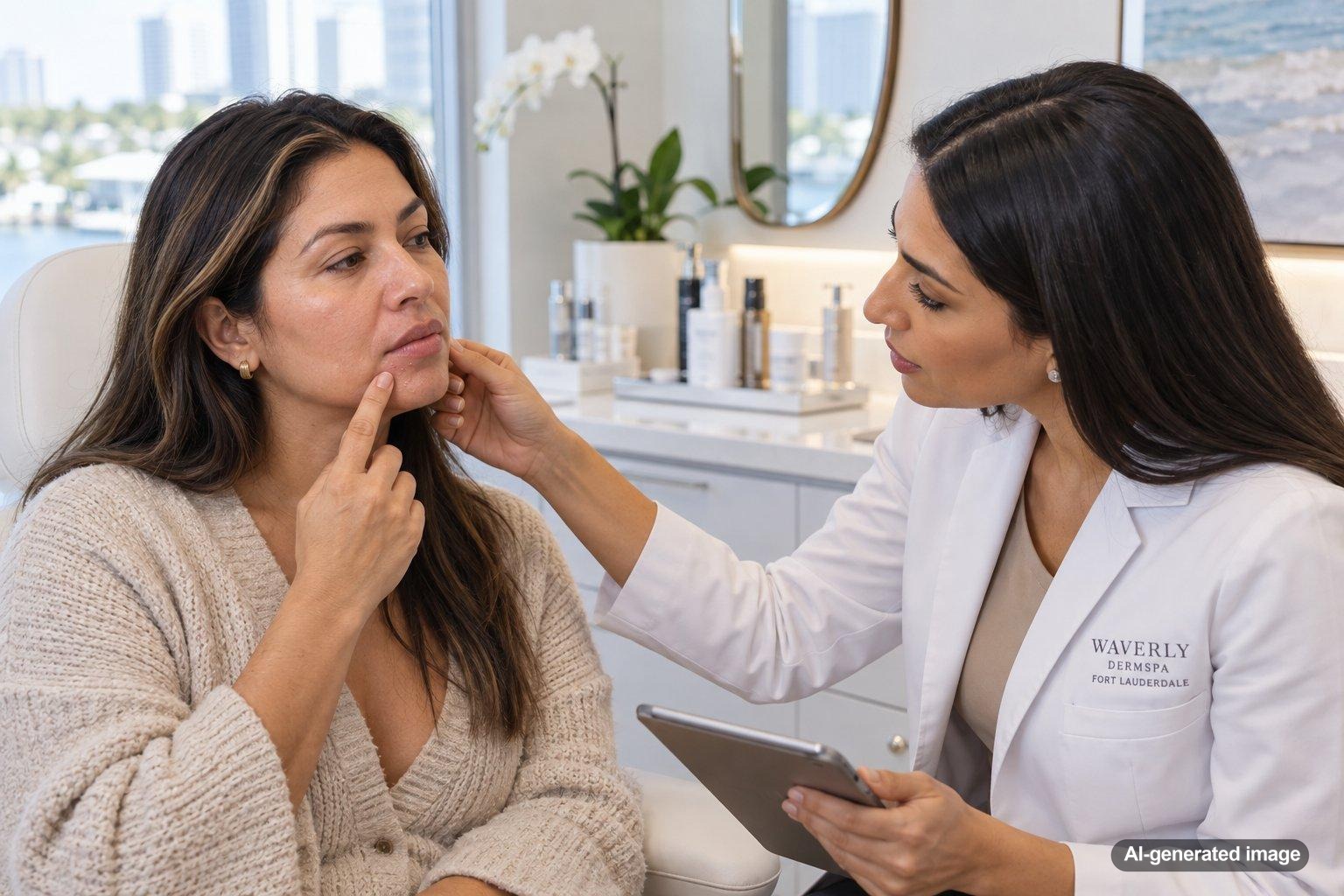
Tiny bumps around the mouth that seem to get worse every time you add another serum, cream, or spot treatment can be especially frustrating. Several skin conditions can create this pattern, and one possibility dermatologists consider is perioral dermatitis, also called periorificial dermatitis. Irritation from skin care products, a disrupted skin barrier, contact reactions, acne, and other rashes can look similar, so the appearance alone does not confirm the cause.
One useful clue is that more aggressive skin care does not always help. When the skin around the mouth is already irritated or inflamed, adding exfoliating acids, retinoids, scrubs, fragranced products, heavy creams, or multiple acne treatments may make the area feel more sensitive and cause additional bumps.
Quick answer
- Tiny bumps around the mouth may be associated with perioral dermatitis, irritation, contact dermatitis, acne, or another inflammatory skin condition.
- Skin care can worsen the area when products are irritating, overly occlusive, fragranced, or simply too numerous for already sensitive skin.
- Topical corticosteroids, including hydrocortisone, are particularly important to discuss with a clinician because they can be associated with perioral dermatitis and may temporarily mask a flare.
- A simple, gentle routine can reduce unnecessary irritation while you arrange an evaluation if the bumps persist.
- A dermatologist can distinguish between look-alike conditions and recommend treatment based on the actual diagnosis.
Why can bumps develop around the mouth?
The skin around the mouth is exposed to a surprising number of potential irritants. Skin care products, cosmetics, sunscreen, toothpaste, saliva, shaving products, and medications applied to the face can all come into contact with this area.
Perioral dermatitis is one condition that can produce clusters of small bumps around the mouth. The bumps may be skin-colored or red, and the surrounding skin can feel dry, tight, sensitive, itchy, or mildly burning. Similar bumps may sometimes occur around the nose or eyes. However, acne, rosacea, irritant contact dermatitis, allergic contact dermatitis, and other rashes can overlap in appearance, which is why self-diagnosis can be difficult.
Why does skin care sometimes make the bumps worse?
When the skin barrier is irritated, adding more products can create a cycle of sensitivity. A person notices bumps, adds an acne treatment or exfoliant, develops more dryness and irritation, and then applies additional moisturizers or soothing products. The growing routine can make it harder to identify which product is aggravating the skin.
Potential triggers vary from person to person, but products that may be worth reviewing include:
- Exfoliating acids such as glycolic, lactic, or salicylic acid
- Retinoids
- Scrubs and cleansing brushes
- Strong acne spot treatments
- Fragranced skin care or cosmetics
- Heavy or highly occlusive creams and ointments
- Multiple active ingredients layered in the same routine
- Topical corticosteroid creams used on or near the face
This does not mean every one of these products is harmful. Many are useful when chosen appropriately. The issue is that skin that is already inflamed may tolerate much less than it normally would.
Could it be perioral dermatitis?
It could be one possibility, but bumps around the mouth should not automatically be labeled perioral dermatitis. Dermatologists typically consider the location, appearance, symptoms, skin care routine, medications, and other exposures before deciding what is most likely.
Perioral dermatitis commonly appears as groups of small acne-like bumps around the mouth and may be accompanied by dryness, scaling, burning, or sensitivity. Topical corticosteroids are a well-recognized association. Cosmetics and skin care products can also contribute to irritation in some people.
If you are using a prescription corticosteroid on your face, do not change or discontinue it without discussing the plan with the clinician who prescribed it. Stopping facial corticosteroids can sometimes be followed by a temporary flare, and a dermatologist can help determine the safest approach.
What can you do at home?
A conservative approach is usually more useful than trying to treat every possible diagnosis at once. Until you know what is causing the bumps, consider simplifying your routine rather than adding new active ingredients.
- Use a mild, fragrance-free cleanser and avoid vigorous scrubbing.
- Pause unnecessary exfoliating products if they sting or worsen the area.
- Avoid picking, squeezing, or repeatedly touching the bumps.
- Keep your routine short so it is easier to notice what your skin tolerates.
- Choose simple, fragrance-free products when moisturization is needed.
- Make a list of facial products, cosmetics, toothpastes, medications, and steroid creams you use so you can review them with your dermatologist.
If a product causes immediate burning, persistent redness, or a clear worsening of the rash, stop using that non-prescription product and give the skin a chance to settle. Avoid repeatedly experimenting with new treatments while the area is actively irritated.
Professional treatment options
Treatment depends on what is actually causing the bumps. If a dermatologist determines that the pattern is consistent with perioral dermatitis, management may involve simplifying the skin care routine and, when appropriate, prescription topical or oral medication. Other diagnoses require different approaches.
For example, acne treatments that are useful for clogged pores may irritate certain dermatitis patterns, while treatments intended for dermatitis may not address true acne. This is one reason an examination can save time when a rash keeps returning despite multiple skin care changes.
Your dermatologist can also review whether prescription or over-the-counter medications applied near the mouth could be contributing and help you decide what should be continued, adjusted, or replaced.
When should you see a dermatologist?
Consider a dermatology evaluation if the bumps persist, repeatedly return, spread around the nose or eyes, become increasingly uncomfortable, or continue to worsen despite simplifying your routine. An appointment is also worthwhile if you are uncertain whether you are dealing with acne, dermatitis, an allergic reaction, or another condition.
Seek prompt medical attention for significant facial swelling, difficulty breathing, rapidly worsening pain, extensive blistering, eye involvement with concerning symptoms, or other signs of a serious reaction.
FAQ
Why do the bumps get worse when I use acne products?
Some acne ingredients can be drying or irritating. If the bumps are related to dermatitis or an impaired skin barrier rather than typical acne, stronger acne treatments may increase irritation instead of helping. A dermatologist can determine whether acne is actually part of the problem.
Can moisturizer make bumps around my mouth worse?
It can in some situations. Very heavy or occlusive products may aggravate certain facial rashes, while simple moisturizers may be useful for other conditions. Product texture and ingredients matter, so consider simplifying your routine and discussing persistent reactions with a dermatologist.
Should I put hydrocortisone on the bumps?
Do not automatically treat an unexplained facial rash with hydrocortisone. Topical corticosteroids can be associated with perioral dermatitis and may complicate the pattern. If a prescription steroid was recommended for your face, talk with the prescribing clinician before changing how you use it.
Is this the same thing as acne?
Not necessarily. Perioral dermatitis and other facial rashes can resemble acne, but their triggers and treatments may differ. Acne often includes features such as blackheads or whiteheads, while dermatitis may be accompanied by more burning, dryness, scaling, or sensitivity.
Can toothpaste or cosmetics be involved?
Products that repeatedly contact the skin around the mouth can sometimes contribute to irritation or contact reactions. A dermatologist may ask about toothpaste, makeup, lip products, sunscreen, moisturizers, and other everyday exposures when evaluating the area.
Will simplifying my routine make the bumps disappear?
Reducing unnecessary irritation may help some mild cases, but persistent bumps may require professional evaluation and prescription treatment. Improvement also depends on the underlying diagnosis, so there is no single routine that works for everyone.
Ready to get help?
Schedule an appointment or send a message and our team will get back to you.
Prefer to call? 954-666-3736
Disclaimer
This article is for educational purposes and is not medical advice. For diagnosis and personalized treatment, please book an appointment with a board-certified dermatologist.
Sources & further reading
- American Academy of Dermatology (AAD) – Red rash around your mouth could be perioral dermatitis
- DermNet – Periorificial dermatitis
- Cleveland Clinic – Perioral Dermatitis: Treatment, Symptoms & Causes
