

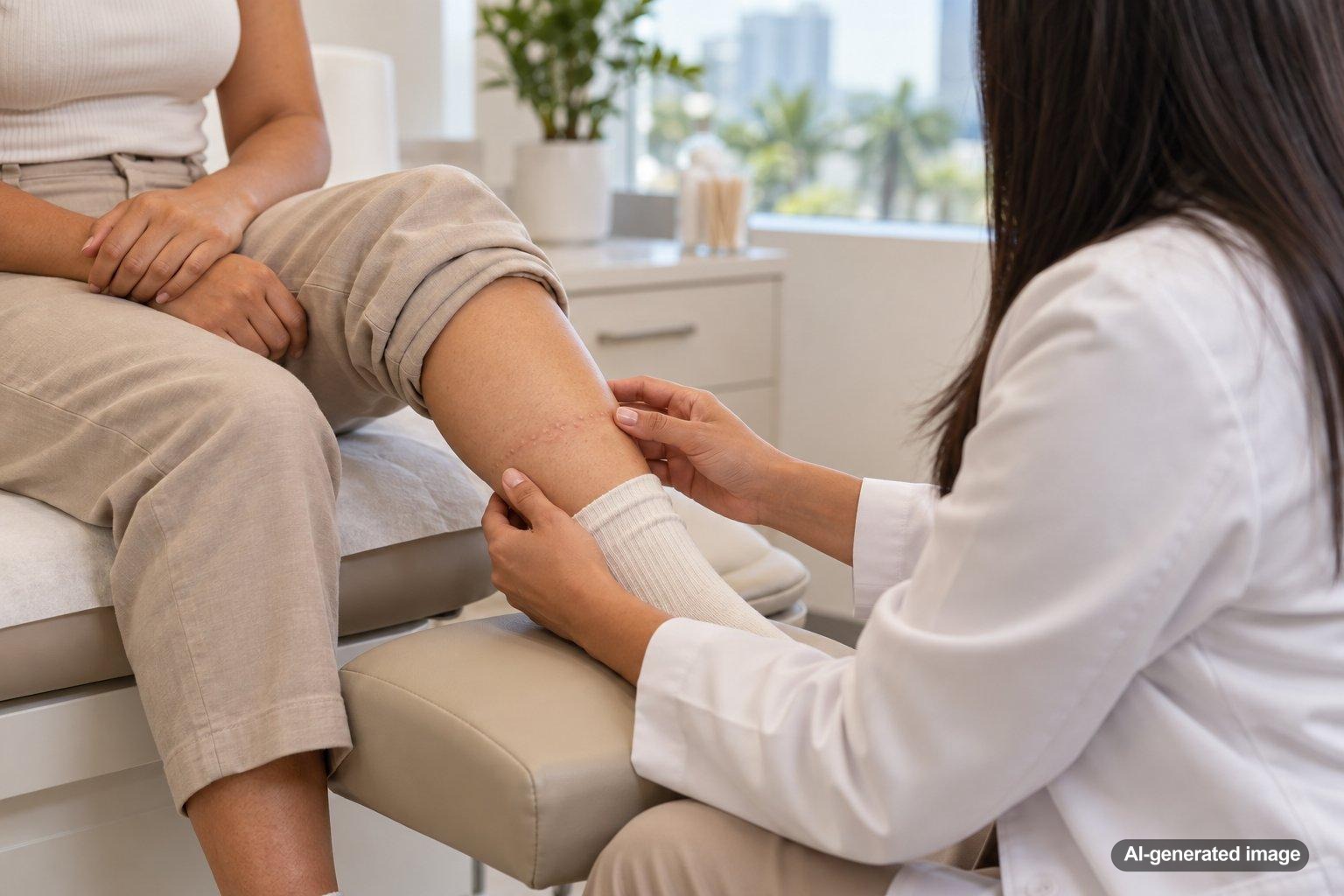
If you’ve ever taken off your socks and noticed a neat line of tiny bumps around your ankles or lower legs, you may wonder why the irritation follows the fabric so precisely. The pattern can be especially noticeable after a long day in shoes, a workout, or several hours in warm weather. Sometimes the bumps itch. Other times, they feel slightly rough or appear as small raised spots without much discomfort.
A line of tiny bumps along the top of your socks often develops because the elastic band creates friction, pressure, or trapped moisture against the skin. Contact dermatitis, including irritation or an allergic reaction to something in the sock material, is another possibility. The appearance, timing, and persistence of the bumps can help a dermatologist distinguish between these causes.
Quick Answer: Why Do Socks Cause Tiny Bumps?
- Friction: Repeated rubbing from the sock cuff can irritate the skin and create small raised bumps.
- Pressure: Tight elastic can leave temporary indentations and may trigger raised, itchy welts in people who are sensitive to pressure.
- Trapped sweat: Warmth and moisture beneath a snug band can contribute to irritation or heat-related bumps.
- Contact dermatitis: Dyes, elastic components, fabric treatments, or laundry products may irritate the skin or cause an allergic reaction.
- Existing skin sensitivity: Dry skin or an impaired skin barrier can make repeated contact with clothing more uncomfortable.
The fact that the bumps form a distinct horizontal line is an important clue. It suggests that something happening where the sock cuff touches the skin may be contributing to the reaction, although the pattern alone cannot establish a diagnosis.
What Is Happening to the Skin at the Sock Line?
The upper edge of a sock is designed to grip the leg and keep the fabric from sliding down. That creates a relatively concentrated area of contact compared with the looser fabric covering the rest of the foot and ankle.
As you walk, sit, exercise, or change positions, the cuff can repeatedly press and move against the same narrow strip of skin. Heat and perspiration may increase this effect. In some people, that combination produces temporary redness or a slightly raised texture. In others, it may contribute to an inflammatory rash.
It’s also important to distinguish a simple sock indentation from a true eruption. A smooth mark that fades after removing the socks is different from clusters of bumps that remain visible, itch, scale, blister, or become tender.
Common Causes of Tiny Bumps Along the Top of Socks
1. Friction From a Tight Sock Cuff
Repeated rubbing is one of the more straightforward explanations. A narrow elastic band can irritate the surface of the skin, particularly during walking, running, or other activities involving frequent ankle movement.
Friction-related irritation may appear as mild redness, small bumps, or a rough-feeling strip exactly where the sock ends. It may be more noticeable with compression-style athletic socks, stiff elastic, or socks that bunch and shift during movement.
The skin does not necessarily have to be visibly damaged for friction to cause discomfort. Repeated mechanical contact can aggravate an already sensitive skin barrier.
2. Irritant or Allergic Contact Dermatitis
Contact dermatitis is an inflammatory skin reaction caused by direct exposure to an irritant or allergen. When it develops around the sock line, possible contributors include fabric dyes, rubber-related chemicals in elastic, textile finishes, or residue from laundry products.
Irritant contact dermatitis can occur when friction, moisture, or another substance repeatedly disrupts the skin barrier. Allergic contact dermatitis involves an immune response to a substance to which the person has become sensitized.
Both can cause itching and redness, but allergic contact dermatitis may also produce small bumps, scaling, or blisters. The reaction may develop after repeated exposure to a familiar material, so an allergy is still possible even when the socks are not new.
Timing can provide useful clues. Irritation may become noticeable during wear, while an allergic contact reaction may appear hours or even days after exposure. A dermatologist may recommend patch testing when a recurring rash suggests a specific contact allergy.
3. Sweat and Heat Trapped Beneath the Elastic
The ankle area can become warm and damp when socks are worn inside closed shoes for extended periods. A tight cuff may reduce ventilation and keep perspiration against the skin.
Under these conditions, sweat-related irritation or a heat rash may develop. Heat rash occurs when sweat becomes trapped within the skin, sometimes creating clusters of small bumps with a prickling or itchy sensation.
This possibility may be more relevant after exercise, prolonged outdoor activity, or a humid day in South Florida. However, bumps that follow the sock cuff precisely can have several causes, and heat alone should not be assumed responsible.
4. Pressure-Triggered Hives
Some people develop hives in response to physical pressure on the skin. Tight waistbands, straps, and sock cuffs are examples of clothing that can produce concentrated pressure.
Pressure-related hives generally appear as raised, itchy welts rather than dry, scaly patches. Depending on the type of physical urticaria involved, symptoms can develop shortly after pressure or become noticeable later.
Individual welts often resolve, although new ones may appear with repeated exposure. Recurrent or prolonged reactions deserve medical assessment, particularly when swelling or significant discomfort accompanies the bumps.
5. Dry Skin or an Eczema-Prone Skin Barrier
Skin that is already dry, inflamed, or prone to eczema may react more readily to clothing friction and sweat. The sock cuff can become the location where an underlying sensitivity is most noticeable.
Rather than producing a completely separate condition, the elastic may aggravate an existing skin problem. Clues can include rough patches, persistent itching, visible scaling, or irritation in other areas where clothing fits tightly.
Moisturizing may help support the skin barrier, but a persistent inflammatory eruption should be evaluated rather than repeatedly treated as ordinary dryness.
How Can You Tell What Is Causing the Bumps?
Several observations can help clarify the pattern without attempting to diagnose it at home.
- Immediately after removing socks: Temporary pressure marks or friction may be involved, especially if the skin returns to normal relatively quickly.
- Several hours after wearing a particular pair: A delayed reaction to fabric or another contact exposure may be worth considering.
- Mostly during exercise or hot weather: Sweat, heat, and friction may be important contributors.
- With significant itching, scaling, or small blisters: Contact dermatitis or another inflammatory condition becomes more relevant.
- With raised welts that appear and disappear: A pressure-related hive response may be possible.
- Only with certain socks: The cuff tightness, fiber blend, dye, or textile treatment may be contributing.
These patterns overlap, and appearance alone may be misleading. Photographs taken when the bumps are most visible can be helpful during a dermatology appointment, especially if the eruption comes and goes.
What Can You Do at Home to Reduce Sock-Line Irritation?
For mild irritation without concerning symptoms, a few conservative changes may help reduce repeated exposure while you observe how your skin responds.
Choose Socks With Less Restrictive Cuffs
Consider socks with a softer, wider cuff that stays in place without leaving a pronounced indentation. Avoid intentionally stretching or modifying medical compression garments, however. If compression socks were prescribed for a medical reason, ask the prescribing clinician about fit and alternatives before changing their use.
Consider Different Fabrics
Soft, breathable fabrics may feel more comfortable against irritated skin. Some people find lighter-colored cotton-rich socks helpful, particularly when they suspect a reaction to textile dyes or finishes.
No fabric is universally suitable for every person. The goal is to identify which materials and cuff designs your skin tolerates best.
Keep the Area Clean and Dry
After sweating, change into clean, dry socks when practical. Wash the skin gently, pat it dry, and avoid aggressive scrubbing. Allowing the area to dry before putting on another snug sock may reduce moisture-related irritation.
Use Gentle Laundry and Skin-Care Products
A fragrance-free detergent may be helpful if laundry products seem to aggravate your skin. Avoid fabric softeners or other additives that appear to cause irritation. Washing new socks before wearing them may also help remove some manufacturing residues.
For dry skin, a simple fragrance-free moisturizer can help maintain comfort and support the skin barrier. Avoid applying heavily fragranced lotions to an already irritated area.
Avoid Scratching or Picking
Scratching can further damage inflamed skin and increase discomfort. A cool compress may provide temporary relief from mild itching. If bumps repeatedly return despite reducing friction and changing socks, continued experimentation with multiple creams may delay identification of the underlying cause.
How Can a Dermatologist Evaluate a Persistent Sock-Line Rash?
A dermatologist can examine the distribution, texture, and appearance of the bumps and ask about their timing, associated symptoms, clothing habits, and skin-care products. Those details can help distinguish pressure-related reactions from dermatitis and other causes of a localized eruption.
If allergic contact dermatitis is suspected, patch testing may be considered to identify relevant contact allergens. This is different from testing for immediate food or environmental allergies.
Professional management depends on the diagnosis. Common approaches may include identifying and avoiding a triggering material, supporting the skin barrier, or using an appropriate anti-inflammatory treatment when indicated. Persistent hives or another underlying condition may require a different evaluation and management plan.
Because several conditions can look similar around the ankles, treatment is best selected after the cause has been assessed rather than assuming every sock-line rash is eczema or an allergy.
When Should You See a Dermatologist?
Consider scheduling an evaluation if the bumps persist, recur frequently, spread beyond the sock line, or interfere with sleep and daily activities. A rash that becomes increasingly itchy, painful, cracked, or blistered also deserves attention.
Seek prompt medical care if the area develops increasing warmth, swelling, tenderness, pus, or spreading redness, particularly if you also feel unwell or develop a fever. These findings can sometimes indicate an infection or another condition requiring treatment.
Red or purple spots that do not fade when pressed, especially when accompanied by fever or other systemic symptoms, should be assessed promptly rather than attributed to sock friction. Sudden difficulty breathing or swelling of the tongue or throat requires emergency medical attention.
If you wear compression stockings because of circulation problems or swelling, new skin changes should also be discussed with your treating clinician. A tight cuff may not explain every symptom occurring around the ankles.
Frequently Asked Questions
Why do I get tiny itchy bumps exactly where my socks end?
The location suggests that the sock cuff may be contributing through friction, pressure, moisture, or contact with an irritating material. Contact dermatitis and pressure-related hives are possibilities, especially if itching is prominent. A dermatologist can help determine the cause when the bumps recur or persist.
Can I suddenly become allergic to socks I’ve worn for years?
Yes. Allergic contact dermatitis can develop after repeated exposure to a material that previously caused no noticeable problems. Fabric dyes, textile finishes, and some rubber-related chemicals are potential triggers. However, a new rash does not automatically mean a new allergy.
Are bumps from tight socks the same as sock marks?
Not necessarily. Ordinary sock marks are usually smooth indentations left by pressure. A rash involves an actual change in the skin, such as raised bumps, redness, scaling, or persistent itching. If a mark does not fade as expected or is accompanied by other symptoms, it may warrant evaluation.
Can socks cause eczema around the ankles?
Socks can contribute to irritant or allergic contact dermatitis, which are forms of eczema. Friction and trapped moisture may also aggravate skin that is already prone to eczema. The pattern and appearance help guide evaluation, but not every sock-related eruption is eczema.
Will switching to cotton socks stop the bumps?
Switching to soft, breathable, loosely fitting socks may reduce irritation for some people. However, cotton alone does not eliminate every possible trigger, including dyes, detergent residue, or pressure from the elastic. Persistent symptoms may require identifying a more specific cause.
Should I be concerned if the bumps appear on both ankles?
A similar pattern on both ankles may reflect exposure to the same sock materials or pressure on each leg. Symmetry alone does not establish the cause. If the eruption is persistent, worsening, painful, or associated with unusual discoloration or swelling, a medical evaluation is appropriate.
The Bottom Line
A narrow line of tiny bumps along the top of your socks is often associated with something happening at the point of contact between the elastic cuff and your skin. Friction, pressure, sweat, and contact dermatitis are useful possibilities to consider. Choosing more comfortable socks and simplifying your skin-care routine may help with mild irritation, but repeated or persistent eruptions deserve a closer look.
At Waverly DermSpa in Fort Lauderdale, Dr. Maryann Mikhail, MD, can evaluate persistent or recurring skin changes and help you understand which next steps may be appropriate for your individual situation.
Ready to get help?
Schedule an appointment or send a message and our team will get back to you.
Prefer to call? 954-666-3736
This article is for educational purposes and is not medical advice. For diagnosis and personalized treatment, please book an appointment with a board-certified dermatologist.
Sources & Further Reading
- American Academy of Dermatology (AAD) – Itchy rash could be contact dermatitis
- DermNet – Textile contact dermatitis
- Cleveland Clinic – Chronic Hives (Chronic Idiopathic Urticaria): Causes & Treatment
- American Academy of Dermatology (AAD) – Eczema types: Contact dermatitis diagnosis and treatment
