

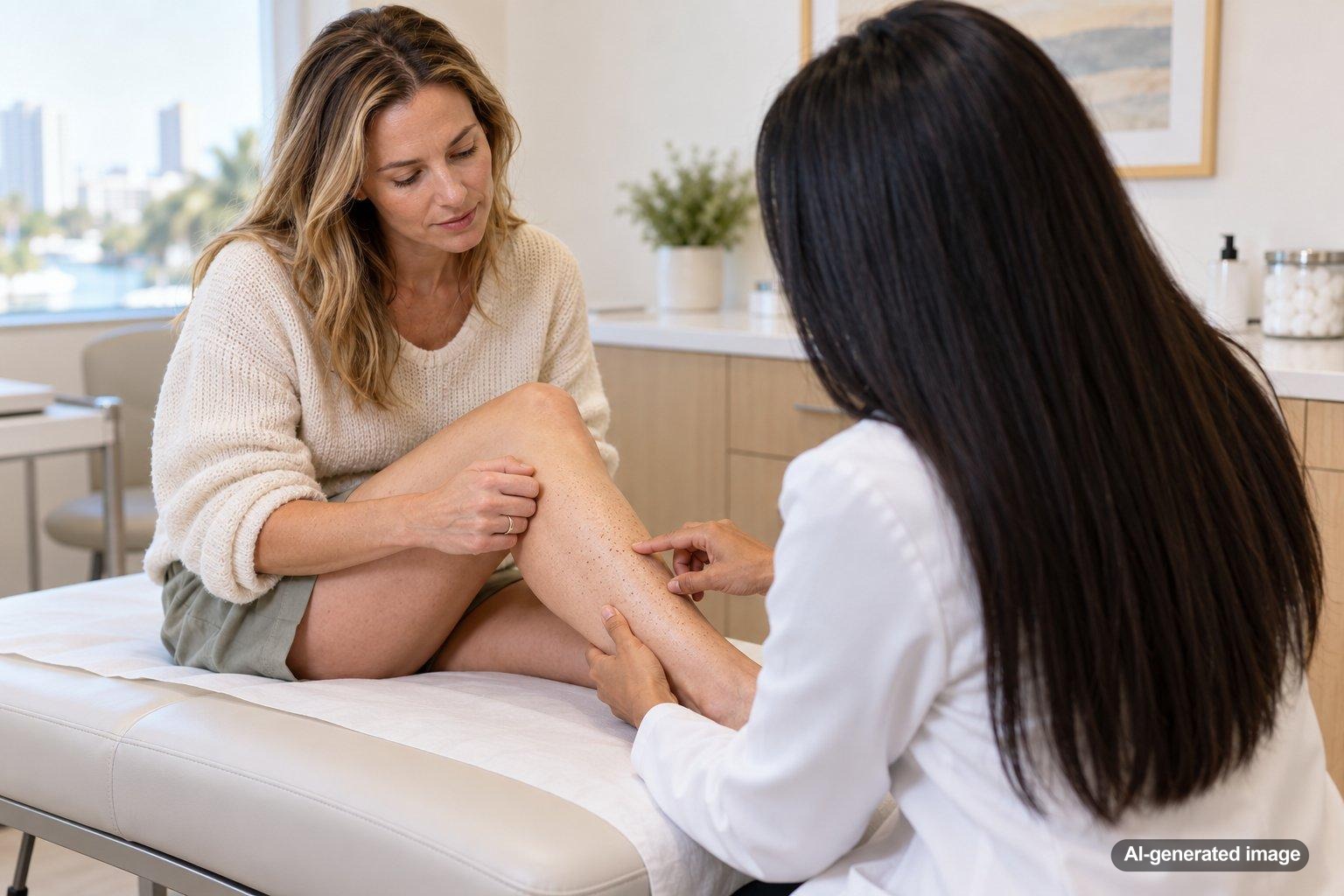
Noticing tiny black dots in an area where hair never seems to grow can be puzzling. The spots may resemble stubble, blackheads, or miniature specks embedded in the skin. Yet even after weeks without shaving, you might not see an actual hair emerge. Sometimes the dots remain remarkably consistent, making it difficult to tell whether they involve hair follicles, clogged pores, or something else entirely.
Several harmless skin processes can create this appearance. A follicle may contain a cluster of extremely fine hairs, accumulated keratin, or a mixture of oil and skin cells. In other situations, a dark spot may not involve a hair at all. Understanding these possibilities can help you avoid unnecessary irritation and recognize when a professional examination is worthwhile.
Quick Answer: What Are Those Tiny Black Dots?
- Clogged follicles: Oil and dead skin cells can collect in follicular openings, creating dark plugs.
- Trapped miniature hairs: Multiple very fine hairs may remain together inside a follicle rather than appearing as normal visible growth.
- Broken or ingrown hairs: Short hair fragments can appear as dots at or beneath the skin surface.
- Keratin buildup: Compacted skin protein may create small, dark-centered bumps.
- Pigmentation: Some flat dark spots are unrelated to hair growth or clogged pores.
The appearance alone cannot reliably distinguish these possibilities. Location, texture, symptoms, and examination of the follicular openings provide important clues.
Why Can a Hair Follicle Look Black Without Growing Hair?
Hair follicles are small structures within the skin, and they do not all produce the same kind of hair. Some generate long, easily visible strands, while others produce very short, fine hairs called vellus hairs. These delicate hairs can be nearly invisible, particularly on areas of the face, upper arms, or torso.
A follicular opening may also remain visible when its hair is too fine to notice. Oil, keratin, and environmental debris can accumulate near the surface, making that opening appear darker than the surrounding skin.
Importantly, a black dot does not necessarily indicate that a hair is actively trying to grow outward. Sometimes what looks like a hair root is actually a compacted plug of skin cells and sebum.
Could It Be Trichostasis Spinulosa?
One particularly relevant possibility is trichostasis spinulosa, a follicular condition in which multiple tiny vellus hairs accumulate within a single follicular opening. Instead of seeing individual hairs extending normally from the skin, you may notice small dark dots or slightly rough, pinpoint projections.
This appearance is often mistaken for ordinary blackheads. It can occur on the nose, cheeks, back, or other hair-bearing skin, even where visible hair growth seems absent.
Trichostasis spinulosa is generally benign, although its appearance may be persistent. A dermatologist can sometimes distinguish it from other follicular conditions using magnification or dermoscopy, which allows closer inspection of the skin surface.
Trying to squeeze these dots repeatedly may cause irritation without addressing the material retained inside the follicle.
Other Common Reasons for Dark Follicular Dots
- Open comedones: Commonly called blackheads, these develop when oil and keratin collect inside a pore. The exposed material darkens through oxidation rather than simply being dirt.
- Keratosis pilaris: Keratin can accumulate around follicular openings, producing tiny rough bumps. Some may have darker centers, particularly when surrounding pigmentation varies.
- Ingrown hairs: Hair that curves or becomes trapped beneath the skin can produce a dark pinpoint mark. This is more likely in areas exposed to shaving, waxing, or friction.
- Broken hair shafts: A hair may break close to the surface, leaving a dark fragment that resembles a dot without obvious lengthening.
- Residual pigmentation: Previous irritation can leave small areas of discoloration that remain visible after the original follicular problem has settled.
These possibilities can overlap. For example, a follicle may have retained keratin and a tiny hair fragment simultaneously. A careful examination is more informative than attempting to identify the material by squeezing it.
Does the Location of the Dots Matter?
Location can help narrow the possibilities, although it does not establish a diagnosis.
On the nose or cheeks: Blackheads, sebaceous filaments, and retained fine hairs can create similarly dark pinpoint patterns. Sebaceous filaments are normal structures that help channel oil to the surface and do not always require treatment.
On the upper arms or thighs: Keratin buildup around follicles may create a rough texture with small dots, sometimes described as strawberry skin.
On the legs or bikini area: Shaving-related hair fragments, follicular plugging, and ingrown hairs may contribute to a dotted appearance.
On the back or chest: Clogged follicles and clusters of retained fine hairs are among the possibilities a dermatologist may consider.
A single isolated dark spot deserves different consideration from dozens of evenly distributed dots. Any unusual or changing pigmented spot should be assessed rather than assumed to be a clogged follicle.
What Can You Safely Do at Home?
When tiny dark dots are not painful, inflamed, or changing, gentle skincare may be a reasonable starting point while you arrange an evaluation if needed.
- Cleanse gently: Use a mild cleanser and avoid aggressive scrubbing, which can worsen irritation.
- Consider careful exfoliation: Products containing salicylic acid may help with some clogged pores. Start cautiously, follow product directions, and discontinue use if irritation develops.
- Support the skin barrier: A fragrance-free moisturizer can reduce dryness and help skin tolerate routine care.
- Limit picking: Avoid digging into dark dots with tweezers, needles, or fingernails. This can damage skin and increase the likelihood of discoloration or scarring.
- Review hair-removal habits: If spots appear after shaving, reducing friction and avoiding overly close passes may help limit additional irritation.
Not every dark dot represents something that needs to be extracted. Persistent spots may require a different approach from ordinary surface congestion.
How Can a Dermatologist Evaluate These Spots?
A dermatologist can examine the pattern, texture, and distribution of the dots and determine whether they correspond to follicles, pigmentation, or another skin structure. Magnification may reveal retained fine hairs or keratin plugs that are difficult to recognize with the naked eye.
Depending on the findings, professional options may include guidance on topical skincare, carefully selected exfoliating treatments, or management of associated follicular irritation. Certain presentations may benefit from targeted hair-related treatments, but these are not appropriate for every type of dark spot.
If a pigmented area appears atypical, further examination or testing may be recommended. The goal is to identify what is creating the appearance before choosing an intervention.
When Should You See a Dermatologist?
Consider an appointment if the dots persist despite gentle care, repeatedly become irritated, or remain difficult to identify. More prompt assessment is appropriate when you notice:
- Increasing redness, tenderness, swelling, or drainage.
- A spot that bleeds, crusts, or does not heal.
- Rapid changes in color, shape, or size.
- New patches of hair loss or scarring near the affected area.
- A single irregular dark mark that looks different from neighboring spots.
These features do not automatically indicate a serious condition, but they are reasons to avoid self-treatment until the area has been evaluated.
Frequently Asked Questions
Are black dots without visible hair actually hair follicles?
Sometimes. Follicles can contain extremely fine hairs or accumulated keratin, but similar dots may also result from pigmentation or ordinary pore congestion. An examination can help distinguish them.
Why don’t the black dots grow into longer hairs?
Some follicles naturally produce very short vellus hairs. Other dots contain trapped hair fragments or material unrelated to active hair growth, so there may be no visible strand to lengthen.
Can trichostasis spinulosa look exactly like blackheads?
Yes. Both can create tiny dark follicular openings. Trichostasis spinulosa involves clusters of retained fine hairs, while blackheads primarily involve accumulated oil and keratin. Magnification may help distinguish them.
Should I squeeze the dots to remove them?
Repeated squeezing is generally not advisable. It can cause irritation, discoloration, or skin injury, particularly when the dot contains retained hairs rather than an easily removable surface plug.
Will laser hair removal make the dots disappear?
Not necessarily. Laser hair removal targets pigment in suitable hair follicles and is not a general treatment for blackheads, pigmentation, or keratin plugs. A dermatologist can determine whether any hair-related treatment makes sense for the specific finding.
Can these dots remain for years without being dangerous?
Some benign follicular patterns can remain relatively stable for extended periods. However, persistence alone cannot establish that a spot is harmless, especially if it is isolated, changing, or different from surrounding marks.
Understanding Your Skin Before Treating It
Tiny black dots where hair never seems to grow can have several explanations, from ordinary clogged follicles to retained fine hairs. Because different conditions can look nearly identical at first glance, identifying the underlying structure is more useful than trying increasingly aggressive treatments.
At Waverly DermSpa in Fort Lauderdale, Dr. Maryann Mikhail, MD, can evaluate persistent or unusual skin findings and discuss appropriate next steps based on your individual skin concerns.
Ready to get help?
Schedule an appointment or send a message and our team will get back to you.
Prefer to call? 954-666-3736
This article is for educational purposes and is not medical advice. For diagnosis and personalized treatment, please book an appointment with a board-certified dermatologist.
