

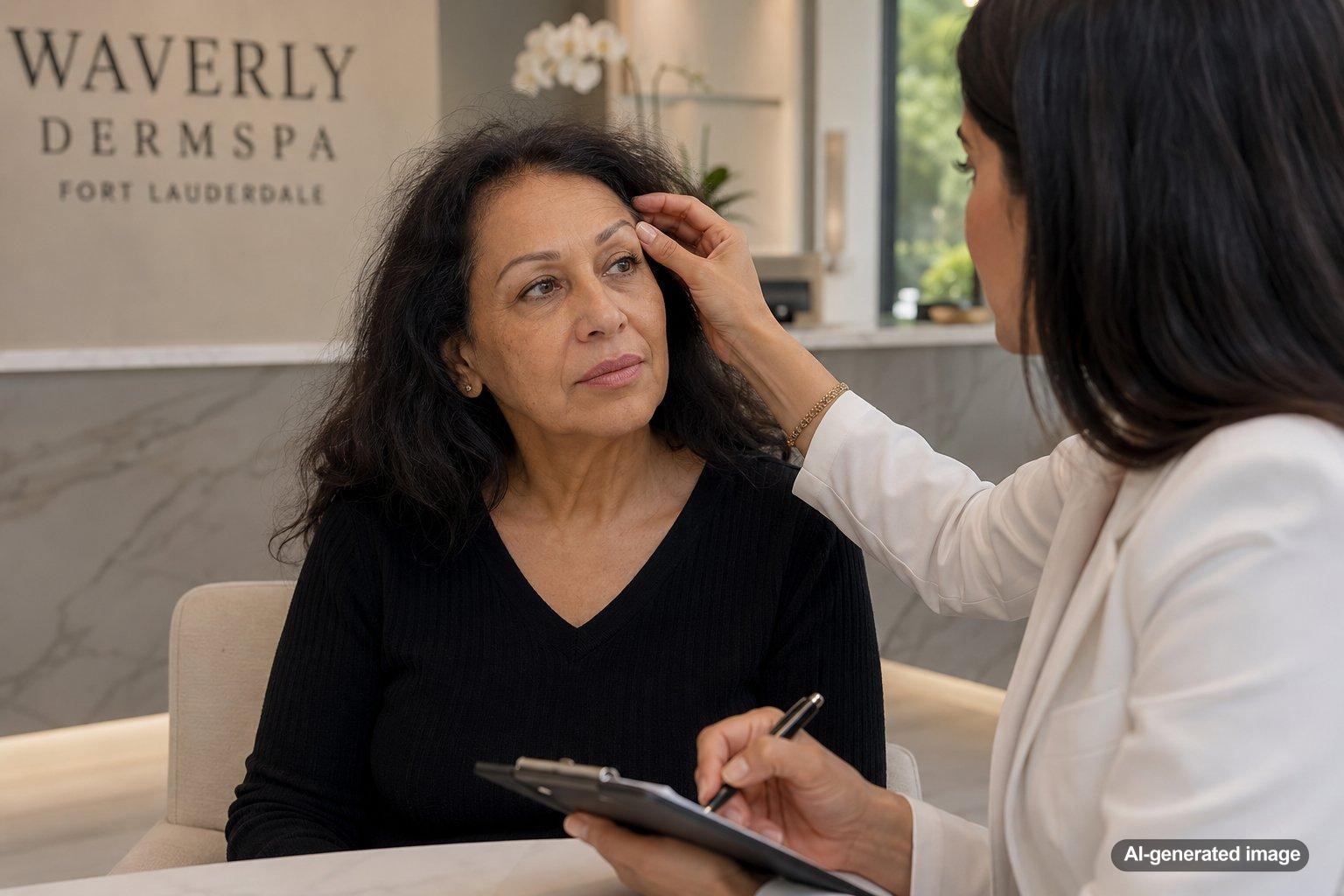
Thin or sparse eyebrows paired with hair that feels unusually coarse, wiry, fragile, frizzy, or difficult to manage can have several explanations. Full lips may simply be a normal facial feature, so the combination does not point automatically to one condition. What matters more is whether these traits are lifelong, recently changing, or accompanied by other changes in the skin, scalp, nails, or hair.
A dermatologist can examine the pattern as a whole. That can help separate everyday causes, such as grooming damage or age-related thinning, from hair-shaft differences, skin conditions, nutritional issues, hormonal changes, or less common inherited traits.
Quick answer
- Sparse eyebrows can result from grooming, aging, irritation, inflammation, hormonal changes, nutritional problems, or certain hair disorders.
- Hair that has always been unusually difficult to manage may reflect its natural curl pattern, fiber shape, or an inherited hair-shaft characteristic.
- Full lips by themselves are usually a normal facial feature and do not explain eyebrow thinning.
- When several hair, skin, nail, or facial features occur together, a dermatologist can assess whether they are related or simply coincidental.
- New or progressive eyebrow loss deserves more attention than a stable pattern that has been present for many years.
Why eyebrow density and hair texture can change
Eyebrow follicles and scalp follicles respond to many of the same internal and external influences, but they do not always change for the same reason. Frequent tweezing, waxing, threading, rubbing, or harsh cosmetic products can reduce the appearance of eyebrow density. Natural aging can also make eyebrow hairs finer or less numerous over time.
Scalp hair may become harder to manage because of chemical processing, heat exposure, weathering, breakage, or changes in its natural texture. In some people, the shape and structure of the hair fiber itself makes hair unusually dry, coarse, twisted, fragile, or resistant to styling.
Could the features be related?
Sometimes they can be, but not always. A dermatologist looks for patterns rather than relying on a single feature. Sparse eyebrows and unusual scalp hair may occasionally occur together in inherited hair or skin conditions. Other clues might include hair that has been unusual since childhood, frequent breakage, changes in eyelashes, nail differences, dental differences, or similar traits in family members.
Full lips are often simply part of someone’s normal facial anatomy. Their presence does not, by itself, establish a diagnosis or explain changes in the eyebrows or scalp hair. If several physical traits have been present since early life, however, your clinician may consider whether they belong to a broader inherited pattern.
Common causes of sparse eyebrows
- Repeated hair removal: Long-term tweezing, waxing, or threading can make brows look thinner, especially when follicles have been repeatedly traumatized.
- Skin irritation: Rashes, scaling, itching, or repeated rubbing around the brows can contribute to temporary shedding or breakage.
- Age-related changes: Eyebrow density and individual hair thickness can gradually decrease with age.
- Hormonal or nutritional factors: Changes in overall health can sometimes affect eyebrow and scalp-hair growth at the same time.
- Hair-follicle or hair-shaft disorders: Less common conditions can affect the quality, strength, or density of hair in more than one area.
What can make hair unusually difficult to manage?
Not all difficult hair is damaged hair. Some hair fibers naturally have a shape or surface that creates more friction, dryness, tangling, or volume. Curly and tightly coiled hair can also behave very differently from straight hair without anything being medically wrong.
On the other hand, a noticeable change from your usual texture can be meaningful. New brittleness, excessive breakage, loss of shine, scalp symptoms, or hair that suddenly behaves differently may justify a closer look. Chemical treatments, frequent heat styling, tight hairstyles, environmental exposure, and general health changes can all contribute.
What you can do at home
- Pause aggressive eyebrow tweezing, waxing, or threading if the brows are becoming progressively thinner.
- Use gentle cleansers around the brow area and avoid repeated scrubbing or friction.
- Reduce high-heat styling, frequent chemical processing, and tight hairstyles if scalp hair is breaking easily.
- Use conditioner and gentle detangling techniques suited to your natural hair texture.
- Take clear photos every few months if you are trying to determine whether eyebrow density or hair texture is actually changing.
- Avoid starting supplements solely for hair loss without discussing them with a clinician, since the right approach depends on the underlying cause.
How a dermatologist may evaluate the pattern
A dermatologist may ask when the eyebrow thinning and hair-texture differences began, whether they have changed over time, and whether anyone else in your family has similar features. The scalp, eyebrows, eyelashes, skin, and nails may be examined for clues.
Depending on the findings, your clinician may consider whether additional testing is appropriate. The goal is not to assume that every feature is connected, but to determine whether the pattern suggests grooming damage, a scalp or skin issue, a general health factor, or an inherited difference in hair structure.
When to see a dermatologist
Consider an evaluation if eyebrow thinning is new, clearly progressing, patchy, or occurring alongside significant scalp-hair loss. It is also worth getting checked if you notice redness, scaling, pain, itching, scarring, marked breakage, loss of eyelashes, nail changes, or a major change in your usual hair texture.
If sparse brows and unusually difficult hair have been present since childhood, a dermatologist can still help characterize the pattern and explain whether it appears to be a normal inherited trait or something that merits further evaluation.
FAQ
Do full lips cause thin eyebrows?
No. Lip fullness does not cause eyebrow thinning. The two features may simply occur together as part of someone’s normal appearance.
Can sparse eyebrows grow back?
Sometimes. The answer depends on why the hairs became sparse and whether the follicles remain capable of producing hair. A dermatologist can help evaluate the likely cause.
Does difficult-to-manage hair mean it is unhealthy?
Not necessarily. Natural texture, curl pattern, fiber shape, and humidity can all make healthy hair challenging to style. New brittleness or breakage is more likely to justify evaluation.
Should I be concerned if these features have been present my whole life?
Lifelong, stable traits are different from sudden changes. They may simply reflect genetics, although a dermatologist can evaluate them if you have questions or if several hair, skin, nail, or dental features seem to occur together.
Can bloodwork explain eyebrow thinning?
In some situations, a clinician may consider laboratory testing based on your history and examination. Testing is not automatically necessary for every case of sparse eyebrows.
Ready to get help?
Schedule an appointment or send a message and our team will get back to you.
Prefer to call? 954-666-3736
This article is for educational purposes and is not medical advice. For diagnosis and personalized treatment, please book an appointment with a board-certified dermatologist.
